Category: Recipes

Papo Seco – Portugal’s Favorite Bread

The Portuguese passion for it’s cuisine is surely matched by the love of it’s bread! 
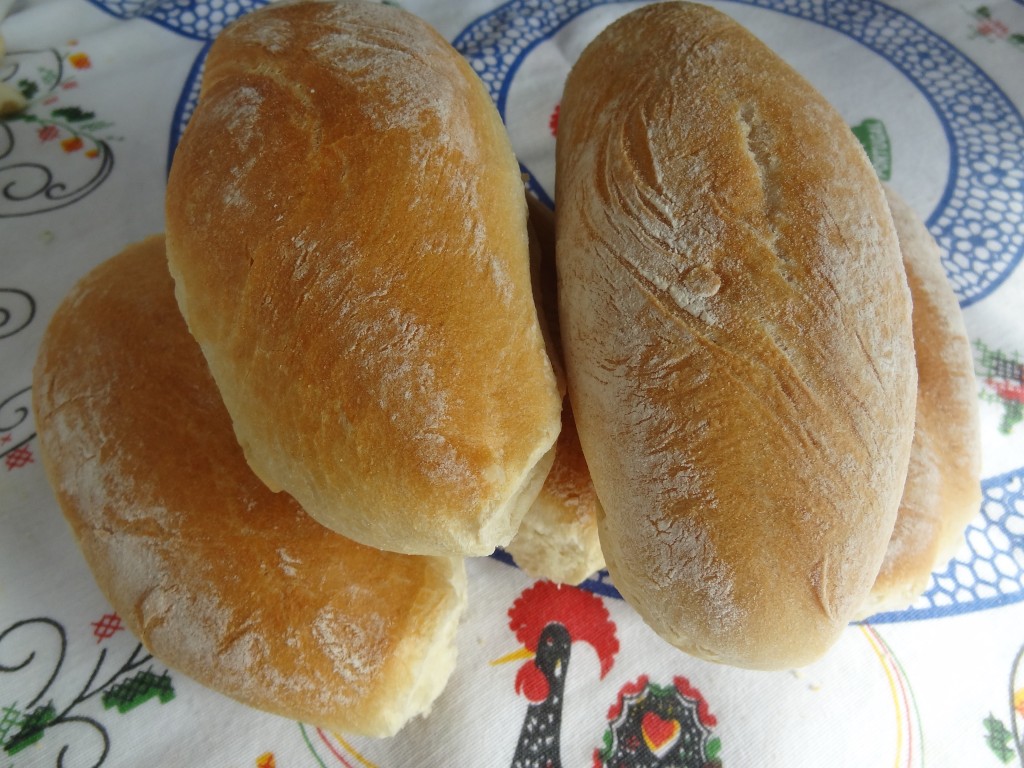
Home style bread & Portuguese rolls

Various regions of the country have their own artisan favorites such as Pão de Centeio “Rye Bread” and “Broa de Milho” from Tras-Os-Montes, and Pão Alentejano from Alentejo, but the Papo Seco which literally means “dry throat” is the most popular bread eaten all over the country both in homes and a staple at every restaurant. The roll is crusty on the outside and light and airy in the center which make it perfect for sandwiches and for absorbing sauces.

The method of preparing it and shape of the roll is uniquely Portuguese and extremely popular but I found there are many recipes. While researching some bread recipes I discovered that there are many different recipes to make Papo Secos. Some use basic dry yeast, while other use (fresh starter).

Making and storing fresh starter in your home seems quite easy and the benefits of using are quite fascinating. I had always wondered how the starter was formed without yeast, and I’m so happy that I found the recipe.

I was even more thrilled to discover that “King Arthur Flour” website actually sells the “Starter Dough” and you can buy it online. You can have a piece of the starter that began 300 years ago!They also sell the yeast that they use in their kitchens. The best part is that the yeast is 75% cheaper and better than the one in the supermarkets!

Please bare with me until the end of this post for recipe for Papo Secos. I found this information very interesting to share with you since it will enhance your future bread making!


“Where else can you find FRESH sourdough starter – not dried? And what a history this has; it’s descended from a starter that’s been lovingly nurtured here in New England since the 1700s. When you feed it, it quickly becomes your own, adapting itself to your own region and climate. Generations of bakers before you have made wonderful bread with a bit of this same bubbling brew. Join the ranks of satisfied sourdough bakers. www.kingarthurflour.com/shop

SAF instant is the yeast used most often in the King Arthur test kitchens. It’s easy to use (no proofing or pre-dissolving), fast-acting and long-lasting, continuing to work for hours longer than “rapid” yeast. It’s absolutely reliable. AND it costs 75% LESS than supermarket active dry yeast. ‘Nuff said. . www.kingarthurflour.com


Here is a recipe to make a “Starter Dough”from scratch!

APPLE STARTER:

3/4 CUP OF SPRING WATER, 2 CUPS FLOUR, 1/2 CUP GRATED APPLE.   Mix and cover, and let sit to ferment.
DAY 1-3:  Stir once a day.  You should be able to smell the starter.
DAY 4:   Put starter into a bowl and add 2 cups flour and 3/4 cup spring water.  Cover and let sit for another 24 hours.
DAY 5:   The starter is now ready to use, and can be refrigerated.   Once a week discard half the starter and add 1 cup fresh flour and 3/4 cup spring water, mix again


EASY YEAST STARTER or SPONGE:

1 PACKAGE DRY YEAST (2-1/4 TSP).  1 CUP WARM WATER, 1 CUP HIGH GLUTEN FLOUR.

Mix, set aside at room temperature for a minimum of 6 hours.  or, mix at night, put in the frig, and then take it out about two hours before making the rolls.


5 Healthy Reasons to make your own Sourdough Starter

1- Increases beneficial lactic acid

The longer rise time needed for sourdough increases the lactic acid and creates an ideal pH for the enzyme phytase. This enzyme breaks down phytates (read more about the dangers of phytic acid here) more effectively than in yeast breads.

Sourdough rye has the least amount of phytates (somehow the Swiss culture mentioned above must have known this) making it a healthier bread.

2- Predigestion of starches

The bacteria and yeast in the sourdough culture work to predigest the starches in the grains, thus making it more easily digestible to the consumer.

3- Breakdown of gluten

Here again, the longer soaking and rising times in the preparation of sourdough breaks the protein gluten into amino acids, making it more digestible.

4- Preservative

The acetic acid which is produced along with lactic acid, helps preserve the bread by inhibiting the growth of mold.

5- Better blood glucose regulation

There has been some research suggesting that sourdough bread — sourdough white bread — showed positive physiological responses. The subjects’ blood glucose levels were lower after eating sourdough white bread compared to whole wheat, whole wheat with barley and plain white bread. Interestingly, the subjects tested after eating whole wheat bread fared the worse — with spiking blood glucose levels.(http://realfoodforager.com/5-reasons-to-make-sourdough-your-only-bread/January 17, 2012)


 ♥♥♥♥♥♥♥♥♥♥♥♥♥♥♥♥♥♥♥♥♥♥♥♥♥♥♥♥♥♥♥♥♥♥♥♥♥♥♥♥♥♥♥♥♥♥♥♥♥♥♥♥♥♥♥♥♥

Since we know the benefits of making your own starter dough, here’s the Papo Seco recipe! Enjoy!


Papo Seco recipe – By: Azorean Green Bean

“Azorean Green Bean is all about preserving the food and culture of the Azores.

There’s a lot of overlap between the Azores and continental Portugal, and we’ll be taking a look at that, too. But for now it’s all about the Azores”


Ingredients:
4 cups of all purpose flour
1 tablespoon of salt
2 teaspoons of sugar
1 envelope package of rapid rise yeast
2 cups of lukewarm water
1 egg white beaten or milk for brushingDirections:

Using a large bowl mix together the flour, salt and sugar then leave aside.
In a separate large mixing bowl, add the two cups of lukewarm water and gently mix in the yeast using a whisk. Add the dry ingredients into the water a little at a time and keep mixing until it forms a soft ball of dough. At this time you will need to use your hands to mix in the remaining flour and combine together. Take the dough out into a floured surface and knead for a couple of minutes. Place the dough into a greased bowl and cover with a dish towel or blanket. Place the bowl in a warm place and let the dough rise for an hour.

Remove the dough and place onto a floured surface, punch the dough down, and knead for about 10 minutes, until the dough feels smooth.

Separate the dough into ten equal balls. Shape them and place them on a greased or parchment paper lined baking trays, and let them rise for 30 minutes. You can shape the rolls by making an indent in the middle with the side of your hand, or you can roll the dough into an oval shape and score with a knife across the top lengthwise before it goes in the oven. What ever way you chose you really can’t go wrong.

Preheat the oven at 375 degrees and brush the rolls with either egg white or milk. Bake for 30 minutes or until the rolls are slightly golden brown and sound hollow when tapped on the bottom.


♥♥♥♥♥♥♥♥♥♥♥♥♥♥♥♥♥♥♥♥♥♥♥♥♥♥♥♥♥♥♥♥♥♥♥♥♥♥♥♥♥♥♥♥♥♥♥♥♥♥♥♥♥♥♥♥♥
Here’s another recipe variation:
Visit portuguesebreads.blogspot.com for some great Portuguese bread recipes!


Ingredients

4 cups bread flour
1 cup fermente (starter)
3/4 -1 teaspoon sea salt
1- 2 cups tepid water

Technique

Mix the ingredients and knead until smooth. About 10 minutes of hand-kneading.
Cover and let rise overnight. 10-12 hours is normal. I always make the dough at night and by morning it is ready to finish and bake.

STEP 1 – Divide into balls – divide the dough into several balls – a little smaller than the size of a tennis bal
l

Dough divided into balls

STEP 2 – Roll on a lightly floured board until you have a smooth ball of dough

Roll into small balls

STEP 3 – Crease the ball of cough with the side of your hand – press firmly almost to the board.

Use the side edge of hand to crease

This is what is looks like with the crease:

Roll creased ready to pinch ends

STEP 4 – Twist the ends – now you must grab about an inch in from each end and twist the dough to for the ends – this technique hold the shape of the roll.
NOTE – some people use a little rice flour in the crease to keep it from sealing up.

Papo-Seco pinched ends ready to rise

STEP 5 – Lay the roll CREASE side DOWN onto a floured tea towel or clean cloth – push the towel up slightly to the roll as you form the next roll – this keeps the rolls from spreading out.

Crease side down on this step!

STEP 6 – cover and let rise – 1 hour – when ready. carefully lift the rolls onto your baking sheet, this time with the CREASE side UP

Ready to bake

STEP 7 – Pre-heat the oven to 425F and set a pan of water on the bottom rack. Bake the rolls for 25 minutes or until done – they should be golden brown when they are done!

Can you smell them?


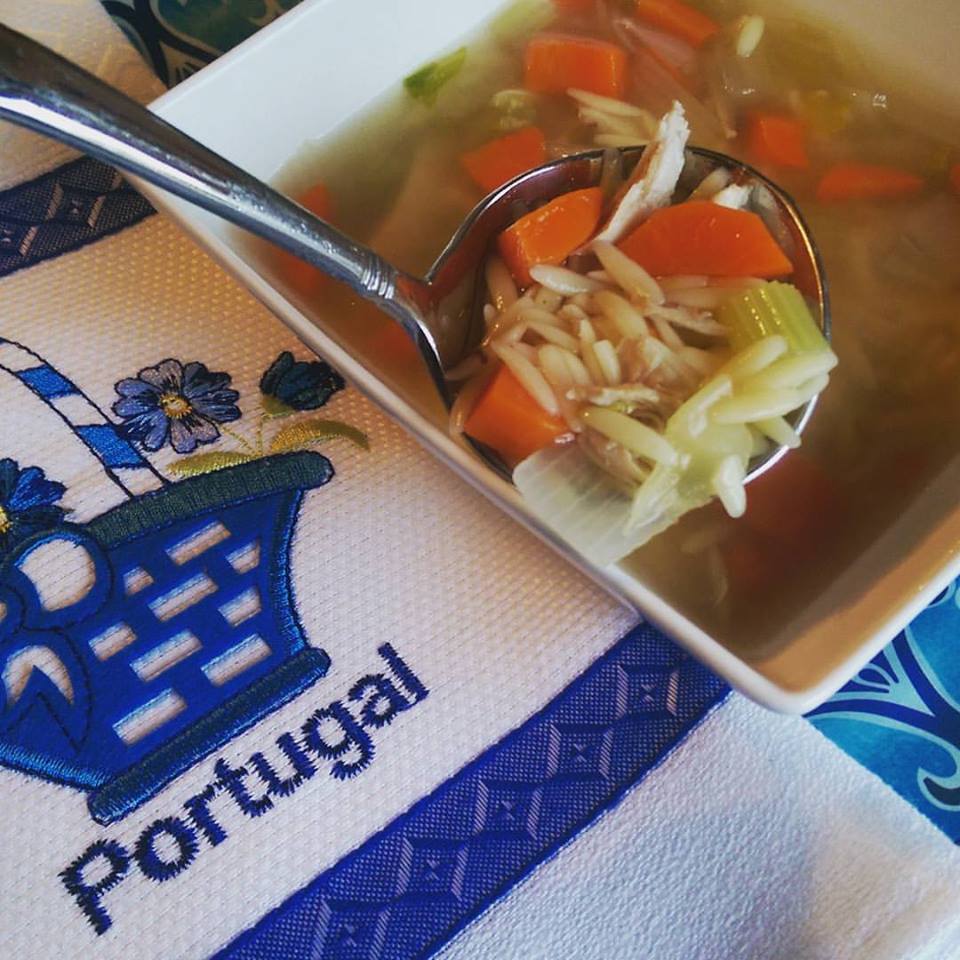
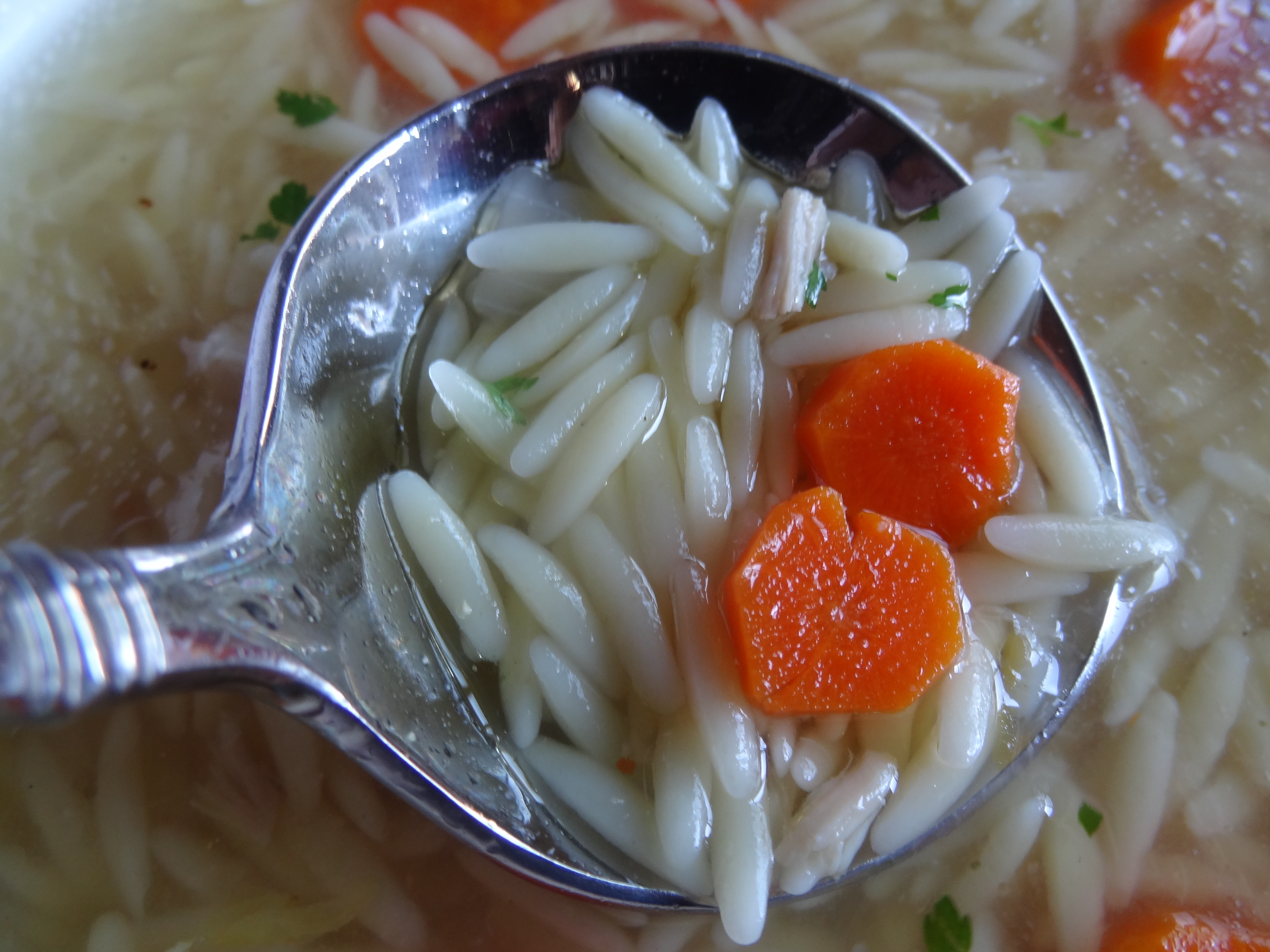
Canja – Portuguese Chicken Noodle Soup

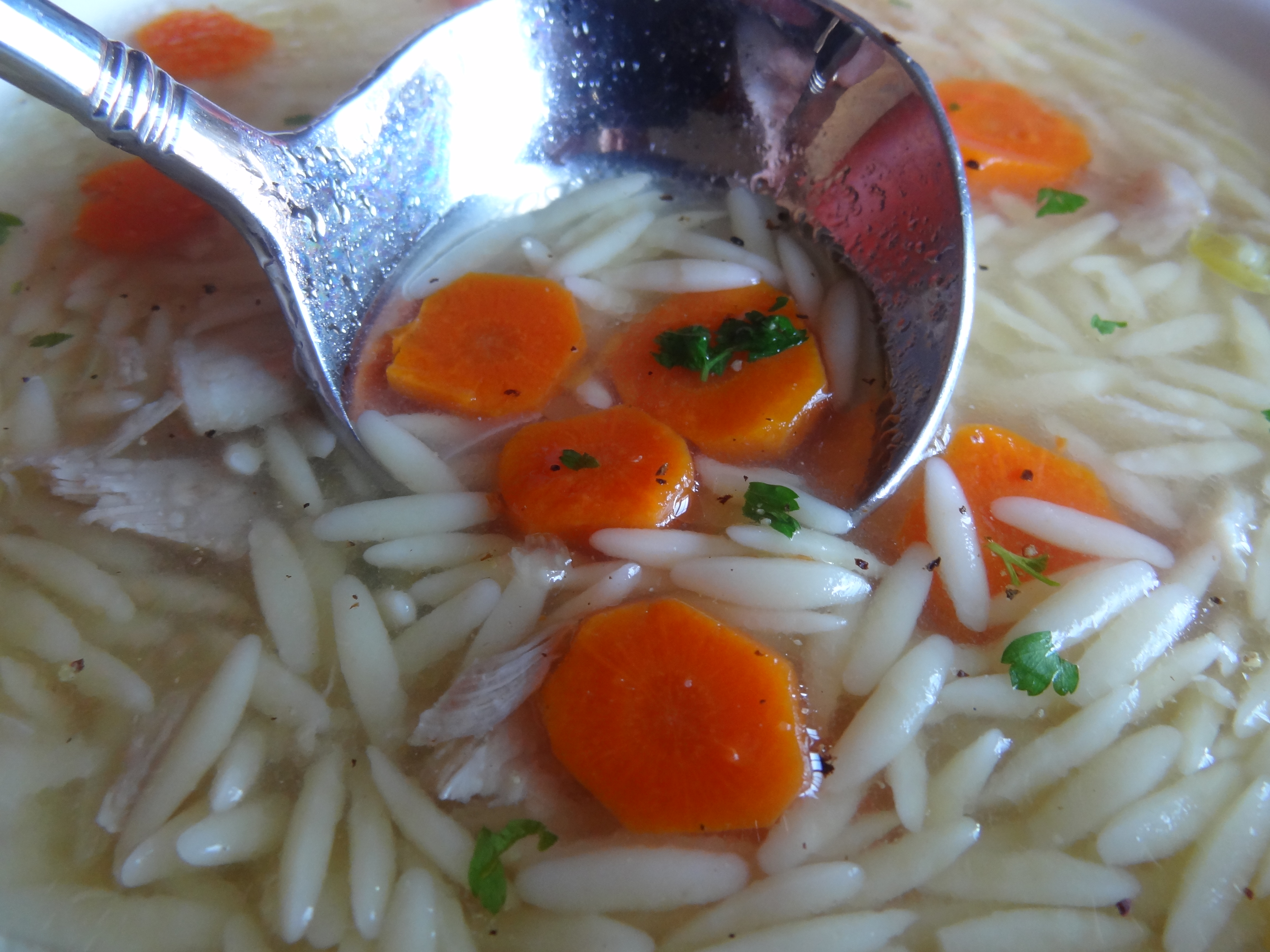
Chicken orzo soup

Big Fat Portuguese Wedding Soup

When I first saw the movie “My Big Fat Greek Wedding” with my friends many years ago, they laughed hysterically at the quirky customs, the outrages family members and the huge bridal party.

Although I did love the movie, I found nothing strange about it since I had lived through many of the same big crazy weddings many times.

In fact, I’ve probably been to over 100, “Big Fat Portuguese Weddings.” Some I attended as a guest, while others, as a waitress during my teenage years.

There is a large close knit Portuguese community in my hometown. It seems that there is literally a Portuguese wedding every week during the summer months where everyone is invited!

Lists of the 300-500 guest’s addresses are handed down from generations to the next who follow the same traditions, customs and even serve the same menus.

A recent email request for the chicken soup that is served at Portuguese weddings brought back the memories from weddings attended long ago and the soup that is still on the menu.

An abundance of food is very important for any Portuguese wedding. Generally, the menus consist of a wide range appetizers such as Bolinhos de Bacalhau (Cod Fritters), Rissois de Camarao (Shrimp Turnovers), Folar (Meat stuffed bread) Roast Suckling Pig, Shrimp Cocktail, Cheese, Fruit, Presunto and other cold cuts, a soup course; Caldo Verde (Green Soup) or Chicken Noodle Soup, a fish course which varies from; Seafood Paella, Fish Fillets with Shrimp Rice or Bacalhau a Gomes de Sa (Salt Cod Casserole), and a meat dish with either; Roast Pork Loin, Roast Beef, or Steak.

Later in the evening a buffet is served similar to an “Italian Venetian” hour with many of these same items along with other traditional classics such as Feijoada (Bean stew), Dobrada (Tripe), and many other classic desserts and pastries to many to mention.

Here’s my recipe for “Portuguese Wedding Soup”. It contains a secret ingredient used by some of the caterers.

Keep it a secret if you wish, it’s up to you! Enjoy!

Portuguese Wedding Soup

Ingredients:

3 lb fresh Chicken (whole or cut into pieces)

12 cups water

1 large chopped onion

2 large celery stalks

2 large carrots

2 cloves garlic (peeled)

3 sprigs parsley

1 tbsp salt

1 /2 tsp freshly cracked pepper

1  – 1/2 cups ORZO pasta (or white rice)

(1/2 tsp crushed pepper flakes optional) 


Instructions:

In a large stock pot, place the water, onion, 1 stalk of celery, 1 carrot, salt, 2 sprigs parsley and garlic and bring to a boil. Add the chicken and let it cook on medium for 2 hours. (If desired: remove one chicken breast after 1/2 hour of cooking time, remove bones, dice the meat and reserve for later).

After 2 hours remove the chicken and vegetables. Strain the soup through a strainer to remove any scum or fats. *Note: (Discard the chicken and vegetables since they have lost their nutrients and con not be re-used). Place the pan with the broth back on the stove and bring to a low boil. Slice remaining carrot and celery into desired small slices.

(TOP SECRET-Restaurant TIP: For an even more Chicken flavored soup, add 1 or 2 KNORR Chicken Bouillon cubes to taste)…HUSH.. HUSH!!

Add the ORZO or rice to the soup and cook on medium for 10 minutes. After 10 minutes, add the diced carrots, celery and the reserved diced chicken to the soup and stir.

Let the soup cook on medium for additional 10 minutes. Remove the soup from heat. Season to taste by adding more salt if needed and add the fresh black pepper. Garnish with chopped parsley.

(*Note: – Some people like to add 1 mint leaf as garnish instead of Parsley) (*Note: Add crushed red pepper flakes to kick up the soup if you want a little heat. The crushed red pepper is great to relieve nasal congestion, but do not give to your younger children).

Serve, or store in refrigerator after the soup cools.  Enjoy!

Malasadas – Filhóses “Portuguese Donuts”

Malasadas are “Portuguese donuts”, a ball of fried yeast dough without a hole in the middle like regular donuts. After frying, they are rolled in confectioners sugar.

The terms “Filhóses” and “Malasadas” are sometimes used interchangeably, and sometimes one refers to doughnuts while the other refers to fritters without a hole in the center.

Many families have their own recipes and carry on the traditions of making this dessert with each generation. The pastry is prepared on Holiday’s such as, Easter, Christmas, New Years, and at many celebrations and family gatherings.

Different regions have different definitions of Filhós and Malasadas.  Filhós are made by stretching out the dough with your hands into flat shapes and frying them whereas in preparing the Malasadas you drop the dough into the cooking oil by large tablespoons.

When the Portuguese first colonized Madeira and later the Azores Islands in the mid 1400’s they brought the deep frying method along with them. The Malasada is credited to have been originated on the Island of Sao Miquel. The other islands as well as the main land of Portugal call the fried confection “Filhós”.

In the United States, Malasadas, or Filhós are cooked in many Portuguese homes from the East to the West Coasts and featured in most Portuguese Bakeries.

When the first Portuguese immigrants moved from the Island of São Miguel to Hawaii, to work on the sugar cane plantations in the late 1800’s they brought the malasadas recipe with them.

Today, Malasadas have been incorporated into the cuisine and extremely popular in many parts of Hawaii.

Although traditionally not  made with any fillings, in Hawaii they can be found in many flavors, and filled with creams and puddings.

Leonards Bakery in  Honolulu, Hawaii is famous for their Malasadas but there are many shops who feature them as well.

photocredit: Leonards bakery

“In June 1882 the British sailing ship ‘Monarch’ brought Arsenio and Amelia DoRego from San Miguel Island, Portugal to Maui, Hawai’i under contract to work the sugar cane fields. Some 33 years later, their grandson Leonard was born. In 1946 Leonard and his wife Margaret moved to Honolulu with their daughter Diane, age 8. Leonard worked at Snowflake Bakery until he founded Leonard’s Bakery℠ in 1952.

Leonard and Margaret were no strangers to hard work, both coming from very large families. The bakery prospered. Not long after opening, Leonard’s mother suggested making malasadas for Shrove Tuesday – a Portuguese tradition. Although thinking it may be too ethnic, Leonard’s bakers complied. Malasadas were a huge hit. And, the appetite for malasadas in Hawaii was born.

Due to Leonard’s popularity Leonard required a larger, more modern facility, moving into their present location at 933 Kapahulu Avenue in 1957.” (http://www.leonardshawaii.com/)

Here’s an interesting video of the history of Malasadas in Hawaii


Sunday Dinner at a Portuguese Home

Sunday diner in a Portuguese home means great home cooked meals and lots of it!  Below, you’ll find the recipes for the entire meal! It only looks difficult but you can do it! Come on, let’s cook Portuguese and create some fond memories of shared Sunday meals with your family! Enjoy!

The all time favorite “Portuguese Roast Chicken” is simple to prepare and comes out perfect every time.

Ingredients:

1 Roasting Chicken

2 tsp salt

1 tsp pepper

2 tsp garlic powder

2 tsp Paprika

1 small onion (Quartered)

1 small celery ( Chopped)

1/2 lemon

2 tbsp Olive Oil

1 tbsp butter or margarine

1 sprig fresh parsley

1/2 cup of white wine

Instructions:

Wash the Chicken and place in roasting pan. Mix the seasonings together in a small bowl. Rub the chicken with olive oil and margarine. Coat with seasonings. Insert the lemon, onion, celery and parsley into cavity.

Cook at 400 degrees for 1 1/2 hours depending on size of chicken. Even though your timer on the chicken may pop up, let the chicken cook longer until it’s crispy on the outside!

♥♥♥♥♥♥♥♥♥♥♥♥♥♥♥♥♥♥♥♥♥♥♥♥♥♥♥♥♥♥♥♥♥♥♥♥♥♥♥♥♥♥♥♥♥♥♥♥♥♥♥♥♥♥♥♥♥

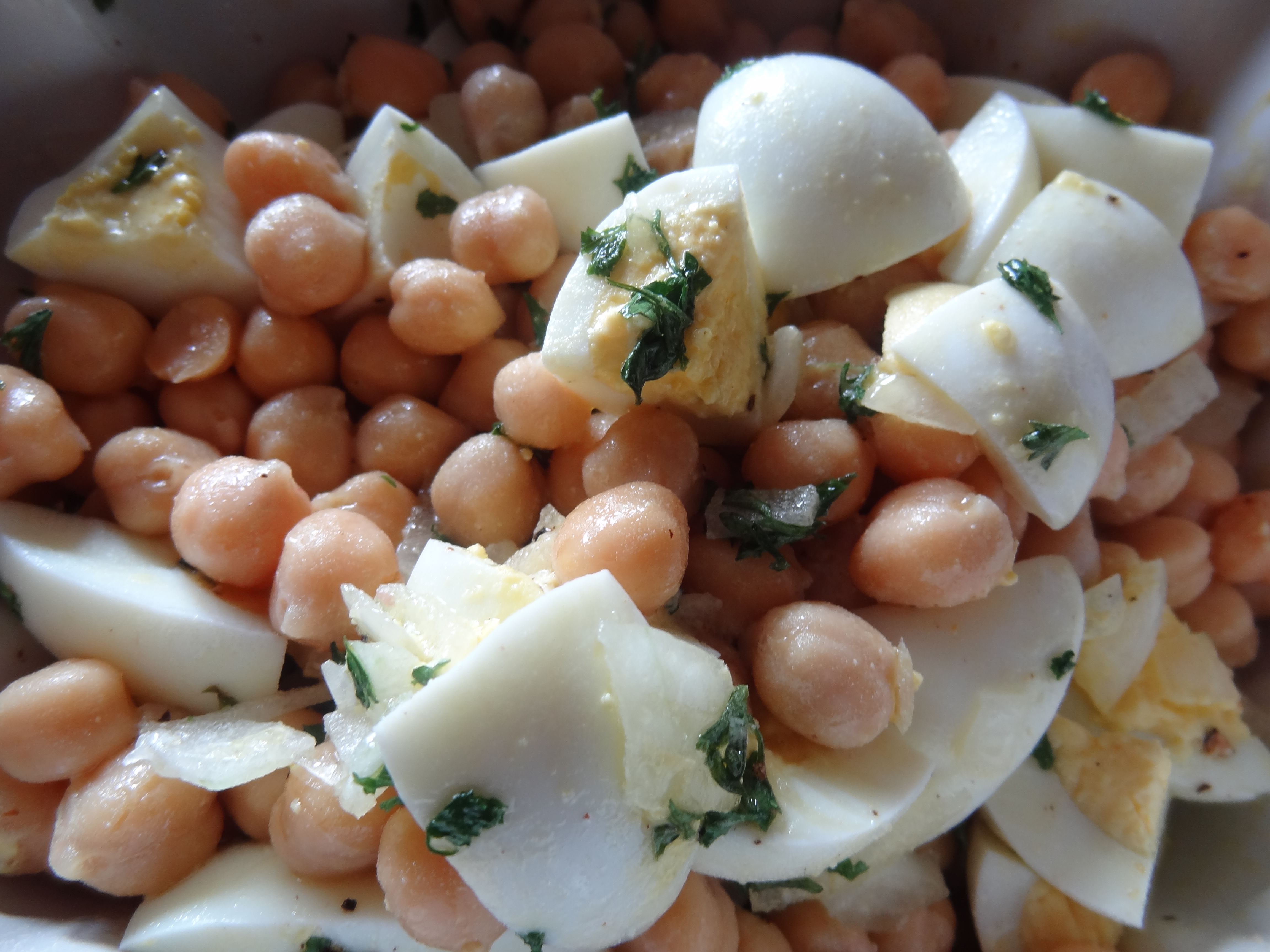
Chick Pea Salad

Ingredients:

2 cans Chick Peas – I use Progresso

6 sliced hard boiled eggs

1 tsp salt

1 tsp pepper

1/2 small chopped onion

2 tbsp chopped fresh parsley

1/4 cup Olive Oil

1/4 cup White Vinegar

Instructions:

Rinse the chick peas, drain and put into a medium bowl. Toss in all ingredients. Let sit for at least 15 minutes. Serve or store in refrigerator until the next day.

♥♥♥♥♥♥♥♥♥♥♥♥♥♥♥♥♥♥♥♥♥♥♥♥♥♥♥♥♥♥♥♥♥♥♥♥♥♥♥♥♥♥♥♥♥♥♥♥♥♥♥♥♥♥♥♥♥

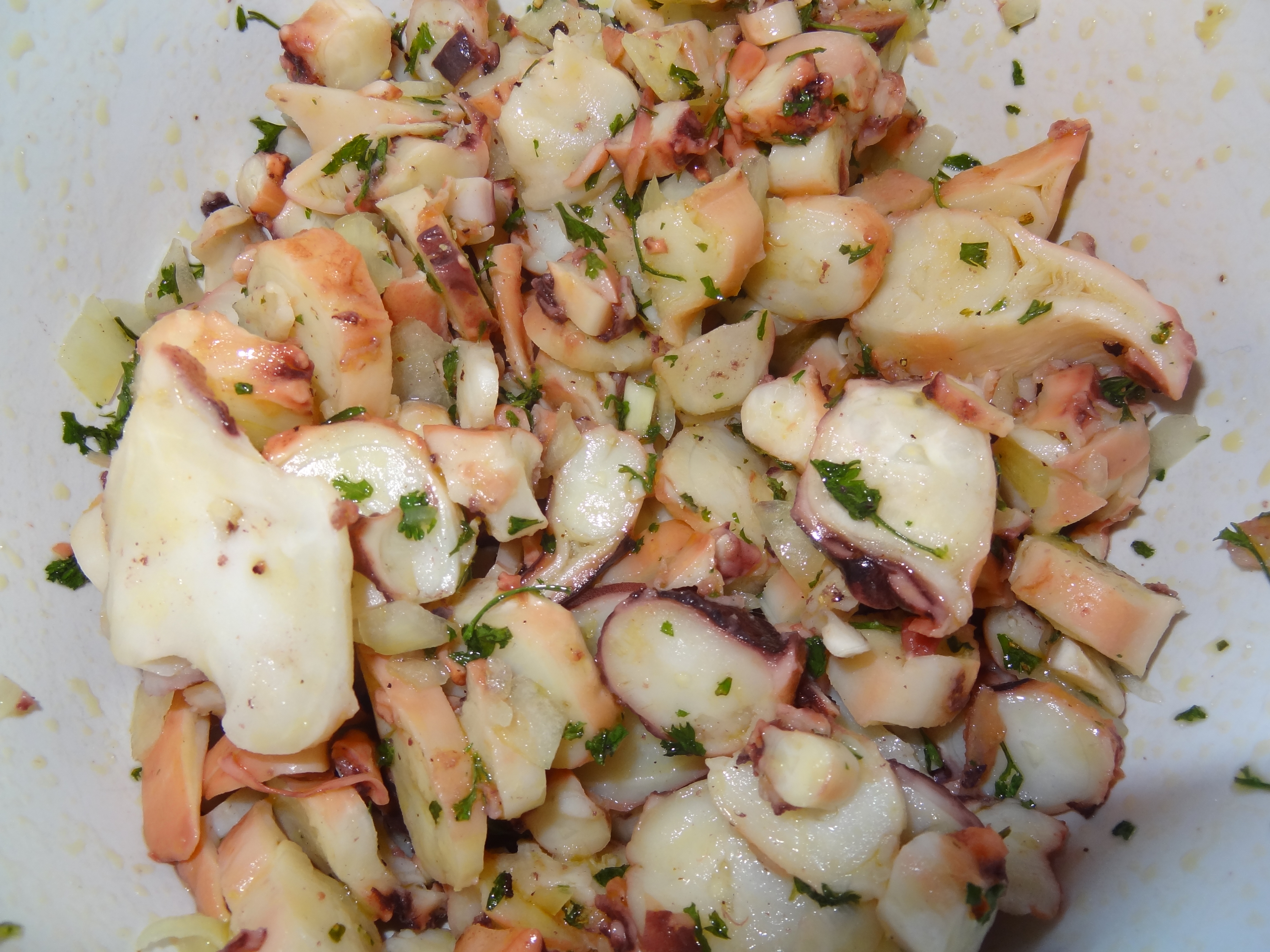
Octopus Salad:

Ingredients:

3 cups chopped cooked octopus

1 tsp salt

1 tsp pepper

1/2 small chopped onion

2 cloves very finely chopped garlic

2 tbsp chopped fresh parsley

1/4 cup Olive Oil

1/4 cup White Vinegar

Instructions:

Place all ingredients in a bowl. Mix together. Let sit for at least 15 minutes to marinate. Serve or store in refrigerator until the next day. (Best if eaten within 24 hours)

♥♥♥♥♥♥♥♥♥♥♥♥♥♥♥♥♥♥♥♥♥♥♥♥♥♥♥♥♥♥♥♥♥♥♥♥♥♥♥♥♥♥♥♥♥♥♥♥♥♥♥♥♥♥♥♥♥

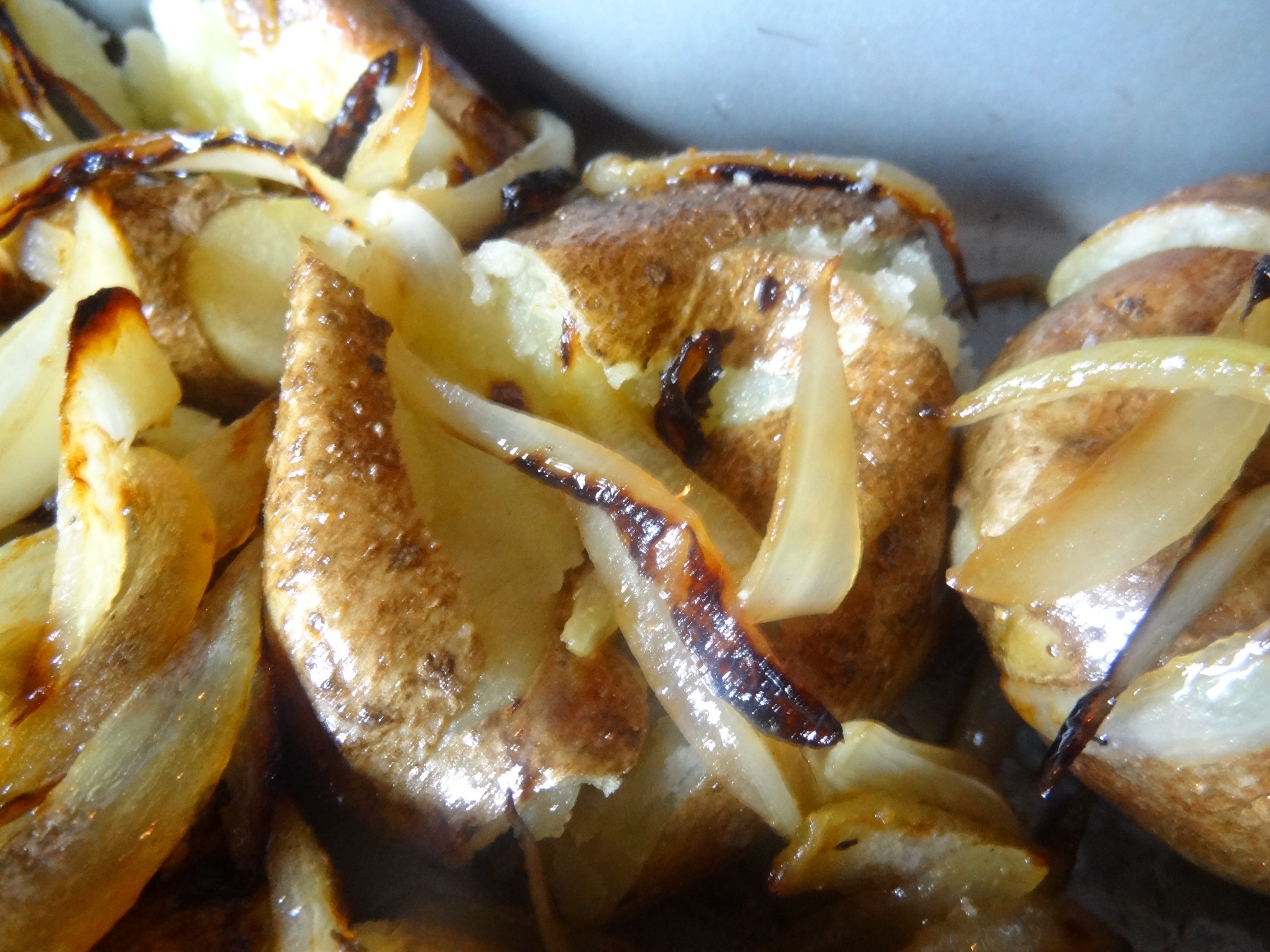
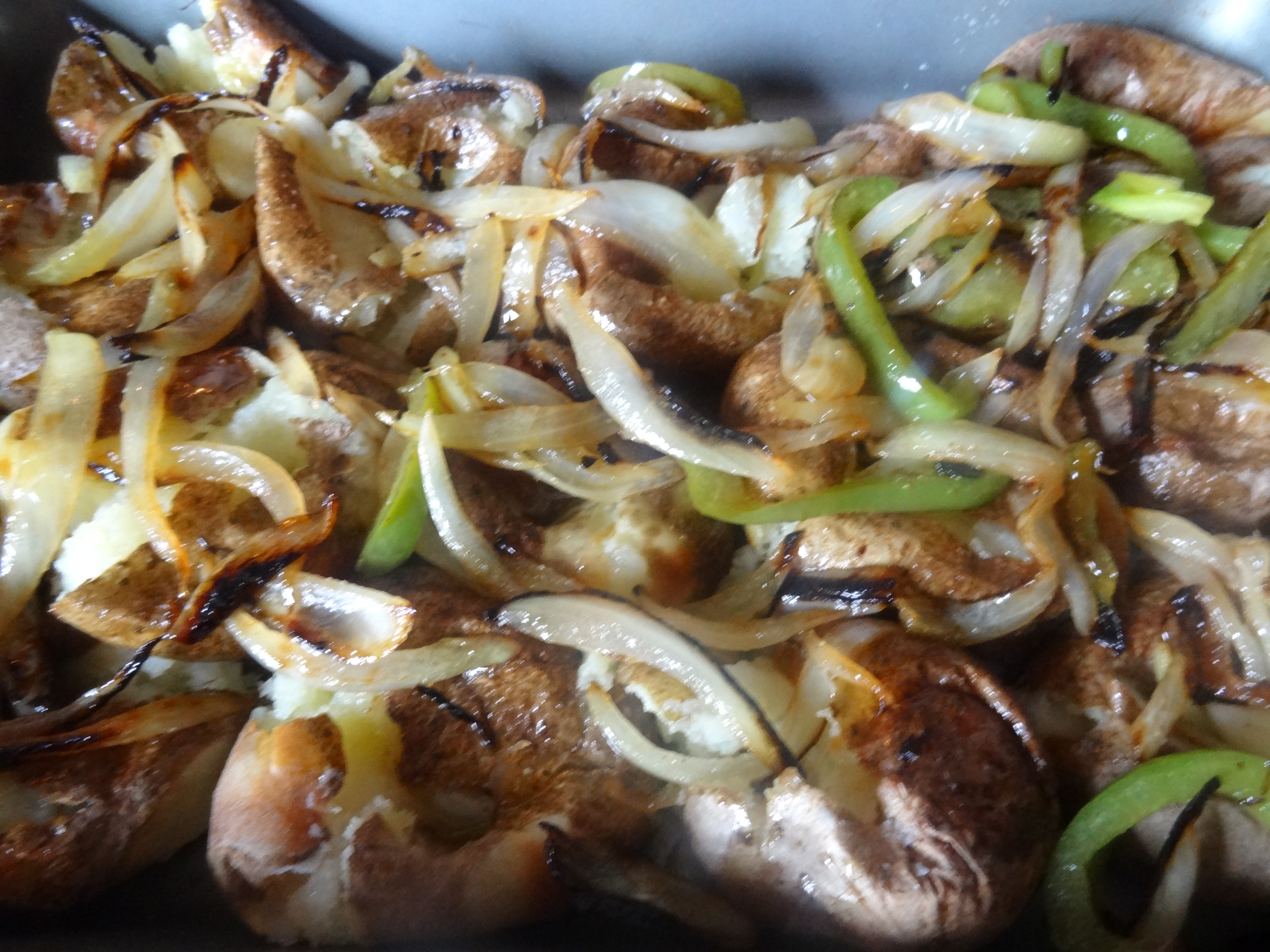
Portuguese Punched Potatoes with Onions and Peppers!

Ingredients

2 lbs small russet or Idaho potatoes

1 tsp salt

1 tsp pepper

2 large cloves chopped garlic

2 large sliced onions

1 large sliced pepper

1/2 cup of olive oil

1 tsp vinegar

Instructions:

Wash the potatoes, remove and blemishes and pat dry. Pierce with a fork in a couple of spots. Coat with a sprinkle of salt and cook at 400 for 1 hour. (I cook along side the chicken)

Meanwhile saute the onions and peppers in olive oil until translucent. Add salt, pepper, and  garlic. Let the cook for 5 minutes. Add the vinegar and let cook for another 5 minutes for

the vinegar to evaporate. Add more salt to taste. Set aside until the potatoes are cooked.

When the potatoes are ready. Punch them down with your fist or a meat mallet until they “POP” open. When ready to serve, pour the onions and peppers over the potatoes. Add more Olive oil if needed.

♥♥♥♥♥♥♥♥♥♥♥♥♥♥♥♥♥♥♥♥♥♥♥♥♥♥♥♥♥♥♥♥♥♥♥♥♥♥♥♥♥♥♥♥♥♥♥♥♥♥♥♥♥♥♥♥♥

Breaded – Baked Pork Chops

Ingredients:

6 center cut pork chops

1 tsp salt

1 tsp pepper

1 tsp garlic powder

1 tsp paprika

2 eggs

2 cups flavored bread crumbs

Cooking Spray

Instructions:

Season the pork chops. Coat a large sheet pan with cooking spray. Beat 2 eggs with 1 tsp water in a small bowl. Place the bread crumbs in a medium bowl. Coat each pork chop with the egg wash and then coat with the bread crumbs.

Place on the sheet pan and cook for 20 minutes at 350 turn them over and cook for another 20 minutes or until golden brown.  Serve

♥♥♥♥♥♥♥♥♥♥♥♥♥♥♥♥♥♥♥♥♥♥♥♥♥♥♥♥♥♥♥♥♥♥♥♥♥♥♥♥♥♥♥♥♥♥♥♥♥♥♥♥♥♥♥♥♥

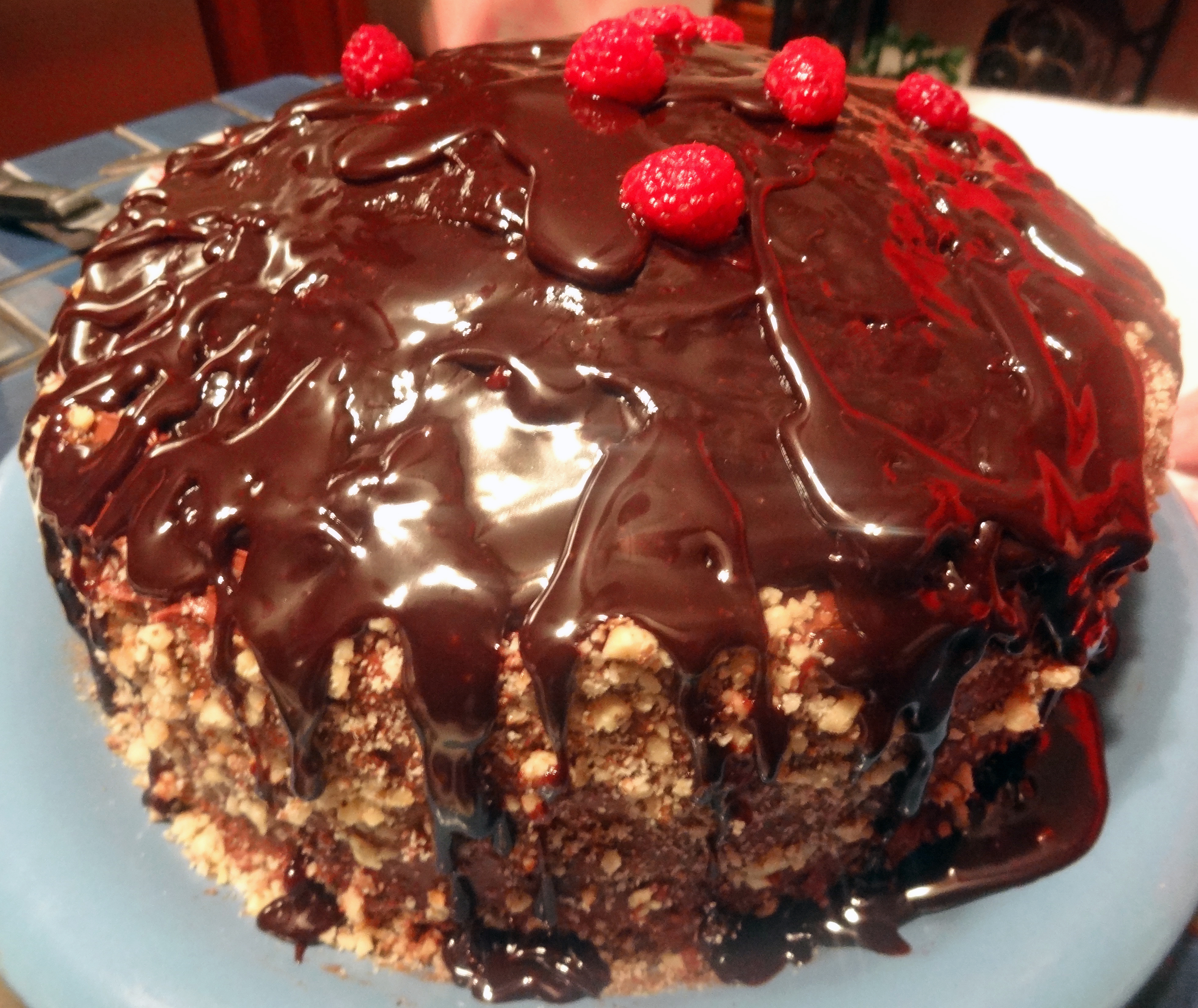
Double Chocolate Raspberry Cake

1 package of Chocolate cake mix

1 small package frozen raspberries

6 oz raspberry Jelly

1 package semi sweet chocolate chips

1/2 cup heavy cream

Fresh raspberries for garnish

Chopped walnuts, pecans or almonds for garnish

Instructions:

Prepare the round cake as per package directions and let cool down completely. Meanwhile, cook the frozen raspberries with the Jelly in a small saucepan. Let the raspberries reduce to a thick puree and let cool. Prepare the chocolates sauce by placing the chocolate chips and cream in a double boiler and mix until creamy. Slice the cake into desired layers.

Spread the raspberry mixture between layers. Top with chocolate sauce. Coat with nuts and garnish with fresh raspberries.

Portuguese Almond Tart – Tarte de Amêndoa


Here’s an easy dessert to make for your Valentine!  I’ve posted the recipe both in English and Portuguese.

It took me a while to translate the recipe.

This is my Valentine’s gift to all of you! Enjoy!

Happy Valentine’s Day!


Ingredients for crust:

1/4 cup of Granulated Sugar

1 egg

1/4 cup Butter

1 cup flour

1/2 tsp Baking Powder


Ingredients for Almond Filling:

1 1/4 cup Honey Roasted Almonds

1/2 cup sugar

1/2 cup butter

2 oz of whole Milk

_________________________________________

Instructions:

Step 1:

In a small bowl mix the egg and sugar until creamy. Add the butter,  flour and the baking powder and mix well

Mold the mixture into the bottom of a greased 10 inch tart pan. Cook for 10 min at 350 degrees and set aside.

Step 2 : Meanwhile make the filling.

Place all filling ingredients in a saucepan and cook for 5 minutes until creamy. Pour the filling on top of the crust and bake for 30 minutes or until golden brown.

I suggest serving the tart with some Strawberries and Champagne!


In Portuguese

Para a massa:
50g de açúcar
1 ovo
50g de manteiga
125g de farinha
1/2 colher chá de fermento

Para o recheio:
150g de amendoins tostados em mel (ou amêndoa laminada)
110g de açúcar
110g de manteiga
60g de leite

tradicional

Misture o ovo e o açúcar e bata bem.
Junte a farinha, a manteiga e o fermento.
Forre uma tarteira com a massa e leve ao forno pré-aquecido a 180º, enquanto prepara o recheio.

Entretanto prepara-se o recheio: leve ao lume numa caçarola os amendoins, a manteiga, o açúcar e o leite e deixe ferver durante 5 minutos.
Espalhe o recheio em cima da massa e leve ao forno novamente até alourar.

Thanks to this site for the recipe:

http://nosoup-foryou.blogspot.pt/search/label/Doces

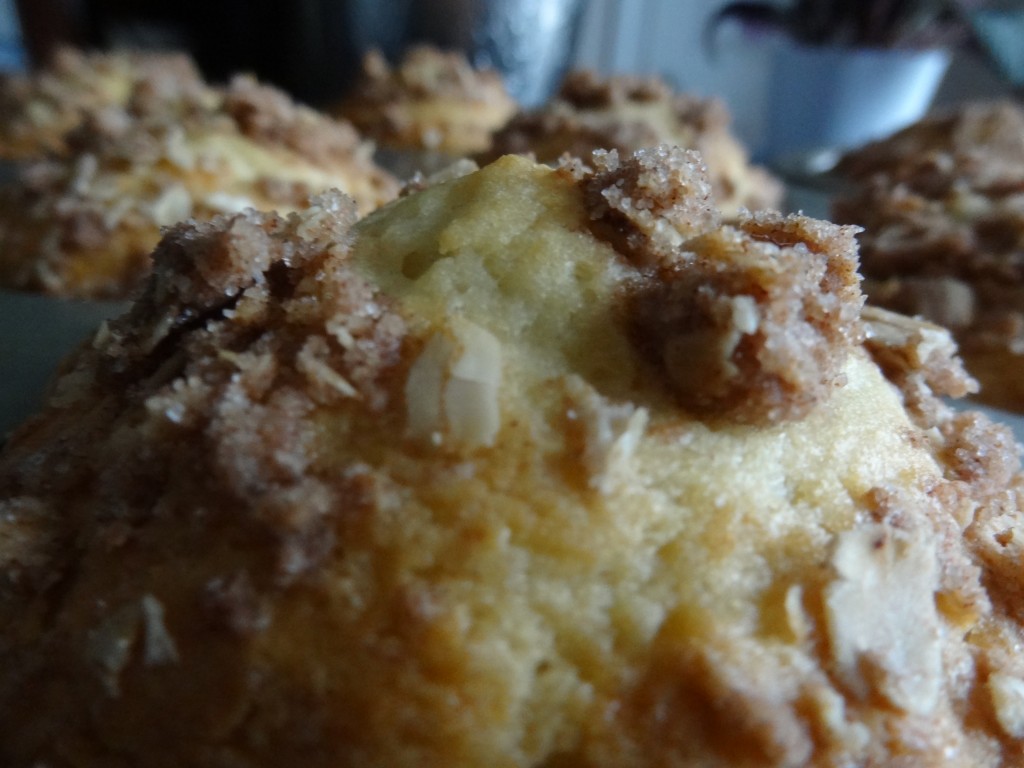
Banana & Yogurt Muffins with Streusel Topping!

Banana Muffins easy to make and delicious! I’ve never thrown out any more old “Bananas” at my house since I began making these muffins.

Banana bread can sometimes turn out heavy and dense but these have the texture of a cupcake. They’re made with only 1 stick of margarine and 1 small container of low fat yogurt!


Ingredients:

1 stick melted margarine

1 cup sugar

1/4 cup brown sugar

2 eggs

1  6 – 8 oz. container Vanilla yogurt (any brand)

2  mashed ripe Bananas

2 cups flour

1 low fat cup milk

1 cup Biscuit mix (any brand)

1 and 1/2 tsp baking powder

1/2 tsp baking soda

1/2 tsp salt


Streusel topping:

1/2 cup instant oatmeal

1/4 cup brown sugar

1 tbsp flour

1/4 cup granulated sugar

2 tbsp melted margarine

1 tsp cinnamon

Instructions:


Step 1:

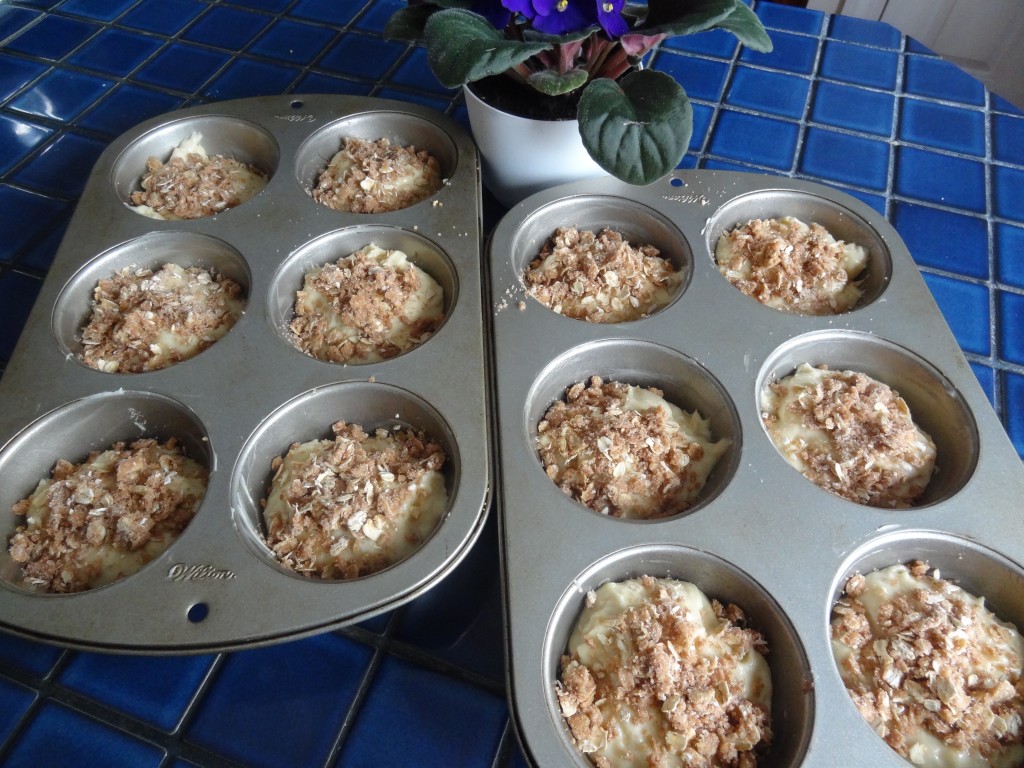
Preheat oven at 350 degrees. Make Streusel topping first, by mixing all ingredients in a small bowl until a crumble forms.

Sift all dry ingredients in a small bowl and set aside.

Step 2:

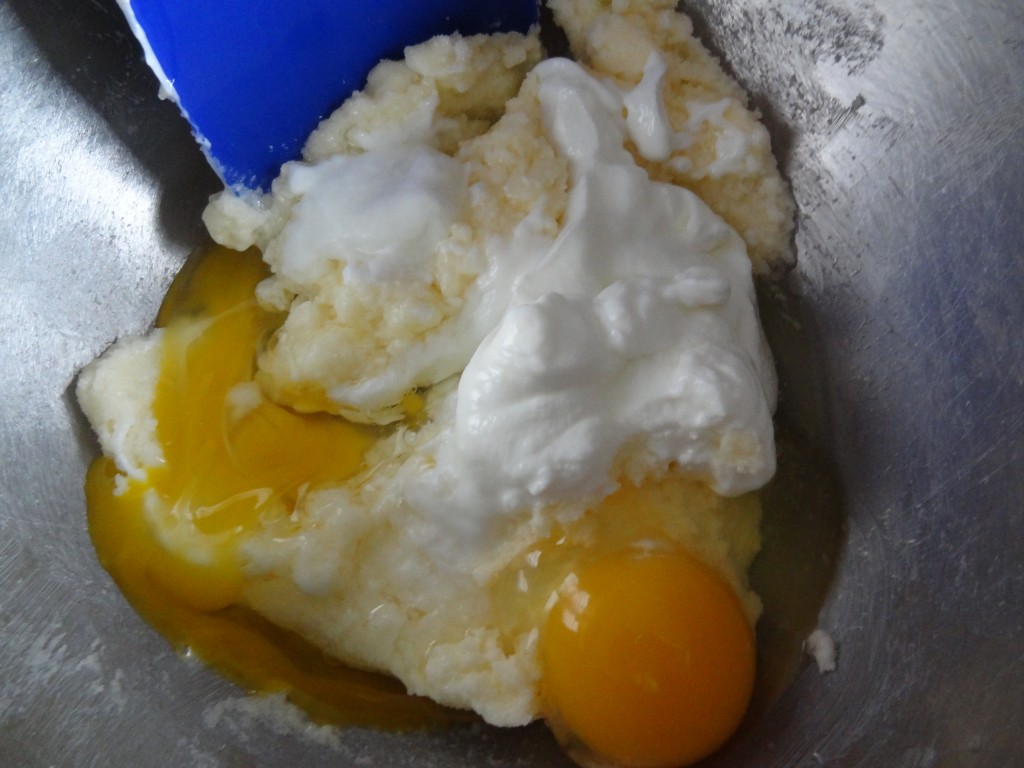
In  a large mixing bowl – mix margarine with sugar until creamy. Add eggs and vanilla and mix well.


Step 3:

Incorporate 1/2 of the mashed banana mixture into the eggs and yogurt mix. Add 1 cup of milk and mix well. Add 1/2 of the flour and mix well.

Add the remaining banana, mix and add the remaining flour.

Step 4:

Pour into large greased 12 muffin pan or 24 small. Top with the Streusel topping. Bake 25 – 30  minutes until golden or when a toothpick comes out clean.

Let cool and remove from pan and serve! Enjoy!


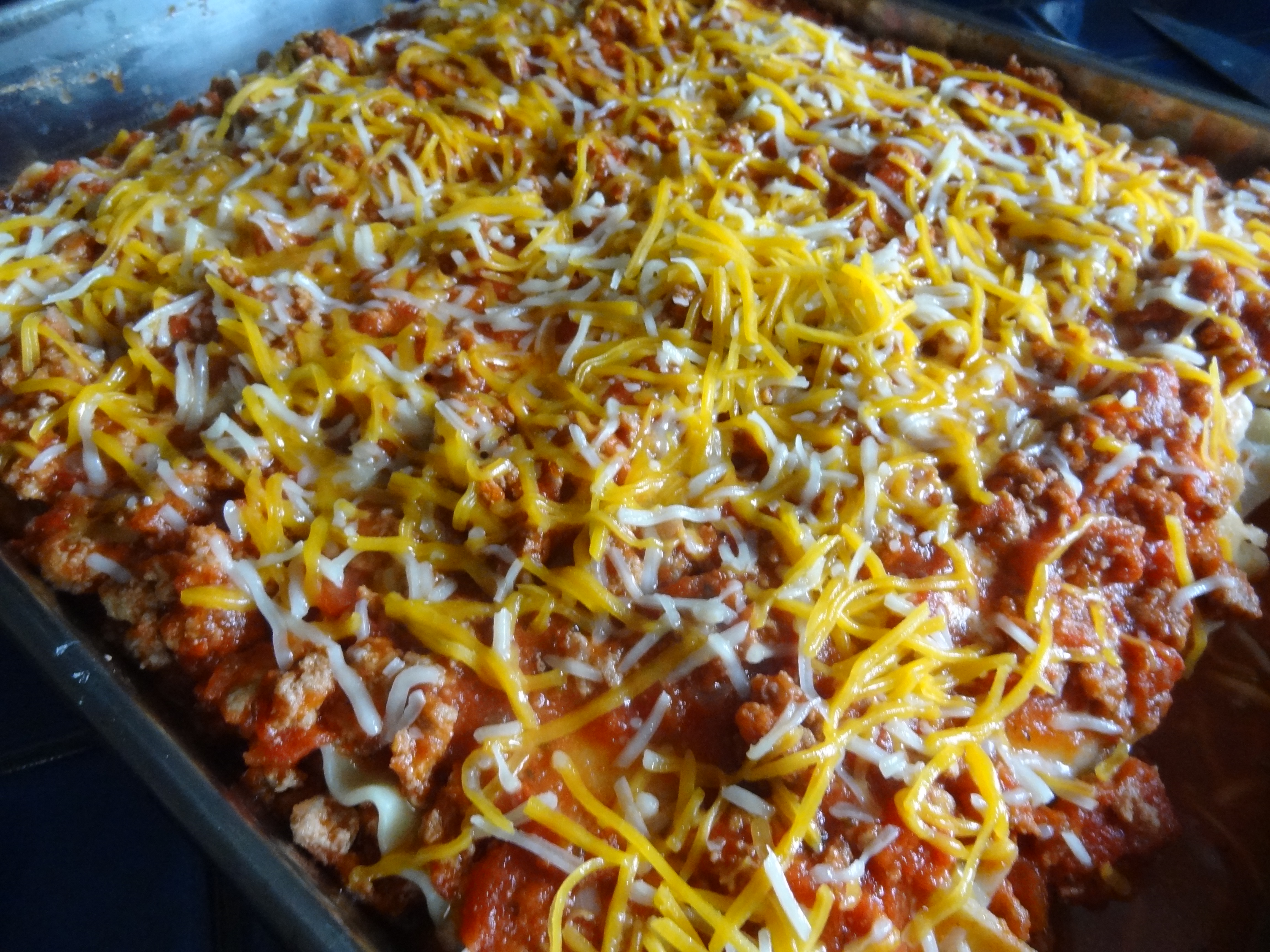
Turkey and Vegetable Lasagna


This lasagna is so hearty and cheesy that once you taste it, you’ll never go back to using ground beef.

By adding Red Wine, to the sauce I discovered that you get a bolder richer flavor and I haven’t used beef since!

What a great way to get your family to eat more vegetables in their diet since there are shredded vegetables in the recipe!

Since most of you know the basic way to make the lasagna, I didn’t take photos along the way until the finished product!

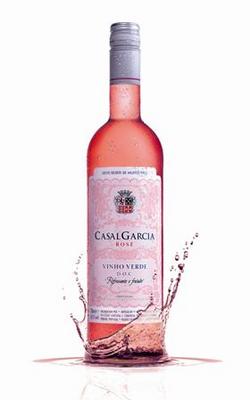
This goes perfectly with Vinho Verde Rose. I discovered this wine a few years ago and I’ve been hooked since! Enjoy!


Ingredients:

2 lbs ground turkey

1 large onion

2 cloves garlic

3 tbsp Olive oil

1 tsp salt

1 tsp pepper

2 tsp dry oregano

2 tsp dry basil

2 28 oz cans of crushed tomatoes (any brand)

2 tbsp tomato paste

1 cup red wine

1 cup shredded carrots (optional)

1 cup shredded zucchini (optional)

1 8 oz package of shredded Cheddar cheese

1 8 oz package of Mozzarella cheese

2 cups part skim Ricotta cheese

1 package of Lasagna noodles (Any brand)


Instructions:

Step 1 :

Saute the onions and garlic with the olive oil in a large sauce pan until translucent. Add the turkey and let brown. Break up the turkey as it cooks.

Add 1 tsp oregano, salt, pepper, 1 tsp basil, tomato sauce, tomato paste, red wine, carrots and zucchini. Let the sauce cook on medium heat for about 20 minutes.

Step 2:

Meanwhile cook the Lasagna noodles as directed and put aside.

Step 3:

Mix the Ricotta cheese with 1/2 of the cheeses, 1 tsp oregano and 1 tsp of the basil in a small bowl, and set aside.

Step 4:

In large lasagna pan – begin layering: 1 layer sauce, 1 layer pasta, 1 layer Ricotta cheese, 1 layer sauce etc. Finish with remaining sauce and top with the remaining shredded cheese.

Cover loosely with foil to let steam escape and let it cook for about 40 minutes at 350.

If you like a crusty cheese top uncover the lasagna for the last 10 minutes.

Let the lasagna sit for 10 minutes and serve! Enjoy!


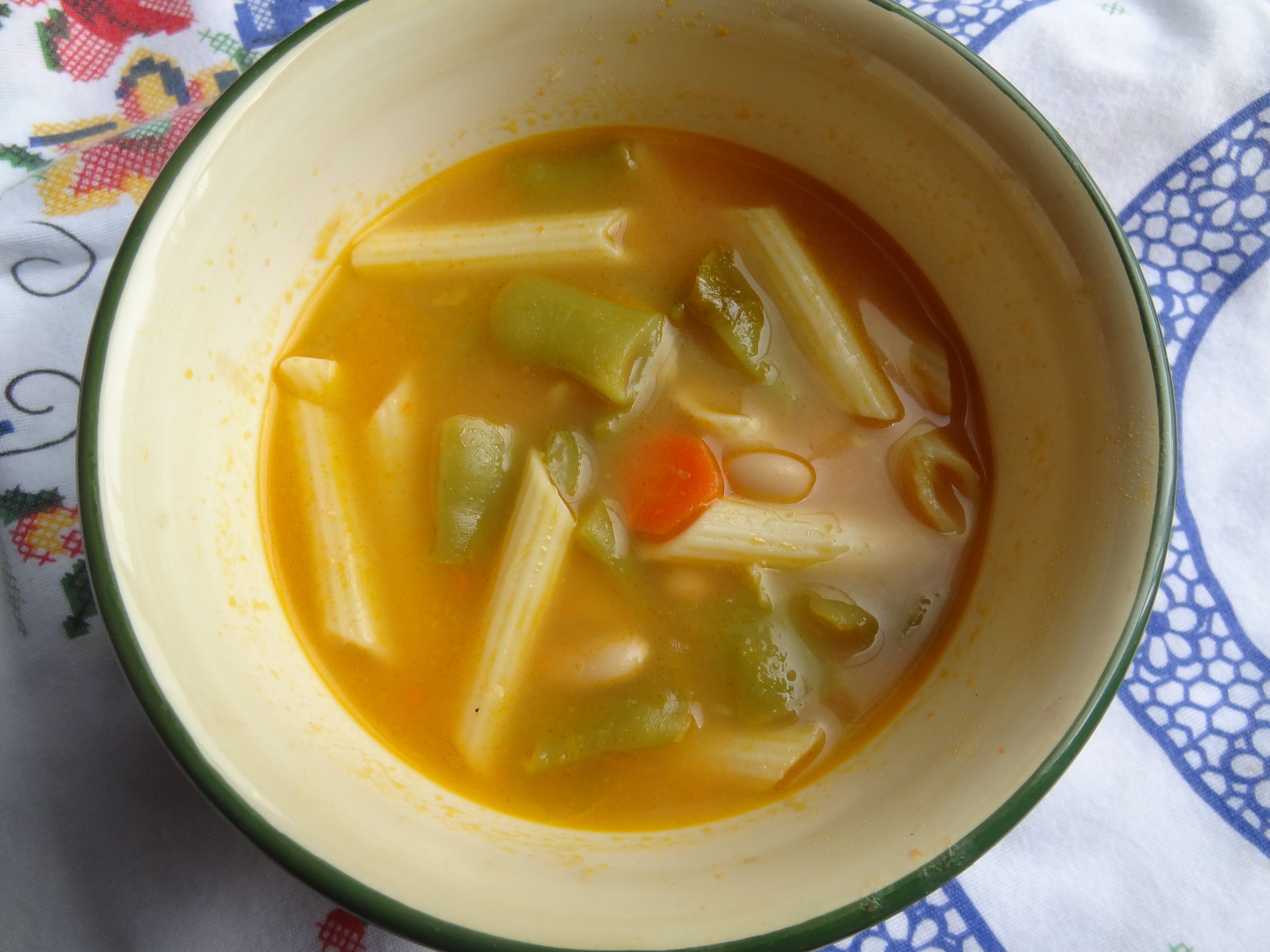
Sopa de Feijão Verde – Portuguese Green Bean Soup


I’ve recently been asked to add more Portuguese soup recipes to this site. Today I made one of my family’s favorite’s to share with you.

This recipe for Sopa de Feijão – Portuguese Green Bean Soup, is a beautifully flavored and hearty soup that you can enjoy all year round!

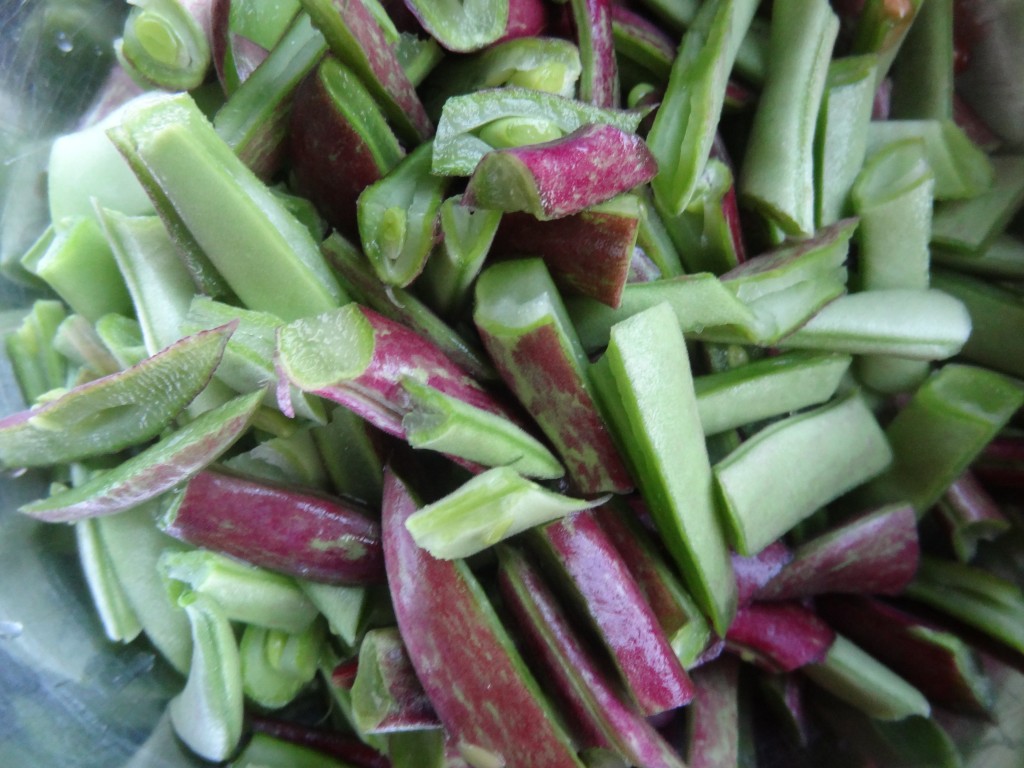
When I make this soup in the summer, I normally use a heirloom variety of green beans from my vegetable garden known as Romanos – also known as Italian green beans.

The flat beans are superior in quality because they have a nutty, meaty taste and smooth tender flavor.

I love this variety of beans and use them in all of my recipes requiring green beans. They’re very easy to grow and require little maintenance other than lots of watering and a some miracle grow!

If you’re not familiar with this type of heirloom green bean ask some of your Portuguese friends who are gardeners and they can help you find some.

In the winter I buy the packages of frozen Italian green beans which you can find in the frozen vegetable section of your supermarket.

In my recipe, I use pasta instead of potatoes which many cooks usually use, but I’m not a big fan of potatoes!

If you prefer to use potatoes, just substitute 2 cups of potatoes instead of pasta but you’ll have to cook and puree the potato along with the vegetables.

This recipe is very easy to prepare since it’s made with the staple ingredients you already have in your kitchen.

Ingredients:

1 large chopped onion

3 large chopped carrots

1 stalk celery

1 large clove garlic

3 tbsp olive oil

1 large bay leaf

1 can white northern beans

1  9 oz box (Romano – Italian) green beans

8 cups water

2 cups chicken broth (or vegetable if you prefer)

1 tbsp salt

1 tsp pepper

2 tbsp any tomato sauce or 1 small ripe tomato

2 cups small Penne or (substitute potato if you prefer)


Instructions:

In a large soup pan, saute the trinity (onions, carrots and celery) in olive oil until translucent. Add the chicken broth, garlic, water, tomato, and seasonings. Bring to boil and cook on medium until vegetables are tender.

Remove pan from heat. Remove the bay leaf and add 1/2 of the can of white beans. Puree the soup with an immersion blender to desired consistency. I like the soup a little chunky but its up to your taste.

Place the soup back on the stove on medium heat. When it comes back up to a boil, add the pasta, green beans, and remaining white beans.

Cover and let it simmer on medium heat for about 20 minutes or until the pasta is cooked. Add more seasoning if desired.

Enjoy with some delicious home made bread.

Here’s the recipe:  Portuguese Pão de Milho !


Cozido a Portuguesa – Portuguese Hot Pot

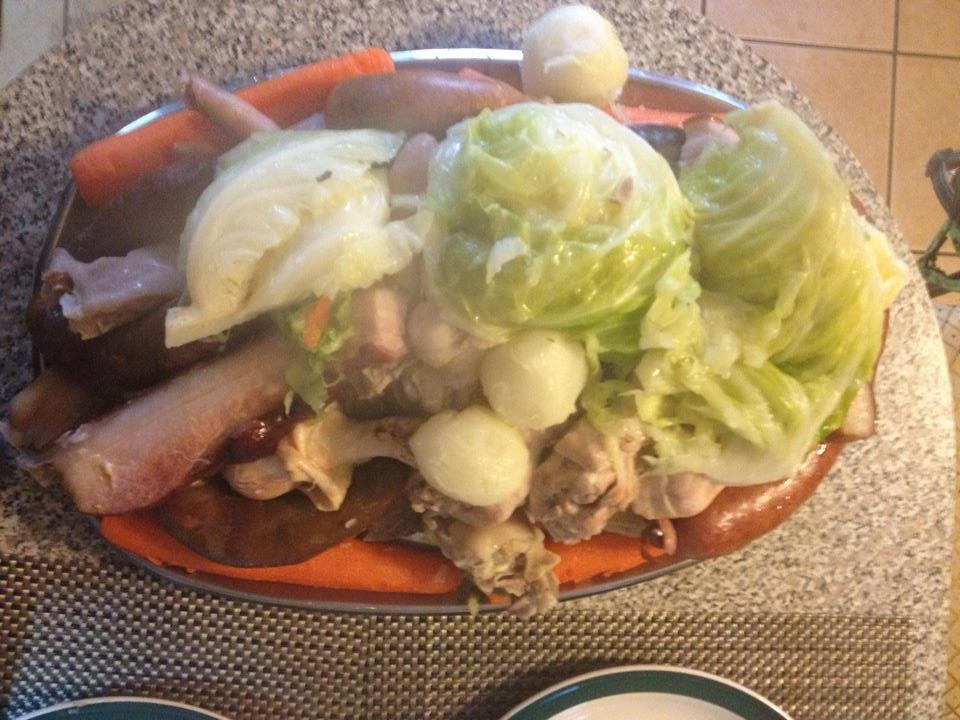
Cozido a Portuguesea (Portuguese Hot Pot) by Nelson de Sousa


Nothing says I love you as much as cooking that great classic, “Cozido a Portuguesa” for your family on a cold winter day!

Here’s a recipe from a great home cook! Nelson, is a Bona fide –  “Portuguese Foodie” like me who puts his heart on the plate.

He loves Portuguese food so much that began a “Portuguese Cooking” page on Facebook and even took a job as unpaid intern – sous chef at: o lagar restaurant – a Portuguese restaurant in Union NJ.

Nelson’s  recipe for Portuguese Oxtail Stew recently won a contest on (rumbameats.com).

Here’s his intro and his recipe below. Thanks Nelson. Enjoy everyone!

Nelson de Sousa – Feb 21, 2011:

Every culture has a tradition of a boiled meat dish. The Chinese call it hot pot, the French call it choucroute and Latin Americans call it sancocho. The Portuguese call it cozido and nothing beats this comfort food in the middle of winter with several inches of snow falling and a negative wind chill!

Of course it doesn’t much snow in Portugal but cozido reminds me of cold Saturdays in my parent’s basement with a big pot of boiling goodness that would steam up the windows, walls and the TV with its warmth. The Portuguese cozido has its origins in the Beira region and is commonly made from shin of beef, pork, and Portuguese smoked sausages and in some regions chicken, served with cabbage, carrots, turnips, rice, potatoes, and collard greens.

Since the origins of this dish are humble (this is a rustic recipe meant to use up the cheaper cuts of meat) it contains ingredients that are unsavory to more “American” refined palates such as pig’s snout, pig’s feet, pig’s ear and blood sausage.  I give no quantities below as it varies by how many people you are serving.

When you go to the store you will have to gauge how much meat to buy for the amount of people you are serving. Similarly,  I don’t give cooking times as this varies by how much meat you are using, which particular cut you are using and the thickness/weight of each meat item. You will have to test periodically with a knife and fork until you reach your desired tenderness.

Some aficionados of cozido prefer the meat less tender while others prefer it falling off the bone. Traditionally a well plated dish will consist of some quantity of one of everything mentioned below albeit in a smaller cut up portion.

If all the various cuts of meat are not available or they disgust you don’t worry all you need to maintain the spirit of the dish is to have a sampling of all the meats (pork, beef, chicken)  sausage and the vegetables.  


Cozido


Ingredients:

  • stewing beef (whole piece not cut up stew meat)
  • pork ribs
  • pork hock,
  • pork snout
  • pork tail
  • pork ear
  • pork neck bones
  • chicken
  • morcela sausage (a Portuguese blood sausage)
  • chourico sausage (the Portuguese equivalent to chorizo)
  • salpicao sausage (a Portugese sausage)
  • farinheira sausage (a Portuguese mealy sausage)
  • lean unsmoked bacon slab, in one piece
  • turnips
  • potatoes
  • white cabbage
  • carrots, scraped
  • collard greens
  • rice (optional)


Directions:

Place all the meat except for the sausages in boiling water enough to cover all and allow it to  cook at a low boil. Add salt to taste. As each item of meat cooks, remove it from the broth into a separate dish.

Please note that different meats will cook differently.  Check your meat periodically for your desired tenderness.

When all the meat has cooked thoroughly place the white cabbage, potatoes, carrots and turnips in the broth and cook.  Remove vegetables as they are cooked and set aside with the meat.

Once again please note that vegetables may cook at varying rates so check periodically. Add collard greens and boil until tender and cooked.  Finally add the sausages and boil until cooked being careful to watch the farinheira as it can explode.

When the sausages are near being fully cooked gently place the meat back into the broth pot, along with vegetables so that all the ingredients can come up to temperature. Place the vegetables last into the pot.

To plate the dish place the cabbage into a platter. Slice the beef, pork, chicken and sausages into manageable 2-3 inch  pieces and place on top leaving the bone in pieces a little bigger so as to not distort the natural shape of the meat.

Garnish the dish with the remaining vegetables around the platter and top with slices of sausage.

Some like to reserve some of the broth and cook some rice in it.  To do so take some broth out before adding all the ingredients back into the pot to reheat.  Remember that liquid to rice ratios are: 1 quantity or rice to 2 of liquid.

Bolos Levedos – Portuguese Sweet Muffins


Bolos Levedos – Portuguese Sweet Muffins or Portuguese pancakes, originated from the Azorean Island of Sao Miguel, Portugal. They’re very popular in Portuguese American communities all around the country.

Since they’re light and sweet, they make great hamburger buns and they’re often shipped to New York City’s gourmet hamburger restaurants! Watch this news clip featuring Portuguese muffins from the 3mealmuffin company.

These muffins are great toasted with butter and jelly or use them as sandwich buns. Many grocery stores in Portuguese communities sell the muffins but you can order them online at Gasparssausage.com.

This great recipe was sent to me by Leonor Santos from Bermuda! It’s so nice to have Portuguese Foodies all around the world who want to preserve our recipes and our culture!

Note that this recipe makes dozens of muffins. Cut the recipe in half to make a smaller batch. However the freeze very well so go ahead and make the whole recipe! Enjoy!

Here’s an article in the Huffington Post about these famous muffins!

Recipe:

5 lb flour
4 cups sugar
1 tbsp salt
6 eggs (room temp)
1/2 pound  of butter
5 cups whole milk

Ingredients to make the yeast:
3 tbsp flour
1/2 tsp sugar
3 tbsp yeast

1 cup warm water

First Step:

Make the yeast mix with the listed ingredients and put it aside for 10 minutes

Heat the milk and butter in a pan until warm and the butter is melted. Set aside.
Beat the eggs, sugar salt for 2minutes. Add the milk and butter and beat for an additional 30 seconds. Mix in the yeast and stir.

Add flour and knead well until a soft bread dough forms. Let the dough rise for 30 minutes.

Form the dough into little balls and them dust with flour.

Let them rest for another 30 minutes. Press them flat to cook.

Cook in a cast iron or heavy skillet on low heat. When one side turns dark golden brown, flip over and cook the other side.

Let them cool. Place in freezer bags to store in freezer.

 Print out the recipe here: Good luck!

Bolos Levedos - Portuguese Sweet Muffins
 
Portuguese
Bolos Levedos - Sweet Portuguese Muffins Recipe from Leonor Santos
Ingredients
  • 5 lb flour
  • 4 cups sugar
  • 1 tbsp salt
  • 6 eggs (room temp)
  • ½ pound of butter
  • 5 cups whole milk
  • Ingredients to make the yeast:
  • 3 tbsp flour
  • ½ tsp sugar
  • 3 tbsp yeast
  • 1 cup warm water
Instructions
  1. First Step:
  2. Make the yeast mix with the listed ingredients and put it aside for 10 minutes
  3. Heat the milk and butter in a pan until warm and the butter is melted. Set aside.
  4. Beat the eggs, sugar salt for 2minutes. Add the milk and butter and beat for an additional 30 seconds. Mix in the yeast and stir.
  5. Add flour and knead well until a soft bread dough forms. Let the dough rise for 30 minutes.
  6. Form the dough into little balls and them dust with flour.
  7. Let them rest for another 30 minutes. Press them flat to cook.
  8. Cook in a cast iron or heavy skillet on low heat. When one side turns dark golden brown, flip over and cook the other side.
  9. Let them cool. Place in freezer bags to store in freezer.