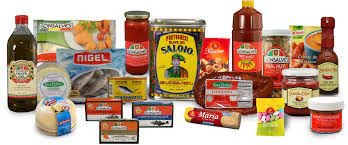
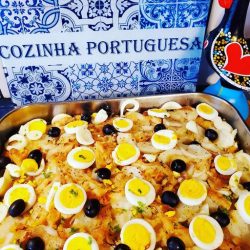
Click on the links below each photo to find the location in Portugal from where the dish is famous! If you can’t read Portuguese just paste the pages URL’s onto Google Translate.
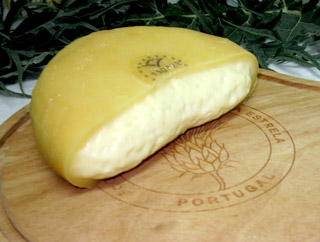
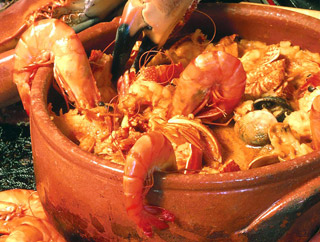
My favorite is “Seafood Rice” and “Queijo Serra da Estrela” What’s your favorite?
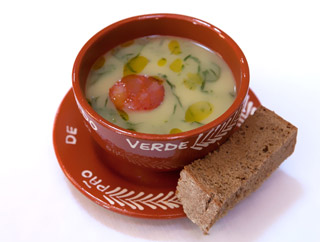
Appetizer Category: Caldo Verde – (Collard Green With Potato Puree)
Article in Western Mass Women’s Magazine by Maria Dias, Contributing Writer-2011
Caramel Flan is a rich and creamy custard-based dessert topped with a layer of caramel.
This classic dessert is enjoyed during the Holiday season in Europe, North America, Latin America and even as far away as Macau and the Philippines. It originated in Europe but became very popular in Central and South America.
Some believe that it was the Romans who first began raising chickens for their eggs. They began cooking the eggs with sweeteners which eventually evolved into the custard desserts of today.
Outside of Spanish-speaking countries and the United States, Flan is sometimes referred to as crème caramel.
Every culture has different variations on the ingredients. My recipe is for Caramel Flan served in Portugal and Spain for Christmas Eve or Christmas day dinner. It took me years to master a great flan, but if you follow my recipe it’s easy. If you cook it, they will come, and you’ll be the hit of the Holiday party!
Recipe:
Flan ingredients:
6 large eggs
3 cups (whole milk) not low fat
1 cup sugar
1/4 tsp salt
1 tsp either; (this is optional: vanilla, anisette liquor, or caramel glaze)
“Carne Alentejana is just like JELLO” my husband tells me;
“There’s always room for Carne Alentejana!” 🙂
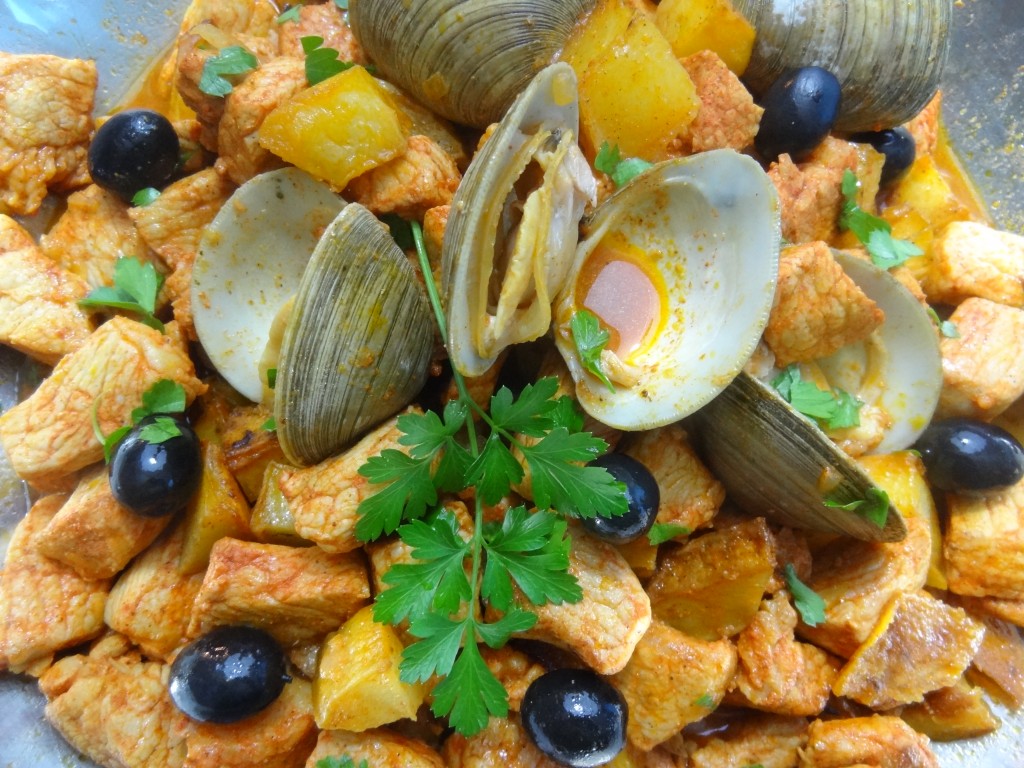
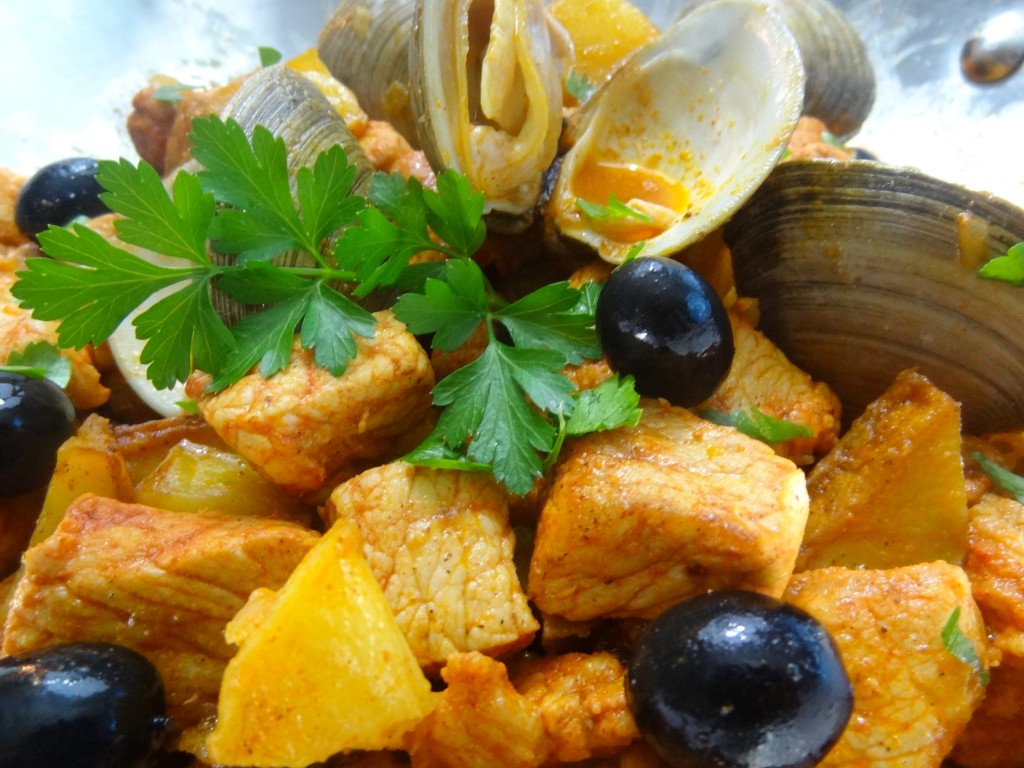
Carne de Porco à Alentejana is one of the most traditional Portuguese dishes found on the menus of Portuguese restaurants through out the world. The dishes name, “Alentejana” meas that the dish comes from the Alentejo region of Portugal.
The origin of its name, “Além-Tejo”, literally translates to “Beyond the Tagus” or “Across the Tagus”. The region is separated from the rest of Portugal by the Tagus river, and extends to the south where it borders the Algarve region.
The name Carne de Porco Alentejana was to distinguish that the pork used in the dish is from that region of the country which produces theBlack Iberian Pig. The meat from the Iberian pig has a higher fat content which produces a more tender and flavorful meat.
Ingredients:
2 lbs pork loin (cut into 2 in cubes)
1 small onion chopped
2 cloves chopped garlic
1 teaspoon red pepper paste
1 – 1 /2 teaspoon Sea Salt
1/4 cup olive oil
1 bay leaf
1 cup white wine or Vinho Verde
1 tablespoon smoked paprika
2 teaspoons Piri Piri or Tabasco hot sauce
4 cups raw potatoes cut into 2 inch cubes
2 lbs small fresh little neck clams
1/2 cup pickled vegetables (Gardeneira)
1 chicken boullion cube
Chopped Cilantro for garnish (if desired)
Olives for garnish
Oil for frying
Instructions:
In a large bowl, season pork with; salt, garlic, bay leaf, paprika, cumin, red pepper, and 1/2 cup of the wine.
Stir well and let the meat marinate for at least 2 hours or leave overnight.
Before you begin cooking the pork, fry potatoes in hot oil until golden brown, season with sea salt and set aside.
Place clams in a bowl with cold water and 1 tsp sea salt. Let them sit for about 1/2 -1 hour in refrigerator so they let the sandiness out of them.
Preheat large skillet or wok on high heat with 1/4 cup olive oil and add onions.
Cook for about 1 minute then add the drained, marinaded pork mixture, (save the liquid). Let meat brown on all sides and cook for about 5 minutes.
Rinse and dry clams and add to the pork with 1/2 cup of wine, bouillon and the leftover marinade. (Add more wine if desired to make more sauce)
Cover and cook on med heat until the clams open.
Taste the pork and add more salt or Tabasco sauce if desired. Add the potatoes into the pork and stir gently. Add pickled vegetables, olives and chopped cilantro for garnish if desired.
Here’s a great video that shows you the classic step by step recipe that is similar to mine.
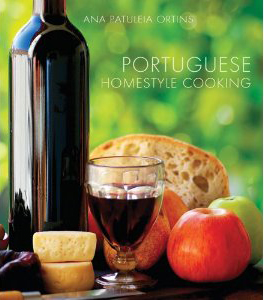
Cook book author Ana Patuleia Ortins begins her cook book’s website; Portuguese Homestyle Cooking with a welcoming phrase; “Welcome to the flavors of Portuguese Homestyle Cooking. Traditional Portuguese recipes combine a blend of flavors and techniques of many other cultures dating back centuries. My book, Portuguese Homestyle Cooking, gives an overview of centuries old cultural influences on Portugal’s cuisine.”
When I asked the Author how she was influenced and why she decided to write a Portuguese cook book she responded;
“Like most Portuguese girls, growing up in America, I grew up with a vast influence of Portuguese culture from my family and other Portuguese friends. I had to learn to sew, crochet, cook and clean, etc, etc, etc. Eventually I became a medical secretary, and while raising a family decided to follow my passion and went to culinary school.
The biggest influence for the cook book was my father’s passion for our traditional recipes. I realized when my father passed away that I needed to record these favorites for my children or the real versions, as we knew them would be lost. After the urging of one of my brothers, what was to be a book for my children, became the idea to make a community book which then went on to be what it is today.”
Her original book was first published in 2008, but a new edition with a beautiful new cover was just released in 2011. The book has received great Reviews including the following in the Boston Globe.
Portuguese Homestyle Cooking by Ana Patuleia Ortins
“Startlingly delicious…superb…Ortin’s meticulously assembled collection should be widely welcomed…liberally interspersed with words of wisdom from her ‘Pai’ and classic tidbits of folklore…extremely thorough, addressing not only mainland cooking but Portuguese-American variations and the distinctive styles of the Azores islands…Though often built from just a few ingredients, Ortin’s recipes usually yield spectacular results…. Longer more complicated recipes are just as rewarding.”
–The Boston Globe
Ana has many favorite Portuguese dishes. “I love Pork with Clams, made in the real Alentejo style with massa de pimentão (red pepper paste). I also love Bacalhau com Natas, – but I could go on forever.” She says.
Although Ana hasn’t been to Portugal in a few years, she longs to take a trip back to visit to her homeland along her family and her husband who is also Portuguese and from Graciosa, in the Azores.
You may contact the Author on her website with any questions about her recipes. Free Cook Book Giveaway! … Sign up for Ana’s newsletter this month and just mention ‘Tia Maria’s Blog”. She will give away one cook book to my fans! * (Contest ended Sept 2011)
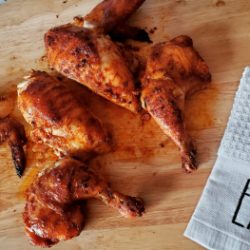
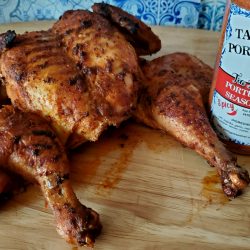
Thank you, Ana for the great cook book and for the following classic Portuguese barbecue chicken that we all love. This recipe is perfect for “tailgating” and to make “party wings”.
Frango Piri Piri – From Portuguese Homestyle Cooking (2008)
Variations of this dish abound, from the simple basting of hot sauce while grilling to the addition of other seasoning including whiskey and a mayonnaide type coating. Mine is a simple one that I have made for years. I hope you like it. You can use small fryer chickens but I find cornish hens are really tasty for this dish. the sweet paprika is a counterpoint to the hot chili. With a lighter hand with the spices, use the seasonings to flavor shrimp and the grill for Camarao Pir Piri.
Serves 2-4
1 tablespoon coarse kosher or sea salt
4 cloves garlic, halved
1 tablespoon sweet paprika
2 tablespoons finely chopped cilantro or parsley
1/4 teaspoon ground black or white pepper
1/4 cup red wine vinegar
1/2 to 3/4 cup olive oil as needed
1/4 cup hot chili sauce (malequeta moida) or 1/2 cup bottled hot sauce
1. Toss the salt into a mortar and using the pestle crush the garlic into the salt forming a paste. Grind in the paprika, follow by the cilantro or parsley and the ground pepper. Mix in the wine vinegar. Drizzle in enough olive oil to make a mushy spreadable paste. Stir in the hot sauce of your choice.
2. Cut the cornish hens from the stem to stern, down the belly to open them up. Turn them over and cut along the back bone so that you cut each chicken in half. You also can just leave them butterflied. Place them in a non-reactive pan. Coat them with the garlic seasoning sauce and turn to evenly season them. Cover the dish and chill over night turning occasionally and at least once before retiring for the night.
3. Bring them to room temperature about 1/2 hour before cooking. Drain and reserve the marinade, you will need it for basting.
4. Place skin side up on the hot grill, basting and grilling for about 15 minutes. Turn the birds over, skin side down, and continue to grill for another 15 minutes. Stop basting about 2 minutes before the birds are done so that any raw marinade applied will have time to cook. If using a thermometer, the internal Temperature of the thick part of the thigh should be 165 degrees F. In any event, when cooking chicken, the juices should be clear. Serve with a bottle of hot sauce on the side for extra dousing. Serve with Sauteed Broccoli Rabe or turnip greens and fried potatoes.
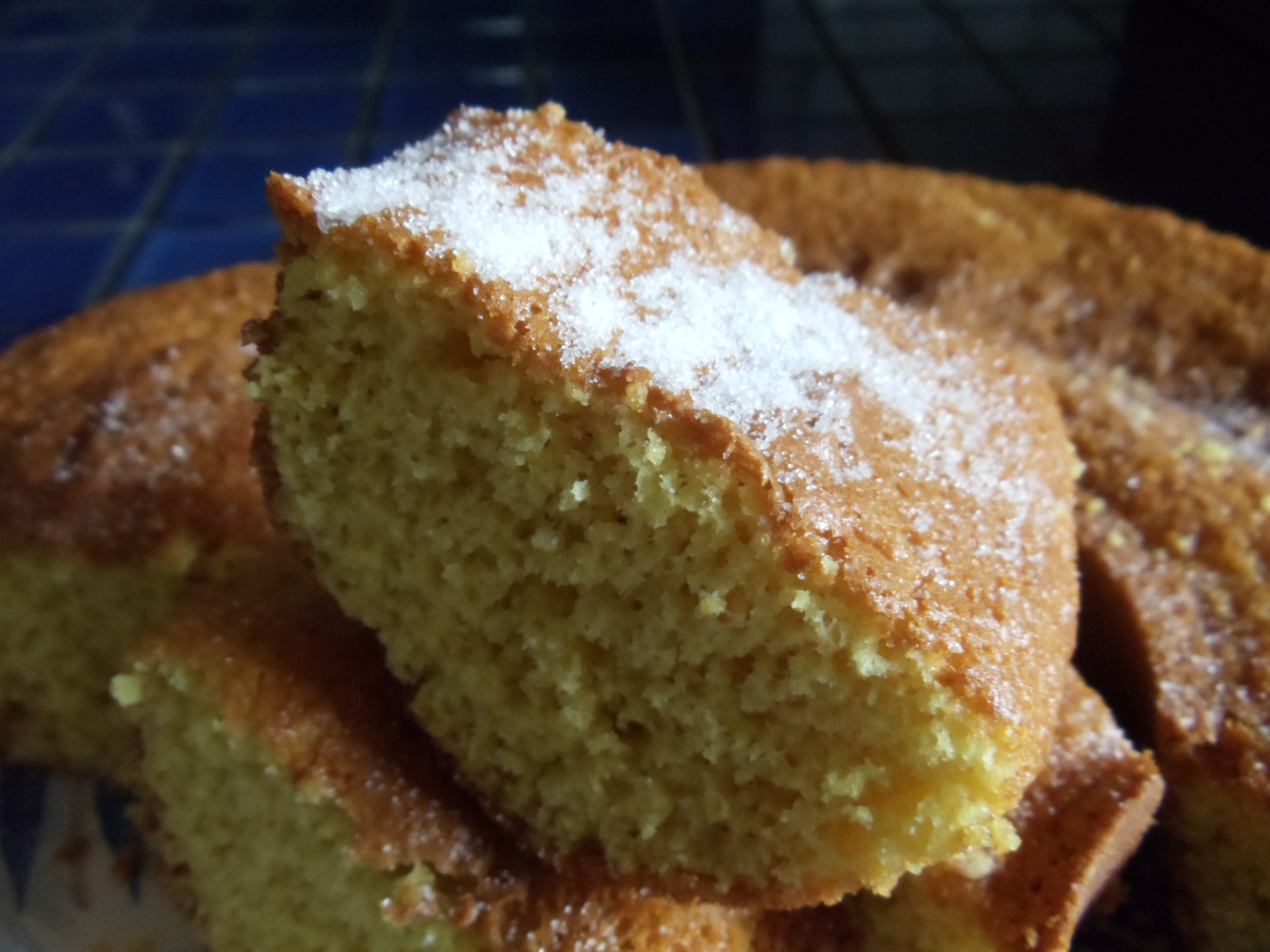
Just in time for Berry season. This recipe is similar to Pao de Lo, (Portuguese Sponge Cake) but the orange flavor really stands out. I was surprised at how easy it is to make. The best part of this cake is that it uses; NO OIL & NO BUTTER which makes it a great low fat dessert. All you need are 6 basic ingredients that most of you have on hand everyday so it’s a great go-to dessert when you need something easy and quick.
Ingredients:
5 eggs (room temp)
1 1/2 cups flour (sifted)
2 oranges
2 cups sugar
1/4 tsp salt
1 tsp baking powder
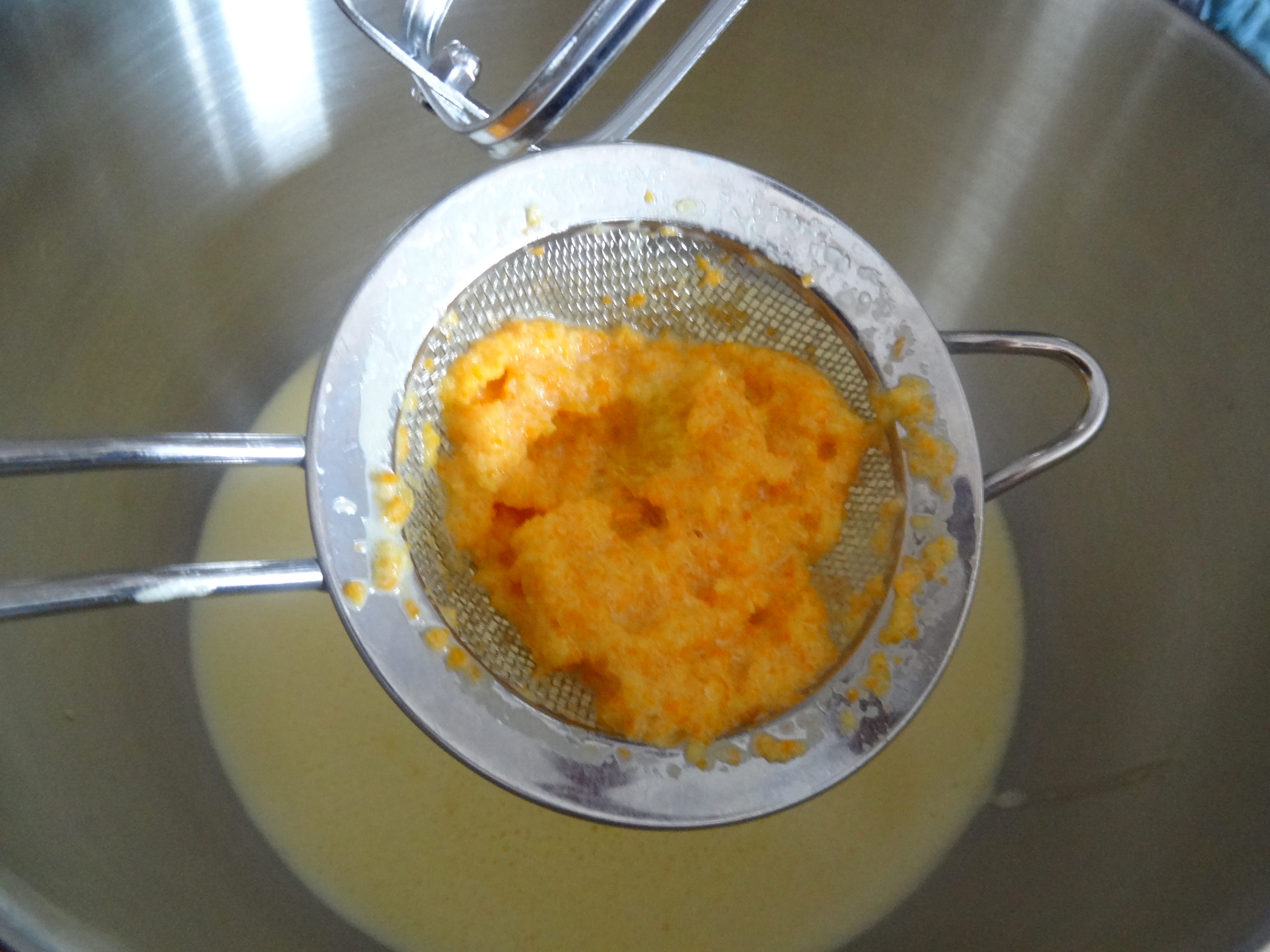
Wash oranges and slice off peels into very thin slices trying not to leave on any white rind. Slice the remaining orange into slices and cut off any excess membrane.
In a food processor, add the orange peels and segments, 5 eggs & salt. Blend into a puree consistency.
Strain the batter through a fine strainer into your mixing bowl. Stir the batter with a fork to sift through stainer.
Discard any remaining segments left in strainer. Add sugar and beat the batter for about 15 minutes until very thick and foamy.
Sift flour and baking powder together into a small bowl and mix well. Add the flour mix to the batter 1/4 cup at a time on low speed until incorporated.
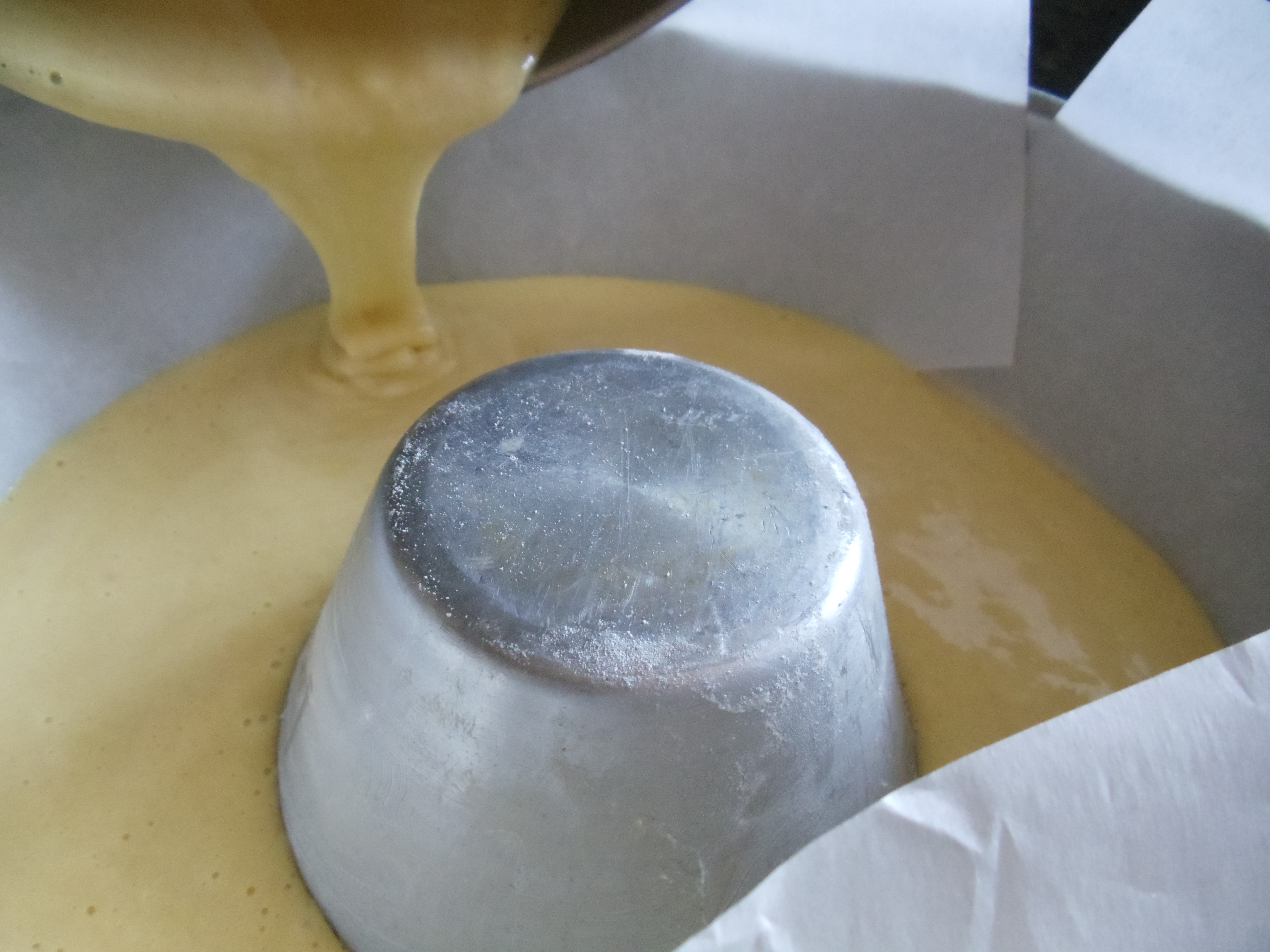
This should only take about 2-3 minutes. Line a fluted cake pan with parchment paper & slightly grease & flour the pan.
Add your batter and bake at 350 for about 15- 20 minutes or until a toothpick comes out clean.
Let the cake cool for about 10 minutes, then invert right side up onto serving plate. Sprinkle with confectioner sugar and serve plain or with berries & whipped cream.
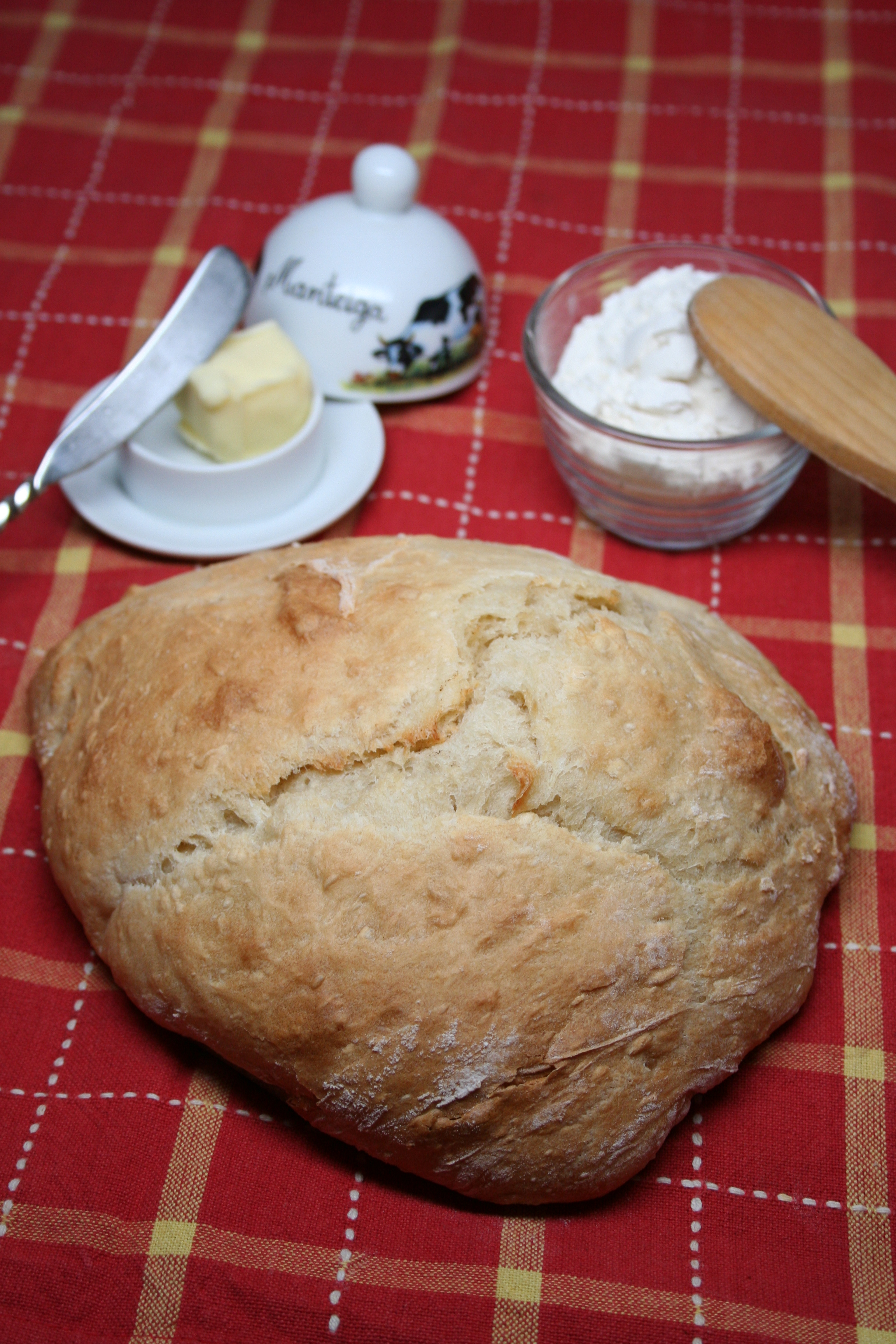
When one of my friends Miguel, who loves to cook Portuguese food, sent me his recipe for Pao Caseiro.
This is his photo of his bread and the wooden spoon he uses to mix the dough using only one mixing bowl. “I never get my hands dirty” he said.
“I grew up watching my mother and her friends cooking, especially deserts. Fortunately she always involved me and my brother in the cooking … and the favorite task was “rapar os tachos, especially the dessert ones! Before moving to the United States in December 2001, I asked my mother to write down my favorite recipe from her. Once in the states I really started missing the desserts and the cooking.Taking advantage of my mother in laws visits to the US, I asked her to teach me how to make bread, plus trouxas de ovos, and over time I started to adapt it and learned from my mistakes.
The secret “orange” ingredient in this Pao Caseiro recipe, was discovered watching a you tube video about pao caseiro da Vidigueira, Alentejo. And a curious fact … my mother was born in evora, so I do love pao Alentejano and grow up with acordas, sopa de cacao e soupa de ovo com pao.”
I made the bread last week and it was delicious of course. I ate far to much of it. So now, I’m happy to share with you.
The next day, I told him that I loved the recipe and that I couldn’t stop eating it! Miguel said he loves it too, especially toasted with butter for breakfast.
Miguel was born in Leiria Portugal and lives in NY with his family. He works AICEP Portugal Global – Portuguese National Tourist Office. A few years ago Meridith Vieira of “The Today Show” had segment on the show which documented her visit to her family’s ancestral home in the Azores. Miquel was her quide. Meredith-vieira-azores .
The video is very interesting and we can all relate to it. This is Meredith’s last week on “The Today Show” and we wish her the best. Merediths last “Today Show”. Miguel is also in this video sitting with Meredith at the Vieira Cafe.
Enjoy the recipe…and let me know how it turns out:).. Tia Maria
P.S. Thanks to Miguel for a great bread recipe!
Here’s a photo of Miquel enjoying Pasteis de Nata in Belem, Portugal.
Pao Caseiro
Ingredients:
7 cups white flour
2 tsp spoons sea salt
2 tsp (pkg) granulated active dry yeast
1 tsp regular sugar
½ cup orange juice
½ cup milk
2 1/2 cups of hot water
Instructions:
Dissolve the sea salt in the water.
Put the flour in a large bowl and add the yeast, sugar, milk, orange juice and the salted water.
Mix all the ingredients with a wooden spoon until you form soft dough. You can use your mixer with a dough hook, or use your bread machine on dough cycle. If dough is still extremely soft add more flour.
Cover the bowl with a warm cloth and let it rise for at least one hour or until it doubles in size.
Flour your hands; place the dough on a floured surface. Knead the dough for a few minutes and separate into 2 parts
Pre heat oven to 400 degrees.
Form the dough into round loaves and place on a lightly floured sheet pan. Let dough rest for 15 minutes.
Cook for about 30 to 40 minutes or until a dark golden crust forms.
Take bread out of the oven and tap with your knuckles. If you hear a hollow sound, the bread is cooked.
Remove bread when fully cooked and serve warm with butter.
Did you know that there’s an old Portuguese saying?
“There are 365 recipes for Bacalhau – one for each day of the year.”
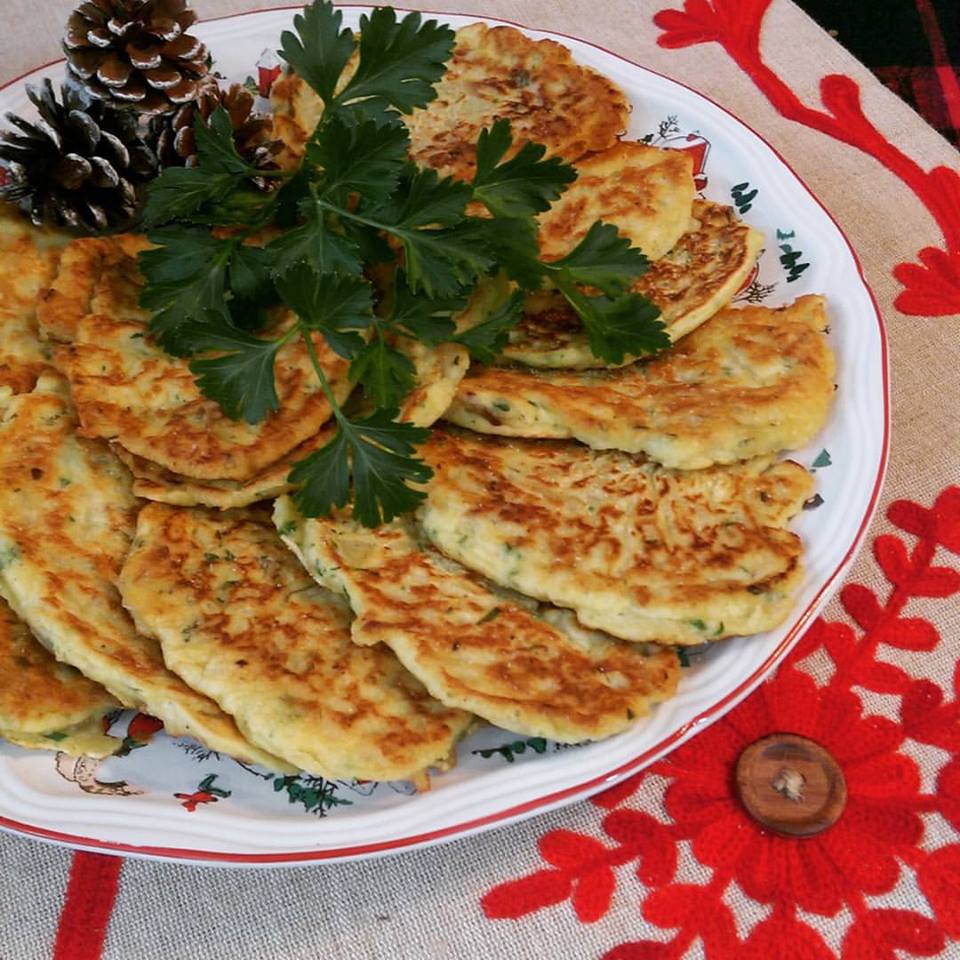
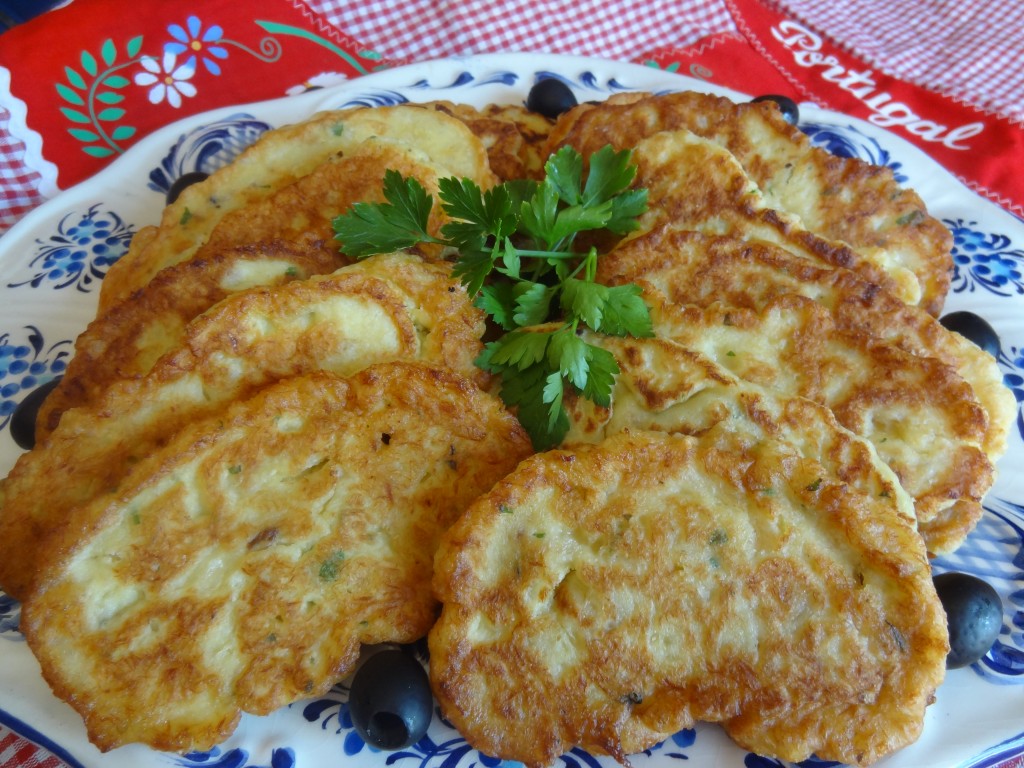
Try this easy and delicious recipe for Pataniscas (Salt Cod Fish Fritters). They are similar to clam fritters made in New England but these are pan fried into a flat shape.
This recipe brings me back sweet memories of my dear mother who taught me how to make them when I was a little girl. We would make these on Sunday mornings for family trips to the beach or during family trips with a long driving distance. We’d stop half way into the trip at the roadside rest stops to enjoy these along with good Portuguese cheese, presunto, bread, and Portuguese wine.
If you love Bacalhau you’ll love these. They’re so simple yet so good, the intense flavor of the Bacalhau, combined with the sweetness of the onions and parsley in the batter gives this classic a taste, which you’ll crave again and again.
Serve them as an appetizer, or as a main dish withmy rice recipe. Oh by the way, make extra because they taste even better the next day! Enjoy!
Here’s our youtube videos. Stop by and subscribe for the latest videos! Our latest video in Portuguese for those of you that requested it.
enjoy the recipe and happy Portuguese cooking!
Ingredients:
1 lb boneless Salt Cod (Bacalhau)
4 eggs
1 1/2 cups flour
1/2 small minced onion (or Scallions)
2 teaspoons fresh minced parsley (or 1 tsp dry)
1/4 tsp black pepper
1/2 tsp garlic powder
1 tablespoon olive oil
salt to taste
1 cup of cold water from poaching the bacalhau
1/2 teaspoon baking soda optional
1/4 cup Olive oil for frying
1/4 cup Vegetable oilfor frying
Instructions:
Hydrate the Cod in water for 1-2 days in cold water in refrigerator changing the water 2 times a day.
Cook the Salt Cod in boiling water for about 5-8 minutes. Let it cool, and then shred it into flakes. Reserve 1 cup of water and let it cool.
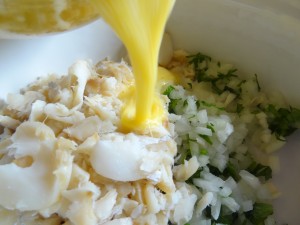
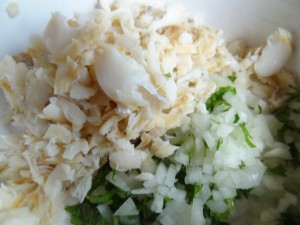
In a bowl, mix onion, parsley, bacalhau, flour, salt, pepper, garlic powder, and the olive oil, and mix well. Beat the eggs with the cold water and add to the bacalhau mix. Stir well to incorporate.
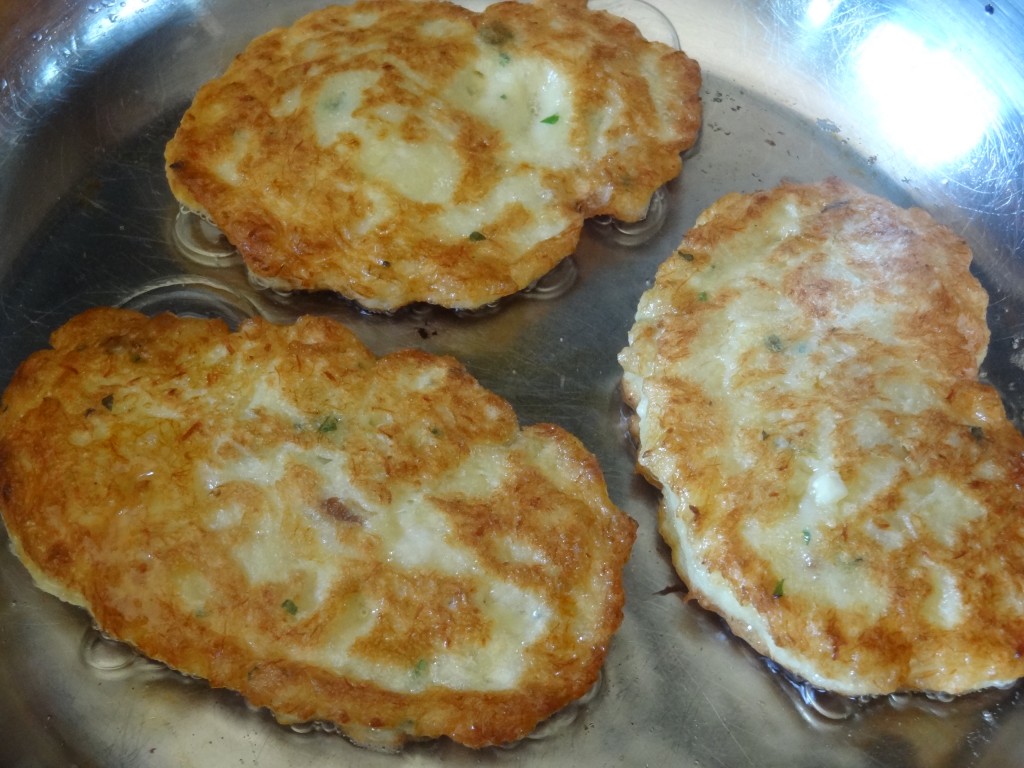
Add more salt and pepper is desired. Note: I like a pancake like texture and appearance so I make a thinner batter. If you like a thicker style flat cake use less water.
In a heavy skillet, add half of both oils to reach 1/4 inch in pan and heat to medium.
Note: (You may use all veg oil, or corn oil if you wish).
Test the oil temp by placing a tiny amount of batter in oil. If batter sizzles it’s ready to fry in. (If you see the oil begin to smoke, lower the heat.)
Spoon silver dollar size pancake batter into pan. Pat them down to cook flat into oval shapes to about 1/4 inch. Cook until golden brown on each side.
Place them onto paper towels or use brown paper lunch bags to absorb any grease. Serve hot or cold….Top with squeezed lemon if desired. Make a double batch because they’re better the next day.
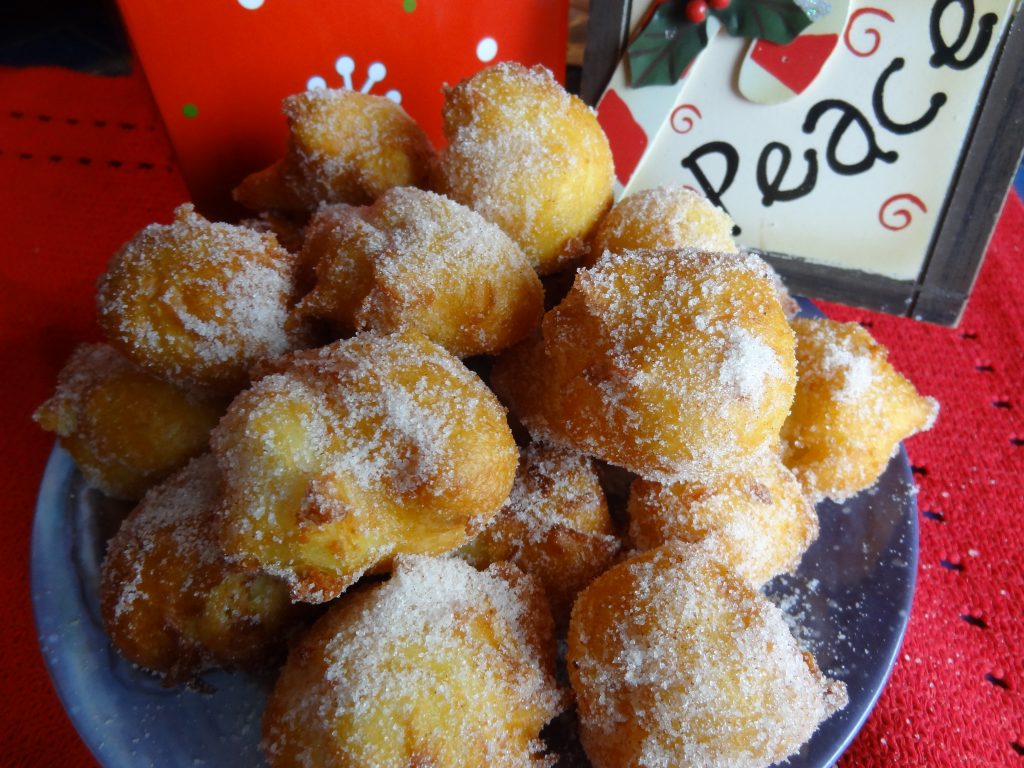
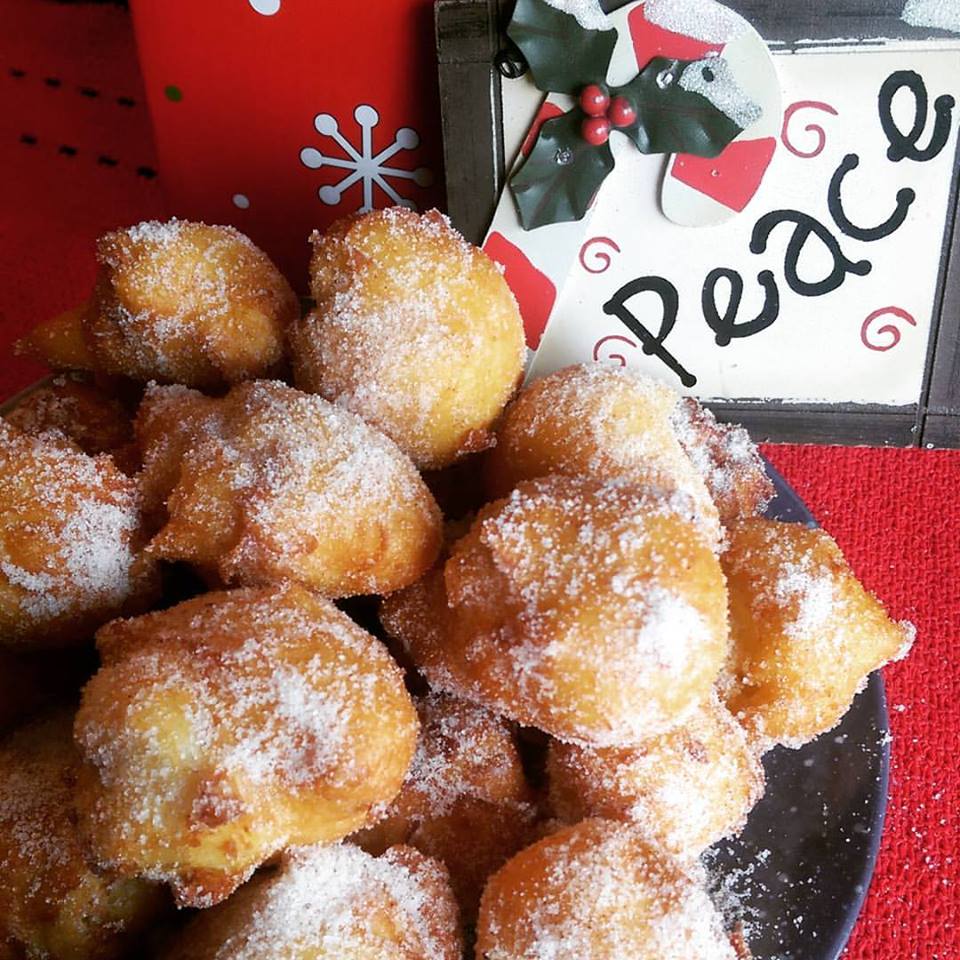
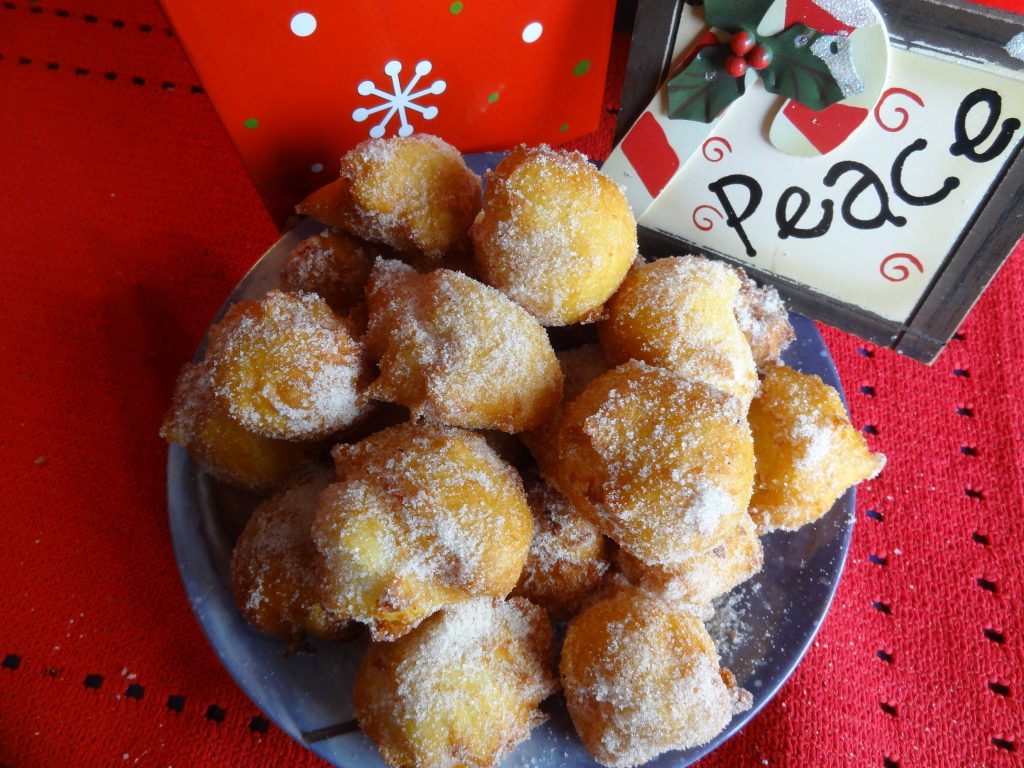
Sonhos, are light and fluffy doughnut like pastries that melt in your mouth! Generally, they’re served around the Holidays but this popular fried pastry is a favorite at almost every Portuguese celebration. They are quite easy to make unlike filhos which are made out of risen dough and have a much longer process time.
Good luck to those of you are making these for the first time! Enjoy!
Sonhos
Ingredients:
6 extra large eggs
2 cups flour
3/4 cup water
3/4 cup milk
1/2 tsp salt
1/2 stick butter or margarine
1 slice lemon rind
Sugar and Cinnamon for topping
Instructions:
In a large heavy pan, place the water, milk, butter, lemon rind, and salt over medium heat and bring to boiling point. Stir in the flour and stir with a wooden spoon until the flour becomes a soft dough which turns into a ball shape that separates from the sides of the pan. This is similar to a basic Choux paste that is used for baking eclairs and cream puffs.
Remove the dough from heat and place into a medium bowl. Let the dough cool for a few minutes. Beat in one egg at a time making a smooth batter.
Heat the oil to 365 degrees. Shape the dough into round doughnuts by using 2 large tablespoons. Fry the dough by 4 or 5 pieces at time until golden brown while keeping the heat at a steady temperature. * NOTE. If you find the dough is turning brown too quickly reduce the heat to a lower setting. They should cook slowly.
**IMPORTANT**Pierce sonhos slightly with a fork all around as they cook. NOTE: If you find they are too dark and still raw in the middle, lower the heat so they cook through at a slower temperature.
Drain on a new clean brown paper lunch bags or on paper towels.
While still hot, roll sonhos in a mixture of sugar and cinnamon.
Watch this video for the demonstration. The recipe varies from mine.
This recipe is for Coscorões – Portuguese fried dough
Receita de Coscorões
Find a Recipe
FIND RECIPES HERE
"Join me! Lets' s share recipes, learn how to cook traditional Portuguese dishes, or chat about our cuisine, culture and traditions. I want to share these recipes to preserve our Portuguese passion for great food and pass them along to the next generation. So come along, Let's cook Portuguese!"
Support Tia Maria's Blog page to promote our Portuguese heritage. SCAN QR CODE:
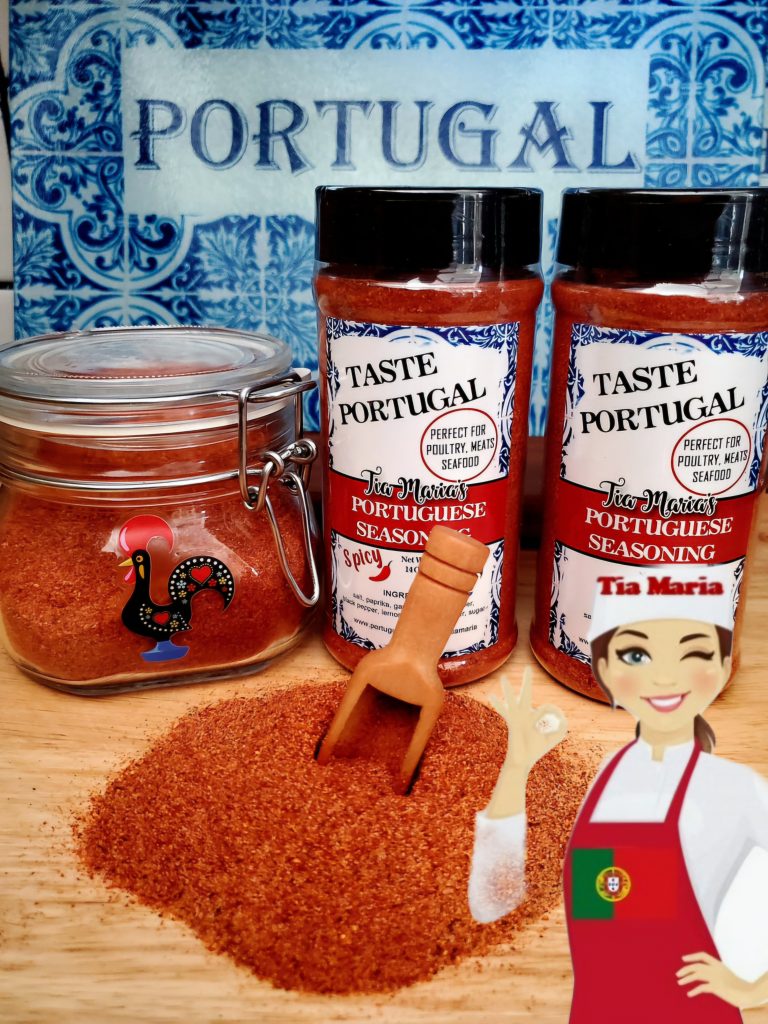
ORDER SET OF 1 REGULAR AND 1 SPICY JAR - FREE SHIPPING IN USA
BUY NOW ON PAYAPAL OR SCAN QR CODE BELOW
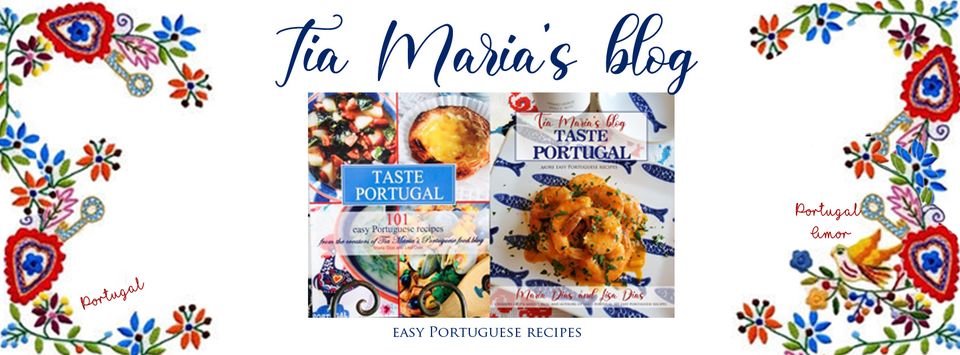
TASTE PORTUGAL COOKS AVAILABLE ON AMAZON ALL AROUND THE WORLD: FREE Prime shipping in USA
COOK BOOKS ARE ALSO AVAILABLE ON AMAZON.CA (CANADA)
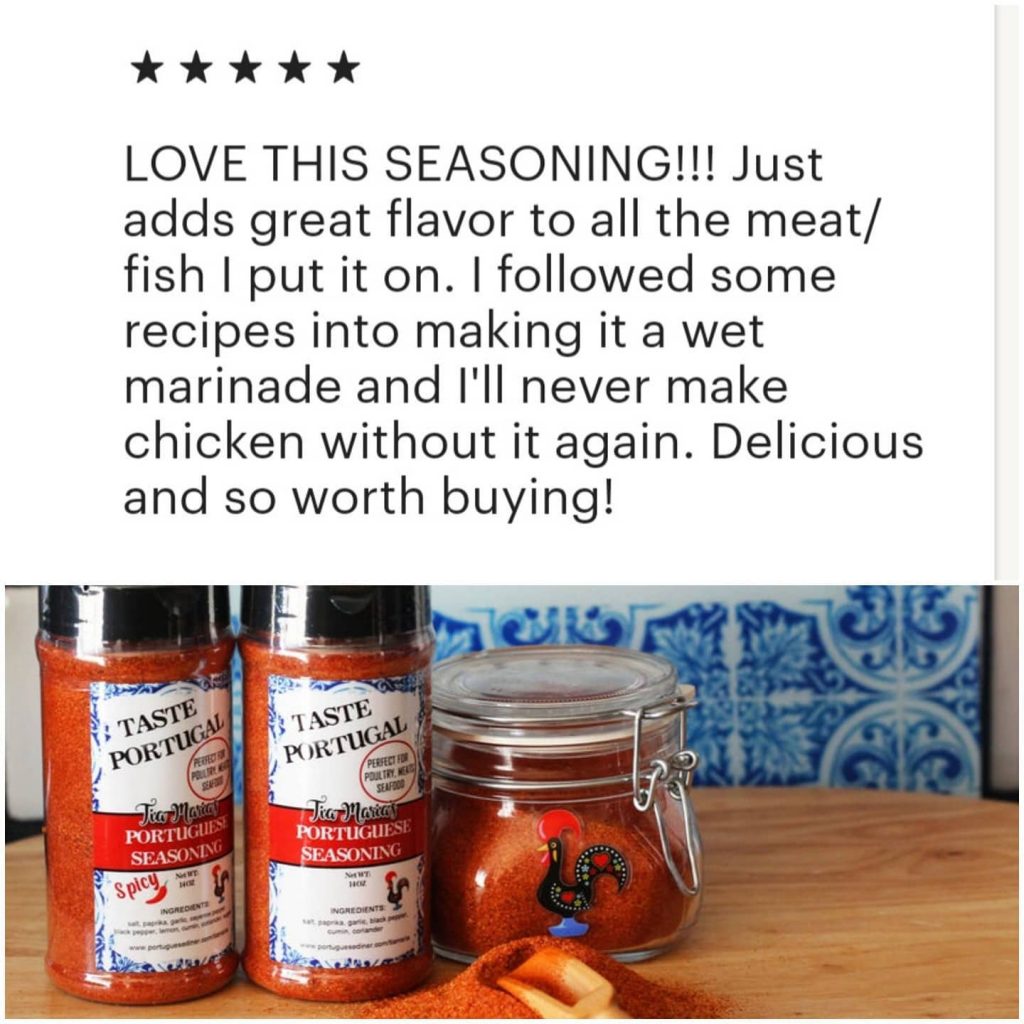
ORDER SET OF 2 TASTE PORTUGAL SEASONINGS ON PAYPAL OR SCAN QR CODE: FREE SHIPPING USA
COOKING PORTUGUESE IS EASY WITH TIA MARIA’S TASTE PORTUGAL PORTUGUESE SEASONINGS
LISBON BLUE ETSY SHOP – FREE SHIPPING IN USA
Shop at Gaspars online for great Portuguese Products
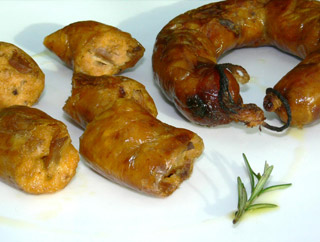
Portuguese Linguica and Chourico
Gift Packs
Gaspars Sausage Company
For nearly a century Gaspar’s Sausage Co., Inc. Has been recognized as the largest manufacturer of Portuguese smoked sausage in the United States. Order today! www.gasparssausage.com or call us at 1-800-542-2038
MY TASTE PORTUGAL SEASONINGS DISTRIBUTOR - GONSALVES FOODS.COM
GONSALVES FOODS
GONSALVES FOODS
The taste of Portugal here in America Your source for authentic Portuguese products We’re proud to offer a wide selection of authentic Portuguese foods from our Gonsalves and Bom Petisco brands as well as the leading Portuguese brands like Saloio olive
0


 Flan is a rich and creamy custard-based dessert topped with a layer of caramel.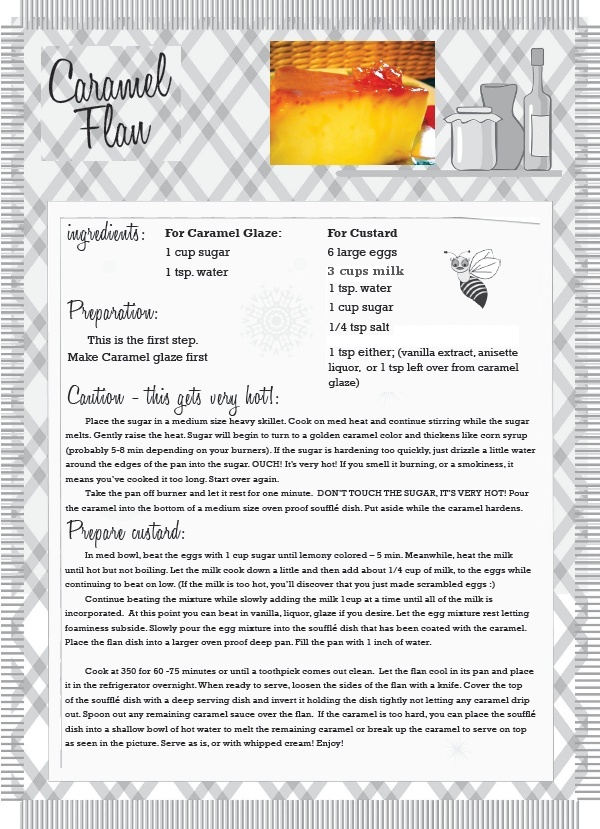









 Now available in Canada – Amazon Canada
 LISBON BLUE ETSY SHOP
 My appearance on RTP Portuguese TV Notícias do Meu País
 No Kid Hungry | Share our Strength Help End Child Hunger in America



















 GONSALVES FOODS