The summer in Portugal is filled with traditional festivals through out the country but June is the month for celebration of the favorite saints. Dia de Santo António – Saint Anthony’s Day is celebrated on June 13th. June 24th belongs to St. John and June 29th to St. Peter. Many Portuguese Immigrant communities around the world still follow these traditions and hold these festivals.
The streets are decorated with balloons and arches made out of brightly-colored paper; people dance in the city’s small squares, and altars, dedicated to the saints, are put up as a way of asking for good fortune.
In Lisbon; the Avenida da Liberdade, has a parade of costumed dancers who dance the street to musical songs called “Marchas”.
There is also dancing, while the highlight of the night is the firework display over the River Douro.
As well as being the patron saint of Lisbon, St. Anthony is also know in Portugal as the “matchmaker saint” and many single women pray to Saint Anthony to find them their mate.
“Santo António, Santo Antoninho, Arranja-me lá um maridinho…” (St. Anthony, my dear St. Anthony, find me a husband…) is one of the oldest and most popular chants in the city.
A flower pot of sweet basil and a love poem is offered as a token of admiration to a perspective suitor. It’s custom for the Lisbon town hall to organize multiple weddings (200 – 300) for lovers from modest backgrounds, which are held in Lisbon cathedral.
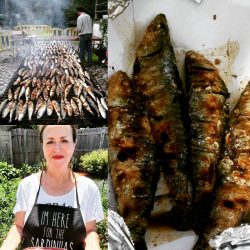
The traditional menu for the festival is; Caldo Verde, Sardinha Assada (grilled sardines), bread and red wine.
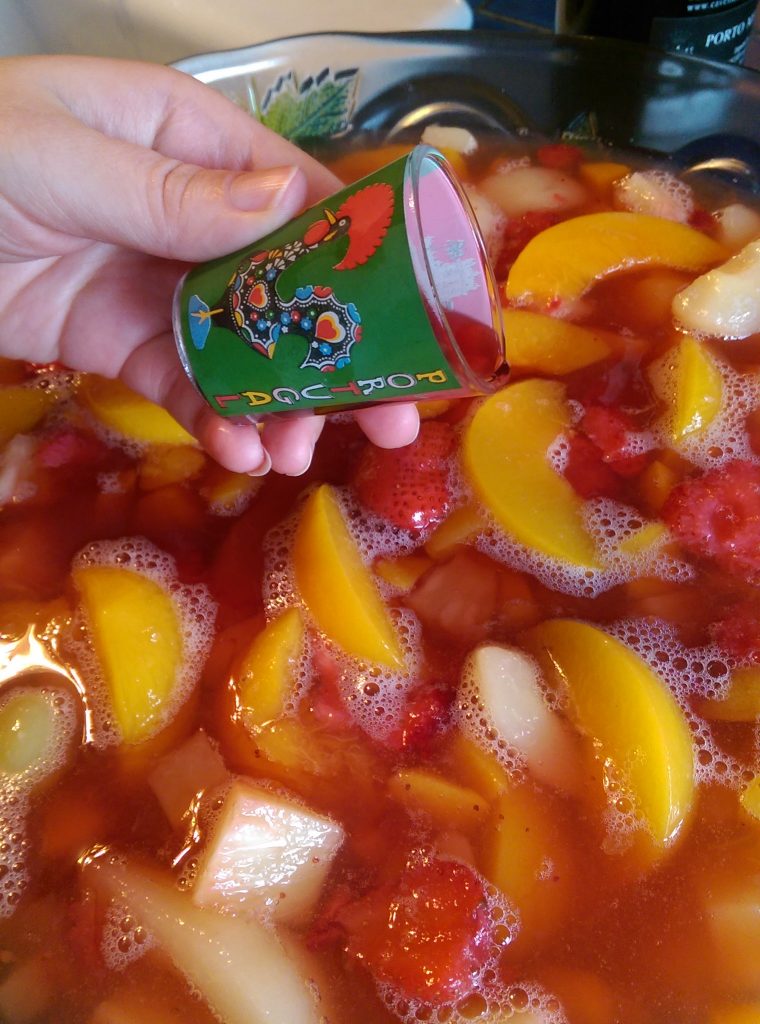
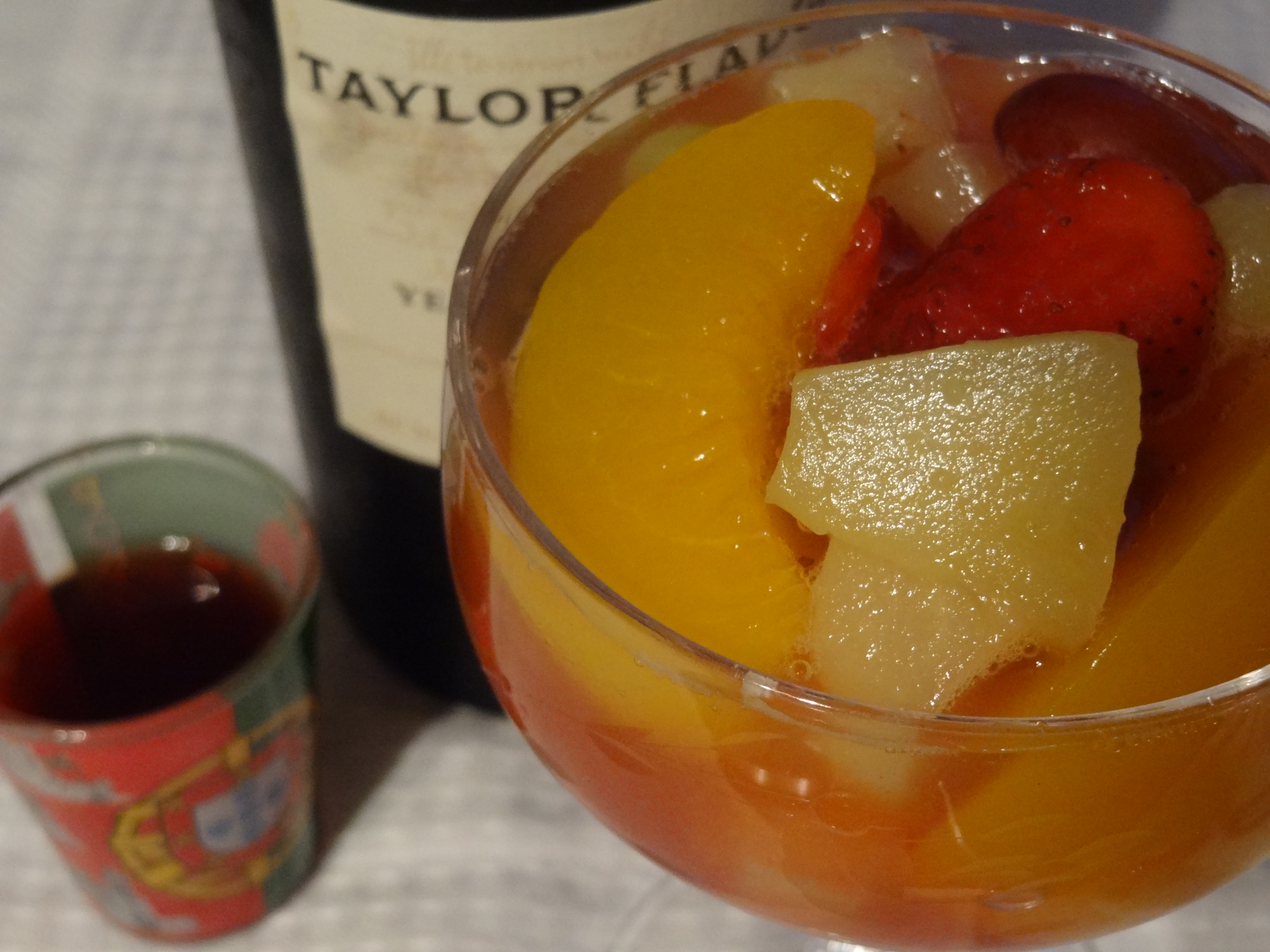
You’ll love this fruit salad for summer picnics, Holidays and for family celebrations. It’s so simple and easy to make, because you don’t have to peel and slice the fruit.
The secret to this recipe, is that you use a packages of frozen strawberries in syrup.
*You may substitute the recipe with low calorie canned fruit, or use any of your favorite fresh fruits.
However, to obtain the rich sweet flavor of strawberries and Port you must use the frozen strawberries in syrup.
*If you want to make this for children, leave out the Port wine, it’s just as delicious!
Ingredients: Serves 12-24
Note: These ingredients are all optional so substitute with your favorite fresh or canned fruits.
1/2 cup Vinho do Porto – (Port wine)
2 cups fresh strawberries cut into slices
1 (16 oz) container frozen strawberries in syrup
1 can chunk pineapple with juice
1 can sliced peaches
1 can fruit cocktail
1 can sliced pears
1 cup grapes
1 – 2 cups chopped cantaloupe (optional)
sliced bananas (optional)
*Note if you want a low calorie option use fruit in its own juice and not sweetened
Instructions: Prep time – 10 minutes
Place all ingredients into a large bowl. Stir gently to incorporate the wine into the fruit.
Place it in your refrigerator or in a cool place for at least 2 hours before serving but it’s better if left overnight in your refrigerator to allow the port wine to infuse the fruit.
When ready to serve, transfer the fruit into a large glass punch bowl. Serve with a ladle into individual glass cups or bowls.
Store in refrigerator for up to 3 days if you have any left over that is! Enjoy!
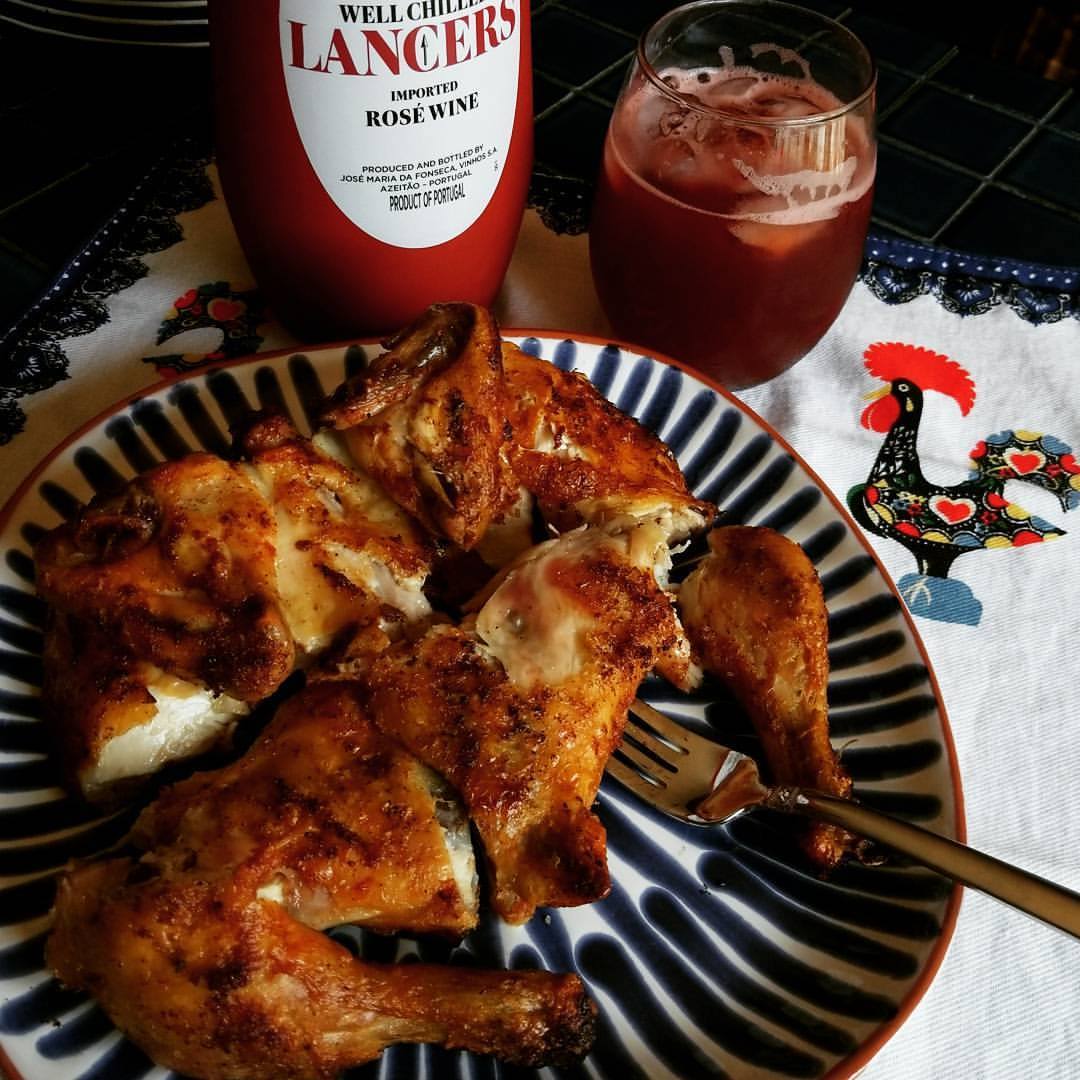
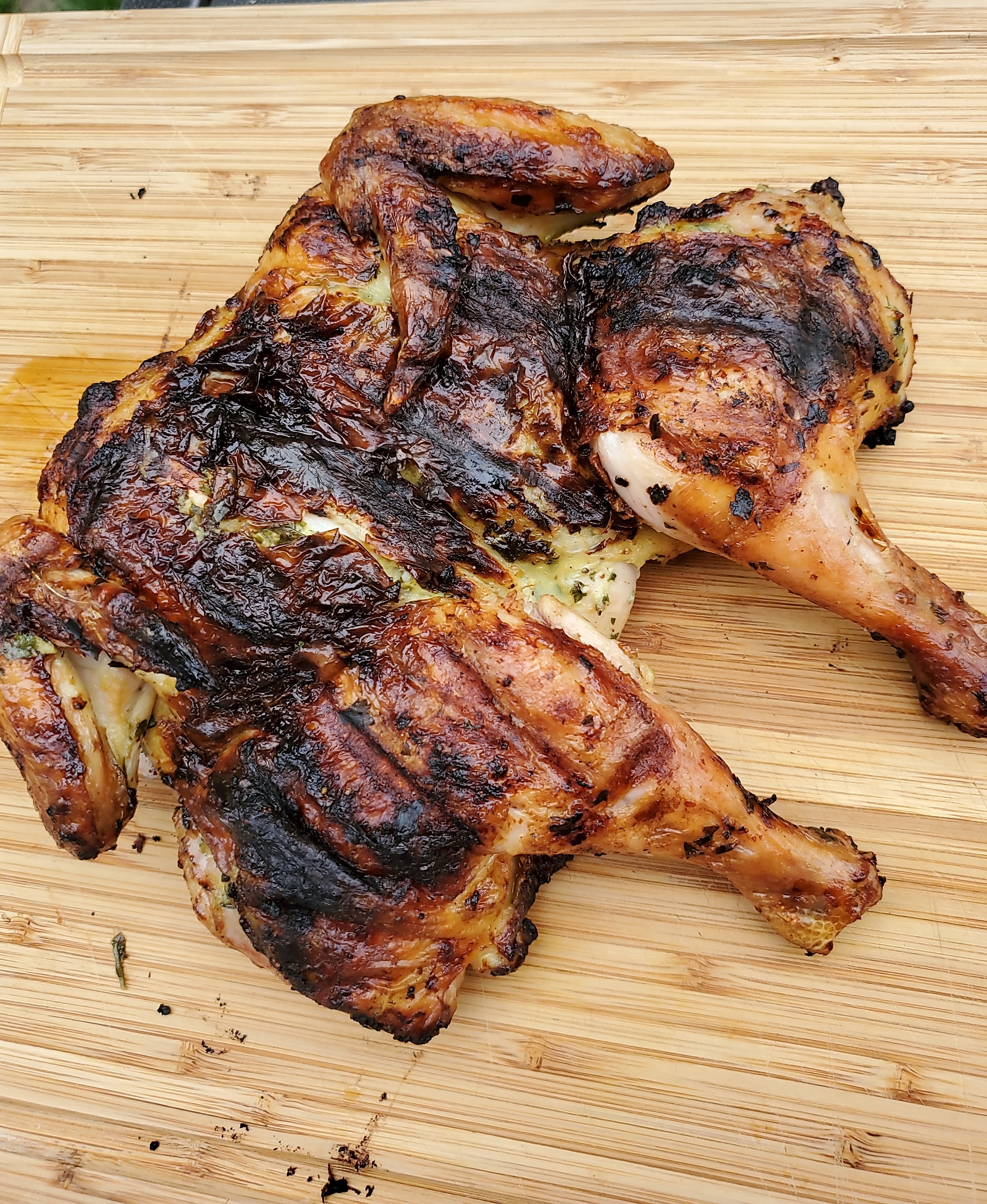
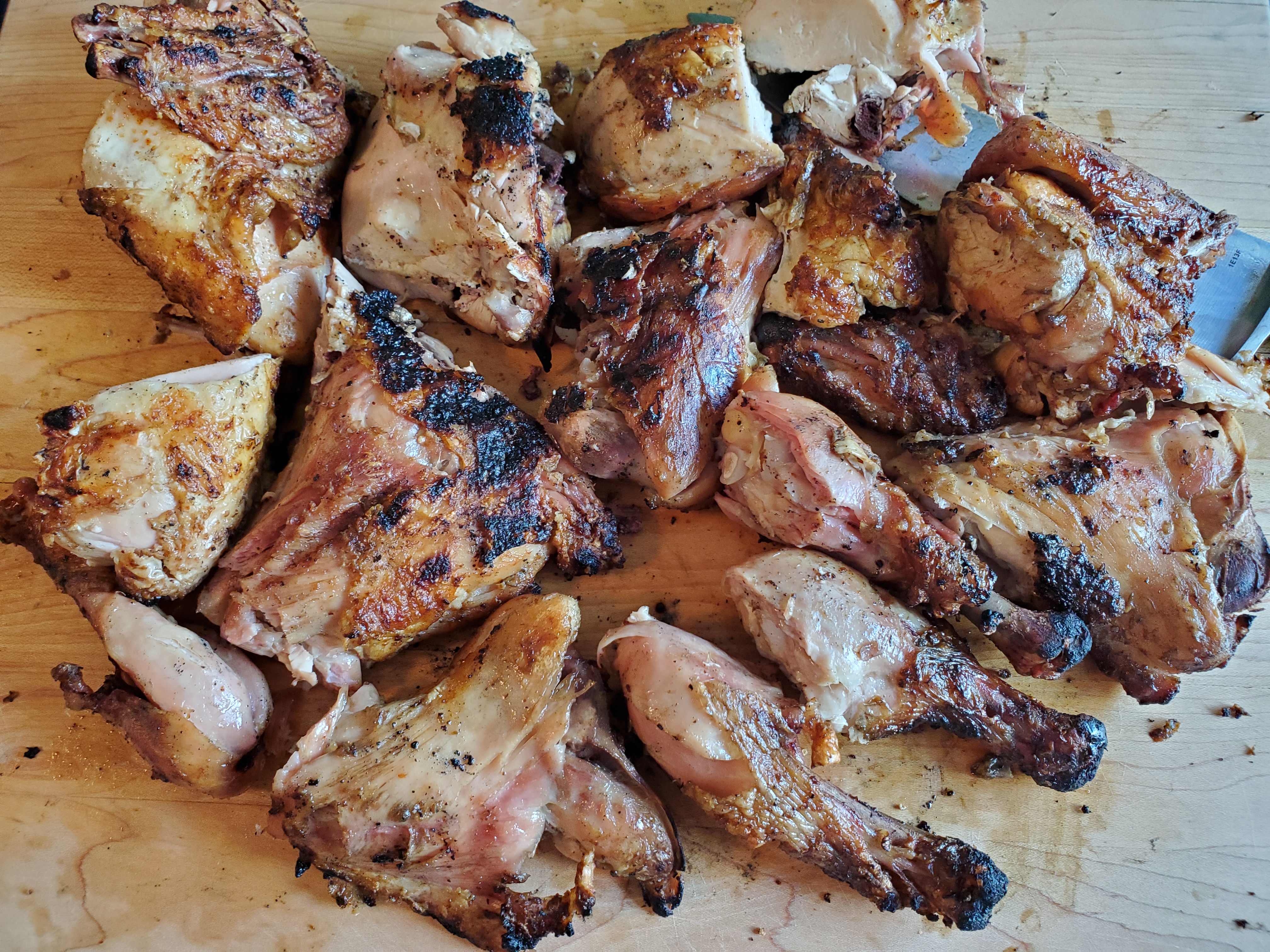
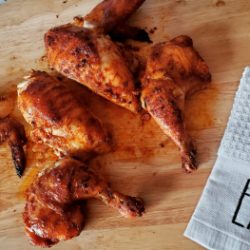
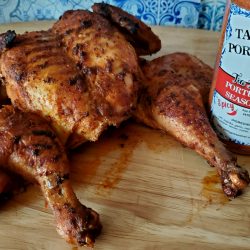
Portuguese “Frango Churrasco” – Barbequed Chicken, is one of the most popular dishes for summer cookouts.
There are many different recipes for this dish from using basic salt and pepper to adding oregano and rosemary.
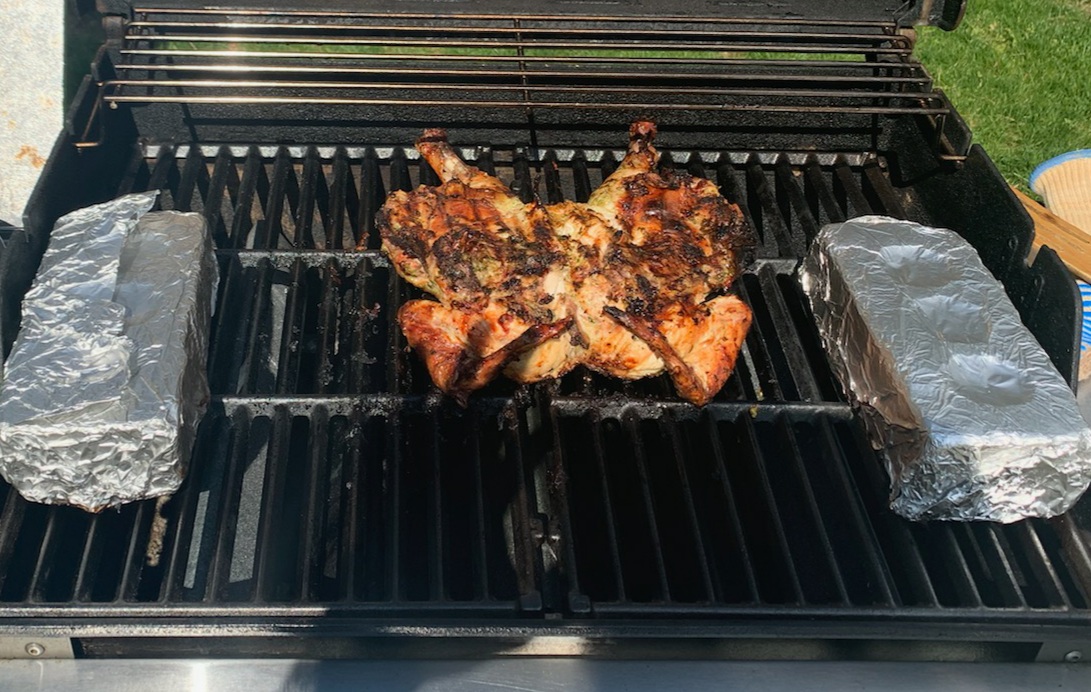
My recipe, combines the classic Portuguese style spices, with an American twist of using a “Brick” to cook the chicken.
The chicken will cook quicker because it literally cooks on both sides with the heat from the hot brick cooking the top of the chicken and the hot grill cooks it on the bottom. You’ll notice you’ll get a great golden sear on the skin from the pressure of the brick as the chicken cooks slowly.
Ingredients:
2 small fryer chickens (3 to 4 lbs each)
4 cloves garlic crushed
2 tbsp salt
1 tbsp paprika
1/2 cup white wine
Juice of 1/2 lemon
2 tbsp Piri Piri or Tabasco sauce (Add more to taste)
2 tbsp olive oil
Cooking Marinade to brush on chicken:
2 tbsp butter or margarine
1/2 cup white wine
Leftover marinade
You will also need:
2 bricks wrapped in foil or a large heavy cast iron skillet
Preparation:
Butterfly the chicken by cutting down the back bone. Mix all the ingredients to form a marinate in a small bowl and reserve 2 tablespoons.
Coat the chicken with the marinate. Place in a shallow pan or plastic bag and store in the refrigerator.
Let it marinate for at least 2 hours or best, if left overnight.
Wrap 2 bricks with foil and place on the hot grill to heat up.
Grill should be hot then lowered to medium.
* Bricks will be hot – Use oven proof gloves.
When ready to cook, remove chickens from pan or the plastic bag.
Place the chickens skin side up on the grill and place one brick on top of each one. If you don’t have a brick use a heavy iron skillet. Close the grill and let chicken cook for 10 minutes.
In a small saucepan, mix reserved marinade with the butter and 1/2 cup of wine. Place saucepan on top of the grill and cook to evaporate the wine or heat up for a few minutes on your stove top until boiling point.
After 10 minutes check the chicken and turn over, skin side down.
Place the brick back on top of the chicken, close the grill and let cook for 5 minutes.
Begin Coating the chicken with the leftover marinade to moisten the chicken as it cooks if needed.
Check the chicken every 5 – 8 minutes to be sure it’s not burning. If you see flames, developing simply move the chicken off the flame to a different location on the grill.
After 1/2 hour, the chicken should have a good sear and charred color on it.
Lower the heat if you notice flames burning the chicken. Continue cooking for another 30 – 45 minutes, or until the legs are fully cooked turning every 10 minutes.
*Note: All grills are different so you may find that you need to cook your chicken for a longer time.
*Cut through the legs and thighs for faster grilling.
You may also finish cooking the chicken in the oven for 10 minutes at 350.
Happy Grilling! Here’s another classic Portuguese BBQ recipe for your summer cook outs! Enjoy! Tia Maria
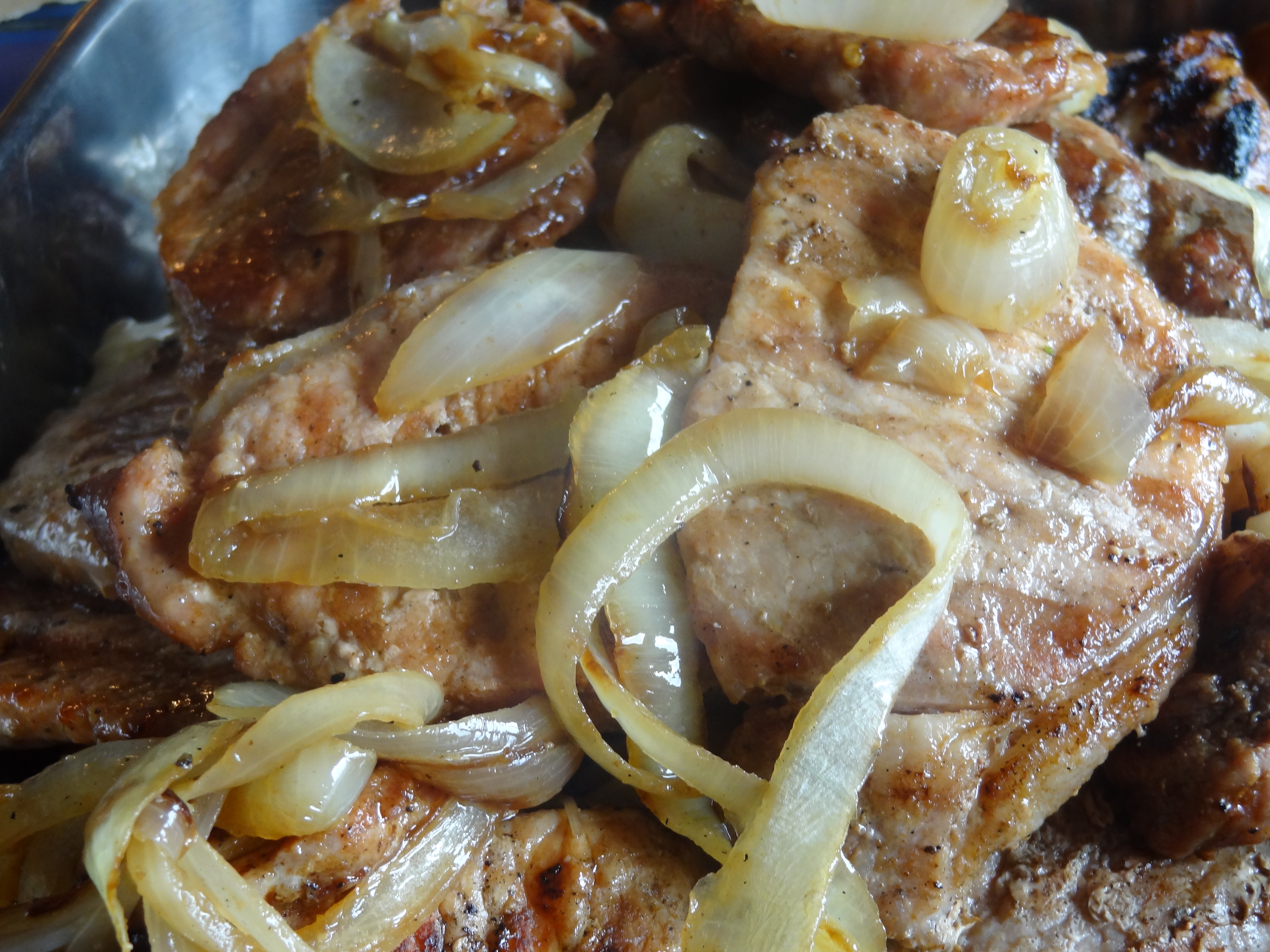
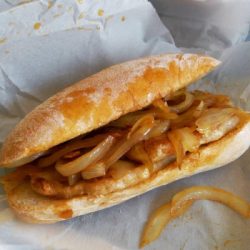
Bifana a Piri Piri Recipe:
Ingredients:
2 lbs Boneless pork loin
1 tsp Salt
1 tsp Garlic powder
1 tsp Paprika
1/2 tsp pepper
1 – 2 tbsp Piri Piri sauce (adjust to your taste preference)
Instructions:
Slice the pork loin into 1/2 inch slices. Place the slices between plastic wrap and pound with a meat mallet until the bifana is 1/4 inch thick.
Season with the listed ingredients. Let marinate for at least 1/2 hour before cooking.
Cook on grill or in saute pan for about 3-4 minutes per side or until fully cooked.
Top with Caramelized onions (recipe below).
Caramelized Onion Ingredients:
2 medium onions
3 tbsp Olive Oil
1/2 tsp garlic powder
1/2 tsp salt
1/2 tsp pepper
2 tbsp white wine
Instructions:
Cook the onions with olive oil until translucent. Add the remaining ingredients and cook until the onions reach a golden color and set aside.
When you’re ready to serve them, just heat them up for a few minutes and top your meats.
I make this often with pasta, and roasted potatoes. I make a double batch for the week since they make great subs, hoagies, grinders or what ever you call them in your area! lol
Ingredients:
2 lbs uncooked Hot or Sweet Sausage
*You can also use Chourica but skip the pre-cooking
1/2 cup red wine
1/2 cup water
Peppers and Onions:
2 large onions (sliced)
1 Jar of Roasted Red peppers (drained and sliced)
1 tablespoon olive oil
4 cloves garlic
1/4 tsp salt
1/2 tsp pepper
1 tablespoon white wine
Instructions:
Rinse sausages and place in a large skillet on medium heat. Add the wine and water, and let boil for about 10 minutes. Pierce and turn them as they cook. Lower heat as needed and let them brown on all sides for another 10 minutes or until cooked.(slice through one to test)
Remove the sausages from the skillet, add the olive oil and cook the onions and garlic until translucent. Add the wine and let cook a few minutes. Add the peppers to heat through. Season with the salt and pepper.
Add the sausages back into the skillet to heat through and serve.
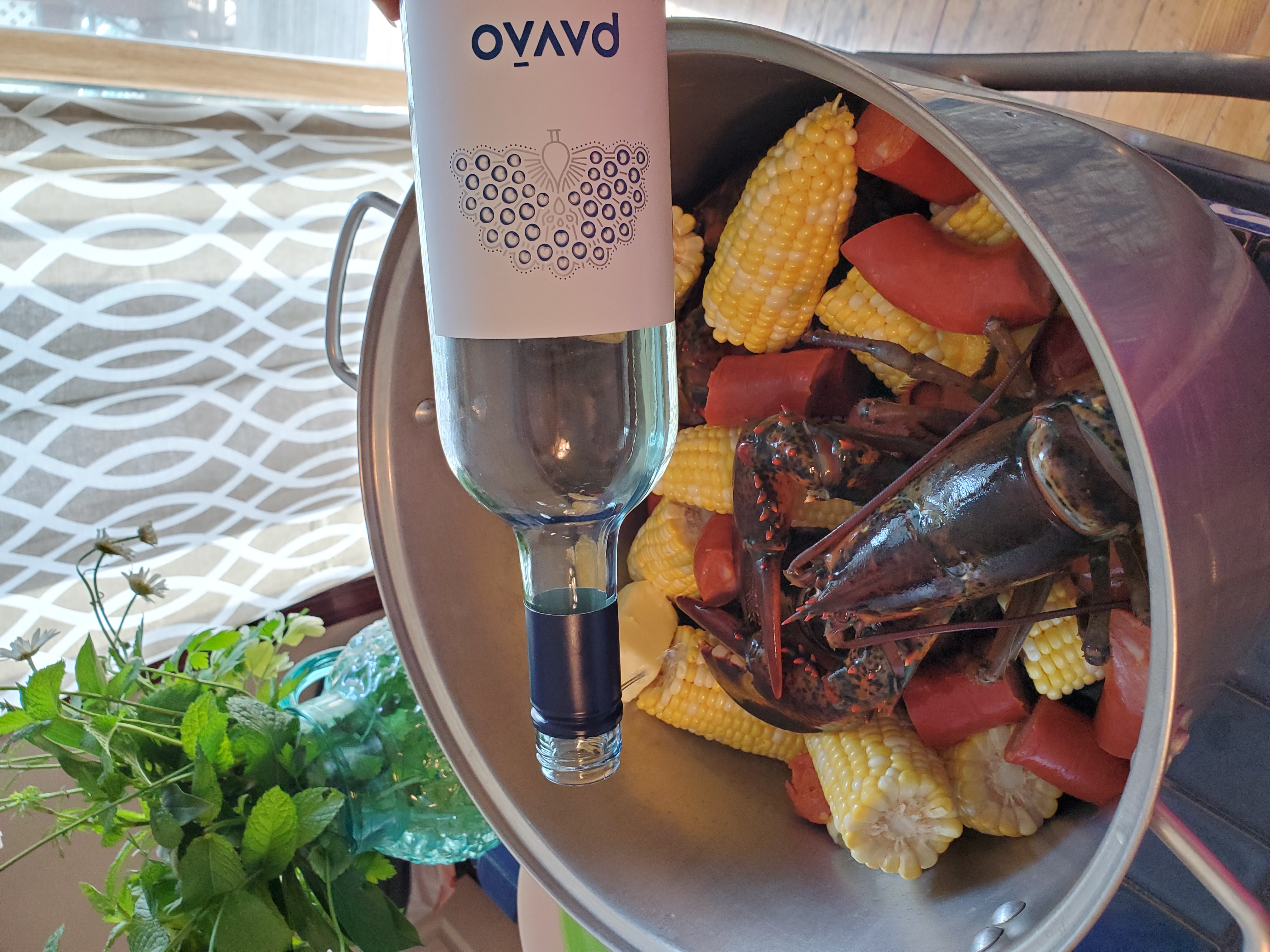
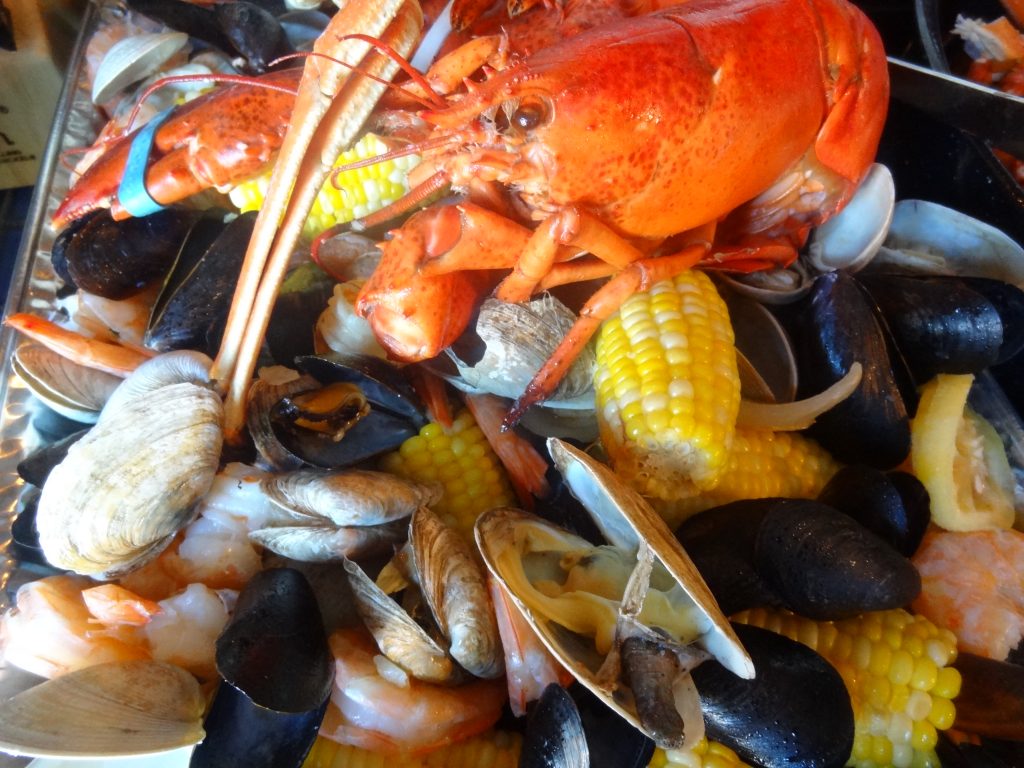
Summer party time is here and nothing beats a Portuguese style, New England Lobster Bake! Our family plans 2 bakes a year, with one on Father’s Day!
Don’t worry, you don’t need to bring Dad and dig a hole on the beach for this easy recipe!
Portuguese Chourica is a traditional ingredient in the New England Clam Bake, since the Portuguese fishermen who immigrated to the area began incorporating it into the recipe many years ago. Some people also add raw eggs in the shell to the bake. Once the eggs are cooked, the bake is done.
It’s easy to prepare because all you have to do is put everything in one pot and let it cook on the grill, or even on the stove top!
No plates, needed! Just poor everything onto clean newspapers on top of your picnic table and enjoy!
Easy clean up, just wrap up the newspaper with shells and pop them in the trash!
*Note: All shellfish and vegetables in this recipe are uncooked.
Don’t throw out the leftovers! Make Seafood Chowder. Here’s the recipe!
Serves 8-12
Ingredients:
8 lobsters 1 1/4 pound average (1 or 1/2 per person)
4 lbs steamer clams
2 lbs mussels
2 lbs shrimp
2 chourico sausages (cut into 2 inch pieces)
1 stick of butter or margarine
8 shucked ears of corn
1 large onion cut into fourths
8 – 12 small red potatoes(1 to 2 per person)
1 teaspoon salt (Only if you do not use seaweed)
2 cups Vinho Verde (enough to have 2 inches of liquid in pot)
*Optional – 4 cups or 2 large handfuls of seaweed (you will find it FREE at the store where you buy the lobsters. They will pack your lobsters in it.)
*Optional – 8 raw eggs
Condiments:
Lemon wedges
Melted Butter
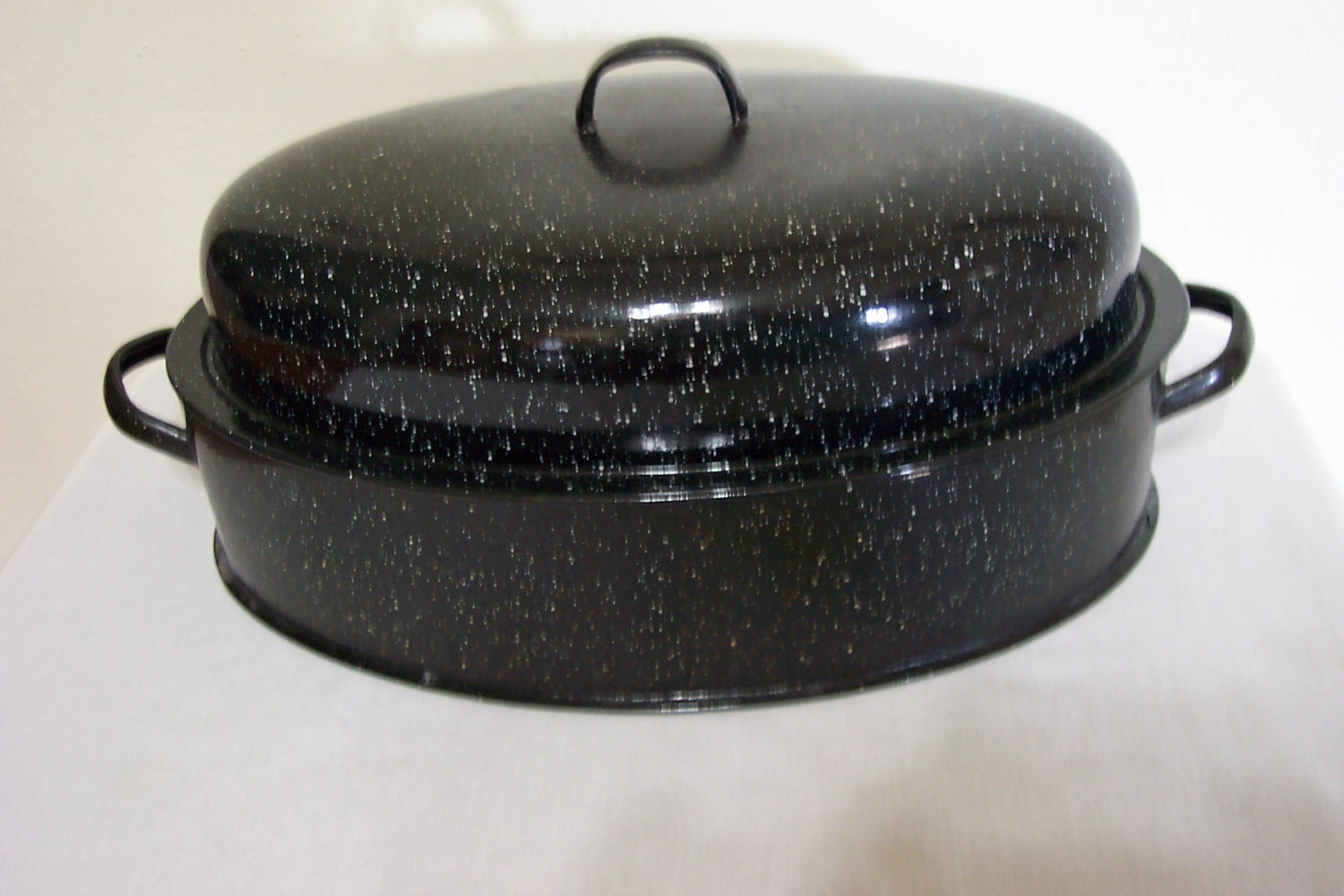
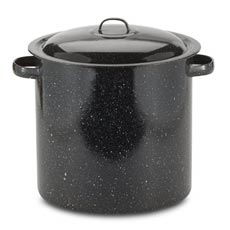
1 large steamer pot or a large turkey roaster pan with lid *Note: (you can use 2 large aluminum disposable roasting pans using 1 for cooking and 1 for the lid. This will make it easy clean up!)
Preparation:
Step 1
Wash potatoes, rinse the seaweed and set aside. Wash and clean the mussels and clams. Remove the elastic from lobster claws.
Step 2
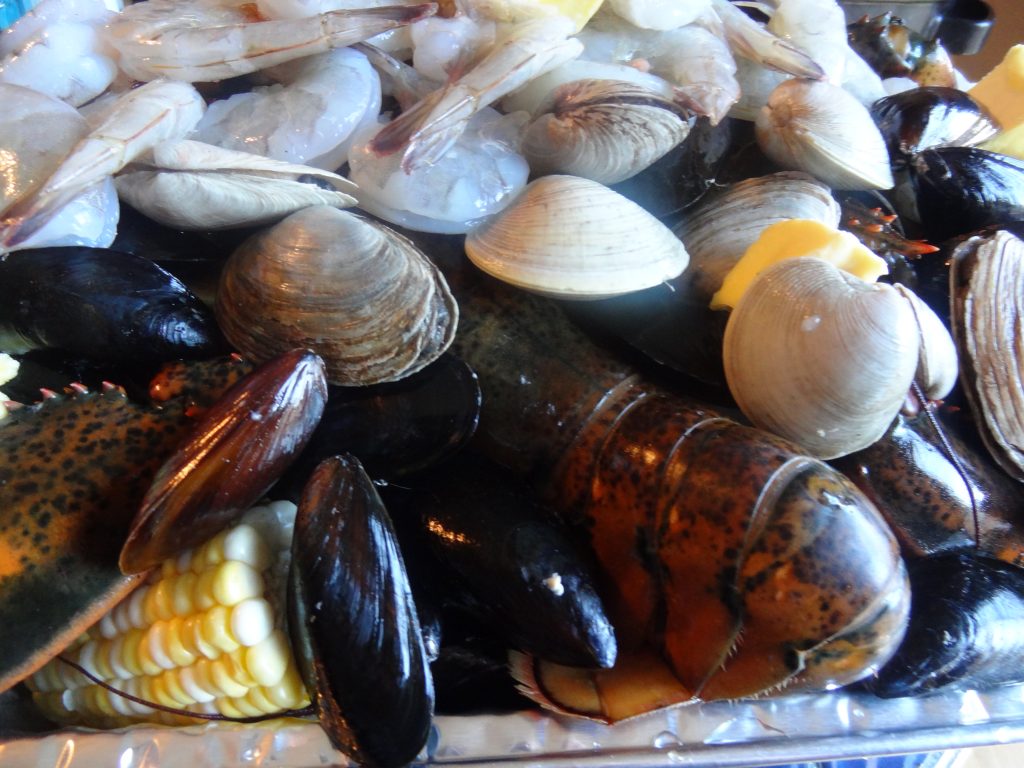
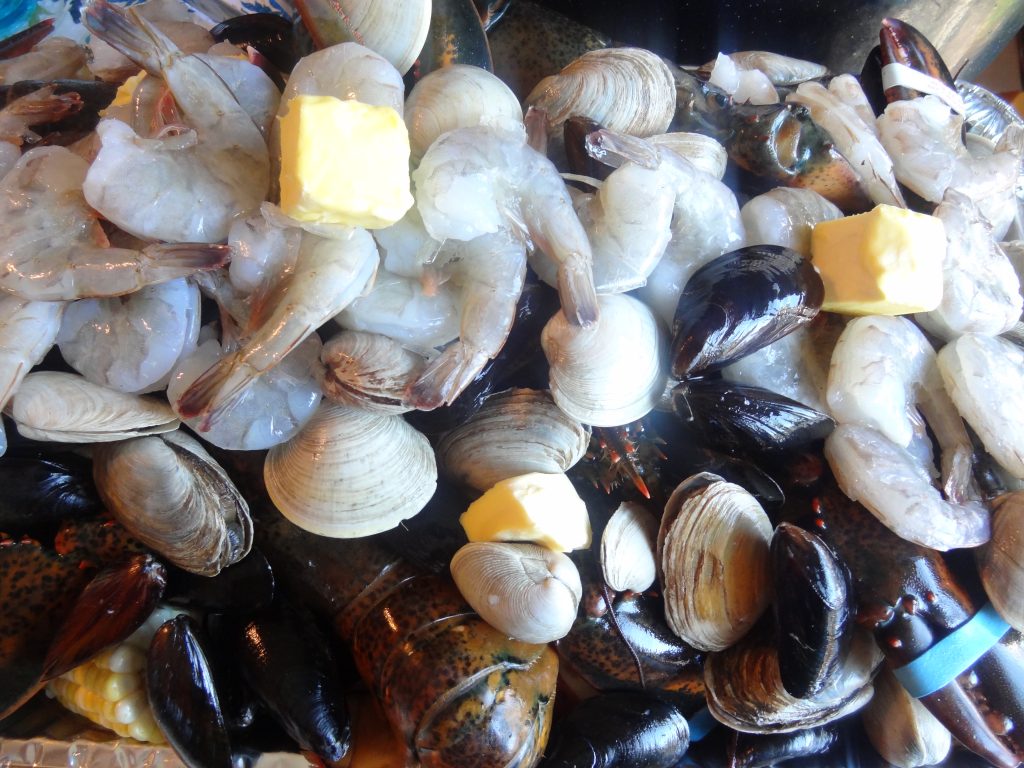
Place 1/2 of the seaweed in bottom of the pan. Next , layer the ingredients as follows; Lobster, Onion, Potatoes, Corn, (eggs optional) Chourico, Clams, Mussels and Shrimp last.
Add the wine. Cut up the margarine into a few pieces and place on top of the seafood. Top with the remaining seaweed. Cover. (The bake cooks from bottom up so be sure to place the items that need longer cooking time on the bottom.)
Step 3
Cook for 30 -45 minutes on high heat on grill or stove top. When the potatoes are cooked, the lobster bake is ready to eat!
Save some broth to serve in bowls for cleaning the steamers. Save any leftovers to make seafood chowder!
*Note: How to tell a lobster is cooked
The meat inside the lobster will be firm, white and opaque. The tomalley, which fills much of the body cavity will be greenish-yellow.
The roe in female lobsters will be bright orange-red and firm. If it is a dark greenish-black, with an oily tar-like consistency, the lobster is under cooked.
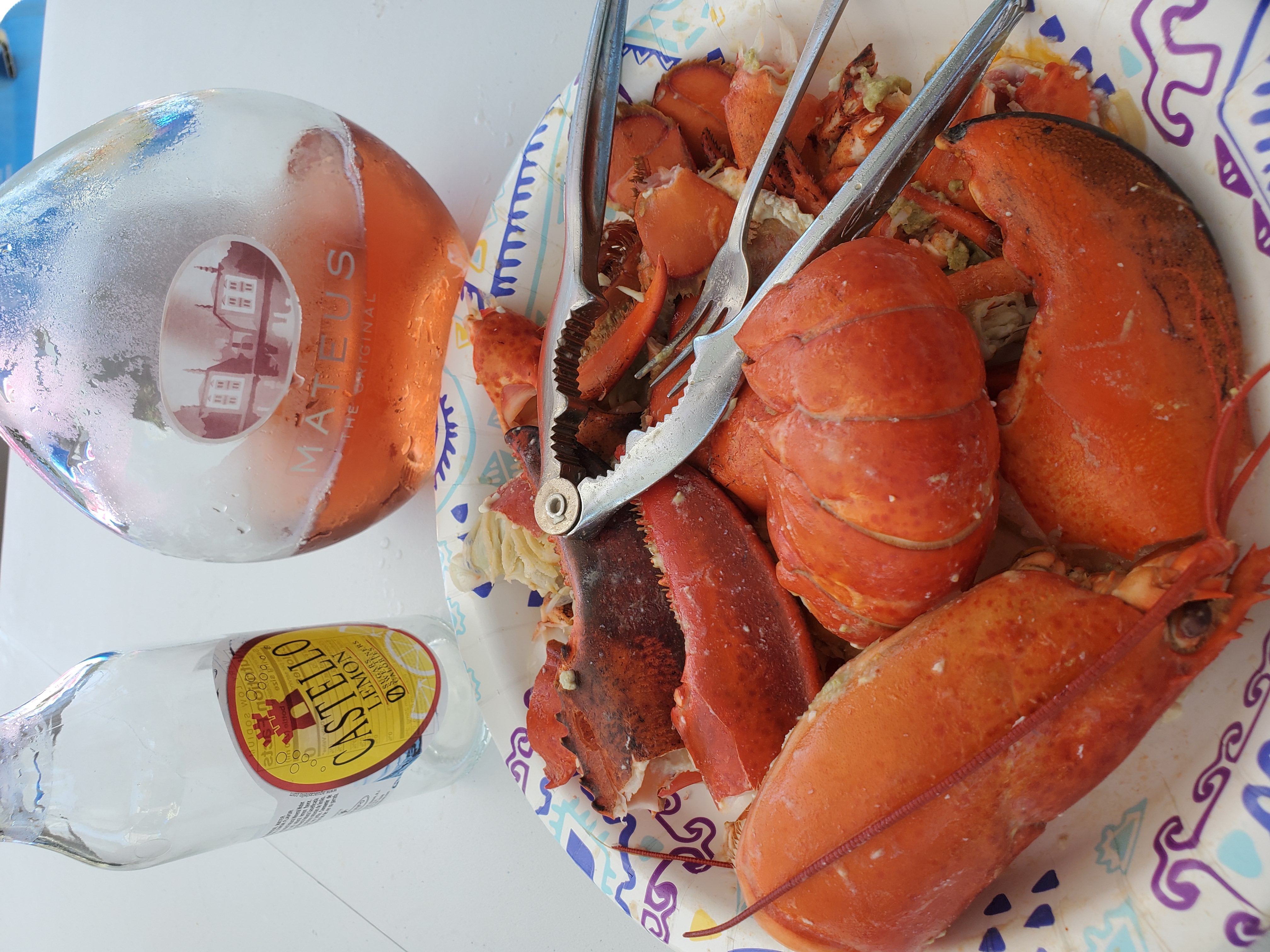
Be sure to have lots of Vinho Verde, since it’s the perfect wine for seafood! Go all out and make freshPao Milho to serve with the bake!
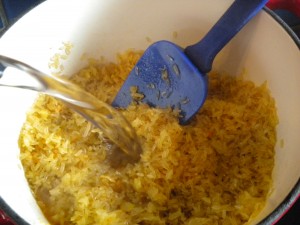
Saute onion in olive oil until translucent. Add the rice and stir to coat with the olive oil. Let the rice stir fry for about 2 minutes on medium heat.
Bring the water to a boil in a small saucepan and add to the rice. Add the tomato and salt. Turn burner on high and let it come to a boil.
Reduce the heat to medium, stir, and cover. Let the rice cook on medium for 15-20 minutes stirring a few times.
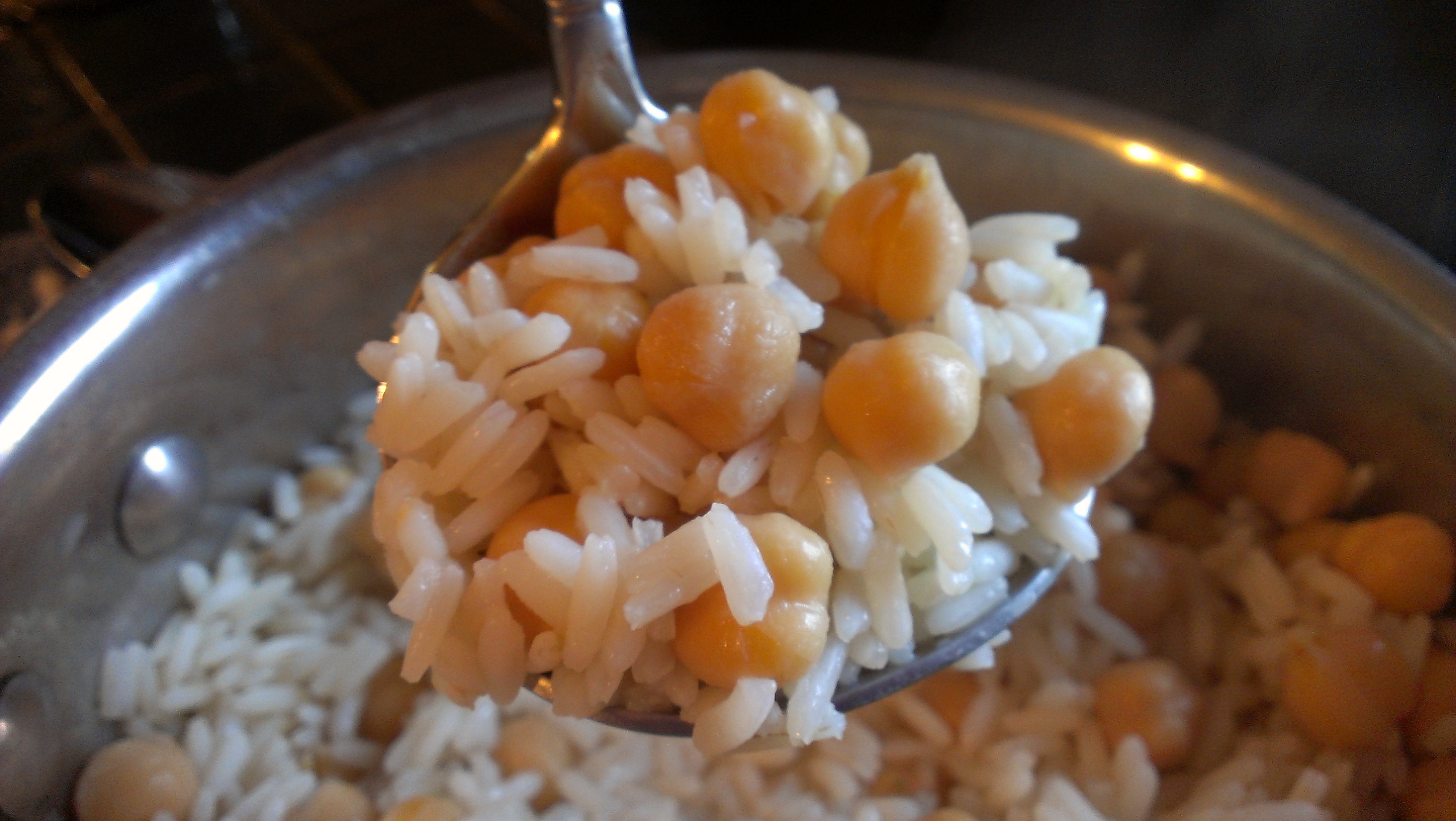
Add the drained chick peas, stir, cover pan and let sit until ready to serve. Enjoy!
These classic pastries are everyone’s favorite. Once you experience just how easy they are to make at home, you’ll never buy them at a bakery again.
Unless of course, your lucky enough to be in one of the famous pastry shops in Lisbon!
Before we get started, I want to share with you the history of this famous pastry that was first created over 200 years ago!
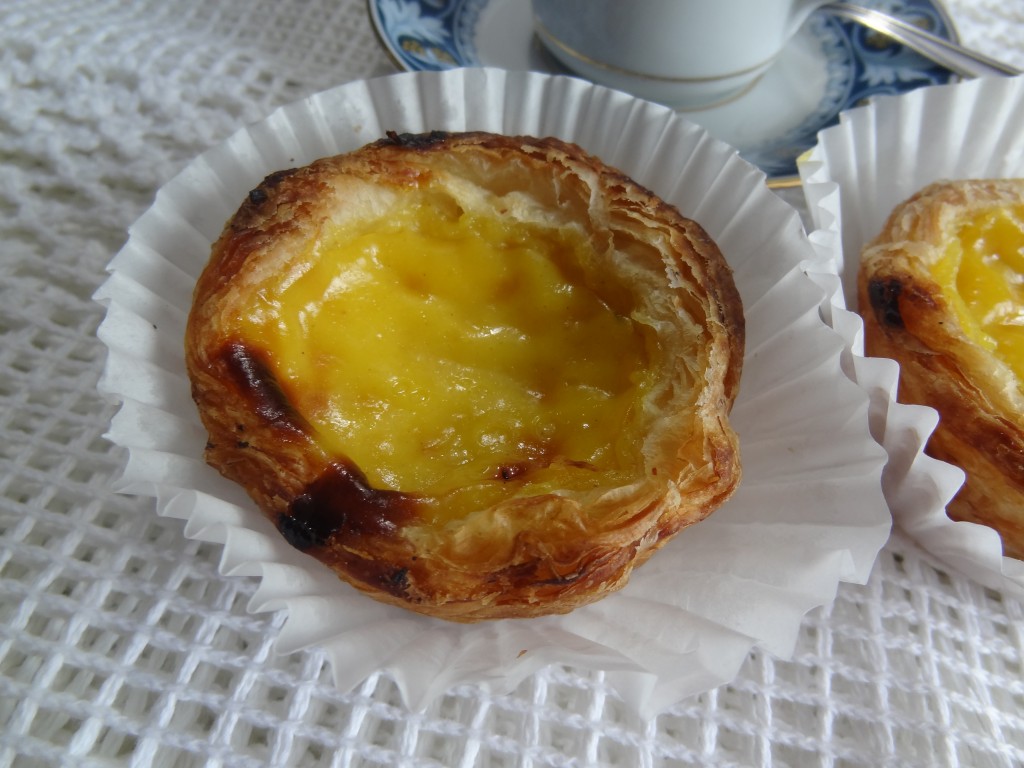
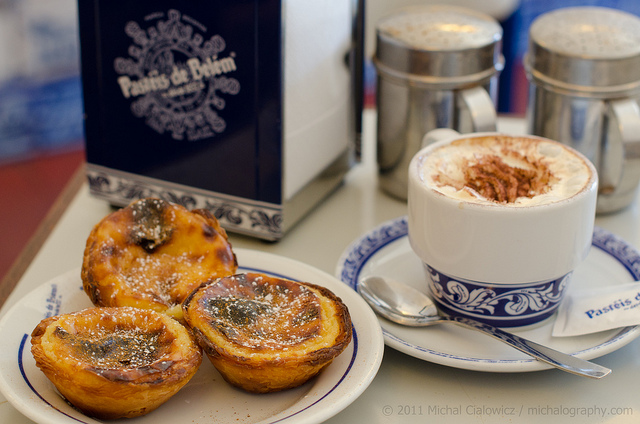
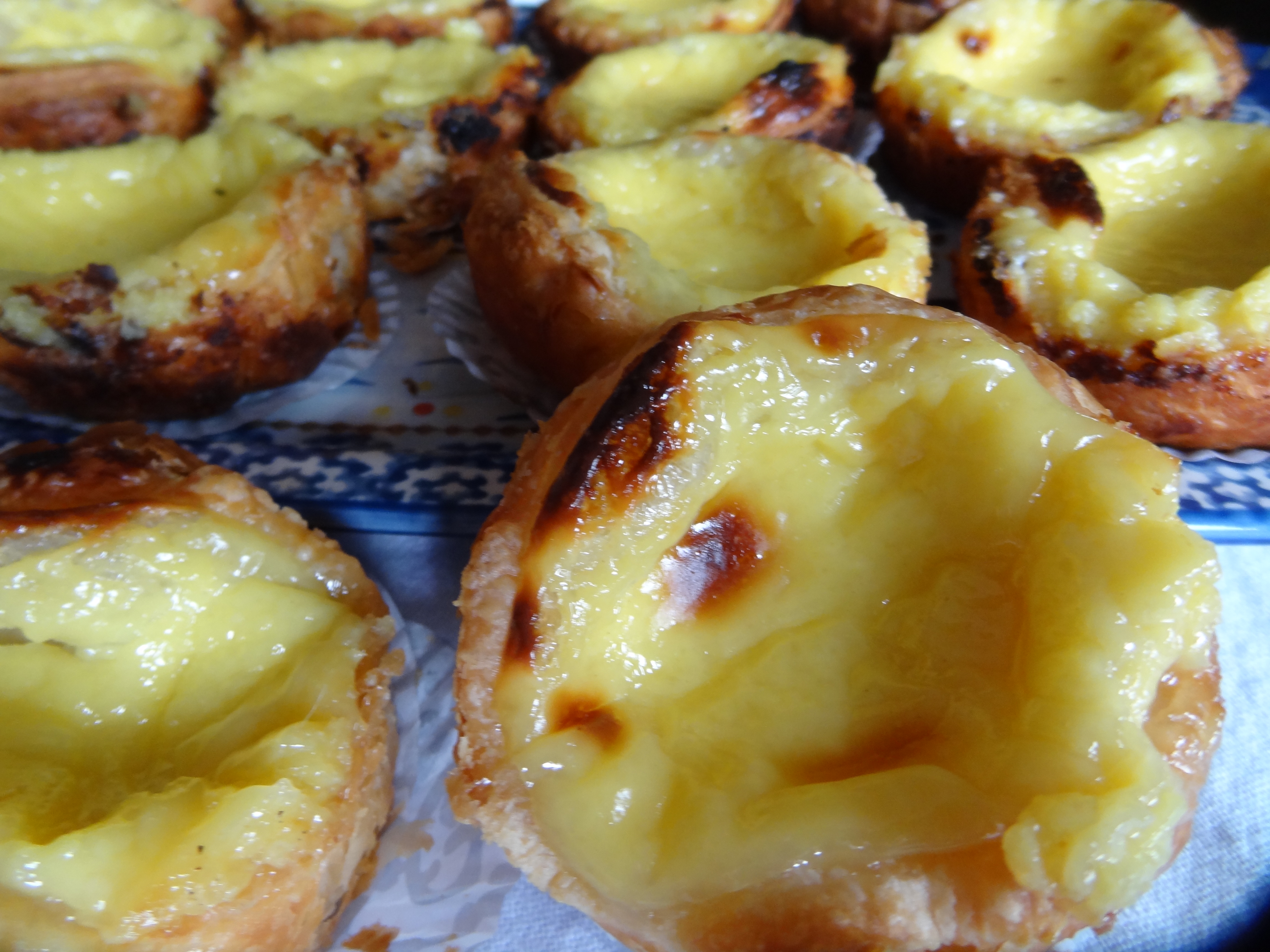
Portuguese Egg Custard Tarts, famously known as Pastéis de Belem are famous in many countries all over the world.
The original Pastéis de Belem, were first created by nuns who lived at the Monestary of Jeronimos in Belem, Lisbon in 1837.
Casa Pasteis de Belem is located in the town of Belem in Lisbon, Portugal. The official name of the town is “Santa Maria de Belem” but its referred to as “Belem”. The name “Belem” originated from the Portuguese word for “Bethlehem”.
Many bakeries have tried to replicate the recipe to no avail. The equally famous; “Pasteis de Nata” it’s copy cat version, has become a famous substitute for the original at every Portuguese bakery throughout Portugal and many other countries around the world.
The famous recipe is kept a secret. “The secret can only be memorized, it can’t be written down”, says the pastry chef who was carefully selected among 80 co-workers.
The pastry’s name was trademarked in 1911, which means the company is the only one that can call the famous sweets by that name. Visit this dessert site; desserteater.com for more on the history of one of the world’s most popular desserts!
In, December 2011, Pasteis de Belem was listed by Lonely Planet # 2 of 583 things to do in Lisbon, #5 of 12718 restaurants in Europe and # 42 of 382 restaurants in Portugal. (desserteater.com)
Watch this video of the famous bakery of Pasteis de Belem.
*I recommend that you try making this recipe a few times to adjust for your own oven temperature and baking time. Happy Baking!
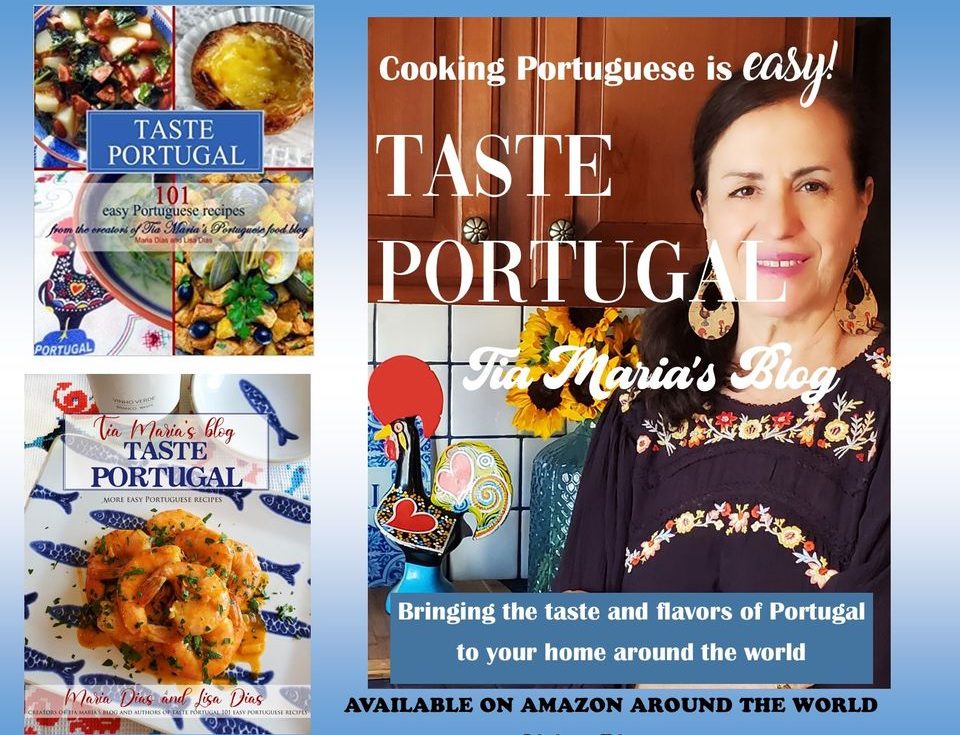
Find this complete recipe plus 100 other recipes in my new cookbook!
The celebrations of “Dia de Portugal” will once again have a special flavor this year.
Featuring Chef David Santos from Louro, Chef Rui Correia from Douro, Chef Luisa Fernandes from Robert and Chef José Meirelles.
The e event will be an unique opportunity to see these renowned Chefs working together, celebrating their roots and passion for cooking.
They will be preparing an exquisite 5 course dinner based on the theme:
“Portuguese Flavors Around the World”, which will include dishes from Goa, Mozambique, Brazil, and of course, Portugal.
The meal will be paired with wines from Esporão, Kopke, and Quinta do Azevedo.
Beer will be provided by Super Bock, sparkling water by Água das Pedras and codfish (bacalhau) by Riberalves.Event Time: 8:00 PM
Location: Louro Restaurant 142 W 10th Street New York, NY 10014 (212) 206-0606Contact: info@portuguesecircle.com Presented by Portuguese Circle
The main seating will take place at 8pm, however the “Portuguese Flavors Around the World”menu will be served from 5:30pm until 11pm. Seating is limited and reservations are required.
Portuguese cuisine has influenced the foods of countries around the world from Asia, to India to North America. This post is for the Portuguese Foodie and the Portuguese Historian in all of us!
Many of you may not know much about Macau, which was the former colony of Portugal off the southeastern coast of China for over 400 years. It was the first and last European colony in Asia until it was given back to China in 1999.
The tiny region is less than the size of Manhattan and home to nearly a half million people. The architecture is European. “Portuguese” is the official language spoken there.
My cousin lived in Macau for over 20 years and I remember receiving post cards and Christmas cards written in both Portuguese and Macanese and I found it so interesting that Portuguese was the main language of a country in Asia. Watch the video at the end of this post to listen to the Macanese Portuguese language and see if you can understand it!
Portuguese cuisine plays a main role in the foods of Macau which has a unique fusion of Asian and Portuguese flavor.
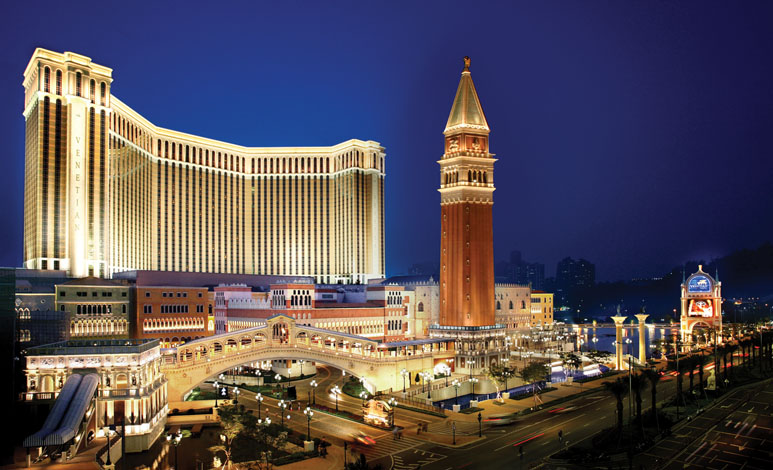
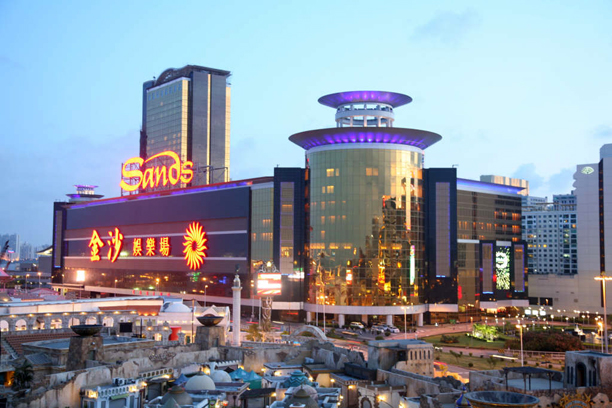
There are hundreds of Portuguese restaurants, bakeries and even the 5 star resort casino’s which all have Portuguese dishes on the menu.
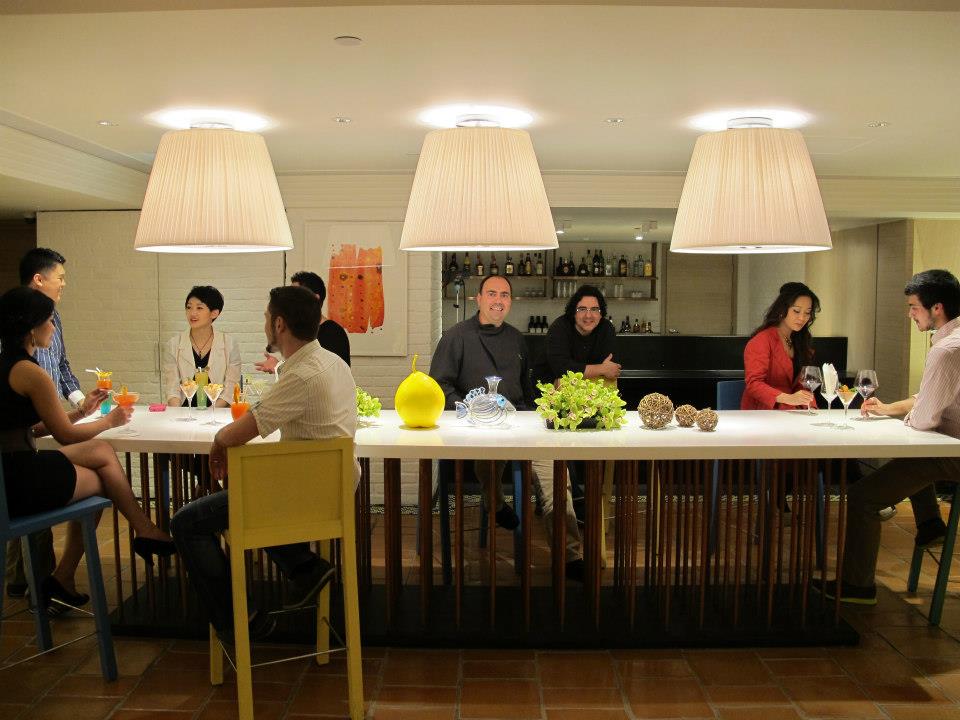
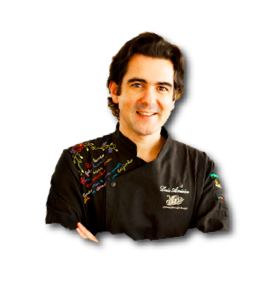
This Spring, award winning Portuguese chefs from Portugal; Marco Gomes and Luís Américo, traveled to Macau to open a Portuguese restaurant, “Fado” at the Royal Hotel Casino in Macau. The chefs were featured in Journal Tribuna de Macau a Portuguese Journal Magazine, a few months ago.
Photo credit: Chefs Marco Gomes and Luis Americo (Center)
Chef Luis Americo Chef Marco Gomes
Royal Hotel, Macau
Portuguese restaurants Antonio and Miramar can be found at Portuguese named streets such as; Rua do Cunha and Rua Fernando Mendes, and Rua Central.
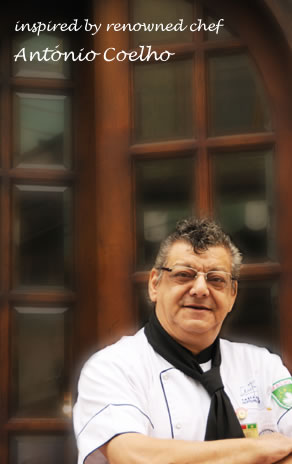
Chef Antonio Coelho – Antonio’s restaurant is listed in the Michelin Guide Macau.
Visit this link for some amazing images and top 10 things to do in Macau.
“Macau offers a delicious fusion of Chinese and Portuguese cooking. The two have blended into a local style known as Macanese cuisine with an emphasis on baked goods and grilled and roasted meats. Some popular Macanese dishes are Portuguese or African chicken, codfish (bacalhau), gray chicken or rabbit (pato de cabidela), spicy chili shrimps, minced beef or pork (minchi), stir-fried curry crab, steamed pork buns, and egg tarts. Macau has many fine Macanese, Portuguese, and Chinese restaurants. Dine at one recommended by a local or the concierge at your hotel. We dined at Antonio (259 rua dos Negociantes Taipa), a Michelin 3-star Portuguese restaurant owned by renowned chef Antonio Coelho widely known as one of the best purveyors of Portuguese cuisine in Macau. The meal was delicious, and the ambiance was wonderful.”
Michelin Star Chef Joel Robuchon’s – Michelin 3 star restaurant; Robuchon au Dôme, is Macau’s most impressive and exclusive restaurant is on the 43rd floor Dome of the Grand Lisboa casino and has one of the best views of Macau.
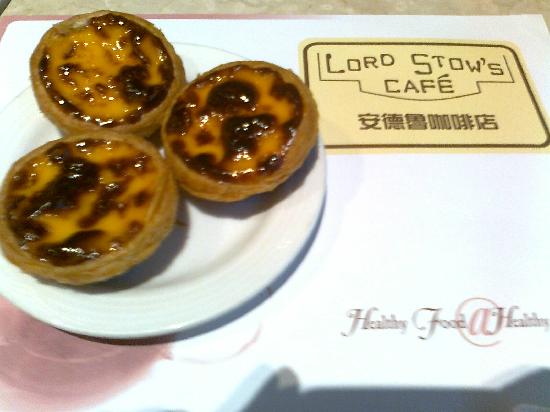
Famous Pasteis de Nata:Lord Stow’s Bakery
This legendary bakery is best known for its world-famous egg tarts. Many other egg tart bakeries have popped up around Macau, but none can compare to Lord Stow’s. It has 4 shops including one at the Venetian Macau.
“China gave Portugal the right to settle in Macau in the 16th Century, in exchange for clearing the area of pirates under strict Chinese administration. It became Portuguese colony after the treaty signed by Qing and Portuguese Government in 1887. Macau Special Administrative Region (SAR) of China on 20 December 1999, ending over 400 years of Portuguese administration.”
Macau, is like Hong Kong which has a business-friendly environment and a lot of foreign investment. Capitalism is thriving here and if Hong Kong were China’s New York, then Macau would positively be its Las Vegas. Gamblers spent 8 Billion dollars here, more than in Vegas.
Due to it’s proximity to over 1 Billion people, Macau’s casino industry and colonial attractions make it China’s top tourists destinations.
According to an article in Forbes Magazine; “Macau’s casino industry earned close to $38 billion in total revenues in 2012. This figure is not just substantially higher than that for Las Vegas, but also higher than the figure for the total U.S. casino industry. Macau’s casino gaming revenues grew by 13.5% in 2012.
Since most of us can’t make the long trip to visit this unique city where old world Portuguese Colonial influence meets modern say fine dining and tourism here’s a video for your enjoyment. Listen to the language that’s called Macanese – Portuguese!
I’ve also shared 2 great video diaries of travel to Macau which feature Portuguese architecture and cuisine.
Find a Recipe
FIND RECIPES HERE
"Join me! Lets' s share recipes, learn how to cook traditional Portuguese dishes, or chat about our cuisine, culture and traditions. I want to share these recipes to preserve our Portuguese passion for great food and pass them along to the next generation. So come along, Let's cook Portuguese!"
Support Tia Maria's Blog page to promote our Portuguese heritage. SCAN QR CODE:
ORDER SET OF 1 REGULAR AND 1 SPICY JAR - FREE SHIPPING IN USA
BUY NOW ON PAYAPAL OR SCAN QR CODE BELOW
TASTE PORTUGAL COOKS AVAILABLE ON AMAZON ALL AROUND THE WORLD: FREE Prime shipping in USA
COOK BOOKS ARE ALSO AVAILABLE ON AMAZON.CA (CANADA)
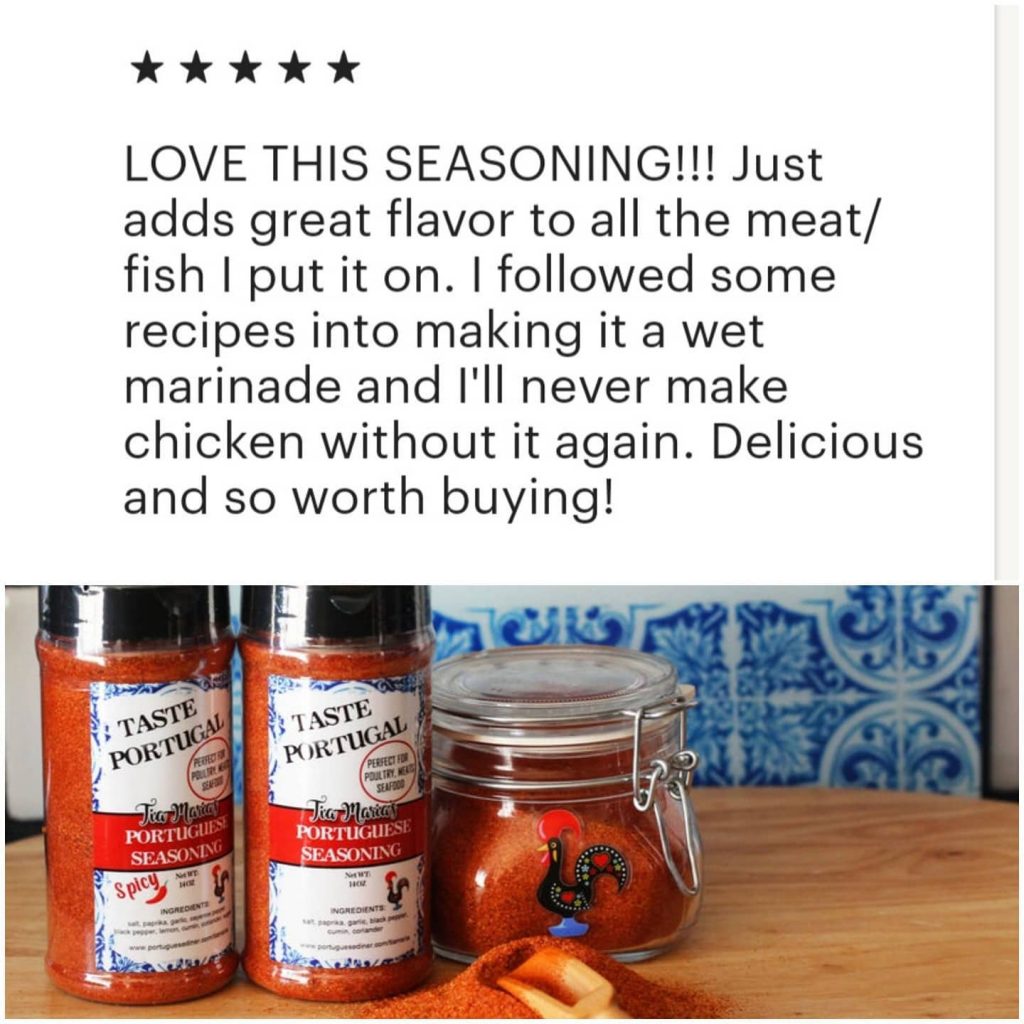
ORDER SET OF 2 TASTE PORTUGAL SEASONINGS ON PAYPAL OR SCAN QR CODE: FREE SHIPPING USA
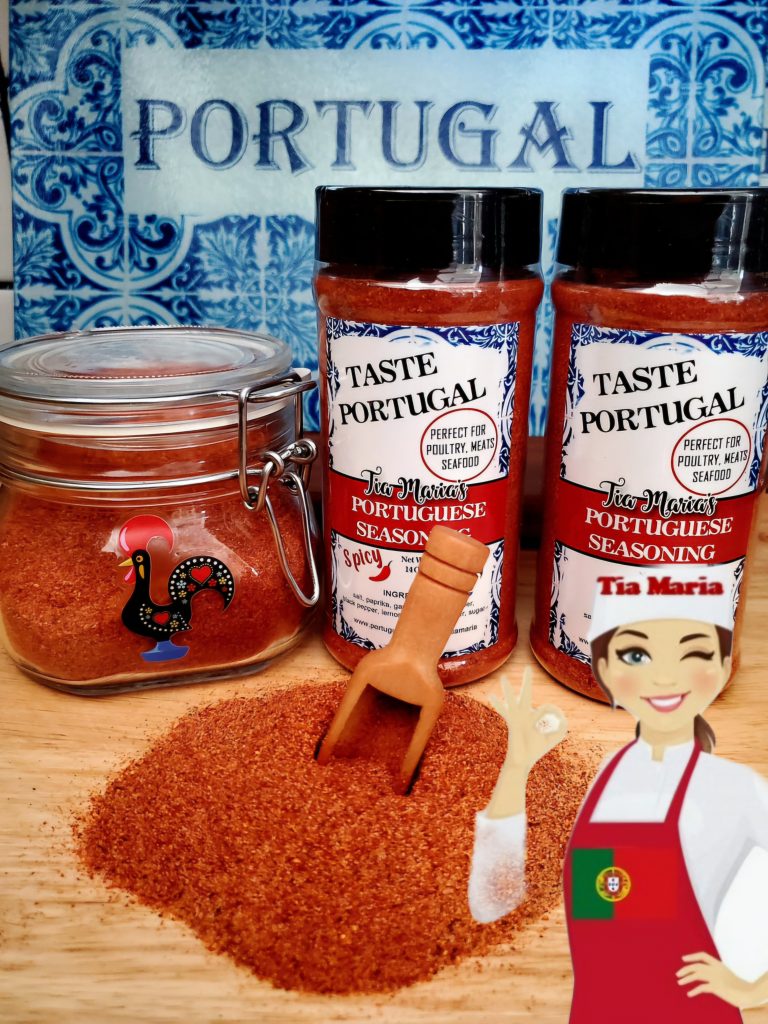
COOKING PORTUGUESE IS EASY WITH TIA MARIA’S TASTE PORTUGAL PORTUGUESE SEASONINGS
LISBON BLUE ETSY SHOP – FREE SHIPPING IN USA
Shop at Gaspars online for great Portuguese Products
Portuguese Linguica and Chourico
Gift Packs
Gaspars Sausage Company
For nearly a century Gaspar’s Sausage Co., Inc. Has been recognized as the largest manufacturer of Portuguese smoked sausage in the United States. Order today! www.gasparssausage.com or call us at 1-800-542-2038
MY TASTE PORTUGAL SEASONINGS DISTRIBUTOR - GONSALVES FOODS.COM
GONSALVES FOODS
GONSALVES FOODS
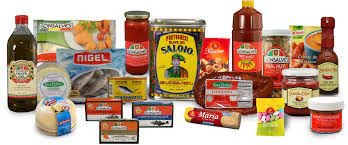
The taste of Portugal here in America Your source for authentic Portuguese products We’re proud to offer a wide selection of authentic Portuguese foods from our Gonsalves and Bom Petisco brands as well as the leading Portuguese brands like Saloio olive
0


























 Now available in Canada – Amazon Canada
 LISBON BLUE ETSY SHOP
 My appearance on RTP Portuguese TV Notícias do Meu País
 No Kid Hungry | Share our Strength Help End Child Hunger in America















 GONSALVES FOODS