This easy recipe requires not baking and makes an elegant dessert. Bolo de Bolacha Maria is traditionally made with butter, or sweetened condensed milk, but my version uses home made pastry cream which makes it lighter and uses less sugar. You’ll find that you have all the ingredients for this recipe in your pantry. If you don’t have Portuguese Maria Cookies, you can use the Mexican Maria Cookies found in most grocery stores as an option. Enjoy!
Makes 1 small cake or approximately 4 parfaits
Ingredients:
1 package of Bolacha Maria (Maria Cookies any brand)
1 or 2 cups of warm strong black coffee
2 cups of whole milk
3 large egg yolks
1/2 cup of sugar
1/4 cup of corn starch
1/2 teaspoon of vanilla extract
2 tablespoons of butter
pinch of salt
Whipped cream
Instructions for Pastry Cream:
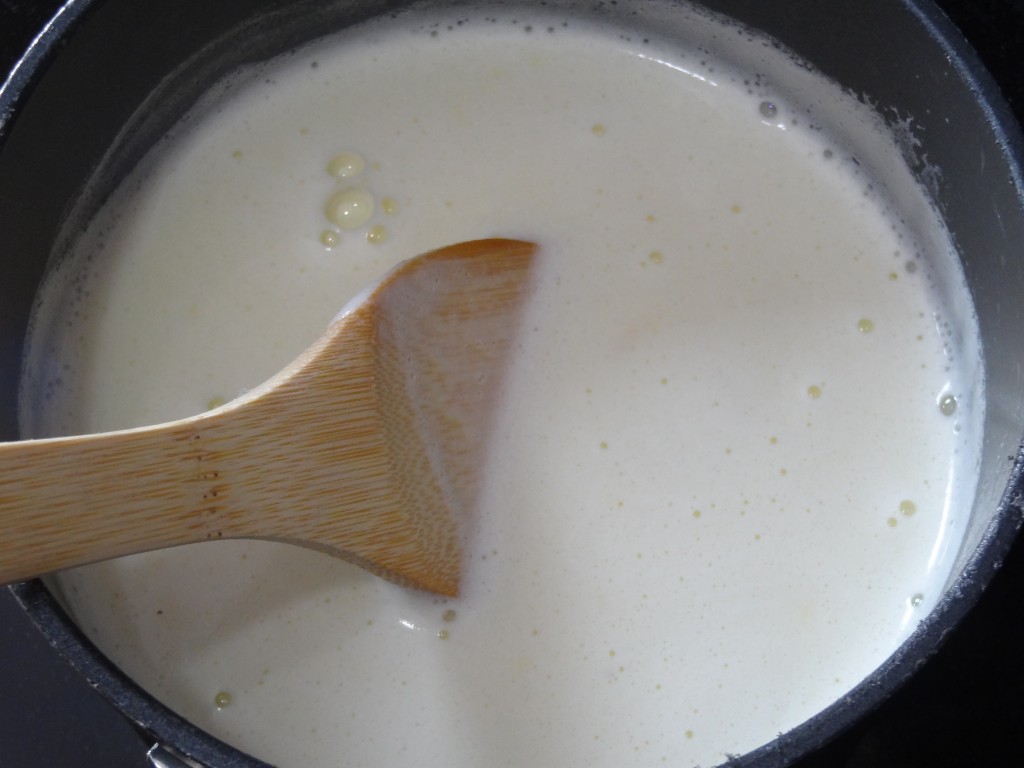
In a small saucepan heat the milk, 1/4 cup of the sugar, vanilla and pinch of salt until scalding but not boiling and set aside.
Meanwhile mix the egg yolks with the remaining sugar and corn starch until smooth and creamy.
Slowly add the yolks to the milk beating as you pour. Cook the mixture on medium heat for two minutes until it thickens stirring constantly.
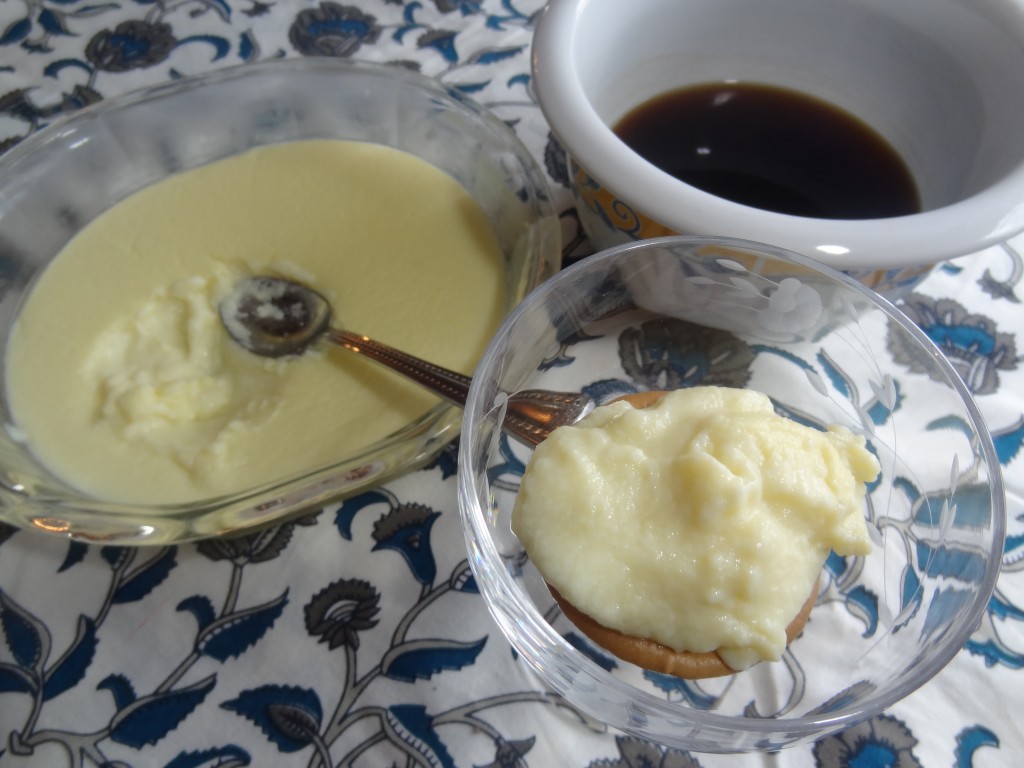
Pour the cream into a bowl and add the butter. Beat with a mixer for about 5 minutes until very smooth and creamy.
Cover the bowl and place in the refrigerator for at least 2 hours to cool completely and thicken.
Dip 1 cookie into the coffee for about 5 seconds and place into the bottom of parfait glass. The cookie shouldn’t fall apart, if you find it gets too soft dip the cookie for only a few seconds.
Spread pastry cream on top of the cookie and continuing layer to your desired height leaving the last layer with the cream on top.
Crumble a few cookies in a plastic bag and sprinkle on top.
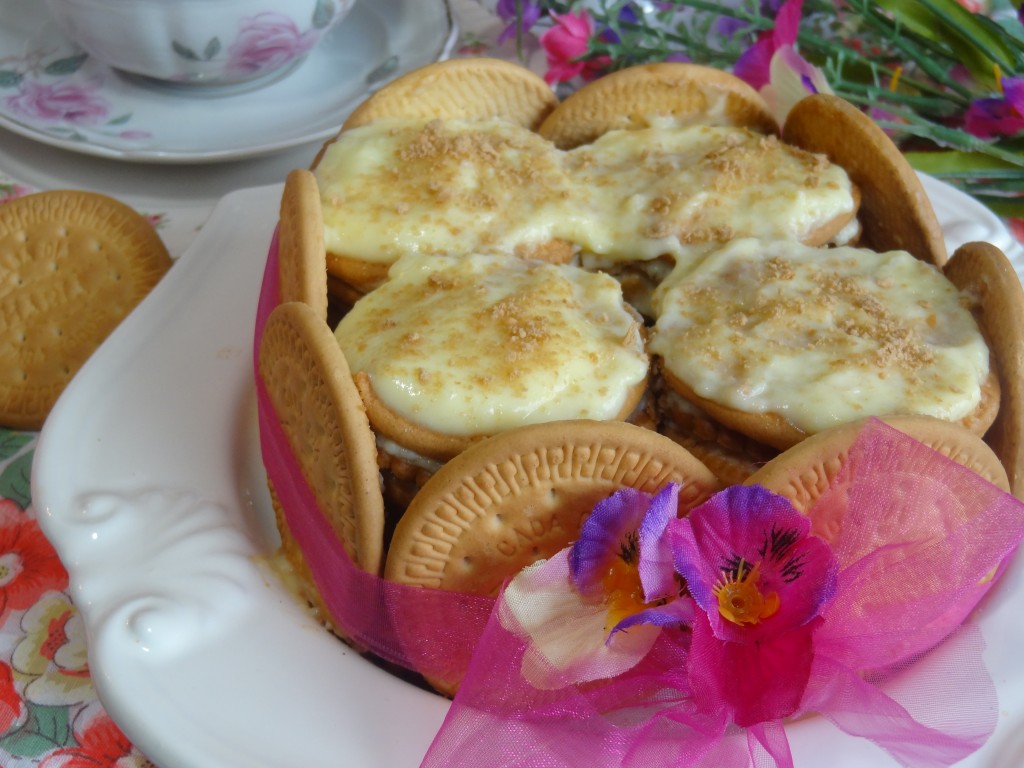
If you want to make the cookie mold with ribbon it’s very easy to do.
Place whole cookies around the sides to form an even square. Wrap a ribbon around and make a bow. Add tiny flowers for a nice effect.
Store in the refrigerator for a few hours to set. When ready to serve top with fresh whipped cream and cookie crumbles.
You can also make this recipe as individual parfaits but don’t top with the cream until ready to serve.
Store in the refrigerator for up to 3 days. Enjoy!
To showcase the incredible versatility of Portuguese wines with food, Wines of Portugal is launching an exciting new culinary-focused program in the United States this April. The program, known as “10 Chefs / 10 Wineries,” will match ten Portuguese wineries with ten of America’s top chefs, culminating in an online cooking series and limited edition printed recipe guide that will be available to trade, press and consumers by the end of the year.
Recipe and photos credit: http://www.winesofportugal.com/us/food-and-wine/10-chefs-10-wineries/
Wine
Quinta do Cruzeiro
“Sousa Lopes Unfiltered, 2012“
First, clean any excess fat and extraneous meat from around the saddle. Preheat a heavy bottom saute pan over medium heat and turn the oven on to 350 degrees. Generously season the saddle with salt and pepper. Add olive oil into the pan and saute the saddle on each side until golden in color. To finish cooking, place in the oven for 5-7 minutes. Remove pan from the oven and return to stove top. Deglaze pan with Chartreuse, add butter, thyme, and garlic; baste for 2-3 mins. Take off heat and allow rabbit to repose and reserve any juices and some of the pan butter to dress the final dish.
Spring Vegetables
1 cup English peas (shelled)
1 cup fava beans (shelled)
1 cup asparagus tips
12 ea ramps
Clean and wash all vegetables. Bring a large pot of salted water to boil and prepare an ice bath. Blanch each vegetable separately (except the ramps) to desired doneness and then place in ice bath (to stop the cooking process). Peel the peas and favas.
Oyster Emulsion
4ea fresh – preferably New England Oysters
1 cup fresh herbs – chive, tarragon, chervil, parsley, dill
1 cup fresh spinach
1 cup grape seed oil
1 lemon (for the zest)
salt
black pepper
Shuck oysters and retain all liquor (oyster juices). Blanch herbs and spinach for 3 seconds in a pot of salted boiling water and then remove to ice bath. Drain well. In a blender, puree oysters and herbs together until very smooth. Then, on low speed, slowly add in oil to form an emulsion. Season to taste and zest in the lemon.
Pickled Vegetables
1 ea sweet onion (i.e., Vidalia or Maui)
2 ea small carrots
Slice onions and carrots into thin strips (either by hand or with a mandolin).
Pickling liquid
2 cups vinegar – white wine or white balsamic work best
1 ea star anise
5 ea green cardamon
1/2 ea cinnamon stick
1 tsp anise seed
1 ea mace
2 ea clove
2 tbls kosher salt
2 tbls sugar
Gently toast all spices over low heat until they release their aroma. Bring vinegar, sugar, and salt to a low simmer, just enough to dissolve the sugar and salt. Add toasted spice and remove from heat. Helpful tip: It is helpful to wrap the toasted spices in cheese cloth before adding to the pickling liquid (making it easier to remove later). Let the pickling liquid cool to room temp and pour over the carrots and onions, with the spices so that they continue to release flavor. Cover and place in the refrigerator and allow to sit at least over night (up to 2 weeks) so the vegetables can absorb the vinegar and spices.
Greens
1 cup wild miner’s lettuce
1/2 cup wild wood sorrel
1 cup petite nasturtium leaves
1 cup chickweed
1 cup sunflower sprouts
1/4 cup nice green olives, pitted
various herbs – chive, chervil, tarragon, and mint
1 cup Pistachio oil
1 ea lemon
finishing salt – Maldon or Fleur de Sel
edible flowers such as mustard, borage, violets, or nasturtium pedals
To Finish
Warm rabbit saddle in oven gently. Zest and then juice the lemon in a bowl, add pistachio oil and season to create a broken style vinaigrette. Heat one tablespoon butter over medium heat until it becomes lightly brown and nutty in aroma. Add ramps and various other Spring vegetables and lightly saute until just warmed. Remove rabbit from the saddle and reserve one loin per guest. Arrange oyster puree on the bottom of a large plate. Disperse the Spring vegetables equally on to each plate, haphazardly strewn about. Slice rabbit loin and place onto each plate. Garnish with generous amounts of olives, greens, herbs, and flowers – creating a Spring garden effect. Finally, drizzle dishes with the reserved warmed pan butter, rabbit juices, and the pistachio-lemon oil. Season with finishing salt and a touch of fresh ground black pepper if you like.
L’Espalier
774 Boylston St, Boston, MA 02199
(617)262-3023
“Sugar and Spice and Everything Nice, That’s What Little Girls are Made of”
Here’s the photos from my daughter in law Rebecca’s baby shower hosted by my daughter Lisa and I. We had the shower at the beautiful “Ludlow Country Golf Club” at 10:00 am, where a delicious breakfast buffet was served by caterers: Salt & Pepper.
Each table was decorated with pink and white linens where a photo frame stated the shower theme along with the photo of the babies ultrasound.
The table center pieces were hand made with vintage tea pots filled with fresh cut flowers from my sister Rose’s garden. She was up at 5 am that morning cutting the flowers and arrived at my house at 6 am. They came out beautiful! Salt and Pepper’s staff suggested we add mirrors under the tea pots which created a stunning affect.
At the end of the shower, we held a contest where the quest at each table with the closest birthday date to the babies due date won the centerpiece!
Two of my friends sitting at the same table were both born on the same day as the babies due date. We decided to award the prize to the one that was born earliest on that day.
To keep with the “Sugar and Spice” theme we served vanilla cupcakes with vanilla frosting. We topped the cupcakes with fresh babies breath and one rose bud also from Rose’s garden.
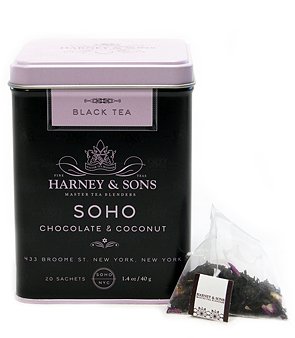
For the “sugar and spice” themed favors, we created a gift bag that had a vintage tea cup, a sachet of cinnamon spice tea and pure sugar cubes. Then we tied the bags with pink baby ribbon. The cupcakes were placed inside the tea cup to take home.
I made the “tutu” gift basket by simply sewing pink netting around a white basket.
We had a door prize raffle table for quests that brought a bag of diapers. There were 15 gift bags filled with goodies such as; spiced tea tins, cookies with vintage dessert plates, tea mugs, spiced muffin mixes, and tea pots.
Here’s a sample of the teas we had.
We passed around a “Pink Princess Piggy Bank” for guests to put in a “lucky penny”. I noticed that some guests were putting in dollar bills. What a great way to start the babies college fund!
We had a wonderful time and everyone is waiting for our beautiful baby girl!
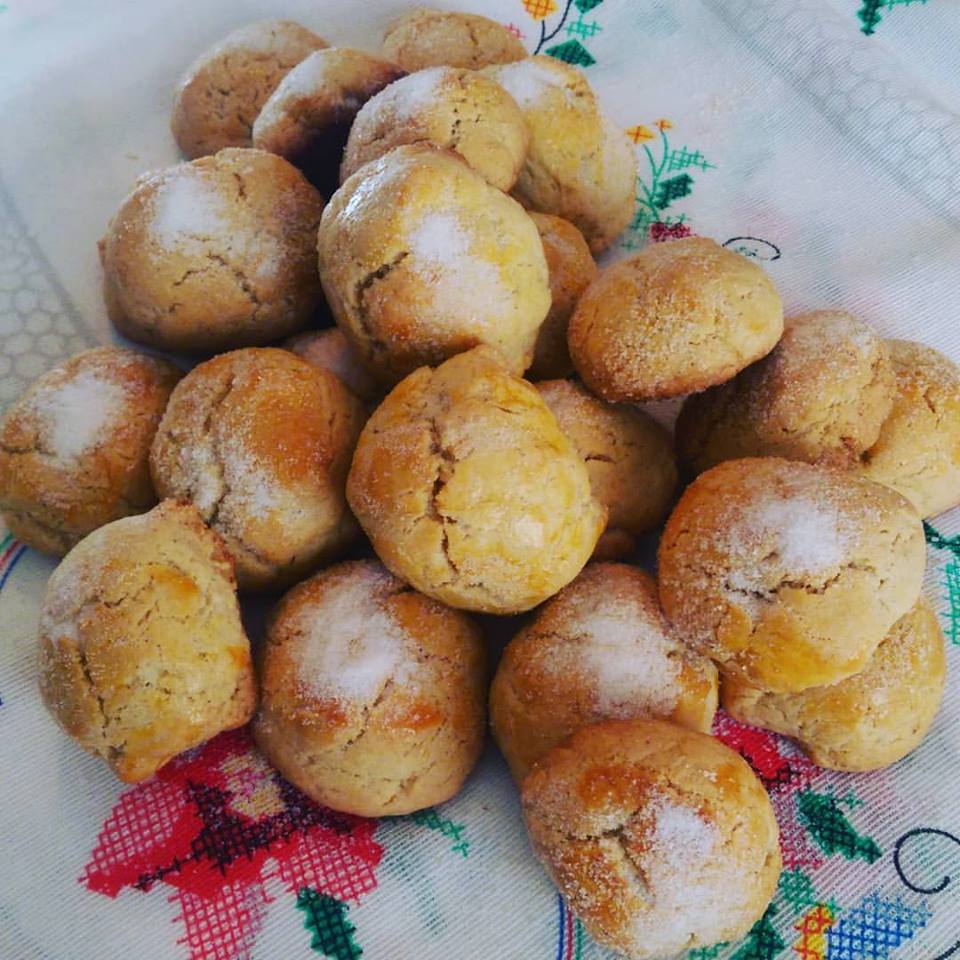
This recipe for simple biscuit cookies is one of my favorites. They’re perfect for breakfast or a snack any time of the day. Enjoy them!
Portuguese Biscuit Cookies:
Ingredients:
1 cup sugar
1/2 cup olive oil
2 eggs
3 cups of flour
1/4 cup milk
1/2 teaspoon of baking powder
1/2 teaspoon of cinnamon
2 teaspoons of whiskey (optional)
1/2 of a lemon zest
1 egg yolk for brushing tops
sugar for dusting
Instructions:
In a large bowl beat the eggs and sugar until frothy. Add the milk, lemon zest, oil, whiskey and cinnamon. Beat until well incorporated.
Add the baking soda and then the flour about 1 cup at a time until the batter becomes like cookie dough.
Form the batter into round balls about 2 inches wide and place on greased cookie sheet. Brush with egg yolk and sprinkle with a little sugar. Cook at 350 degrees until they turn golden brown. Release one cookie to check the bottom to be sure they don’t overcook after a few minutes. Let cool slightly and sprinkle on more sugar.
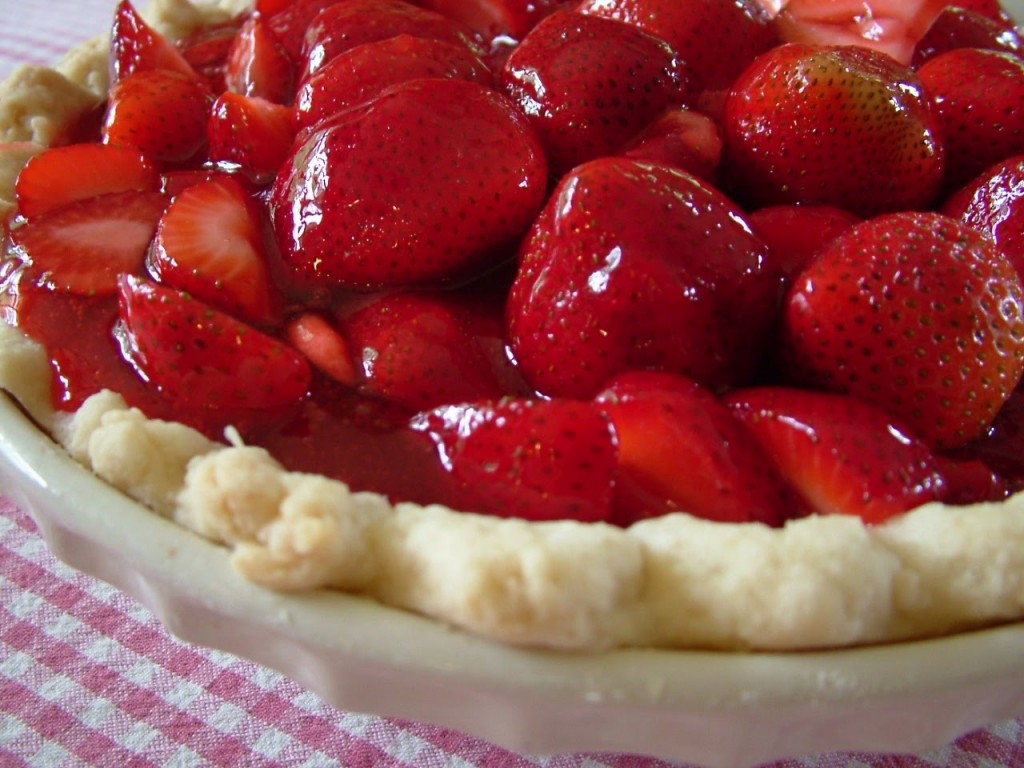
Make pie crust by stirring butter and sugar in a bowl. Add the egg yolk and stir. Add the flour and salt, and mix until crumbly. Press the dough into the bottom and up sides of a 9 in pie dish. Place in freezer for 20 minutes. Cook in a 375 degree oven for about 15 minutes and let it cool.
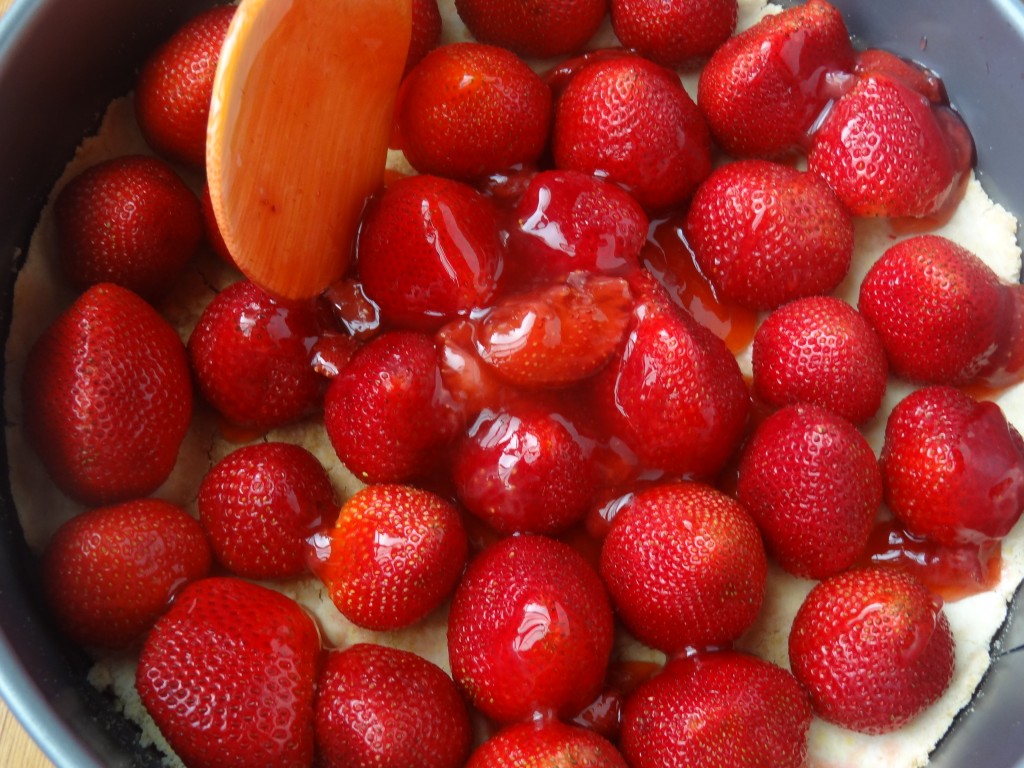
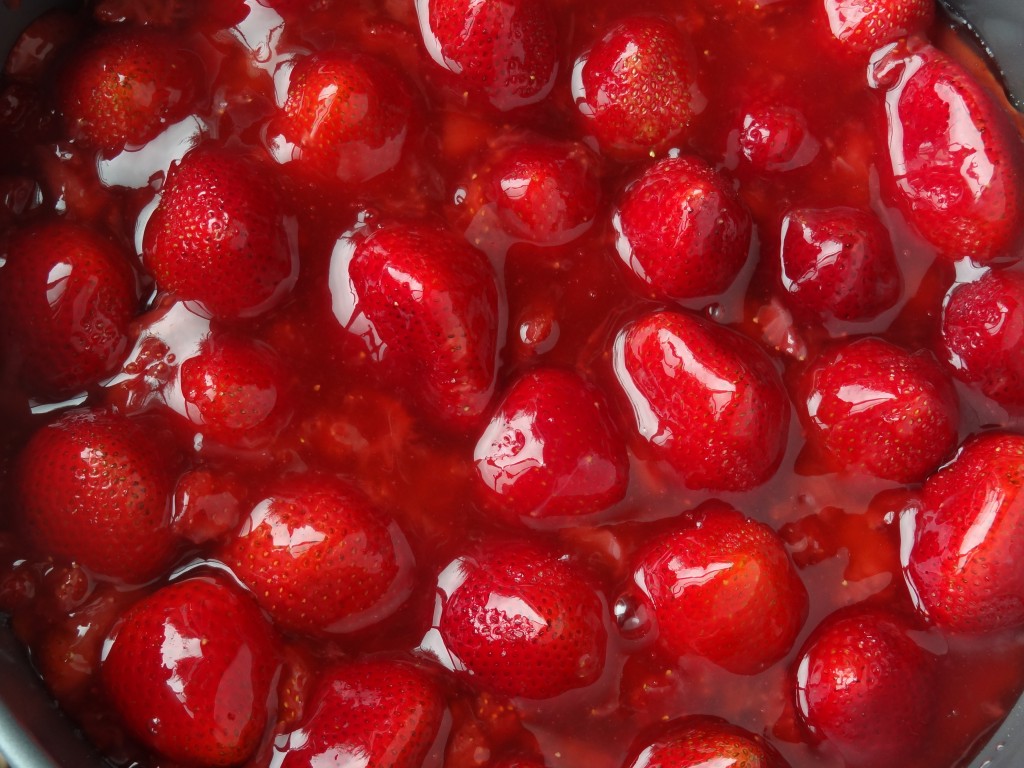
When ready to make the pie wash and dry the strawberries. Arrange 1/2 of them on the pie crust and save the remaining to make sauce.
To make filling:
Mash remaining berries and mix with sugar in a medium saucepan. Cook over medium heat and bring to a boil but keep stirring gently.
Mix the corn starch with the water in a small cup. Stir to dissolve and add to the strawberry sauce.
Cook the sauce on low heat for about 8-10 minutes until it thickens and becomes clear. Let the sauce cool before adding to the strawberries.
Chill the pie for at least two hours and serve with whipped cream.
To showcase the incredible versatility of Portuguese wines with food, Wines of Portugal is launching an exciting new culinary-focused program in the United States this April. The program, known as “10 Chefs / 10 Wineries,” will match ten Portuguese wineries with ten of America’s top chefs, culminating iphn an online cooking series and limited edition printed recipe guide that will be available to trade, press and consumers by the end of the year. (Photo and credits: http://www.winesofportugal.com/us/food-and-wine/10-chefs-10-wineries/)
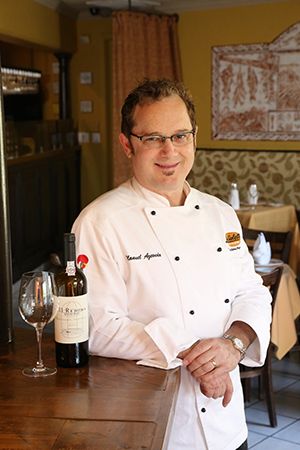
Chef Manuel Azevedo’s dream to champion Portuguese cuisine throughout the United States and beyond was born at an early age when he would assist his mother, the restaurant’s namesake, prepare recipes from their former home in the Azores Islands. It has been more than a decade since LaSalette welcomed its first diners, and the LaSalette family continues to invite you to join them in their second decade of proudly sharing Chef Azevedo’s interpretation of modern Portuguese cuisine. credits (http://www.winesofportugal.com/us/food-and-wine/10-chefs-10-wineries/la-salette/)
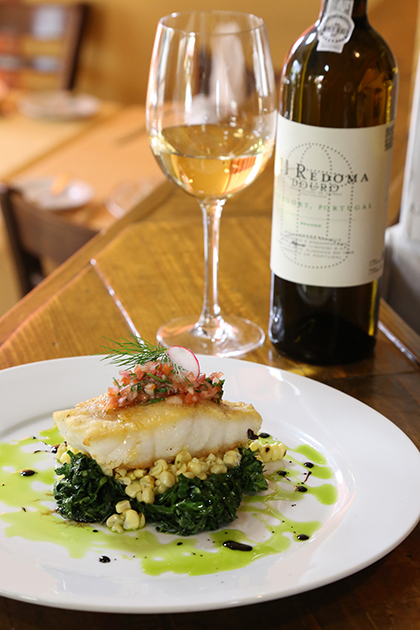
Recipe: Baked Stone Bass, Grilled Yellow Corn, Sautéed Collard Greens, and Raw Sauce
Cherne Assado no Forno com Molho Cru, Milho Amarelo Grelhado e Refogado de Couve Galega
The corn:
1 ½ cups (218 grams) yellow corn
3 tablespoons (39 grams) butter
1 clove garlic, thinly sliced
Fine sea salt
Freshly ground black pepper
The collard greens:
6 cups (180 grams) collard greens or about 12 leaves, sliced 1/8 -inch thick
2 cloves garlic, thinly sliced
3 tablespoons (42 grams) extra virgin olive oil
Fine sea salt
Freshly ground black pepper
The arctic char:
4 (5-ounce/145-gram) stone bass fillets, skin off
Fine sea salt
Freshly ground white pepper
The raw sauce:
2 medium shallots, 1/8 -inch dice
2 cloves garlic, 1/8 -inch dice
¼ cup (59 grams) white wine vinegar
½ cup (112 grams) extra virgin olive oil
1 tablespoon (15 grams) puréed tomato
¼ cup (10 grams) minced flat leaf parsley
2 teaspoons (9 grams) fine sea salt (or to taste)
Piri piri sauce or other hot sauce
This dish is very popular at the restaurant – diners really enjoy the exciting flavor combination of the fish with the bitter collards, the sweet corn, and the acidic raw sauce. You can substitute stone bass with arctic char, salmon, or halibut; whatever’s the freshest fish available. You should note the size of the collard cuts is important. One eighth of an inch wide delivers perfect results; any thinner and they’ll cook too quickly and become mushy; any thicker and their bitterness can get overwhelming. Slicing the collards 1/8 -inch wide is the ideal size for sautéing and brings out just the right amount of bitterness and flavor.
Molho cru is traditionally served on fried fish such as sardines or Spanish mackerel. In the summer months when heirloom tomatoes are at their peak of freshness, combine equal parts molho cru and tomatoes and serve it over just about any seafood from grilled sardines to steamed mussels to baked grouper. Ideally you should use this sauce immediately after it’s prepared so its freshness shines through. Leftover sauce makes a terrific marinade.
For the corn:
Grill the corn and then cut the kernels off the cob. Place the cut kernels in a pan and briefly sauté them with the garlic butter and enhance their flavor with salt and pepper to taste.
For the collard greens:
Pour olive oil into a sauté pan and heat on medium heat. Lay the cut collard greens and garlic in the pan and sauté them for about 8 – 10 minutes, until they turn a deep green color. Taste intermittently and enhance their flavor with salt and pepper to taste. Try not to let the collard greens sit for more than 15 minutes before serving.
For the stone bass:
Preheat oven to 450 degrees Fahrenheit (232° C). Sprinkle fillets with salt and pepper. Add vegetable oil to a large ovenproof sauté pan and sauté one side of the fillets on the stove on high heat. Turn the fish over and place the pan into the oven. Bake until cooked through, about 2 – 3 minutes – it will depend on the thickness of the fillets.
For the raw sauce:
Combine the shallots, garlic, vinegar, olive oil, and tomato puree. Enhance the flavor with piri piri sauce and salt. The hotness of the sauce and flavor of the salt should be identifiable. Stir in the parsley just before serving.
To serve:
Warm up the corn and collard greens. Make a nest of collard greens in the center of each plate and spoon the corn into the nests. Lay the stone bass on top of the nests. Spoon some raw sauce onto the fillets. (recipe and photos credits: http://www.winesofportugal.com/us/food-and-wine/10-chefs-10-wineries/la-salette/)
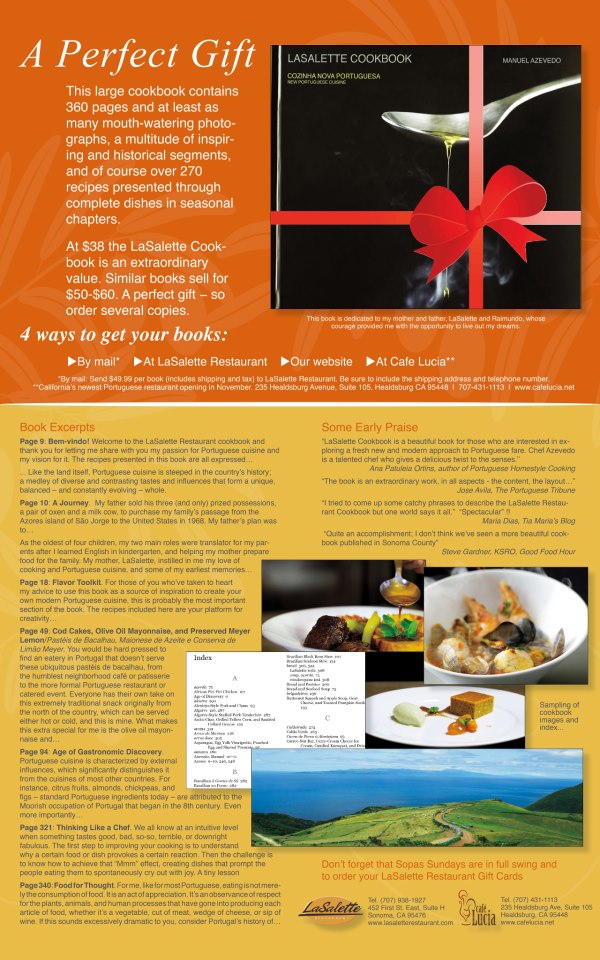
Read my article of LaSalette here. Visit LaSalette’s website and order the LaSalette Cook Book – Cozinha Nova Portuguesa by Chef Manuel Azevedo and many other products. You may also the cook book on amazon at the links on this page under cook books.
Credit: http://www.lasalette-restaurant.com/
It contains 360 pages, over 270 recipes, and the beautiful photographs by Portuguese photographer Henrigue Bagulho will leave you craving the flavor of Portugal, and inspire you to try the recipes. What a perfect gift for the special Portuguese foodie in your life!
LaSalette Cook Book – Cozinha Nova Portuguesa Chef Manuel Azevedo: Order below
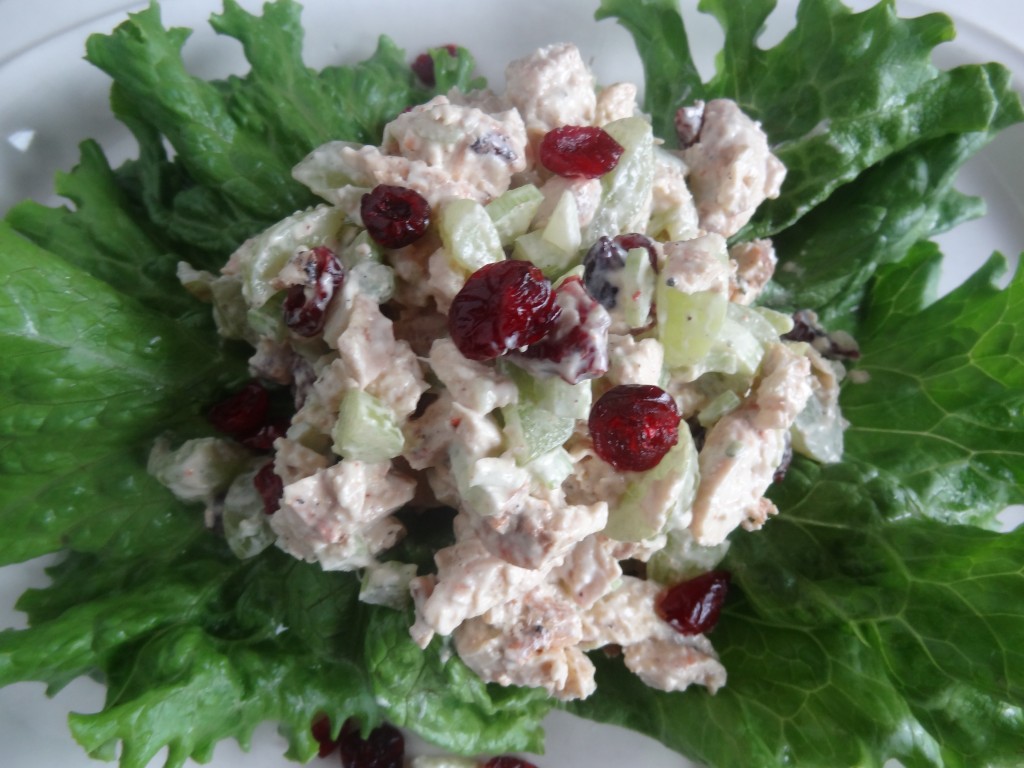
This chicken salad is a perfect summer salad to make when you have leftover chicken. The tartness of the grapes and cranberries pare well with the chicken to create a light salad.
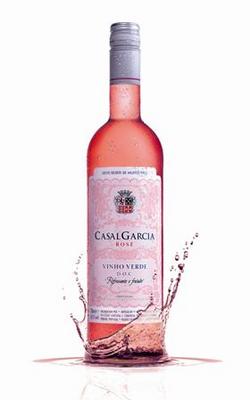
Serve it over lettuce or as a sandwich or wrap. This salad is a perfect match for Vinho Verde, Portuguese wine. Enjoy!
Ingredients:
2 cups chopped cooked chicken
1 stalk celery (finely chopped)
1 cup white grapes (chopped into quarters)
1/2 cup dried cranberries ( you can use any variety)
1/4 cup mayonnaise
1/4 teaspoon curry powder (optional)
Chopped Almonds or walnuts
Pepper
Salt
Instructions:
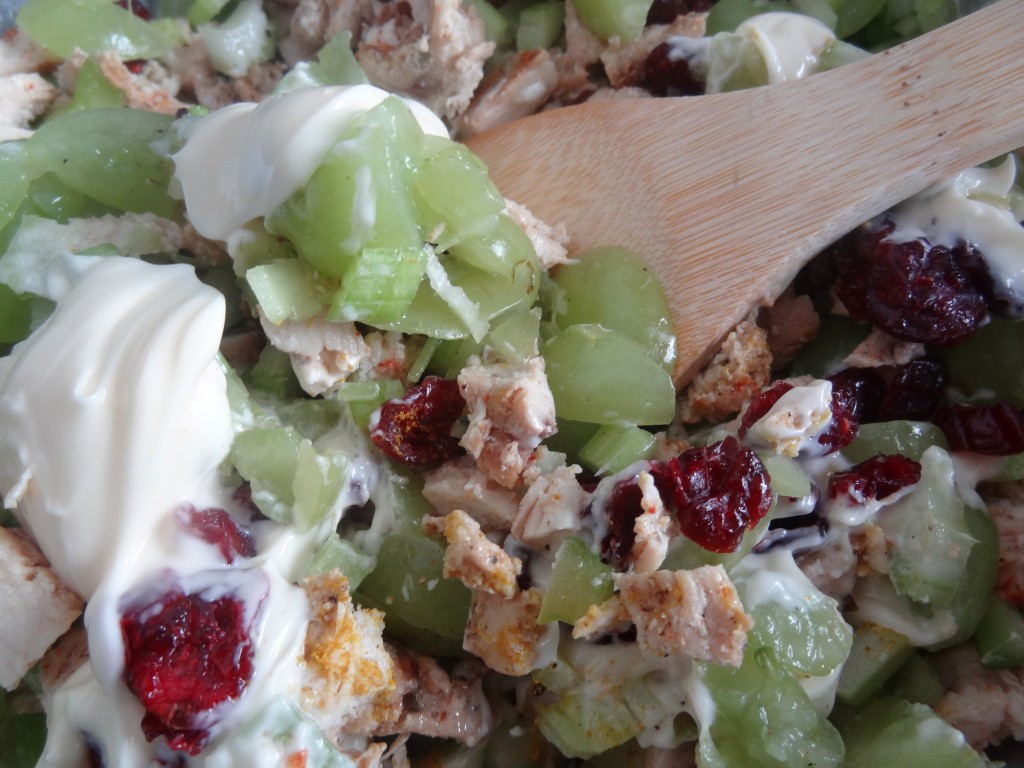
Mix all ingredients in a bowl adding the mayonnaise last. Mix gently, taste and add desired seasonings. Serve
Mr. Lopes sent my family his delicious muffins and I can tell you, they were simply delicious! The muffins are available in many markets in New England and will soon be able to order online via their website in the near future.
The muffins have gained much popularity in the recent years and are now featured at many famous upscale restaurants. Paul Lopes, owner of the company says his muffins are used as burger and sandwich buns in many New York City restaurants such as the famous Tribeca Grill, and at Madison Square Garden. They are also used in many upscale restaurants around the country, in Miami, and at the famous Craigs Restaurant in L.A. Ca.
When the Lopes family came to this country 46 years ago, Mr. Lopes’s mother-in-law, Beatriz Caetano, noticed that no one was making the kind of breakfast muffins they ate in the Azores.
Tiberio Lopes, the Portuguese muffin patriarch, got the idea for his product while working at Chaves Market, a Portuguese market that did not sell bolos levedos. Beatriz gave Tiberio and Leonor the recipe.
In 1975 the husband-and-wife team started the baking business out of their garage. They found a distributor who brought the muffins to mom-and-pop shops in Cape Cod.
Their muffins became a hit and the demand was enough to start a mail order business. It catered to customers who got to know the product while vacationing in Cape Cod and wanted to get the muffins back home.
This led to them moving out of the garage and into their first and smallest bakery on South Main Street.
In 1988, the Lopes’s got their first big break. A story in the New York Times featured the family and their product. The muffins were already being sold to restaurants in the city including high-end eateries like Balducci’s.
Another publication called “Food Finds” also featured the muffins. Today the Food Channel has a show based on the book which looks at local specialty foods.
The Bakery only makes Portuguese Muffins, which they brand as 3-meal muffins due to the fact that they are not just considered breakfast food by their customers. The branding is also a way of shaking off the competition that has followed the names they have given the product since introducing it. They wanted to separate themselves from everyone who tried duplicating their muffins.
The Central Bakery family is proud to be baking the Original Portuguese Muffin since 1975. credits (http://3mealmuffin.com/our-distributors
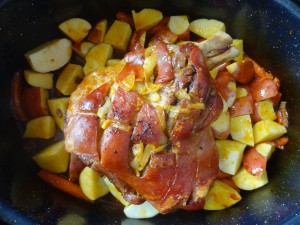
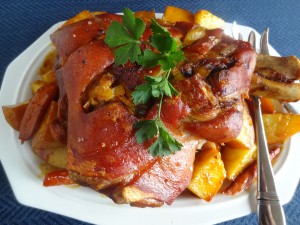
This pork shoulder recipe is simple to make on a lazy Sunday morning. All you have to do is put it in the oven and it pretty much cooks on its own. It has 5 easy steps to a perfect family Sunday dinner! The pork turns out moist and tender. You can slice it or shred it with a fork to create pulled pork sandwiches with my barbeque sauce. Enjoy!
Ingredients:
1 fresh pork shoulder 6-8 pounds
2 table spoons sea salt or kosher salt
1 teaspoon fresh ground pepper
3 garlic cloves (chopped)
1 large onion (chopped)
3 large carrots (cut into quarters)
1 bay leaf
6-8 potatoes (cut into cubes)
2 tablespoons olive oil
1 teaspoon paprika
1 cup of white wine
Cooking pan: 1 large oven roasting pan with lid
Instructions: Prep and cook time 4.5 to 5 hours
Serves 8-10
Pre heat oven to 400 degrees. Remove the pork from the refrigerator and let it sit for at least 30 minutes before prepping if you’re planing on cooking it right away.
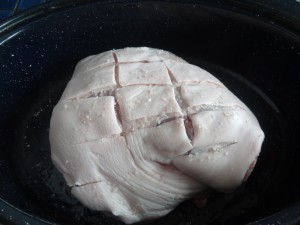
Step 1. Wash and pat dry the shoulder. Place it on a cutting board and score the skin being careful not to cut into the meat.
Coat the pork on both sides with the salt leaving the skin side up. Place the olive oil in the center of the roasting pan and place the pork over the olive oil.
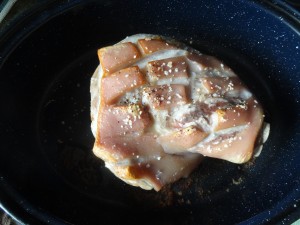
Step 2. Cook the pork uncovered for 30 minutes until the skin starts to get crackling and browned.
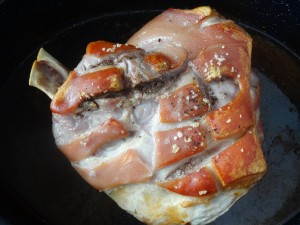
Step 3. After 30 minutes turn the heat down to 325 degrees. Cover the pork with the lid or very tightly with heavy foil and cook for 2 hours.
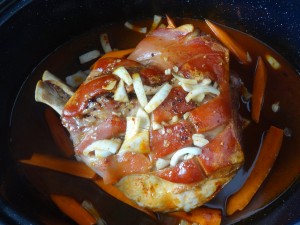
Step 4. After 2 hours remove the pan from the oven, coat the pork with the paprika, garlic and onions and pour the pan drippings over the pork. Place the carrots into the pan evenly around the pork. Add the wine and stir to coat the carrots. Cover and continue cooking at 325 for 1 hour.
Step 5. After 1 hour remove the pan from the oven, add the potatoes evenly around the pork and stir to coat with the seasonings. Add a little more wine if you find the juices have dried out. Coat the pork with the pan drippings. Cover and cook for another 45 minutes at 325 degrees.
Remove the pan from the oven and pierce potatoes with a fork to see if they’re cooked. Gently stir the potatoes and let the pork rest for a few minutes before serving.
Here is the recipe for June in the 10 Chefs 10 Portuguese Wineries series from Wines of Portugal.
Wines of Portugal will announce new chef collaborations and pairings (using the hashtag #10Chefs) throughout the year from now through January on Wines of Portugal’s Twitter (@WPTUSA), U.S. Facebook page, and program page. The printed recipe guide featuring all ten chef collaborations will be available by the end of the year at all Wines of Portugal events around the country and as a special giveaway to Facebook fans. credits and images: http://www.winesofportugal.com/us/food-and-wine/10-chefs-10-wineries/
Louro is a restaurant in the West Village of New York City that features the creative Modern American cuisine of Chef David Santos in a sophisticated yet relaxed setting.
Recipe for June:From wines of Portugal Poached Duck Egg with Amarello Grits, Chourico and Kale, paired with Quinta do Vallado
For the Chourico:
2 lb pork butt, diced into 2 inch pieces 1/2 lb pork fat, diced into 2 inch pieces 3 tbsp salt 6 tbsp smoked paprika 30 cloves whole garlic, peeled 3 bay leaves 2 cups white wine 4 onions, small dice 6 red peppers, small dice ¼ cup extra virgin olive oil 1 cup tomato paste 1 bottle white wine 2 cups water seasoning to taste
The day before, marinate the pork, pork fat, salt, paprika, garlic and bay leaves in two cups of white wine in a non-reactive bowl or container. Mix well with your hands and leave covered in the refrigerator overnight. The following day run the mixture through a meat grinder. In a large pot that will fit both the sausage and the remaining ingredients, sauté the onions and peppers in olive oil over medium high heat. When the vegetables begin to color and are nice and soft, add the tomato paste and toast for 2 minutes. Add the sausage and sauté until it’s nice and crumbly, about 10 minutes. Make sure to keep stirring to break up any large clumps that form. Add the white wine and water and bring to a boil. Reduce the heat and simmer for 2 hours, making sure to stir every few minutes. When the mix is nice and tender with a thick consistency, it’s ready. Keep in mind that you may have to add a little more water during the cooking process to allow for the time it needs to cook.
For the Kale:
1 small onion, diced 6 cloves garlic, peeled and chopped 3 tbsp olive oil 3 bunches kale, washed and de-stemmed salt and pepper
In a pot with a lid big enough to fit all the kale, sauté the onions and garlic in olive oil over medium heat. When the vegetables are slightly colored and soft, about 6 minutes, add your kale and season. Cover the pot with the lid, lifting every minute or so over the first 7-8 minutes to stir. The kale will start to release moisture; this liquid will become your braising liquid. Keep the cover on and reduce the heat to low. Braise slowly for about 30 minutes until the kale is tender but not falling apart. Cool and chop to make mixing more manageable.
To finish the dish:
3 cups milk 4 tbsp butter 1/2 cup Anson Mills coarse grits 4 tbsp queso amarello 2 tbsp distilled vinegar 4 duck eggs salt and pepper
Bring the milk, butter and seasoning to a simmer in a large sauce pot. Add the grits and stir continuously over medium heat for 20 minutes, adding more milk if needed. Check the seasoning and adjust as needed. In the meantime, while stirring the grits, fill a 2 quart sauce pot with water and add the vinegar. Bring the water to just before simmering. When the grits are done, cover and set aside. In another pot warm a 50/50 mix of kale and chourico until nice and hot. To finish the grits, mix the cheese into it and stir to emulsify. Check the seasoning. Make a whirlpool in the egg pot and crack the eggs in one at a time. Poach the eggs for about 2-3 minutes until the white is set and the yolk is soft.
To plate, pool grits in a bowl, then place the kale mixture on top of the grits, and top with the poached egg. Drizzle with a little good Portuguese olive oil.
Louro
142 WEST 10TH STREET
(BETWEEN WAVERLY PLACE AND GREENWICH AVENUE)
212.206.0606
Find a Recipe
FIND RECIPES HERE
"Join me! Lets' s share recipes, learn how to cook traditional Portuguese dishes, or chat about our cuisine, culture and traditions. I want to share these recipes to preserve our Portuguese passion for great food and pass them along to the next generation. So come along, Let's cook Portuguese!"
Support Tia Maria's Blog page to promote our Portuguese heritage. SCAN QR CODE:
ORDER SET OF 1 REGULAR AND 1 SPICY JAR - FREE SHIPPING IN USA
BUY NOW ON PAYAPAL OR SCAN QR CODE BELOW
TASTE PORTUGAL COOKS AVAILABLE ON AMAZON ALL AROUND THE WORLD: FREE Prime shipping in USA
COOK BOOKS ARE ALSO AVAILABLE ON AMAZON.CA (CANADA)
ORDER SET OF 2 TASTE PORTUGAL SEASONINGS ON PAYPAL OR SCAN QR CODE: FREE SHIPPING USA
COOKING PORTUGUESE IS EASY WITH TIA MARIA’S TASTE PORTUGAL PORTUGUESE SEASONINGS
LISBON BLUE ETSY SHOP – FREE SHIPPING IN USA
Shop at Gaspars online for great Portuguese Products
Portuguese Linguica and Chourico
Gift Packs
Gaspars Sausage Company
For nearly a century Gaspar’s Sausage Co., Inc. Has been recognized as the largest manufacturer of Portuguese smoked sausage in the United States. Order today! www.gasparssausage.com or call us at 1-800-542-2038
MY TASTE PORTUGAL SEASONINGS DISTRIBUTOR - GONSALVES FOODS.COM
GONSALVES FOODS
GONSALVES FOODS
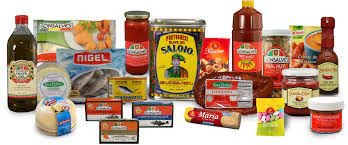
The taste of Portugal here in America Your source for authentic Portuguese products We’re proud to offer a wide selection of authentic Portuguese foods from our Gonsalves and Bom Petisco brands as well as the leading Portuguese brands like Saloio olive
0












































 Now available in Canada – Amazon Canada

 LISBON BLUE ETSY SHOP
 My appearance on RTP Portuguese TV Notícias do Meu País
 No Kid Hungry | Share our Strength Help End Child Hunger in America

























 GONSALVES FOODS