It’s been a long, cold winter so to cheer you up, I’ve found some great sites and sites to help you plan your summer vacation in Portugal.
The Michelin guide to Spain & Portugal is available on Amazon. Visit my favorite gifts on this page to order.
Here’s a list of Michelin Star chefs in Portugal that have made the list for 2013! Bom appetite. Have a nice trip and send back pictures!
This is a breathtakingly beautiful video presented by the Tourism office of Portugal. I really enjoyed seeing the beautiful green mountains of my home; Tras os Montes!
I’ve recently been asked to add more Portuguese soup recipes to this site. Today I made one of my family’s favorite’s to share with you.
This recipe for Sopa de Feijão – Portuguese Green Bean Soup, is a beautifully flavored and hearty soup that you can enjoy all year round!
When I make this soup in the summer, I normally use a heirloom variety of green beans from my vegetable garden known as Romanos – also known as Italian green beans.
The flat beans are superior in quality because they have a nutty, meaty taste and smooth tender flavor.
I love this variety of beans and use them in all of my recipes requiring green beans. They’re very easy to grow and require little maintenance other than lots of watering and a some miracle grow!
If you’re not familiar with this type of heirloom green bean ask some of your Portuguese friends who are gardeners and they can help you find some.
In the winter I buy the packages of frozen Italian green beans which you can find in the frozen vegetable section of your supermarket.
In my recipe, I use pasta instead of potatoes which many cooks usually use, but I’m not a big fan of potatoes!
If you prefer to use potatoes, just substitute 2 cups of potatoes instead of pasta but you’ll have to cook and puree the potato along with the vegetables.
This recipe is very easy to prepare since it’s made with the staple ingredients you already have in your kitchen.
Ingredients:
1 large chopped onion
3 large chopped carrots
1 stalk celery
1 large clove garlic
3 tbsp olive oil
1 large bay leaf
1 can white northern beans
1 9 oz box (Romano – Italian) green beans
8 cups water
2 cups chicken broth (or vegetable if you prefer)
1 tbsp salt
1 tsp pepper
2 tbsp any tomato sauce or 1 small ripe tomato
2 cups small Penne or (substitute potato if you prefer)
Instructions:
In a large soup pan, saute the trinity (onions, carrots and celery) in olive oil until translucent. Add the chicken broth, garlic, water, tomato, and seasonings. Bring to boil and cook on medium until vegetables are tender.
Remove pan from heat. Remove the bay leaf and add 1/2 of the can of white beans. Puree the soup with an immersion blender to desired consistency. I like the soup a little chunky but its up to your taste.
Place the soup back on the stove on medium heat. When it comes back up to a boil, add the pasta, green beans, and remaining white beans.
Cover and let it simmer on medium heat for about 20 minutes or until the pasta is cooked. Add more seasoning if desired.
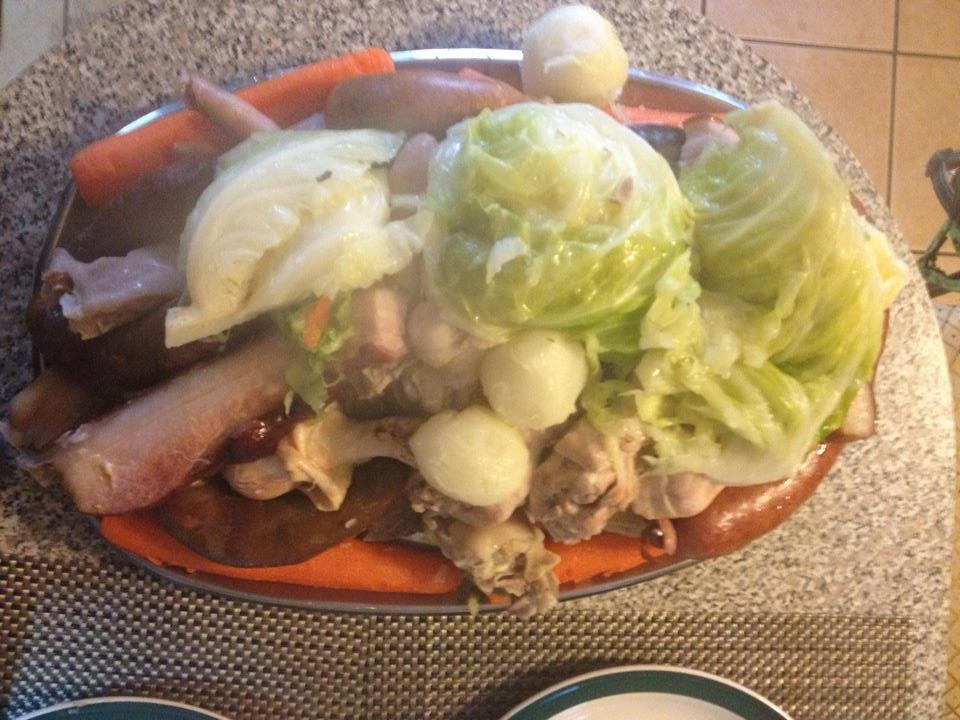
Cozido a Portuguesea (Portuguese Hot Pot) by Nelson de Sousa
Nothing says I love you as much as cooking that great classic, “Cozido a Portuguesa” for your family on a cold winter day!
Here’s a recipe from a great home cook! Nelson, is a Bona fide – “Portuguese Foodie” like me who puts his heart on the plate.
He loves Portuguese food so much that began a “Portuguese Cooking” page on Facebook and even took a job as unpaid intern – sous chef at: o lagar restaurant – a Portuguese restaurant in Union NJ.
Here’s his intro and his recipe below. Thanks Nelson. Enjoy everyone!
Nelson de Sousa – Feb 21, 2011:
Every culture has a tradition of a boiled meat dish. The Chinese call it hot pot, the French call it choucroute and Latin Americans call it sancocho. The Portuguese call it cozido and nothing beats this comfort food in the middle of winter with several inches of snow falling and a negative wind chill!
Of course it doesn’t much snow in Portugal but cozido reminds me of cold Saturdays in my parent’s basement with a big pot of boiling goodness that would steam up the windows, walls and the TV with its warmth. The Portuguese cozido has its origins in the Beira region and is commonly made from shin of beef, pork, and Portuguese smoked sausages and in some regions chicken, served with cabbage, carrots, turnips, rice, potatoes, and collard greens.
Since the origins of this dish are humble (this is a rustic recipe meant to use up the cheaper cuts of meat) it contains ingredients that are unsavory to more “American” refined palates such as pig’s snout, pig’s feet, pig’s ear and blood sausage. I give no quantities below as it varies by how many people you are serving.
When you go to the store you will have to gauge how much meat to buy for the amount of people you are serving. Similarly, I don’t give cooking times as this varies by how much meat you are using, which particular cut you are using and the thickness/weight of each meat item. You will have to test periodically with a knife and fork until you reach your desired tenderness.
Some aficionados of cozido prefer the meat less tender while others prefer it falling off the bone. Traditionally a well plated dish will consist of some quantity of one of everything mentioned below albeit in a smaller cut up portion.
If all the various cuts of meat are not available or they disgust you don’t worry all you need to maintain the spirit of the dish is to have a sampling of all the meats (pork, beef, chicken) sausage and the vegetables.
Cozido
Ingredients:
stewing beef (whole piece not cut up stew meat)
pork ribs
pork hock,
pork snout
pork tail
pork ear
pork neck bones
chicken
morcela sausage (a Portuguese blood sausage)
chourico sausage (the Portuguese equivalent to chorizo)
salpicao sausage (a Portugese sausage)
farinheira sausage (a Portuguese mealy sausage)
lean unsmoked bacon slab, in one piece
turnips
potatoes
white cabbage
carrots, scraped
collard greens
rice (optional)
Directions:
Place all the meat except for the sausages in boiling water enough to cover all and allow it to cook at a low boil. Add salt to taste. As each item of meat cooks, remove it from the broth into a separate dish.
Please note that different meats will cook differently. Check your meat periodically for your desired tenderness.
When all the meat has cooked thoroughly place the white cabbage, potatoes, carrots and turnips in the broth and cook. Remove vegetables as they are cooked and set aside with the meat.
Once again please note that vegetables may cook at varying rates so check periodically. Add collard greens and boil until tender and cooked. Finally add the sausages and boil until cooked being careful to watch the farinheira as it can explode.
When the sausages are near being fully cooked gently place the meat back into the broth pot, along with vegetables so that all the ingredients can come up to temperature. Place the vegetables last into the pot.
To plate the dish place the cabbage into a platter. Slice the beef, pork, chicken and sausages into manageable 2-3 inch pieces and place on top leaving the bone in pieces a little bigger so as to not distort the natural shape of the meat.
Garnish the dish with the remaining vegetables around the platter and top with slices of sausage.
Some like to reserve some of the broth and cook some rice in it. To do so take some broth out before adding all the ingredients back into the pot to reheat. Remember that liquid to rice ratios are: 1 quantity or rice to 2 of liquid.
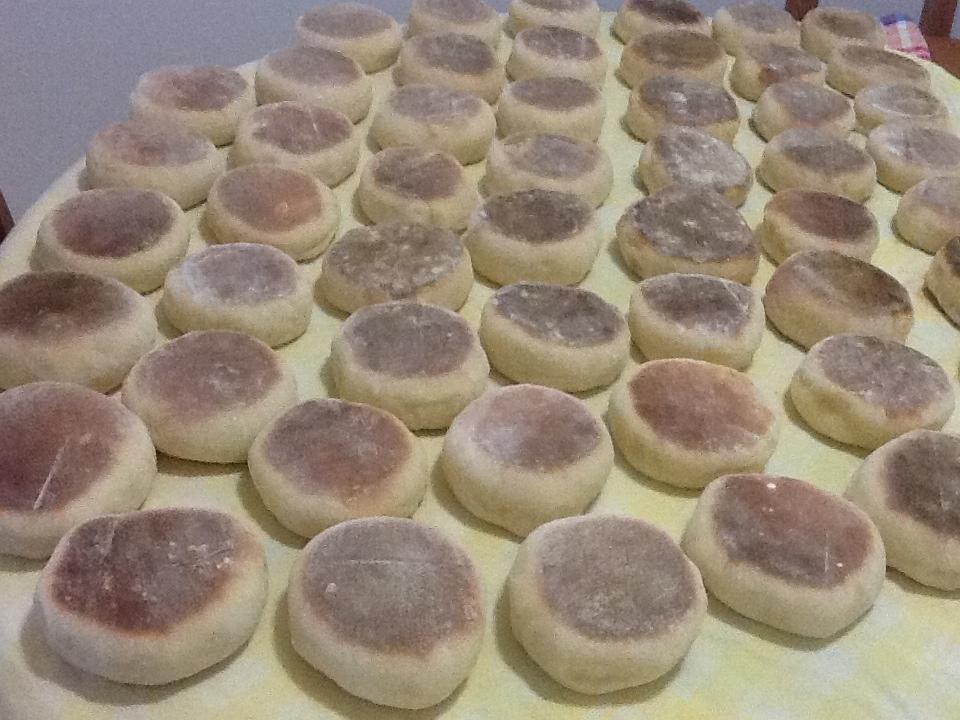
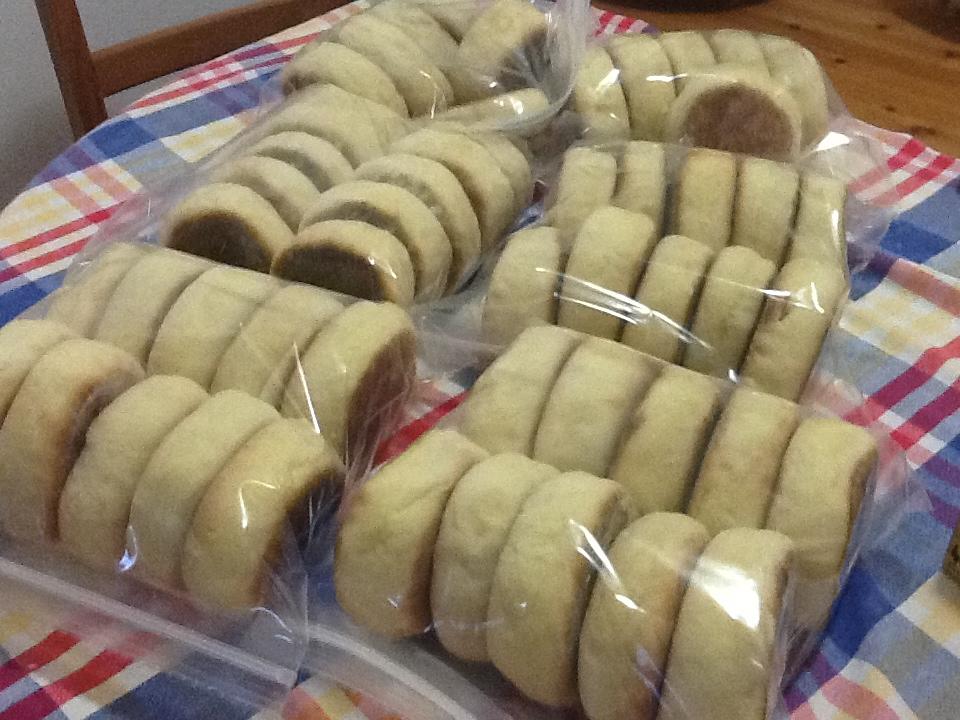
Bolos Levedos – Portuguese Sweet Muffins or Portuguese pancakes, originated from the Azorean Island of Sao Miguel, Portugal. They’re very popular in Portuguese American communities all around the country.
These muffins are great toasted with butter and jelly or use them as sandwich buns. Many grocery stores in Portuguese communities sell the muffins but you can order them online at Gasparssausage.com.
This great recipe was sent to me by Leonor Santos from Bermuda! It’s so nice to have Portuguese Foodies all around the world who want to preserve our recipes and our culture!
Note that this recipe makes dozens of muffins. Cut the recipe in half to make a smaller batch. However the freeze very well so go ahead and make the whole recipe! Enjoy!
Ingredients to make the yeast: 3 tbsp flour 1/2 tsp sugar 3 tbsp yeast
1 cup warm water
First Step:
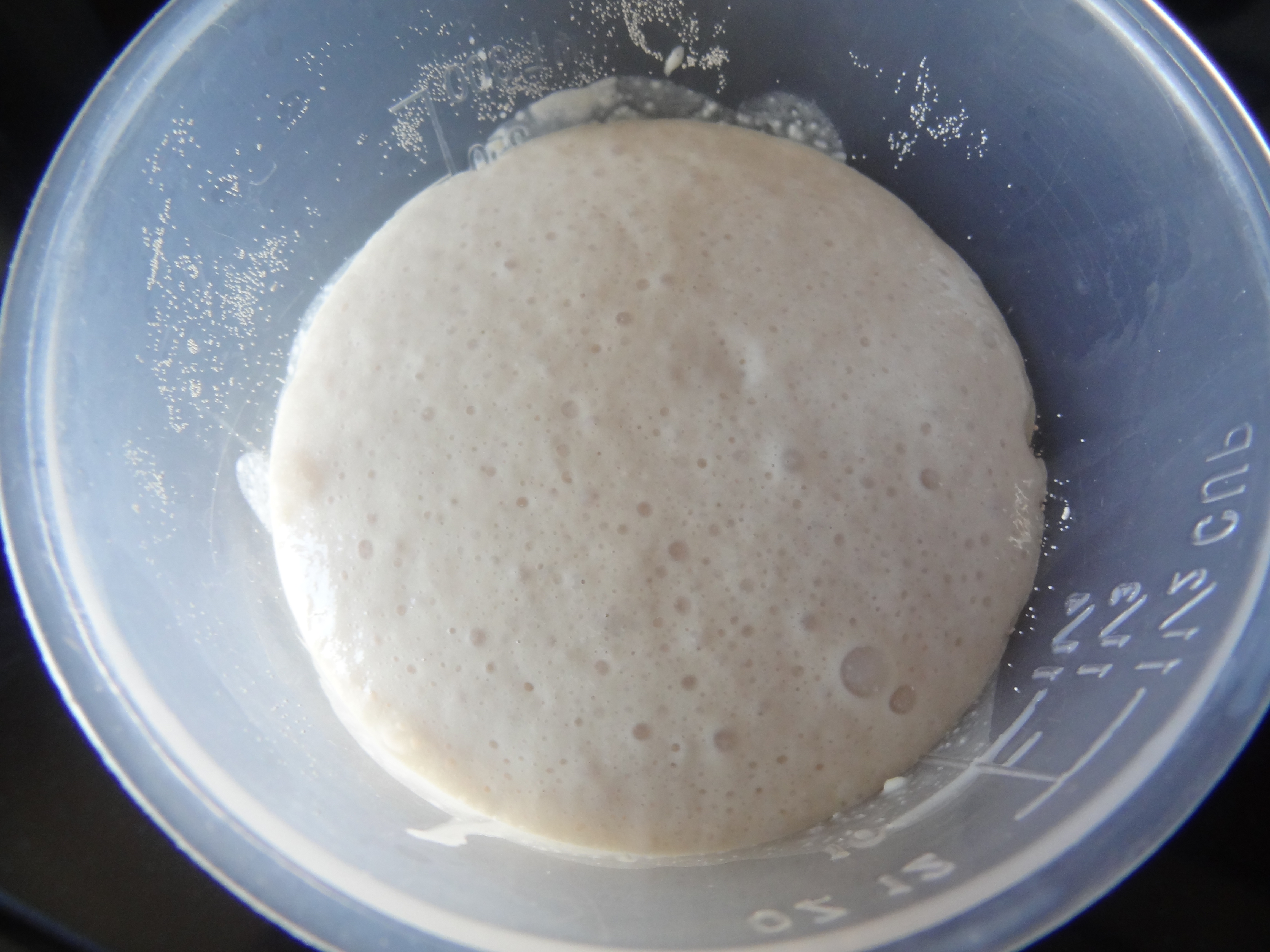
Make the yeast mix with the listed ingredients and put it aside for 10 minutes
Heat the milk and butter in a pan until warm and the butter is melted. Set aside.
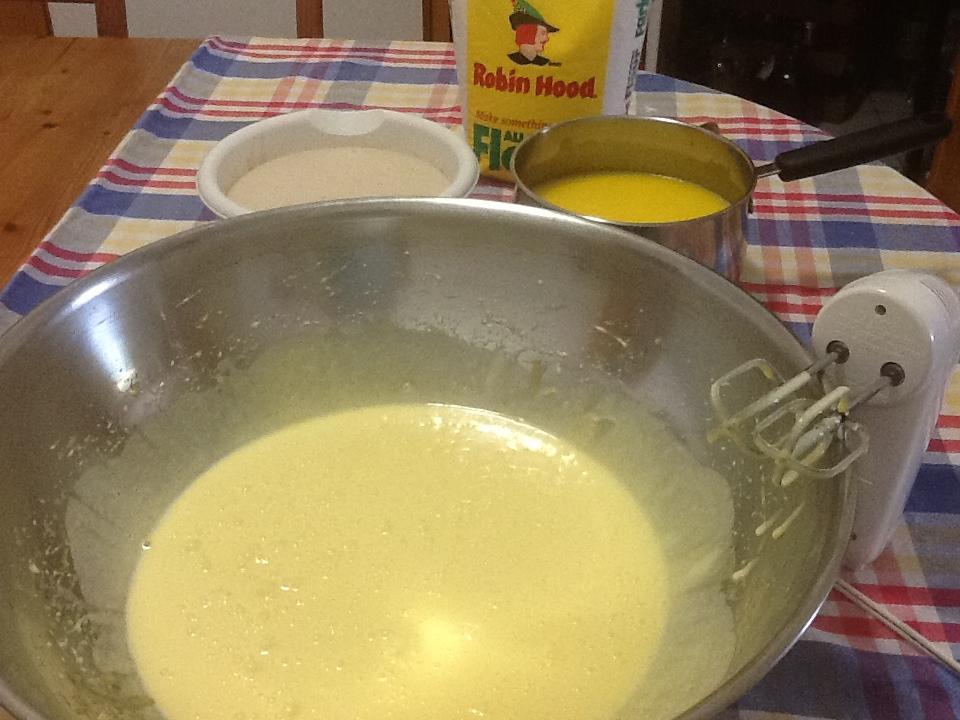
Beat the eggs, sugar salt for 2minutes. Add the milk and butter and beat for an additional 30 seconds. Mix in the yeast and stir.
Add flour and knead well until a soft bread dough forms. Let the dough rise for 30 minutes.
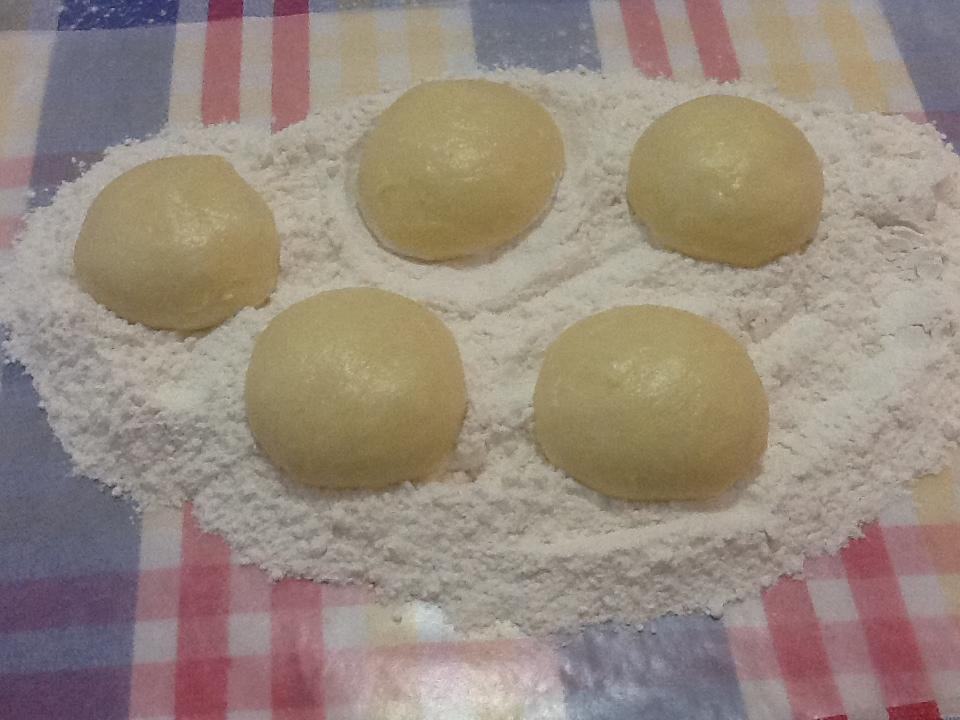
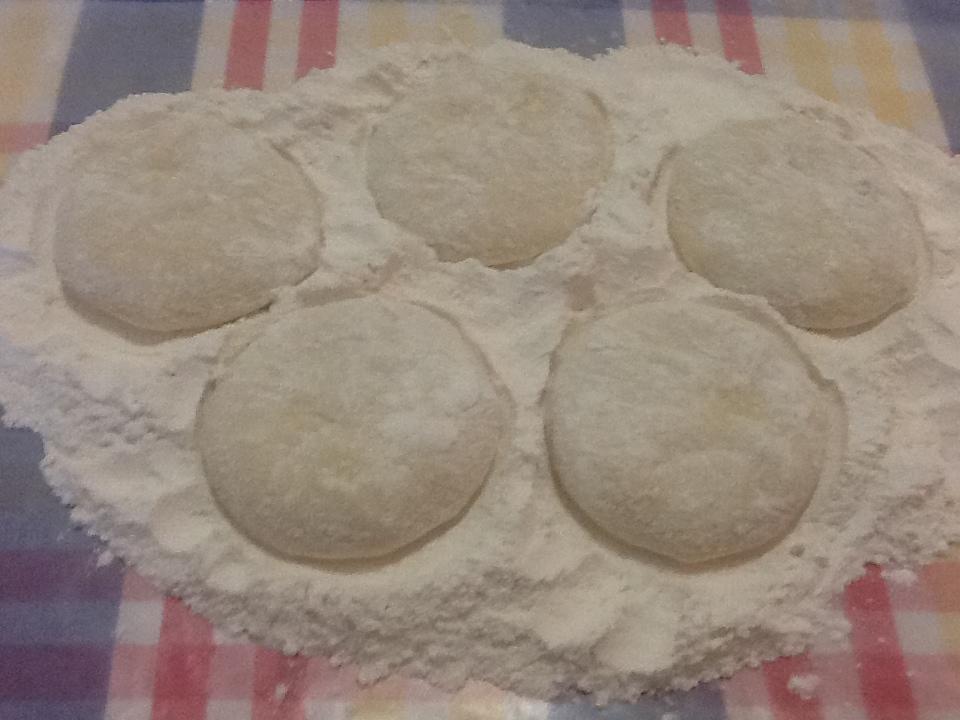
Form the dough into little balls and them dust with flour.
Let them rest for another 30 minutes. Press them flat to cook.
Cook in a cast iron or heavy skillet on low heat. When one side turns dark golden brown, flip over and cook the other side.
Let them cool. Place in freezer bags to store in freezer.
This true story that happened long before Shakespeare wrote Romeo and Juliet. A story of love – tragedy – and of a haunting. Could this have been Shakespeare’s inspiration?
The summer when I was 12 years old, my parents took our family on a vacation back to Portugal. We traveled on a fabulous train ride through some incredible scenery from Lisbon to Porto, toured the famous castles, museums, gardens, and all the other famous sites that my brothers and sisters and I had never seen before since we had immigrated to America when we were young.
It was a trip of a life time, which has left fond memories in my heart. But of all the places I visited that summer, there was estate in Coimbra, that left the most vivid image in my mind. Perhaps it was that spooky story that was told to us by the tour guide on that hot summer day. The terrifying story made my skin crawl and gave me a sense that a ghost was watching me as I walked along the guided tour with my parents and siblings.
This story takes place at; “Quinta das Lágrimas“ (Estate of Tears), a famous estate in Coimbra, Portugal once inhabited by the Portuguese nobility. The original castle was built in the 14th century during the rein King Afonso IV. The estate had very lush and famous hunting grounds often visited by many kings and emperors of Europe.
Ines de Castro and King Pedro
Prince Pedro, the son of King Afonso IV was the heir to the Portuguese throne. When he was 19 his father had him marry Constança of Castile (Spain) in order to build an alliance in 1340.
Ines de Castro,a daughter of a nobleman from Castile, was a lady-in-waiting to the Princess Constance. Ines was a radiant beauty who stole Pedro’s heart and they quickly fell madly in love.
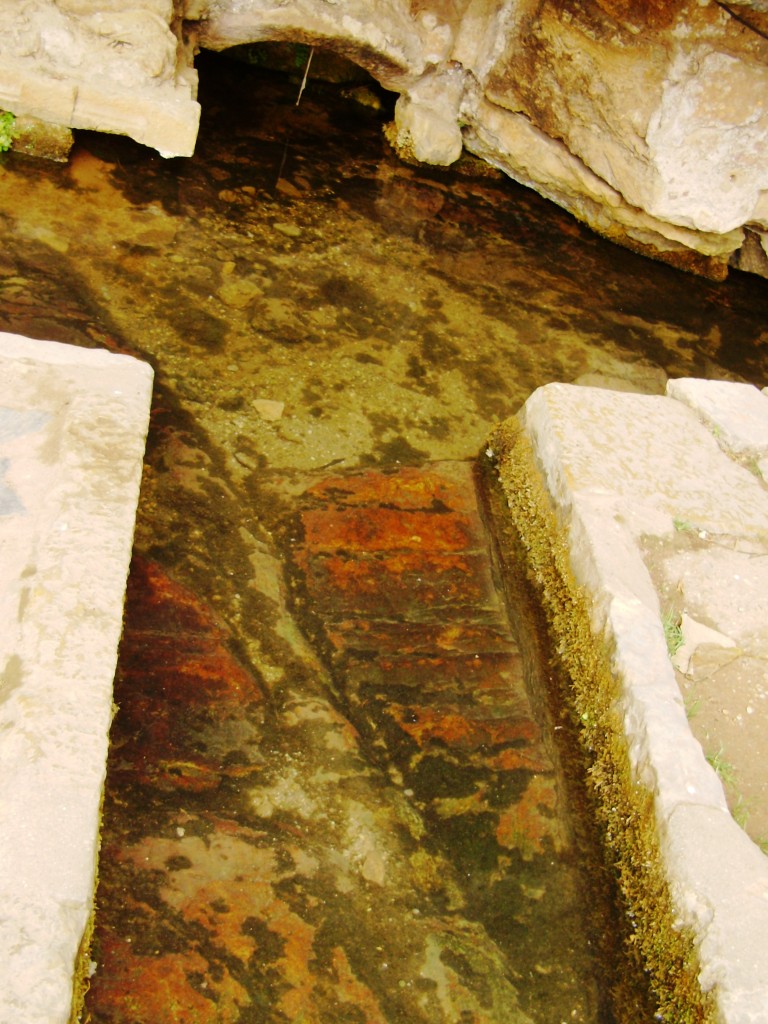
Legend even says that Pedro would send his love letters through channel named “Fonte dos Amores” a pipe that carried water from the estate of Quinta do Pombal to the Monastery of Santa Clara-a-Velha, where Ines lived only less than half a mile away.
According to the legend, if two people in love simultaneously drink the water as it pours from one channel to a lower one called “Pipe of Love” their love will be everlasting.
Quinta das Lagrimas Hotel
“Fonte dos Amores” – Fountain of Love
The affair caused great conflict between the two countries which made King Afonso . The Queen tried to end the affair by making Ines Godmother to her children but to no avail. King Afonso was furious at the their affair so he banished Inês from Court and sent her back to Castile in 1344. However, the distance between them did not end their love for one another. Pedro’s passion could not be subdued and he would often visit Ines in Castile.
In 1349 Princess Constance died. Dom Pedro brought Ines back to Portugal and settled her in Coimbra, where they would live together openly. The lovers were closer than ever, and they went on to have four children.
Pedro wanted to marry Ines to make her the lawful Queen but his father opposed it because he feared that Ines’s children would claim the throne one day rather than the legitimate children borne by Princess Constance.
The King wanted to end the relationship so when Pedro was away he decided the only way to end the relationship was to kill Ines. On Jan 7, 1355 the king sent three of his courtiers – Pêro Coelho, Álvaro Gonçalves and Diogo Lopes Pacheco – to Coimbra, to end her life.
The assassination took place in Santa Clara-a-Velha but the myth associates Inês’ tragedy with the Quinta das Lágrimas. It is believed that her blood still stains the red stone-bed of the natural spring on this estate which irrigates the estate’s farmland through channels. Thin grasses sway the water, representing Inês’ hair. This is said to be where Ines shed her last tears at the hands of the assassins thus giving the spring it’s name.
Legend say’s Ines’s spirit still haunts the ground of the estate and you can see her blood stains embedded into the stones of the fountain.
Pedro’s love for Inês lived on after her death. He waged war against his father for having killed her thus creating a Civil war in the country for two years until the Queen, Pedro’s mother arranged a truce between the father and Son. However, Pedro never forgave his father and when he became king in 1357 after his father died, Pedro exhumed Ines’s body from the Monastery of Santa Clara of Coimbra, built her a royal tomb, and crowned as queen, claiming that they had married in secret before she died.
The legend says that after forcing the members of his court to kiss her decomposing hand and swear allegiance to their new queen, Pedro tracked down her assassins and killed them, ripping out their hearts with his bare hands.
Poem on the stone at Fonte das Lagrimas by the famous Portuguese Poet;Luís de Camões
To ensure they would be together in the afterlife, Pedro installed Inês’ body in the monastery of Alcobaça and had his own sarcophagus placed at the foot of hers.
Pedro and Ines’s sarcophagus at Alcobaça Monastery
The tragedy of Inês de Castro has been celebrated everywhere: in epic and lyric poetry, in novels, dramas, in paintings and in music. According to José Hermano Saraiva, more than 120 operas were created about this story in Italy alone. Among these is a famous 18th-century opera by Paisiello and an 1830 ballet entitled Pietro di Portogallo.
Decades later after the tragic love story the estate became part of the University of Coimbra and in 1730 purchased by the family; Osório Cabral de Castro, who had a palace built on the property. During the 18th century a lavish garden was added which contains exotic vegetation from all over the world.
The Duke of Wellington, commander of the troops who fought against Napoleon lived on the estate at one time and had planted tw0 sequoia trees near the fountain. which are now over 200 years old.
Today, the estate is a luxury hotel. If you have the pleasure of dinging at the Quinta das Lágrimashotel, you will feast on the food of love because its kitchen garden is still fed by the same channels of water. Tour guides are still available for lovers who want to experience romance of long ago.
There is no definition in any dictionary that translates the word Zen into Portuguese.
This tranquility does not exist in our culture. We have to much ambition, drive and determination. Perhaps it’s the reason why our ancestors sailed the oceans and at one time conquered the world. This type A personality, AKA (workaholics) is in almost every Portuguese person. This is the reason why we’re the best cooks, the best bakers, the best sailors and candle stick makers! Plus add what ever occupation you want to add to the list!
January is supposed to be a month of reflecting on the past and planning the future, but I have no intention of doing any of it!
To be honest with you, I found myself wiped out on the morning of January 1st, 2013. Maybe it’s because I was sick with the flu all through the month of December, or, it may have been from the hectic Holiday Season.
But for what ever reason, I was so glad the year was finally over. Instead of reflecting and planning, I’m doing a little Zen therapy on myself.
Join me, discover how the Portuguese got the world hooked on tea, bake yourself a deliciously healthy Carrot Cake and have your own Zen moment!
A Japanese priest in the 13th century wrote a lengthy treatise on the health benefits of tea stating, “Tea is a marvelous elixir of health that has the capacity to prolong human life. Most medicines treat only a single ailment, but tea is a panacea for all ills.” Gorreanatea.com
Maybe that Japanese priest was right? My parents drank chá de cidreira – (lemon balm tea) everyday and they lived until almost 90 years old. Like my parents I’ve turned into a daily tea drinker. Lemon Balm, Orange Pekoe and Tazo Zen tea are my favorites.
Growing up watching my parents drink tea, I never knew how it was made or where it came from. Many years later as I developed a taste for tea myself I discovered that it was the Portuguese traders that first introduced tea to Europe and even to India! It’s quiet fascinating that our Portuguese ancestors brought so many culinary influences around the world including tea.
The Portuguese were the first Europeans to import tea in large amounts to Europe during the Portuguese expansion of the 16th century. They took their word for tea (cha), from Cantonese in the 1550s when they had trading posts in the south of China, especially Macau. For those of you that aren’t familiar with Macau it’s a region off the mainland of China which was a Portuguese colony until 1999 when it was transferred back to China. Both Chinese and Portuguese are Macau’s official languages.
In 1750, tea experts from China began planting tea on the Island of San Miguel, Azores Portugal. Today, Gorreana Tea, founded by the Gago da Camara family, is the only remaining of the 14 original tea producing estates and has remained family owned and operated for 5 generations. Learn more about the history of tea in Portugal here.
In 1662, Catherine Braganza of Portugal married King Charles II and brought tea to the royal court of England for the first time. Still, much of the earliest days of European tea, was far too expensive at $100 a pound, to gain favor with anyone but the rich. Tea was not widely consumed in Britain until the 19th century.
How To Make The Perfect Cup Of Tea: From Gorreana Tea
Good water is essential
Fill an empty kettle with fresh cold water. If using tap water, let the water run for 5 seconds so that it is fresh. If you have hard water, for best results, use spring water.
Measure Your Tea
For loose tea, place approximately one teaspoon of tea leaves per cup into the pot, or into an infuser placed in the pot. If you don’t have loose tea, use one tea bag per 1-2 cups, depending on the size of the bag and personal preference.
Boil Water As soon as the water comes to a boil, remove it from the heat. Overheating the water causes the tea to taste flat. Immediately pour the water into the pot, cover, and let stand. If using green tea, allow the water to cool slightly before pouring onto the leaves
Steeping Your Tea
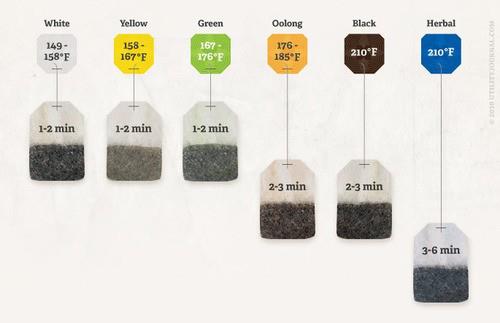
How long to steep depends on how strong you like your tea and the type of tea you’re using. Do not judge by color because some teas brew light while others brew dark. Most teas will taste bitter if you steep longer than FIVE minutes. If you have used an infuser or tea bags, remove them from the pot when the tea has reached the desired strength. Tea bags steep more quickly because the leaves are finely cut, so don’t let them steep too long. You may squeeze the bags gently before removing them from the pot to reduce drips. If you placed loose leaves directly into the pot, you may want to pour the tea into a second warmed pot through a strainer to separate the tea from the leaves. But if you plan to pour all the tea into cups soon, simply place a strainer over the cup and pour slowly from the original pot.
Perfect steeping time for tea
Adding Lemon, Sugar, Milk or Honey
If you add lemon and sugar to your tea, add the sugar first, since the citric acid from the lemon will prevent the sugar from dissolving. Milk is often used in full-bodied black teas such as our Broken Leaf Tea. (Don’t use cream as it interferes with the taste of the tea.) Also, Do not use milk with green tea (Many teas are better without). Adding a little honey to tea is a personal preference, but it is a delicious way of sweetening your tea.
Storing Tea
Tea to be enjoyed properly must be sealed properly! It is that simple. Teas are known for there taste, color, aroma etc, and are very easily affected by other scents-which could alter the quality of a good tea. Often times, people will notice if they leave there tea in a cupboard for many months without being stored in a proper package or container, that their teas have picked up other scents from surrounding foods and spices. Grown hundreds of miles away from industrial pollution using traditional farming methods, when you open your package of Gorreana tea the first thing you will notice is the aroma of the high quality tea leaves! Fresh never tainted!
How to make a great Carrot Cake!
This cake is very easy to make and I can bet that most of you have all of the ingredients in your pantry right now! If shredding the carrots intimidates you, don’t kill yourself, or your arm, just shred them in your food processor!
I find that using oil in carrot cakes often leaves the cake greasy so I use margarine and yogurt for moistness instead. After you try this recipe and see how deliciously easy it is to make, you’ll never buy a store carrot cake again! Enjoy!
Ingredients:
2 cups flour
1 cup brown sugar
1 tsp baking soda
1 tsp baking powder
1 tsp salt
2 tsp cinnamon
3 eggs room temp
3 cups shredded carrots
1 stick margarine (soft)
1/2 cup Pineapple fruit on the bottom yogurt (or any you prefer)
1 cup chopped walnuts (optional)
1 cup raisins (optional)
Frosting:
1 Package cream cheese (room temp)
2 cups confectioners sugar
1 tsp vanilla
Instructions:
In a large mixing bowl, mix eggs, sugar, and margarine until creamy. Add Carrots and yogurt. Combine all other ingredients except walnuts in a bowl. Add dry ingredients to the wet batter and mix for about 5 minutes.
Add the walnuts and raisins if desired and fold into batter.
Poor into 2 greased 9 in round cake pans. Cook in 350 degree oven for 30 -40 minutes until toothpick comes out clean. Let cool and frost with desired amount of cream cheese frosting. Top with more walnuts!
(If you like lots of frosting, double the frosting recipe)
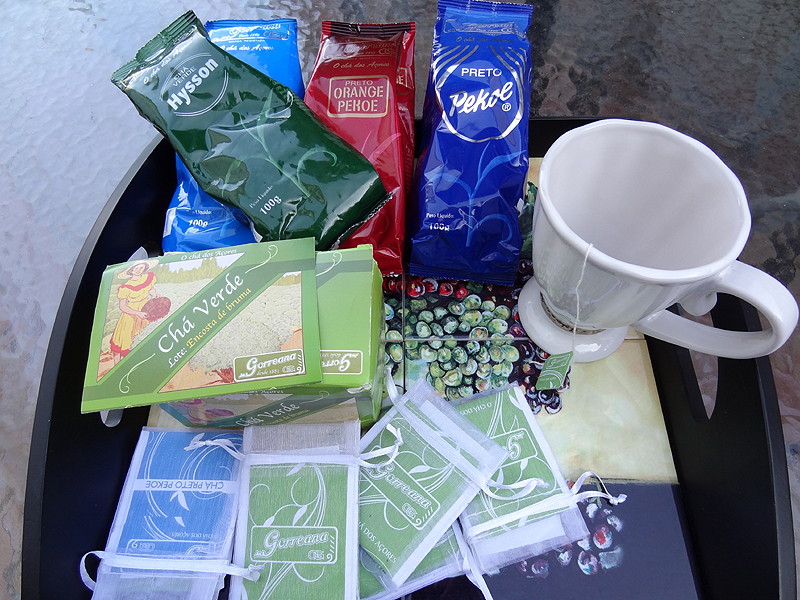
Watch this video from the beautiful Gorreana Tea estates, which uses my photo that I took of their tea last summer on my patio table.
I love pulled pork but I’m not a fan of Barbeque sauce so I came up with a Portuguese version.
This recipe is a crowd pleaser for your next party or family gathering. What a great way to warm up on a cold winter day!
My family loves Polish Perogies so I add them to the recipe, but this is optional.
Don’t you love the American Melting Pot of Cuisine? I used the Southern, Polish, and Portuguese influences in this dish.
It’s very easy to make. You put the pork shoulder with all the ingredients in the oven and 6 hours later your meal is done!
I serve the pulled pork on Portuguese rolls, Pao Caseiro, or Pao Milho of course! Enjoy the recipe.
Ingredients:
1 large uncooked pork shoulder
2 large sliced onions
2 large carrots cut in half
3 cloves garlic
1 bay leaf
1 tsp cumin
2 cups (Sagres Beer) – or any Dark Beer
1 jar of Jalapeno, Chipolte, or any favorite (hot) peppers
2 tbsp Piri Piri sauce
1 tbsp salt or more to taste
1 tbsp pepper or more to taste
1 large head of cabbage cut into wedges
1 package of any flavor Perogies (optional)
Instructions:
Wash and dry the pork. (Remove Skin if desired) Season with desired salt and pepper. Add all ingredients into a large covered Dutch Oven. I use my turkey roaster which has a lid.
Cook at 300 degrees for 5 hours. During the last half hour add the cabbage and cook until the cabbage is tender. Remove the excess grease from the pan but leave the cabbage in the pan.
Remove the pork and trim off all the fat. Shred the meat using 2 forks and place it back into the pan with the cabbage. (Add Perogies if desired) Cook for about 15-20 minutes to absorb the seasonings in pan.
Serve with Portuguese Roast Potatoes if desired. If you want to serve the pork the next day, let pork cool and store in refrigerator. Enjoy!
The dog wags his tail, not for you, but for your bread.
–Portuguese Proverb
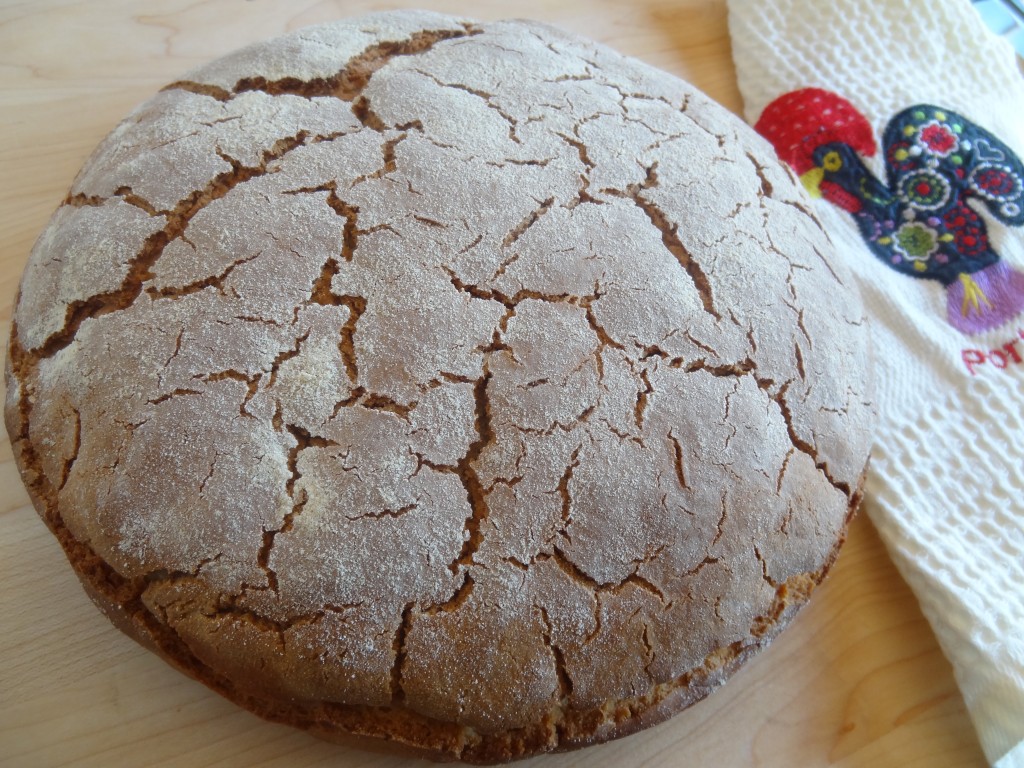
Pão de Milho, is my favorite of all the classic Portuguese breads. This artisan style bread is usually made with both Corn and Wheat flour and originated in the Northern region of Tras os Montes, Portugal.
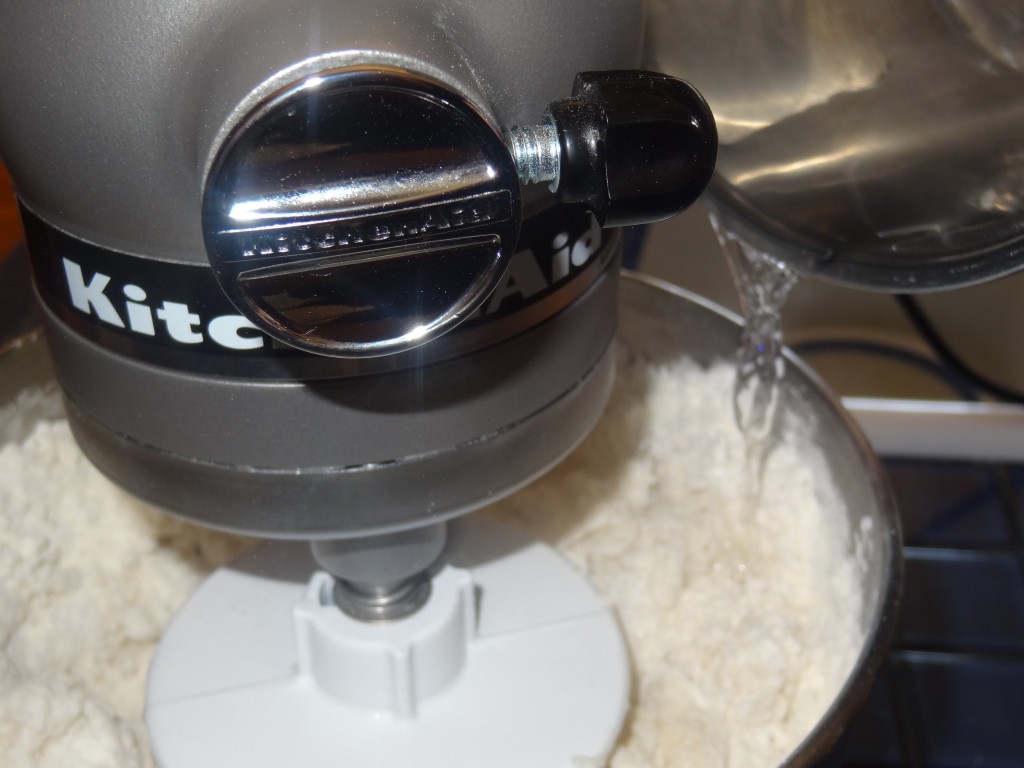
What is unusual about this baking process it that you initially use scalding hot water to pre-cook the corn flour before you add in the regular flour. This is called pre-gelatinization of the corn meal, kind of like cooking polenta.
This process speeds up the cooking and leaves a less sticky dough. Once the corn flour and water mixture cools down you add the flour and finally the yeast.
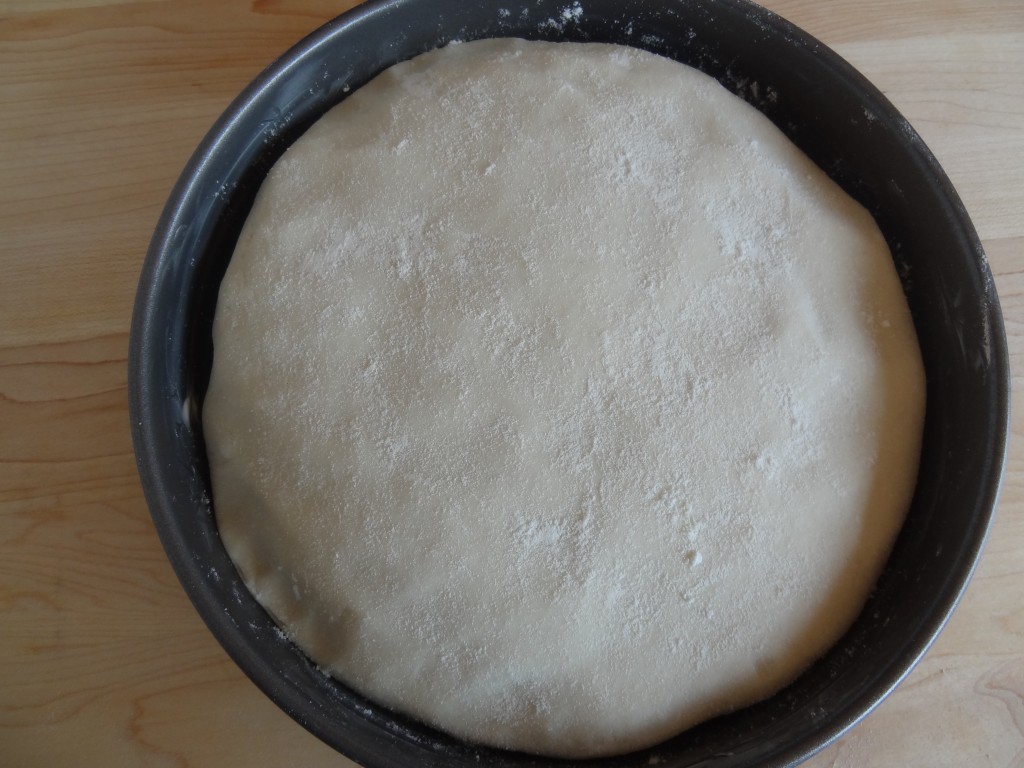
The dough is placed in round shaped pans to form the bread. There is no need to let the dough rise for hours like most bread doughs.
Watch the videos at the end of this post to see the old world traditions of making this bread.
Makes 1 corn bread
Ingredients:
3 and 3/4 cups of white corn flour (you may also use fine yellow corn flour)
3 cups of flour
3 cups boiling water
1 tablespoon melted butter
2 teaspoons sugar
2 teaspoons salt
Yeast Starter:
1/4 cup warm water
1/2 teaspoon of sugar
2 teaspoons powdered yeast
1 tablespoon of flour
Instructions:
Make the yeast starter and set aside.
Place the corn flour in a mixing bowl and add the boiling water butter, sugar and salt. This will start the cooking process of the corn flour.
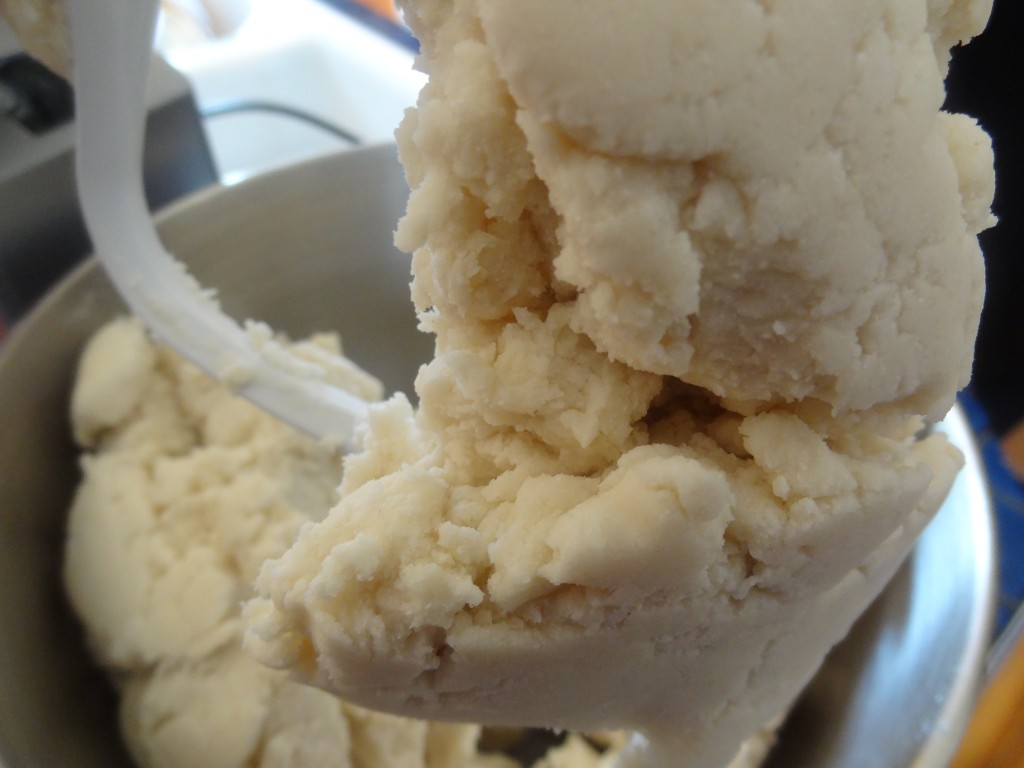
Mix well with a dough hook or with your hands if the dough is cool enough to handle. Let the dough rest for about 5 minutes and add the flour a little at a time.
Add the yeast mix and knead until the dough is smooth and can be shaped into a ball.
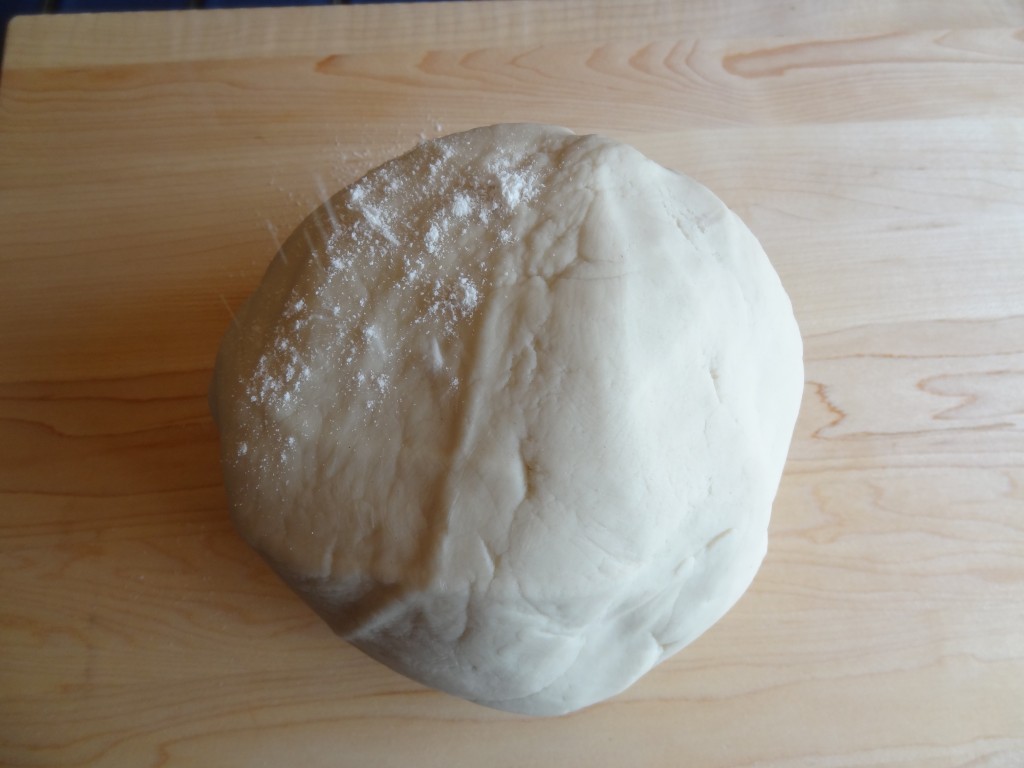
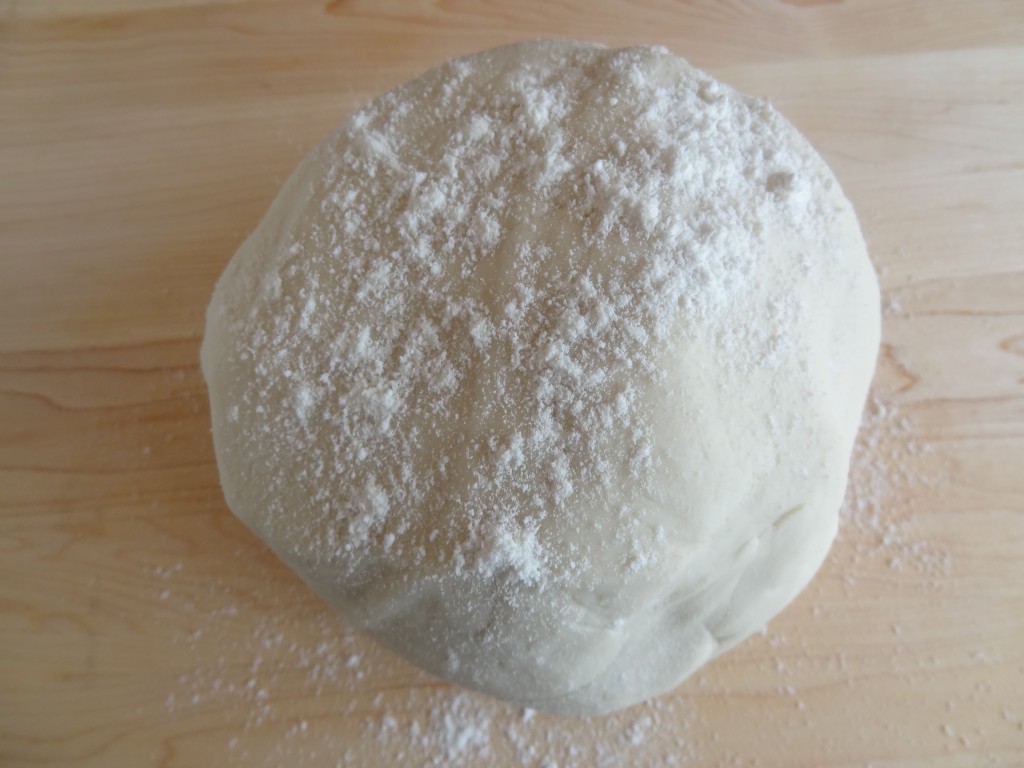
Place dough on a floured surface and shape into a ball. Coat the top of the dough with corn flour.
Form the dough into a flat round shape and place in a greased cake pan or pie plate.
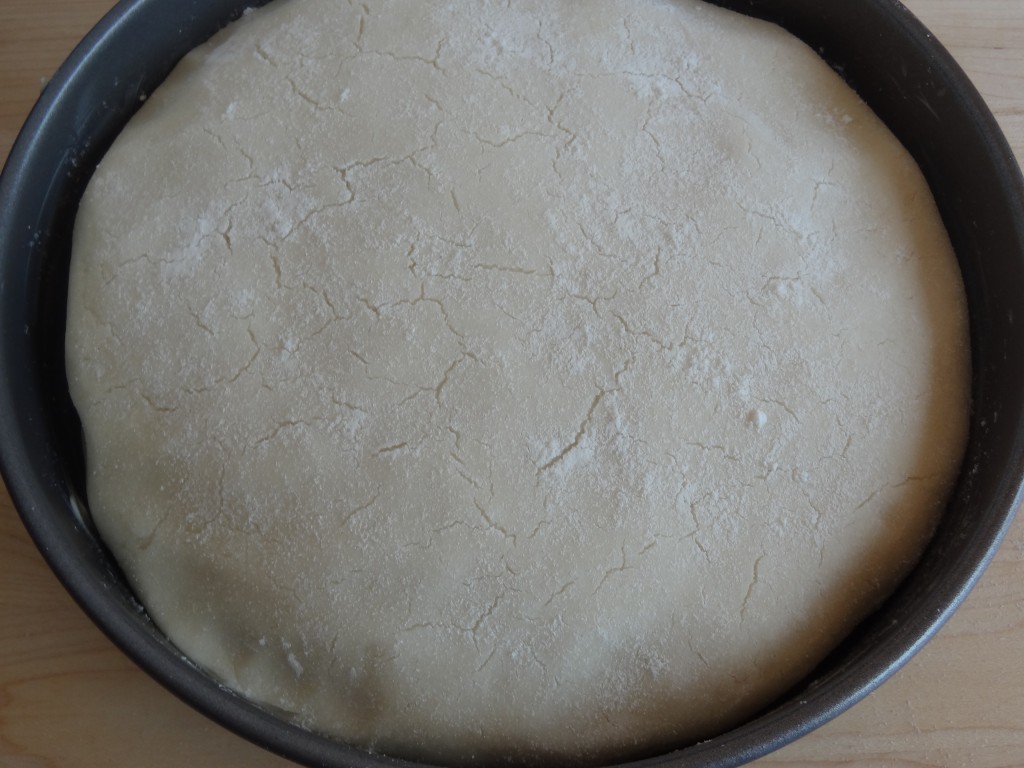
Meanwhile preheat oven to 450 degrees. Let the dough double in size for about 30 minutes or longer.
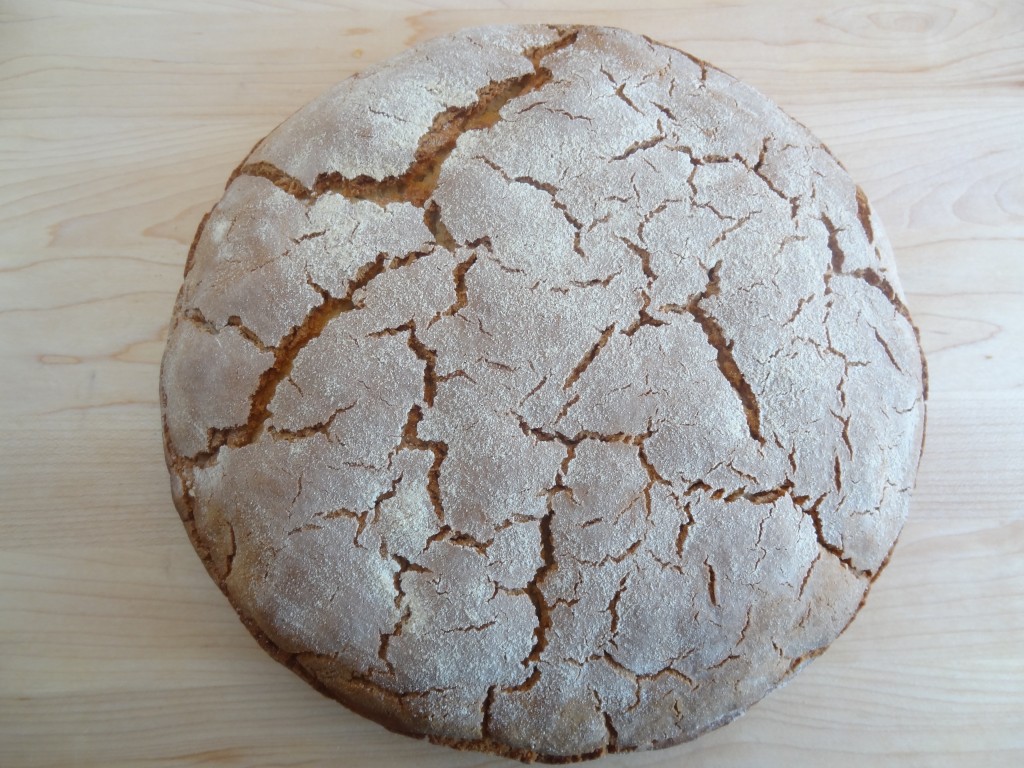
You’ll notice the cracks forming on the dough but that is what gives the dough an artisan appearance.
Cook for about 45 minutes until the crust is dark. Hit the bread with your knuckles and listen for a hallow sound. You may need to cook the bread longer depending on your oven since temperatures vary.
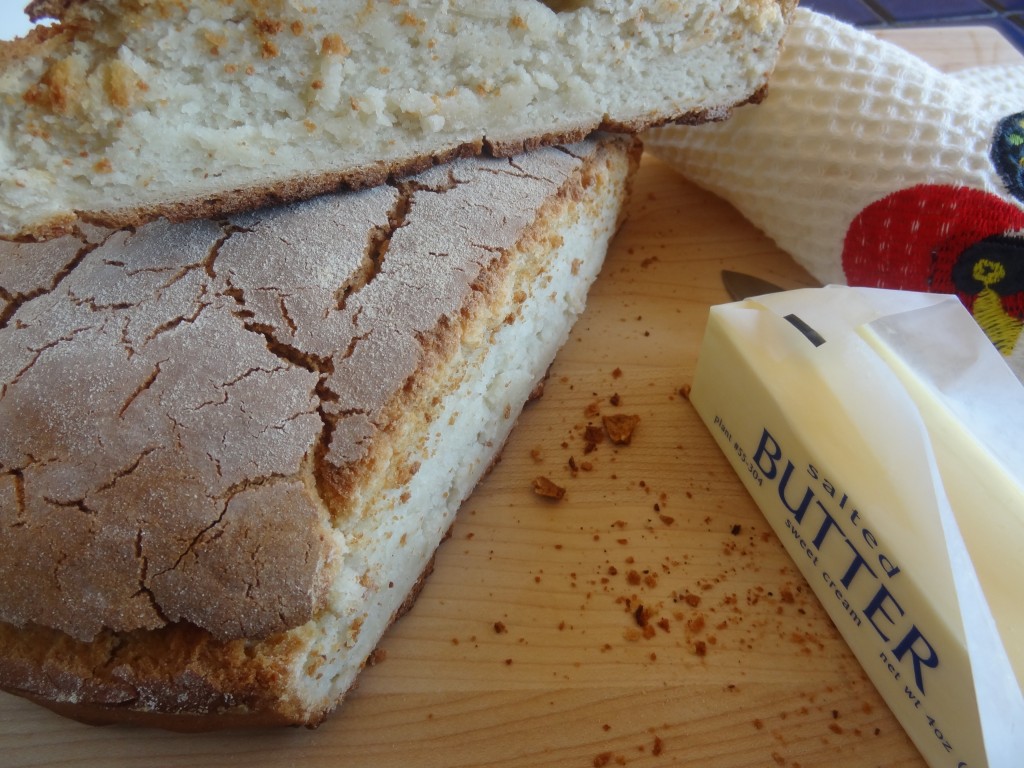
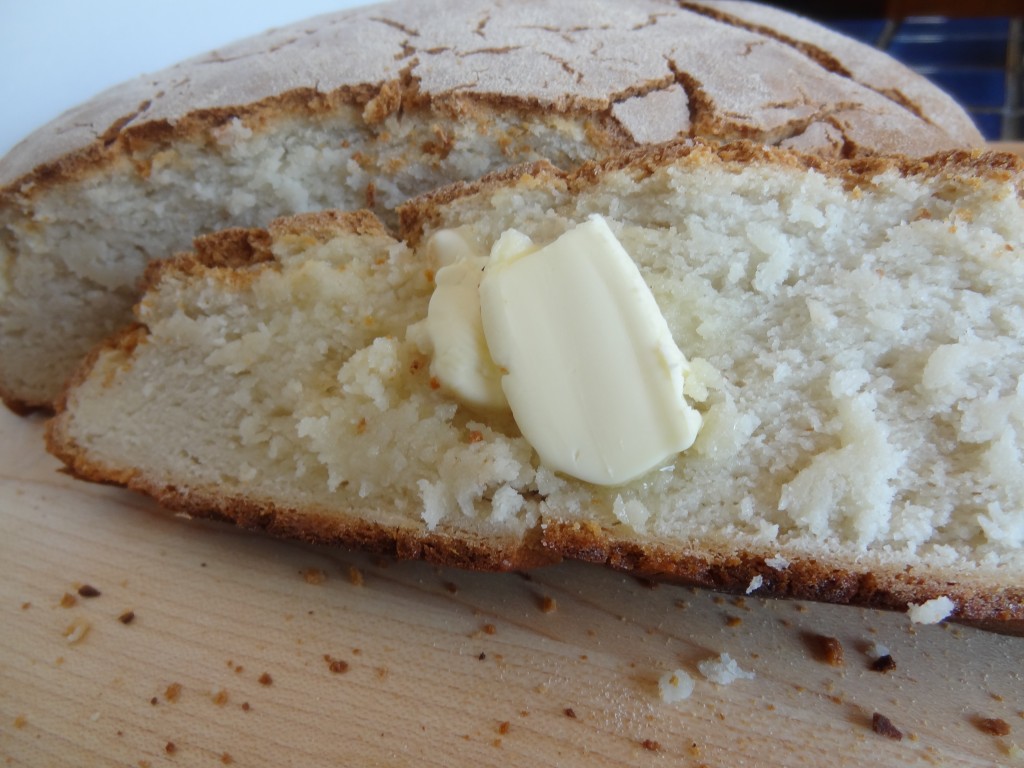
Let cool before slicing. The bread will be very crusty. If you want a softer crust, place the cooled bread in a food safe plastic bag for a few hours.
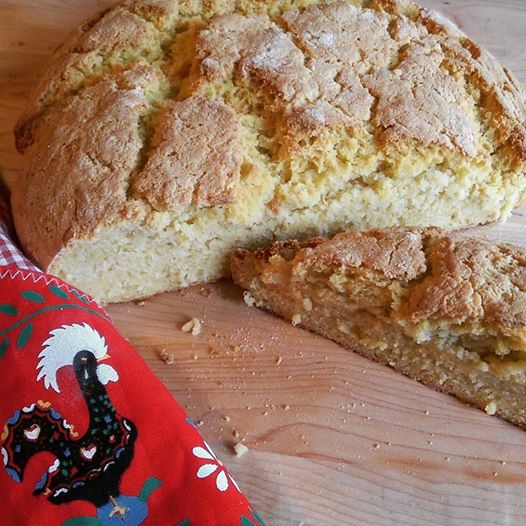
I wish you could taste it with that melted butter!
Watch this video to see the old process of making Pao Milho and cooking it in a wood fired oven.
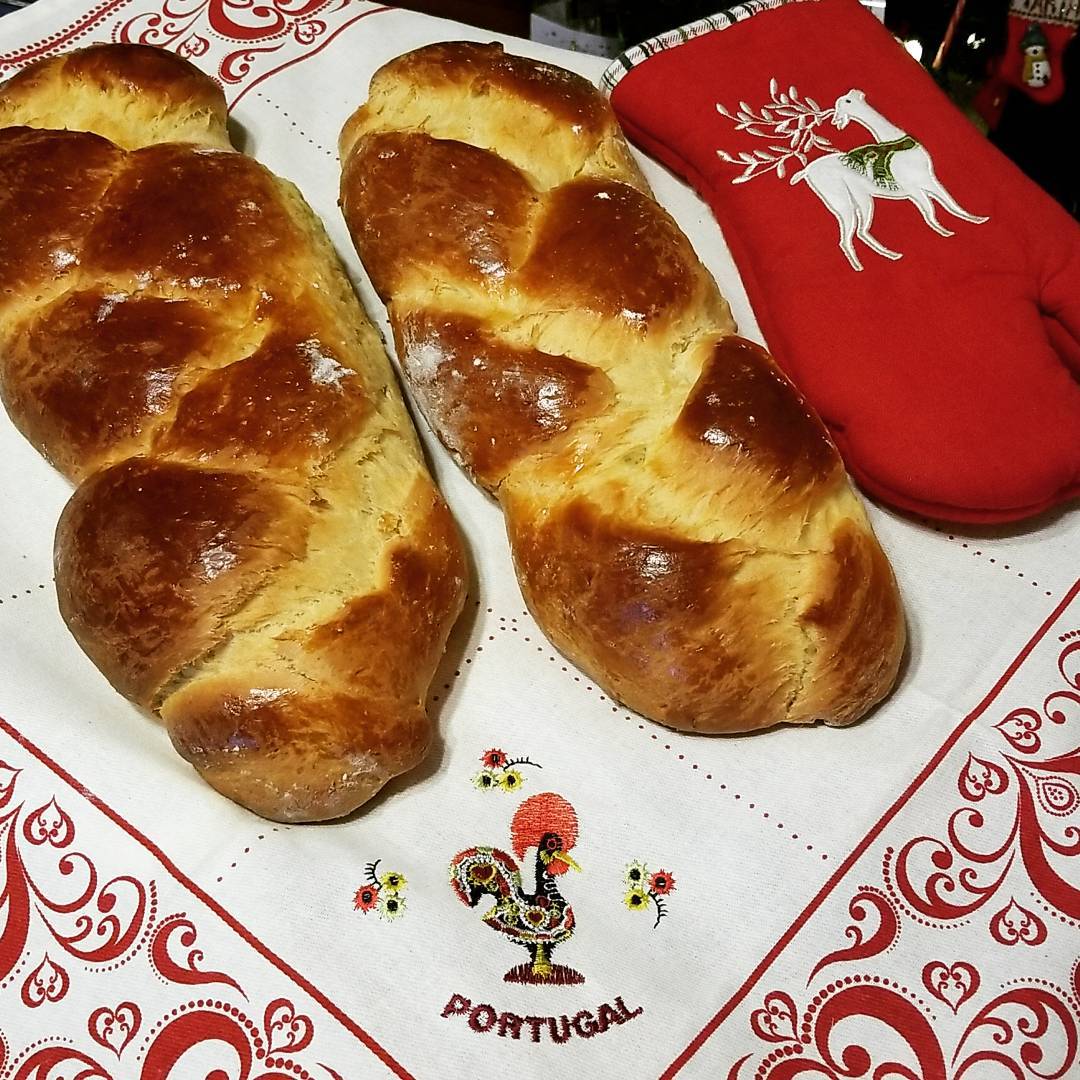
Portuguese sweet bread (Massa Sovada or simply Massa, Pão Doce. This light and airy sweet bread is usually made during Christmas and Easter. It’s also enjoyed throughout the year at breakfast, during meals and even served as a dessert. Some Sweet Breads made during Easter are called Folar de Pascoa. A hard boiled egg is cooked in the dough to signify the rebirth of Christ.There are many variations of this bread. Some recipes call for raisins, lemon zest, rum or whiskey to intensify the flavor.
This bread has maintained its popularity and it’s tradition within the Portuguese Immigrant communities in the United States. The first Portuguese immigrants came from the Azores and settled on the East Coast of Southern New England to work in the fishing and whaling industry during the late 18th century. One century later, another group of immigrants settled on the West Coast in the San Fransisco Bay area to work in the dairy and farming industry.
By the late 19th century, more had immigrated to Hawaii to work in the sugarcane fields.
Watch the video below of actual baking in an authentic (Forno) brick oven.
I’ve tried many recipes and finally come up with this perfect one to share with you. The bread comes out light and fluffy and delicious.
Ingredients:
6 to 7 cups flour
2 and 1/2 packages of dry yeast
1 cup warm milk
1 stick butter
1 tablespoon salt
4 Jumbo eggs
1 cup sugar
1 tbsp (whiskey – aguardente)
1/4 cup warm water
1/2 teaspoon sugar
Preparation:
Heat milk, but do not scald. Remove from heat and stir in margarine until melted. Add sugar, salt and mix. Let the milk cool down.
Meanwhile Make yeast starter by mixing packages of yeast with ¼ cup of warm water and ¼ tsp of sugar. Stir yeast until dissolved and let it rest until you see bubbles activating.
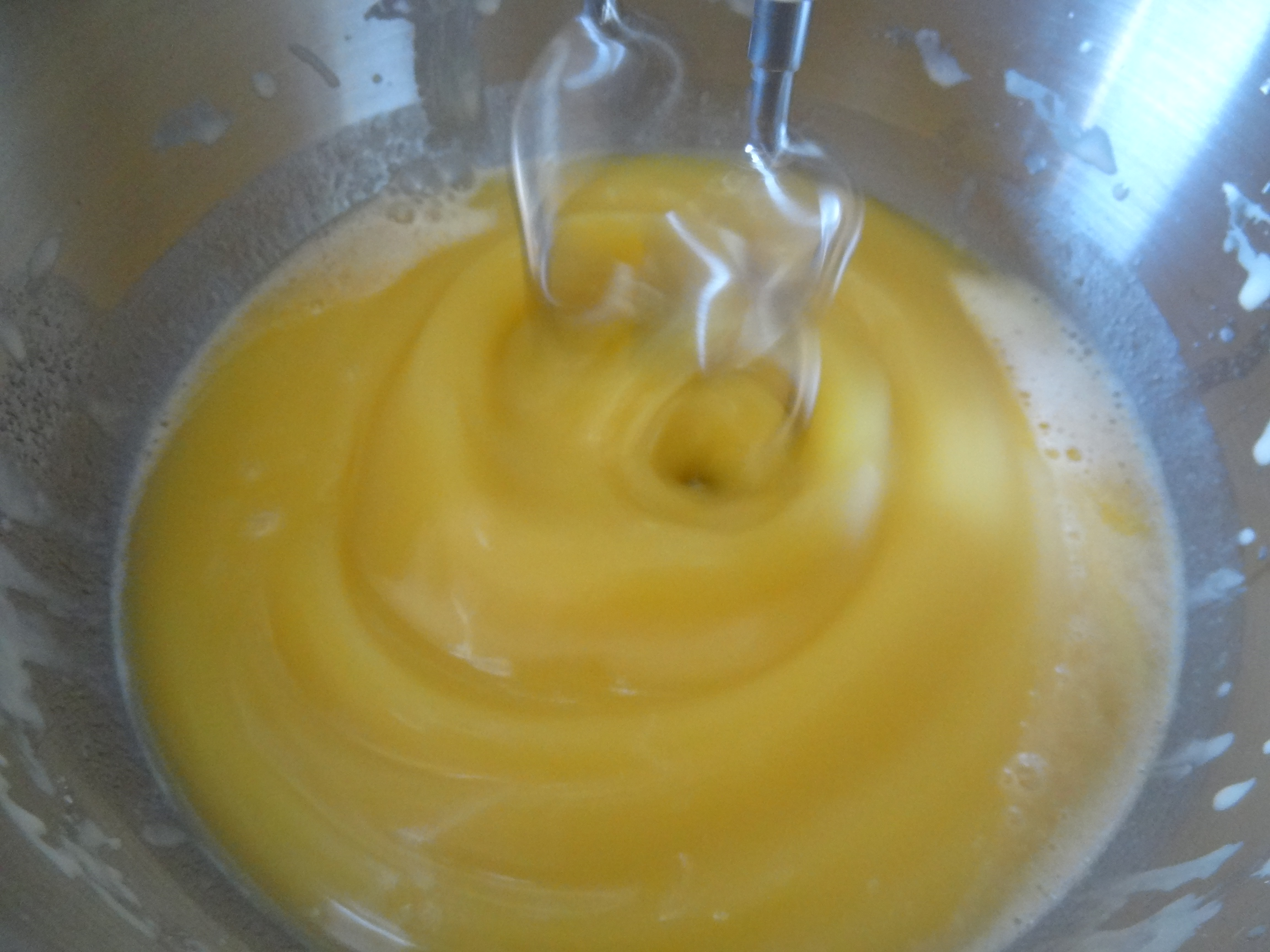
Beat eggs for a few minutes then add to the milk in a large mixing bowl. Add the yeast to the milk along with the whiskey and beat for 2 minutes.
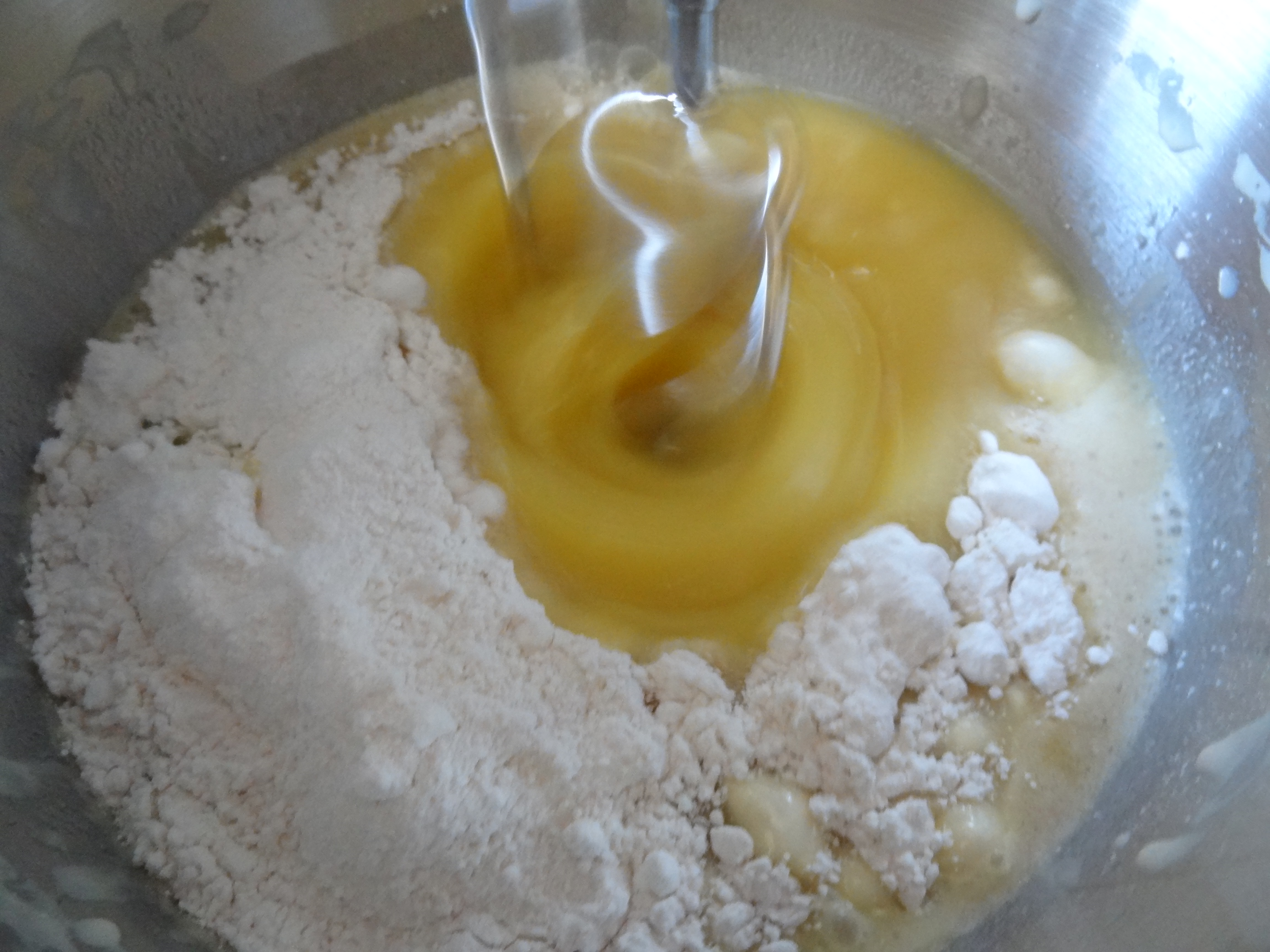
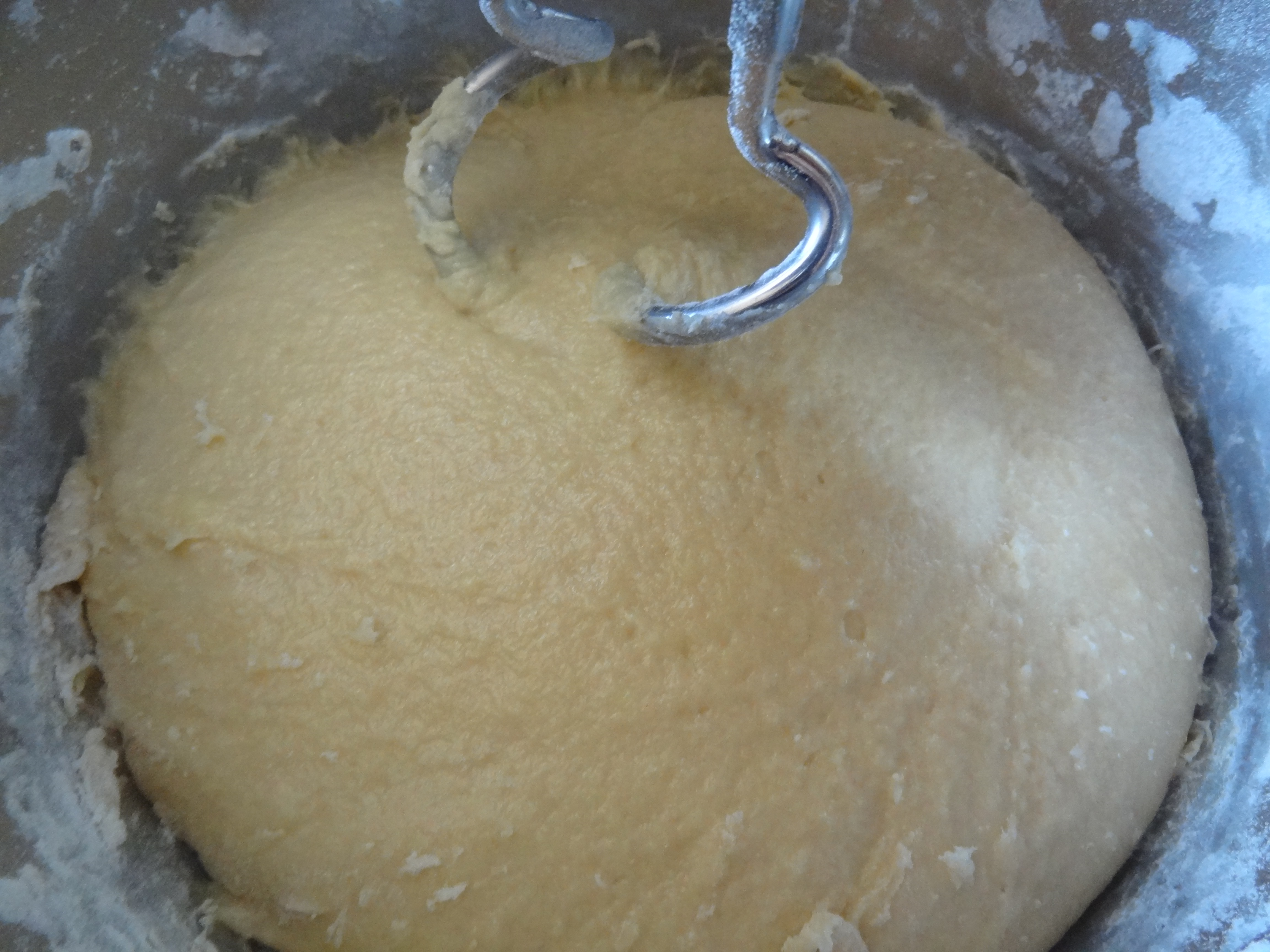
Begin adding the flour 1 cup at a time until it’s all incorporated. Use your dough hooks or your hands to knead for about 10 minutes. The batter should be very silky and smooth but not sticky. Add more flour if you find the dough sticky.
Remove dough from mixer, place on a floured surface and knead for about 5 minutes until it is smooth and soft.Place the dough into a large floured bowl and cover with plastic wrap and a warm towel. Let it rise in a warm place for 2 to 3 hours or until doubled.
After the dough has doubled, punch it down and let it rise for 30 minutes longer. Place your dough on a floured surface and form your bread either into a braid, loaf or mini buns.
Let the dough rise for another hour or in a warm oven for about 20 minutes or until almost double.
Preheat oven to 325 degrees F.
Brush tops of the bread with egg wash and bake for 30 minutes. After 30 minutes, turn the heat to 300 and cook for 30 minutes longer until the bread has a golden caramel color.
Note:: Do not over bake since it may get the bread dry.
Mini buns cook in less time, approximately 45 minutes.
You may find oven temps will vary, adjust accordingly.
Makes approximately 2 loaves, 1 large braid or 12 buns
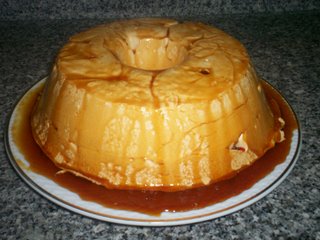
This egg white souffle dessert is light, airy and delicious. It will become a Holiday tradition for your family!
Ingredients:
12 egg whites
2 cups sugar
Ingredients for caramel sauce:
2 cups sugar
1 tbsp water
Instructions:
Grease a large bunt pan and set aside. Meanwhile, in a large heavy skillet, cook sugar and water on med heat until it turns into a smooth golden caramel.
Put the caramel except for (3 tbsp) into the bunt pan. Rotate the bottom of pan and sides to coat with caramel. Set aside.
Beat egg whites until stiff. Add sugar and beat to incorporate. Add the 3 tablespoons of caramel. Beat slowly to incorporate.
Place egg whites in bunt pan. Tap pan lightly on counter to take out air bubbles.
Cook the Pudim in (bain marie) for 12 minutes at 375. *Do not open oven for at least 10 minutes* Let the Pudim cool.
Take out of the oven, let completely cool and refrigerate until ready to serve. When ready to serve place a large serving platter on top of pan and flip over
Spread the caramel glaze over the pudim! Enjoy!
Thank you Chef Vania!
Chef Vania Soares
Find a Recipe
FIND RECIPES HERE
"Join me! Lets' s share recipes, learn how to cook traditional Portuguese dishes, or chat about our cuisine, culture and traditions. I want to share these recipes to preserve our Portuguese passion for great food and pass them along to the next generation. So come along, Let's cook Portuguese!"
Support Tia Maria's Blog page to promote our Portuguese heritage. SCAN QR CODE:
ORDER SET OF 1 REGULAR AND 1 SPICY JAR - FREE SHIPPING IN USA
BUY NOW ON PAYAPAL OR SCAN QR CODE BELOW
TASTE PORTUGAL COOKS AVAILABLE ON AMAZON ALL AROUND THE WORLD: FREE Prime shipping in USA
COOK BOOKS ARE ALSO AVAILABLE ON AMAZON.CA (CANADA)
ORDER SET OF 2 TASTE PORTUGAL SEASONINGS ON PAYPAL OR SCAN QR CODE: FREE SHIPPING USA
COOKING PORTUGUESE IS EASY WITH TIA MARIA’S TASTE PORTUGAL PORTUGUESE SEASONINGS
LISBON BLUE ETSY SHOP – FREE SHIPPING IN USA
Shop at Gaspars online for great Portuguese Products
Portuguese Linguica and Chourico
Gift Packs
Gaspars Sausage Company
For nearly a century Gaspar’s Sausage Co., Inc. Has been recognized as the largest manufacturer of Portuguese smoked sausage in the United States. Order today! www.gasparssausage.com or call us at 1-800-542-2038
MY TASTE PORTUGAL SEASONINGS DISTRIBUTOR - GONSALVES FOODS.COM
GONSALVES FOODS
GONSALVES FOODS
The taste of Portugal here in America Your source for authentic Portuguese products We’re proud to offer a wide selection of authentic Portuguese foods from our Gonsalves and Bom Petisco brands as well as the leading Portuguese brands like Saloio olive
0
































 Now available in Canada – Amazon Canada

 LISBON BLUE ETSY SHOP
 My appearance on RTP Portuguese TV Notícias do Meu País
 No Kid Hungry | Share our Strength Help End Child Hunger in America



























 GONSALVES FOODS