Tagged: Portuguese Christmas dessert

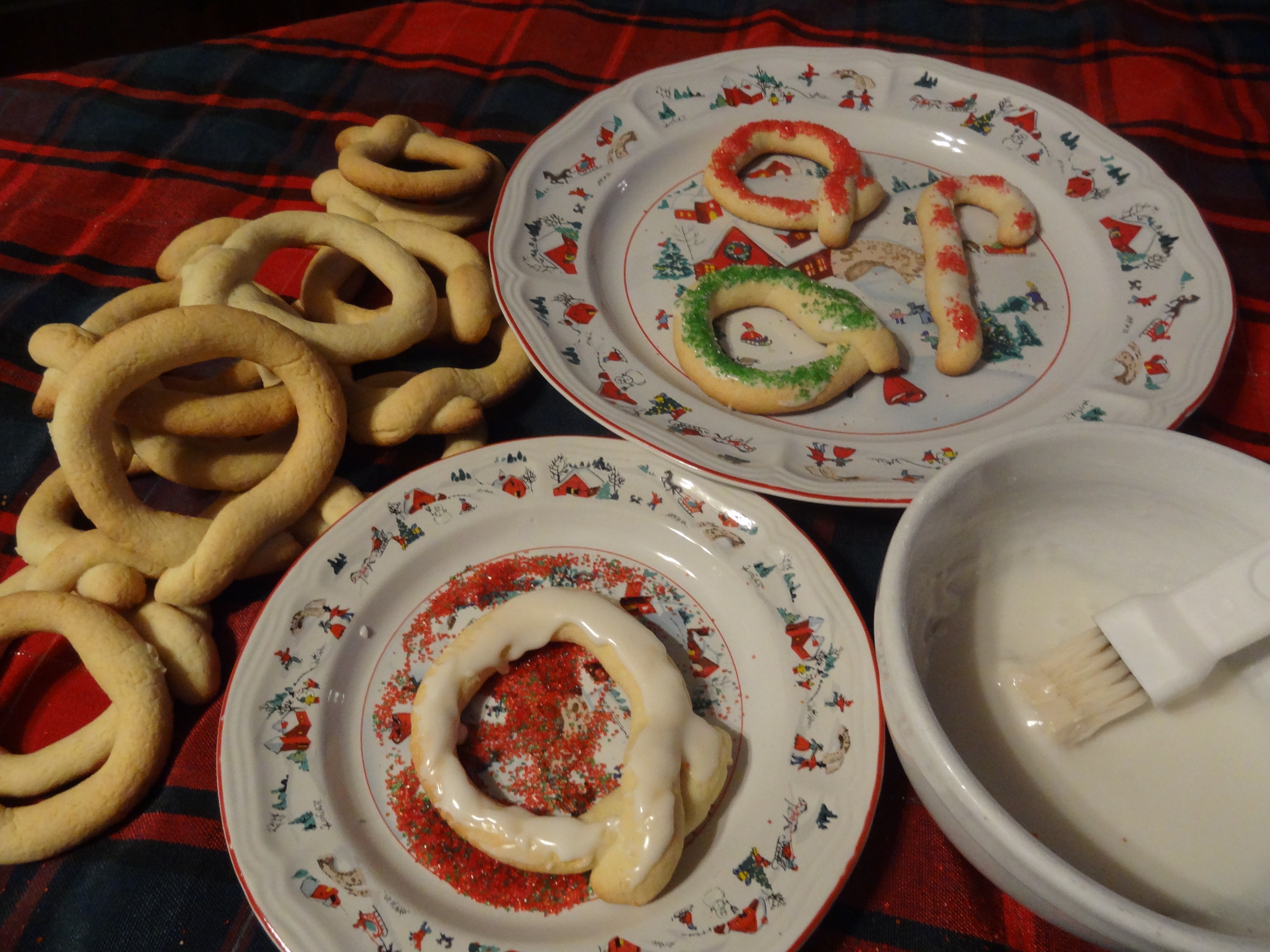
Biscoitos de Natal – Christmas Biscuit Cookies


Christmas Biscuit Cookies are easy to make since they require no cookie cutters to shape them and they don’t break apart.

Anis liquor, gives them a unique taste but you can also add lemon zest if you prefer.

These cookies are perfect  to make with your kids because they can get their little hands into the dough and make all kinds of shapes!

If you want to give these little treats as gifts you can find food save gift bags at craft stores. My bags have 12 cookies. Simply tie a ribbon around the bag and you’ve created a beautiful home made cookie gift!

Ingredients:

3 cups of flour

1 cup of sugar

3 eggs (room temp)

6 tbsp of salted butter (softened)

2 tsp of baking powder

1 tbsp of Anis Liquor or 1 teaspoon lemon zest


Icing:

1/2 cup confectioners sugar

2 tsp of milk

1 drop of vanilla flavoring

Christmas sprinkles, colored sugars to decorate


Instructions:

Preheat the oven to 350 degrees. Soften the butter and mix with the sugar in a medium bowl until light and fluffy

Add the eggs and Anis and beat for about 1 minute. Add the flour and baking powder to the sugar and mix with a dough hook for about 3 minutes until the batter forms into a ball.

You may need to a little flour if you find the dough too soft depending on your butter or the size of your eggs. The batter will be soft but firm enough to handle.

You can also spoon the batter and make balls and roll instead of cutting it into logs.
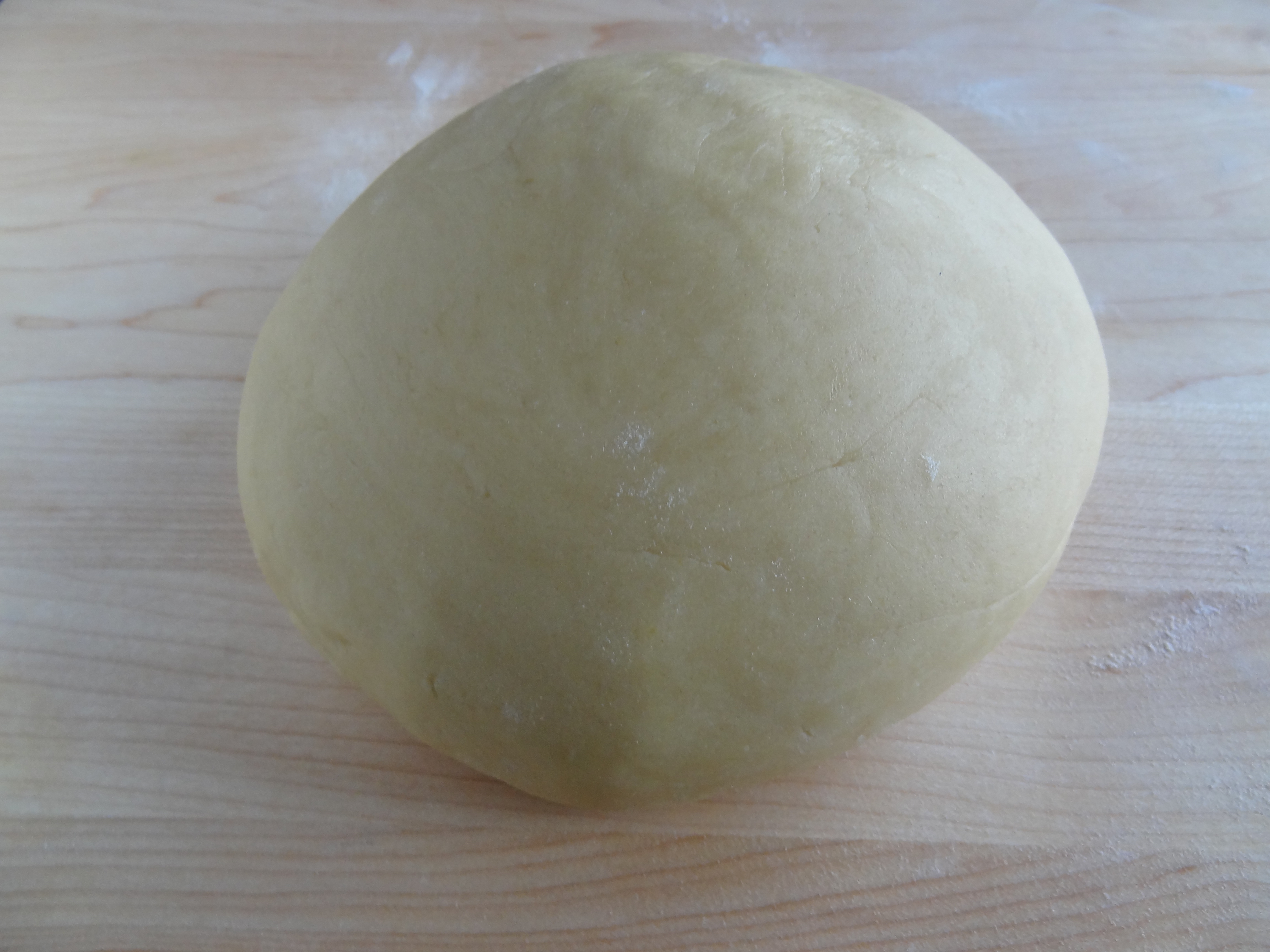
 

Place the smooth dough onto a lightly floured cutting board and shape into a flat disc with 1/2 inch in height.
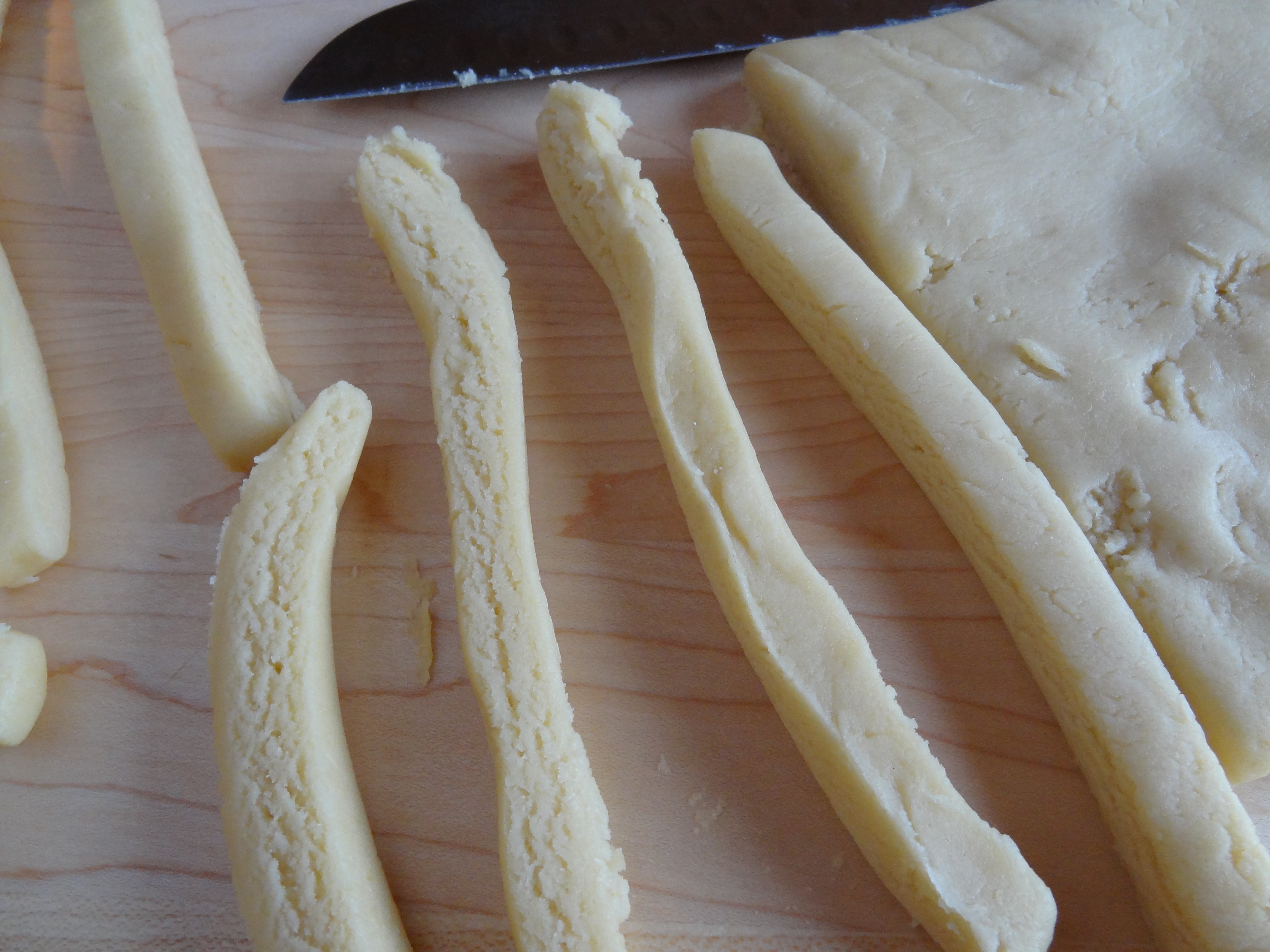
Cut the dough evenly into 1/2″ by 5″ strips. Roll each strip into a round snake like form and shape into desired shapes such as candy canes, wreaths, letters, etc.

Slightly grease a cookie sheet and place the biscuits evenly on the pan.

Cook for about 15-18  minutes or until slightly golden brown.

Lift one and look under neath to find a golden crust bottom.

Let them cool slightly before decorating.

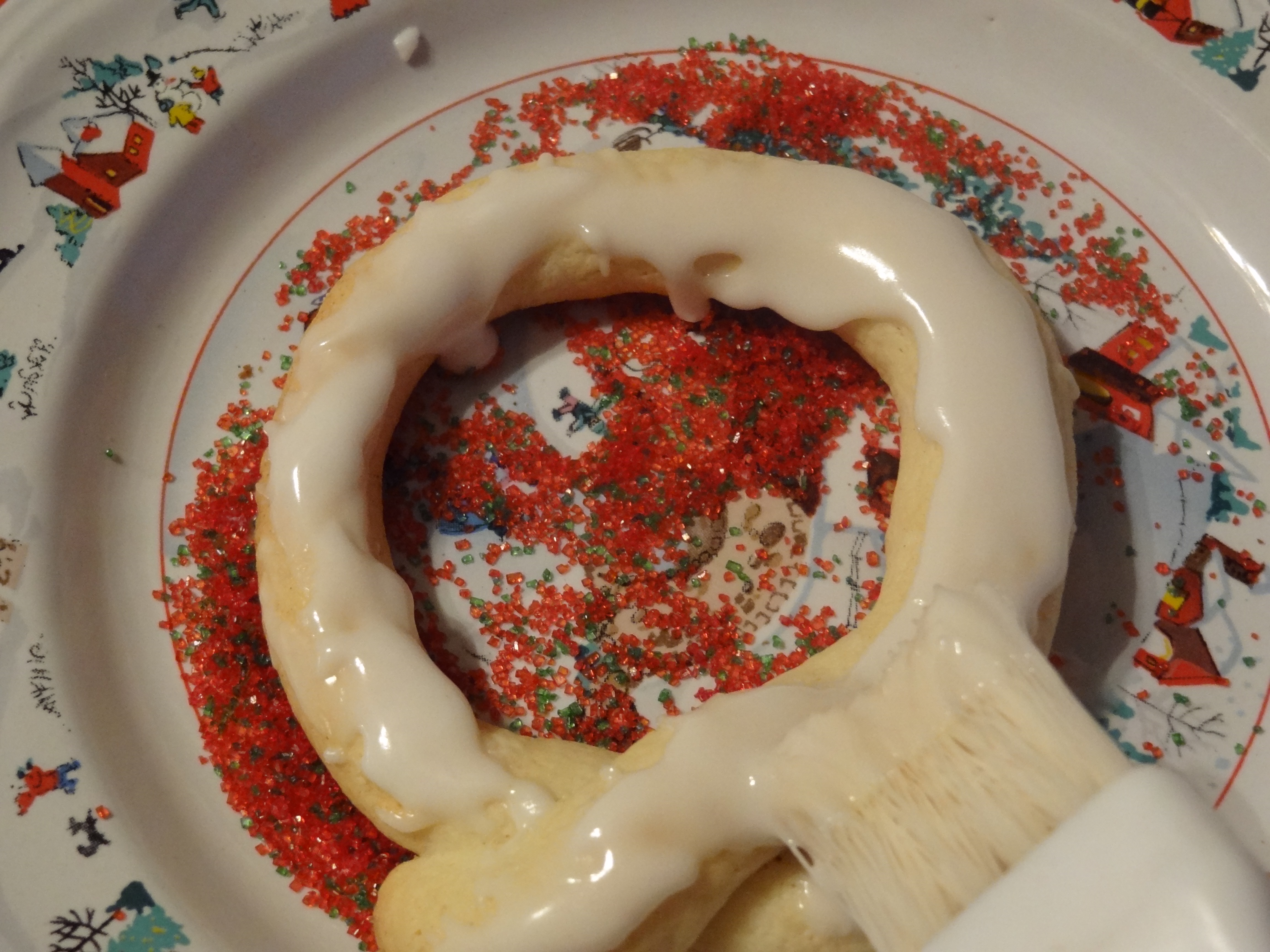
Make icing by mixing the confectioners sugar, milk and vanilla until very smooth and creamy.

Brush icing on cookies and dip into the decorations or sprinkle onto the sugar before it hardens.


Leite de Creme – Portuguese Egg Custard

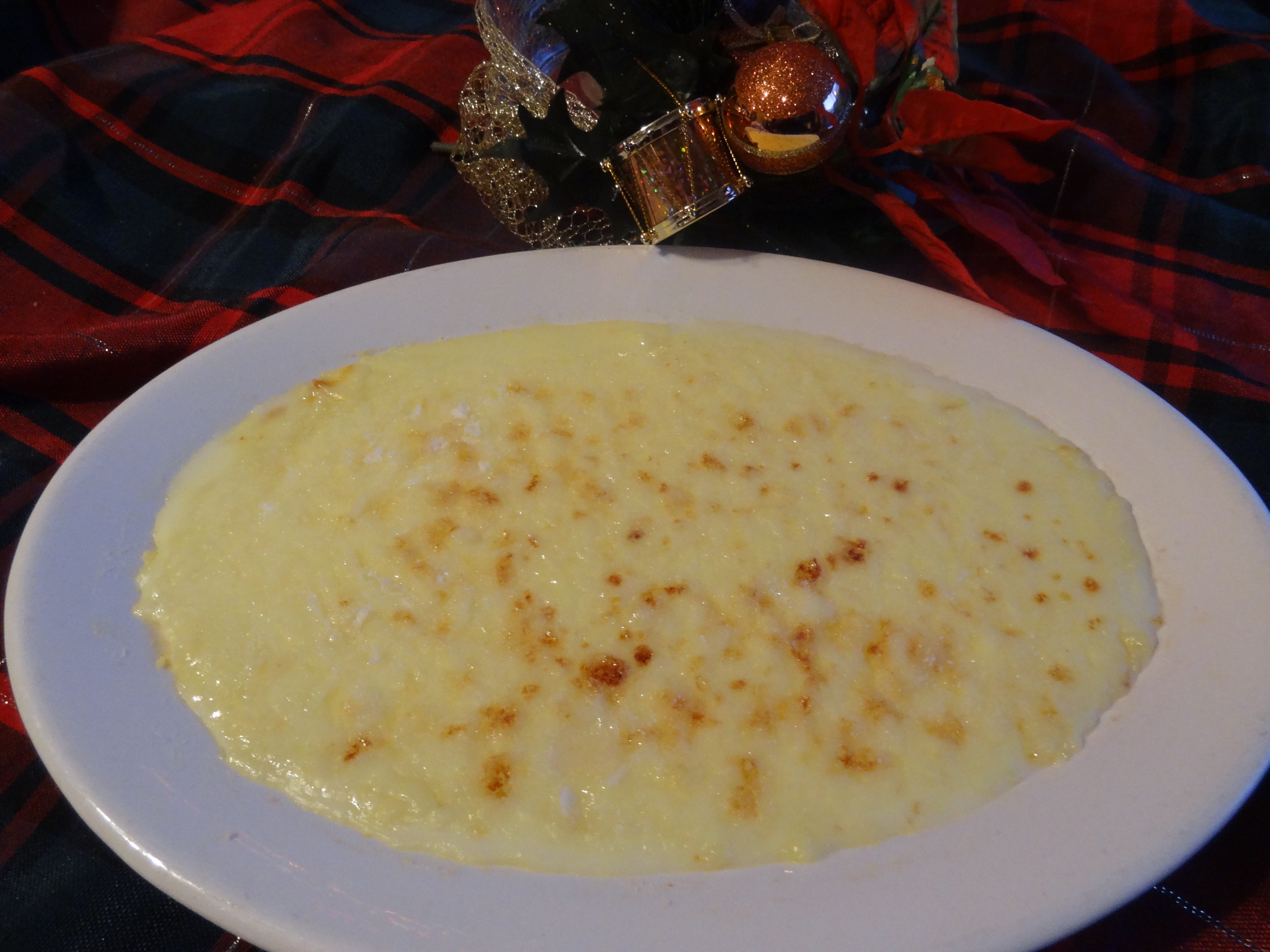
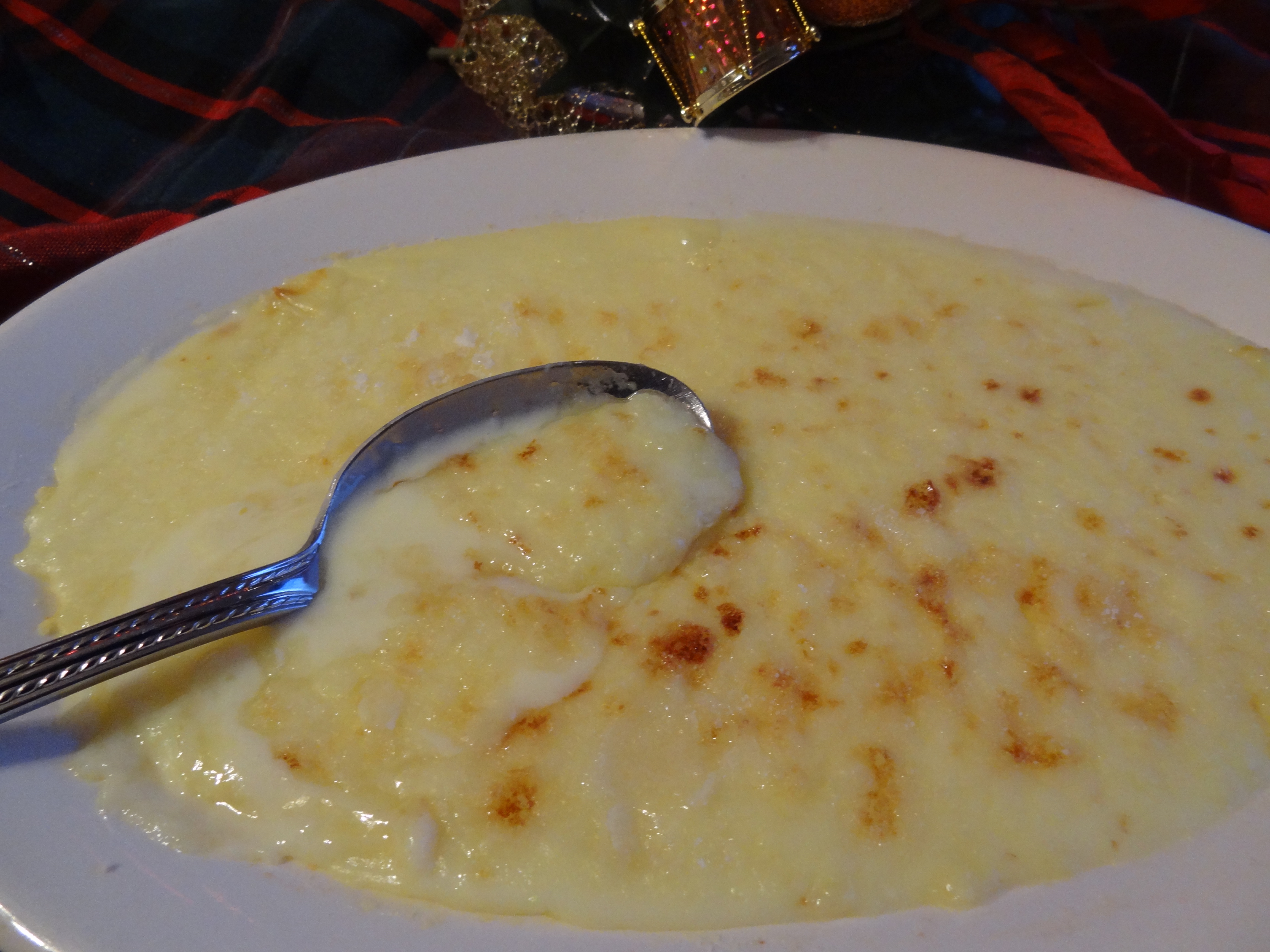
Leite Creme is a Portuguese Egg Custard similar to French Cream Brulee but cooked on the stove top instead of baked.

It’s rich, creamy texture is perfect as a light dessert.

The first time I ate this custard was when I was a only twelve years old and on my family’s first trip back to Portugal after coming to America.

We arrived in Lisbon and then took the long cab ride to Coimbra to stay at my Aunts house for a week.

She prepared this delicious creamy dessert for us when we arrived and I’ve been hooked ever since!


Leite de Creme – Serves 4-6

Ingredients:

2 tablespoons of Corn starch

5 tablespoons of sugar

3 egg yolks

2 cups whole milk

1/2  stick of cinnamon

1 slice lemon peel


Instructions:

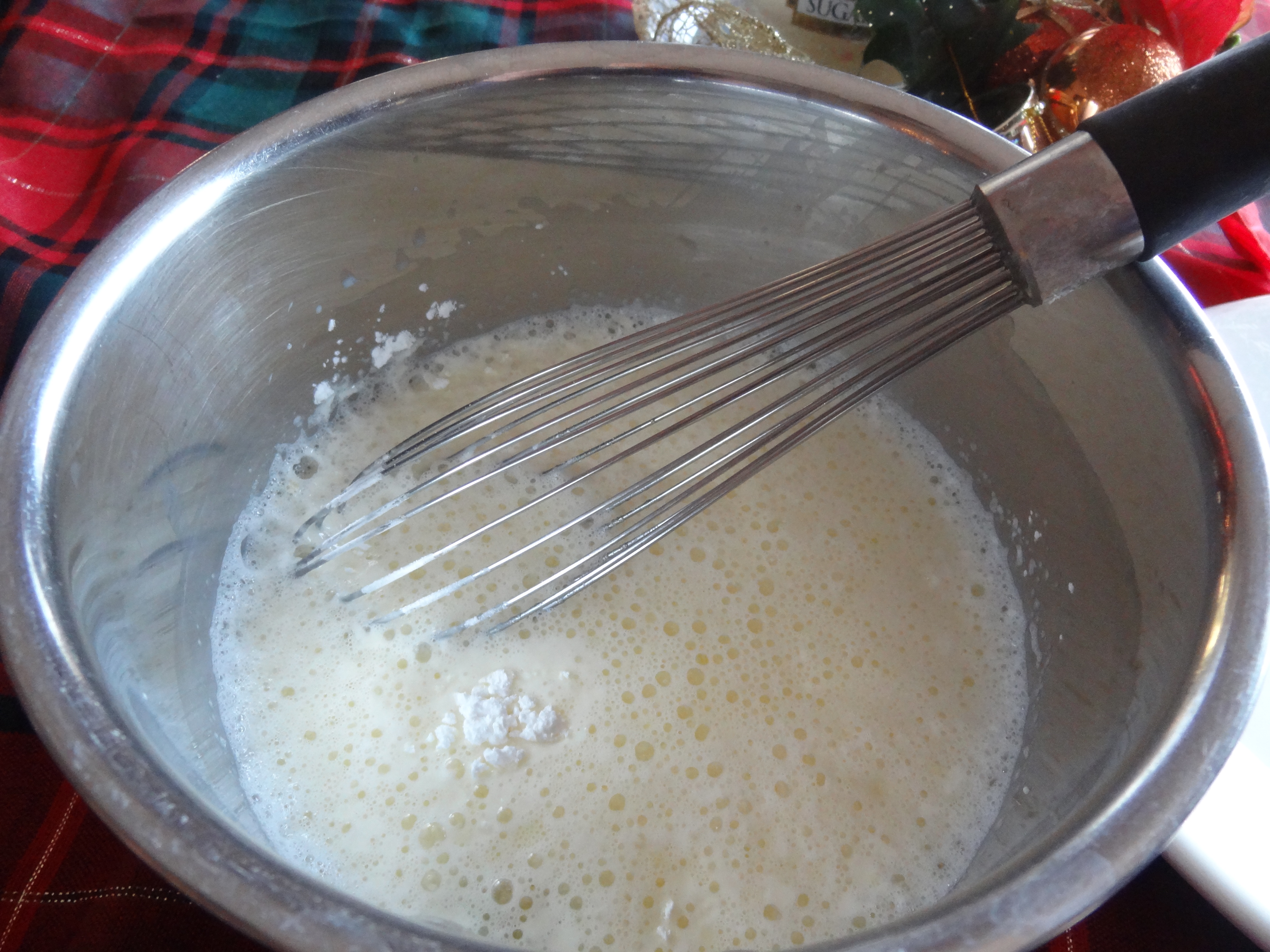
In a medium bowl, beat the eggs and the milk with a whisk until well incorporated.

Add the cornflour and sugar and mix well.

Add the lemon peel and cinnamon stick and heat in a saucepan on low – medium heat stirring continuously.

Do not let the custard boil. If it begins to boil remove from heat to cool down while stirring.

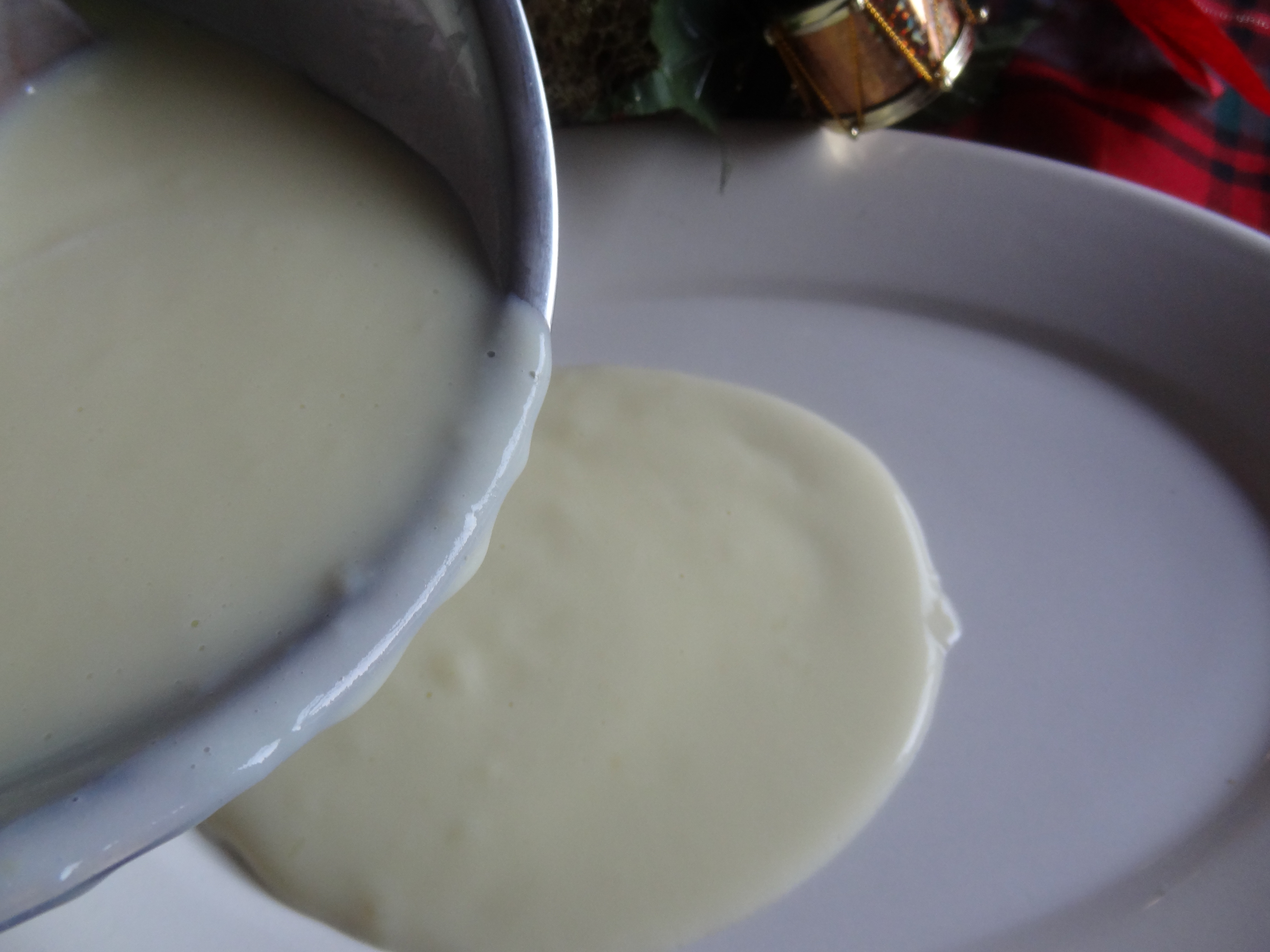
The custard should be thick enough to coat the spoon like pudding.

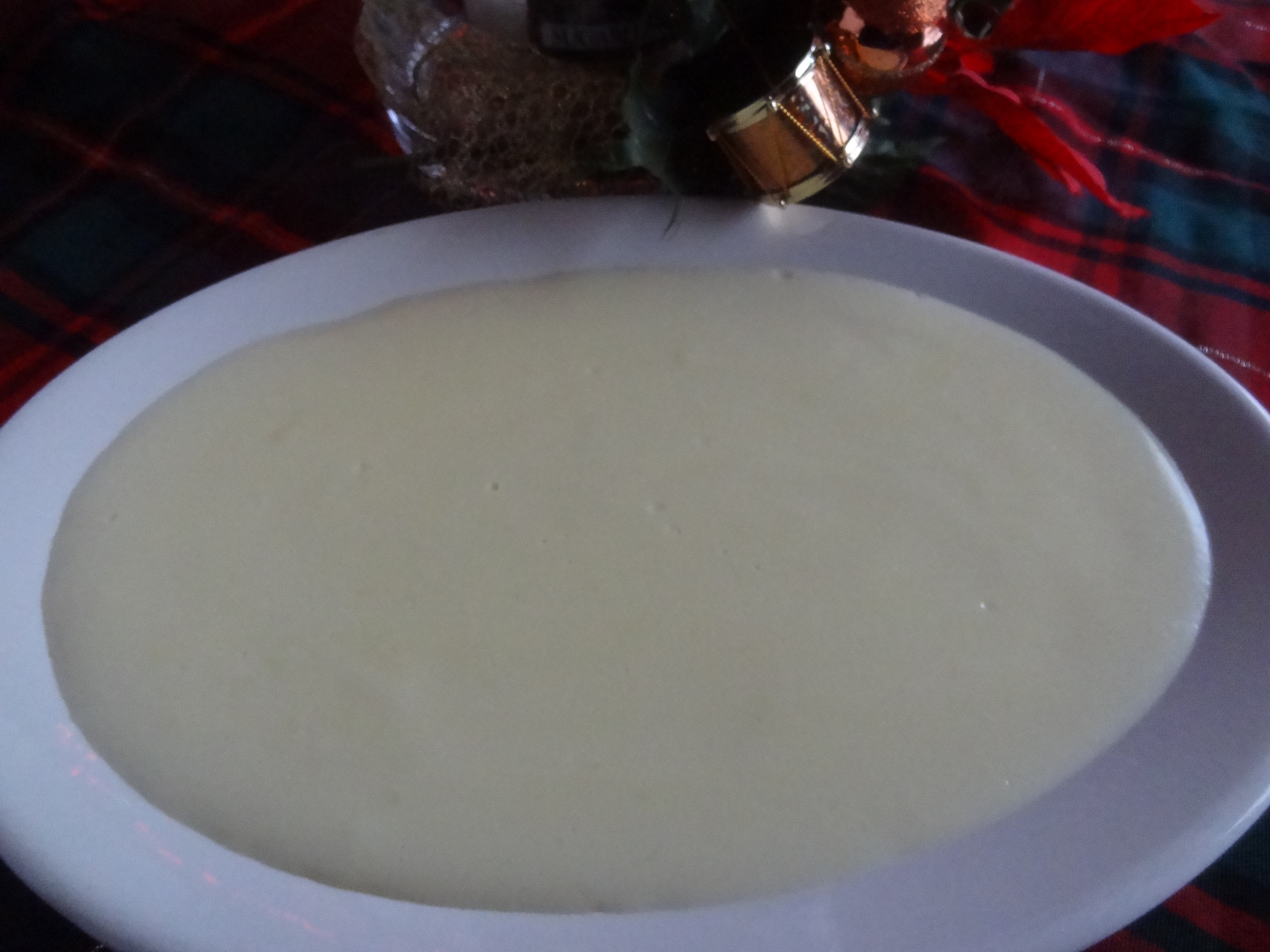
Pour into a serving platter or individual ramekins and let cool to room temperature.

Store in the refrigerator until you are ready to serve.

When the custard has cooled, sprinkle sugar on top and brown slightly in oven broiler or with a cooking torch.

Serve! Enjoy!


  • Beat the egg yolks in a large pan and mix with a little milk. Gradually add the rest of the milk whilst whisking.
  • Add the lemon zest (ideally, grate the lemon with a Micro-plane or very fine grater over the pan). Add the cornflour and sugar and mix well.
  • Heat over low to medium heat, stirring gently at all time. It should take 10 to 15 minutes for the mixture to thicken and reach a custard consistency.
  • Pour the mix into individual or a large terracotta ramequin(s). Sprinkle the top with sugar and caramelise under the grill or with the blow-torch. Chill before serving.

Read more at http://www.goodtoknow.co.uk/recipes/537728/erin-satterly-s-leite-creme#zGgOPrK8Dh6KrRxO.99


  • Beat the egg yolks in a large pan and mix with a little milk. Gradually add the rest of the milk whilst whisking.
  • Add the lemon zest (ideally, grate the lemon with a Micro-plane or very fine grater over the pan). Add the cornflour and sugar and mix well.
  • Heat over low to medium heat, stirring gently at all time. It should take 10 to 15 minutes for the mixture to thicken and reach a custard consistency.
  • Pour the mix into individual or a large terracotta ramequin(s). Sprinkle the top with sugar and caramelise under the grill or with the blow-torch. Chill before serving.

Read more at http://www.goodtoknow.co.uk/recipes/537728/erin-satterly-s-leite-creme#zGgOPrK8Dh6KrRxO.99

Portuguese Lemon Rice Pudding – Arroz Doce com Limao

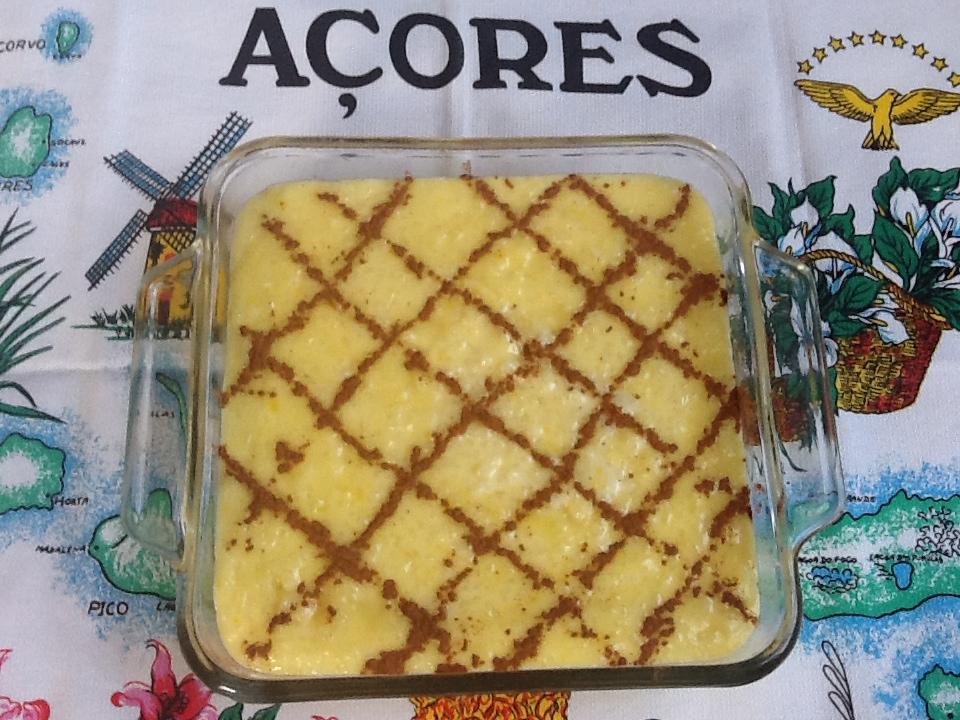
This recipe for Arroz Doce is a variation from the original that uses milk. This recipe is made using condensed milk and lemon pudding. This dessert comes out very rich, creamy and lemony.

Thanks to Leonor Santos for the recipe and photos! I love the Acores tablecloth! Enjoy!

Arroz Doce (Rice Pudding) by Leonor Santos

Ingredients:

1 pound Carolina rice


4 cups whole milk


4 cups water


2 cans condensed milk


1 stick Margarine


Zest of 1 lemon


2 boxes of instant lemon pudding


Cinnamon


Directions:

In a heavy pot place rice, milk, water, margarine, condensed milk and lemon zest. Stir from time to time.

When the liquid starts to boil, lower flame and keep stirring from time to time.

When the rice is cooked and all the liquid is absorbed turn off burner, remove from flame. Add the instant lemon pudding and stir fast until everything is incorporated.

Place in serving plates and decorate with cinnamon.


Photos credit: Leonor Santos


Crunchy Snickerdoodle Cookies


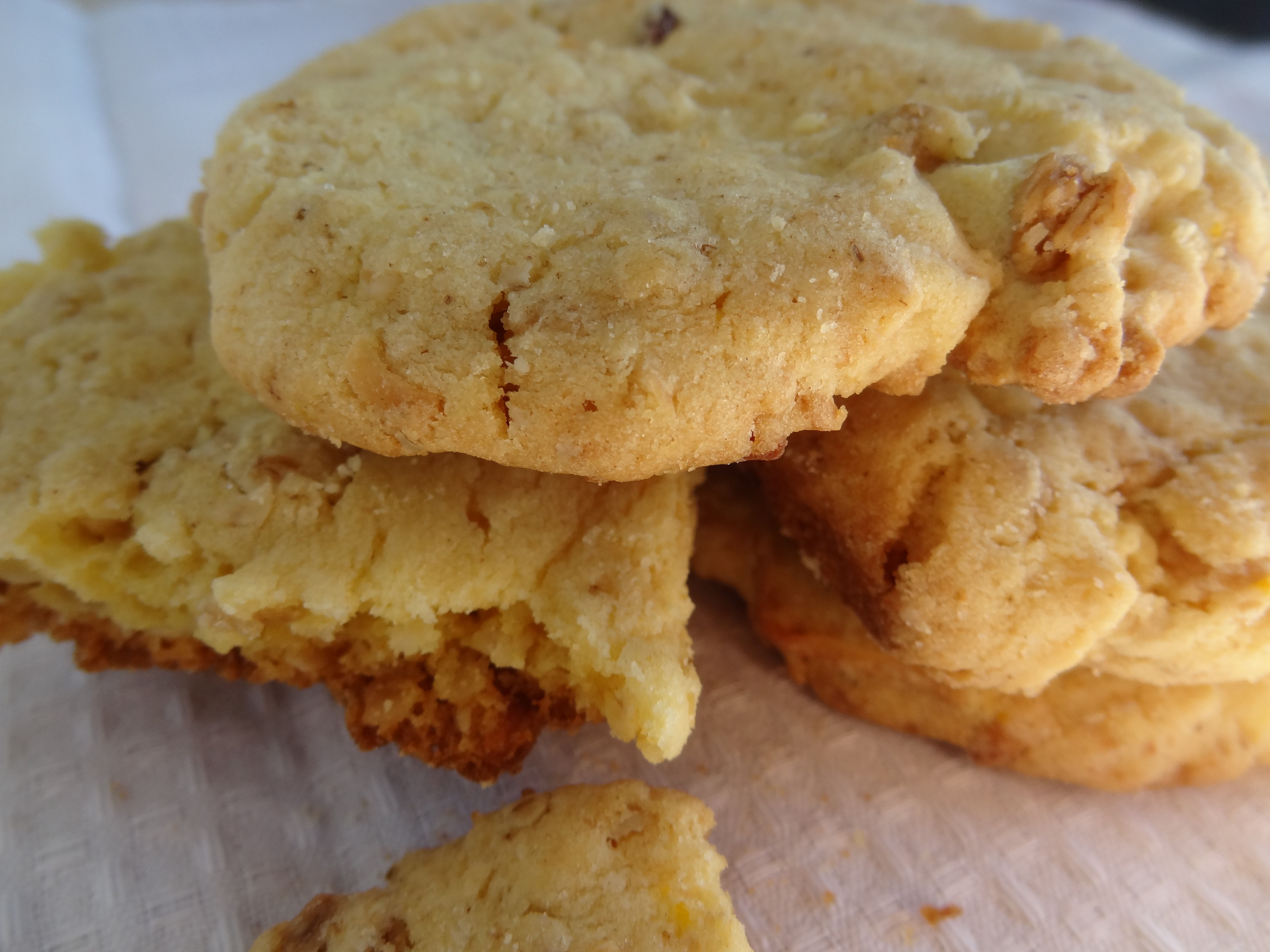
Last week I wanted to make a dessert but discovered that I was out of flour. I searched the pantry and found 1 box of yellow cake mix so this is what I came up with.

The cookies came out crunchy on the outside and chewing on the inside!

They were such a hit with my family that they insisted I have to put them on my Holiday baking list!

I posted a print out recipe for you…you’ll love it!


Crunchy Snickerdoodles Cookies
 
Easy recipe!
Ingredients
  • 1 package of yellow cake mix
  • 1 large egg
  • 1 cup flaked coconut
  • 1 cup fruit and nut granola
  • ½ tsp cinnamon
  • 1 tsp brown sugar
  • ½ cup veg oil
  • Coating mix
  • 2 tbsp granulated sugar 2 tbsp cinnamon
Instructions
  1. Place all ingredients except coating mix of sugar and cinnamon, into a large bowl and mix well. Scoop out about 1 tablespoon of the dough and form into balls.
  2. Make sugar coating by combining sugar and cinnamon in a small bowl. Dip each ball into the mixture and place on cookie sheet.
  3. *The dough will be dry when you make the balls just pack it firmly.
  4. Flatten the cookies into a cookie shape about 2-3 inches wide.
  5. Cook for about 8-10 minutes until the cookies are slightly browned on the bottom.
  6. Let cool and enjoy!

Malasadas – Filhóses “Portuguese Donuts”

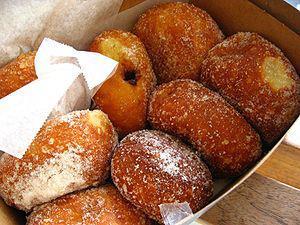
Malasadas are “Portuguese donuts”, a ball of fried yeast dough without a hole in the middle like regular donuts. After frying, they are rolled in confectioners sugar.

The terms “Filhóses” and “Malasadas” are sometimes used interchangeably, and sometimes one refers to doughnuts while the other refers to fritters without a hole in the center.

Many families have their own recipes and carry on the traditions of making this dessert with each generation. The pastry is prepared on Holiday’s such as, Easter, Christmas, New Years, and at many celebrations and family gatherings.

Different regions have different definitions of Filhós and Malasadas.  Filhós are made by stretching out the dough with your hands into flat shapes and frying them whereas in preparing the Malasadas you drop the dough into the cooking oil by large tablespoons.

When the Portuguese first colonized Madeira and later the Azores Islands in the mid 1400’s they brought the deep frying method along with them. The Malasada is credited to have been originated on the Island of Sao Miquel. The other islands as well as the main land of Portugal call the fried confection “Filhós”.

In the United States, Malasadas, or Filhós are cooked in many Portuguese homes from the East to the West Coasts and featured in most Portuguese Bakeries.
When the first Portuguese immigrants moved from the Island of São Miguel to Hawaii, to work on the sugar cane plantations in the late 1800’s they brought the malasadas recipe with them.

Today, Malasadas have been incorporated into the cuisine and extremely popular in many parts of Hawaii.

Although traditionally not  made with any fillings, in Hawaii they can be found in many flavors, and filled with creams and puddings.

Leonards Bakery in  Honolulu, Hawaii is famous for their Malasadas but there are many shops who feature them as well.

photocredit: Leonards bakery

“In June 1882 the British sailing ship ‘Monarch’ brought Arsenio and Amelia DoRego from San Miguel Island, Portugal to Maui, Hawai’i under contract to work the sugar cane fields. Some 33 years later, their grandson Leonard was born. In 1946 Leonard and his wife Margaret moved to Honolulu with their daughter Diane, age 8. Leonard worked at Snowflake Bakery until he founded Leonard’s Bakery℠ in 1952.

Leonard and Margaret were no strangers to hard work, both coming from very large families. The bakery prospered. Not long after opening, Leonard’s mother suggested making malasadas for Shrove Tuesday – a Portuguese tradition. Although thinking it may be too ethnic, Leonard’s bakers complied. Malasadas were a huge hit. And, the appetite for malasadas in Hawaii was born.

Due to Leonard’s popularity Leonard required a larger, more modern facility, moving into their present location at 933 Kapahulu Avenue in 1957.” (http://www.leonardshawaii.com/)

Here’s an interesting video of the history of Malasadas in Hawaii


Portuguese Lemon & Vanilla Torta

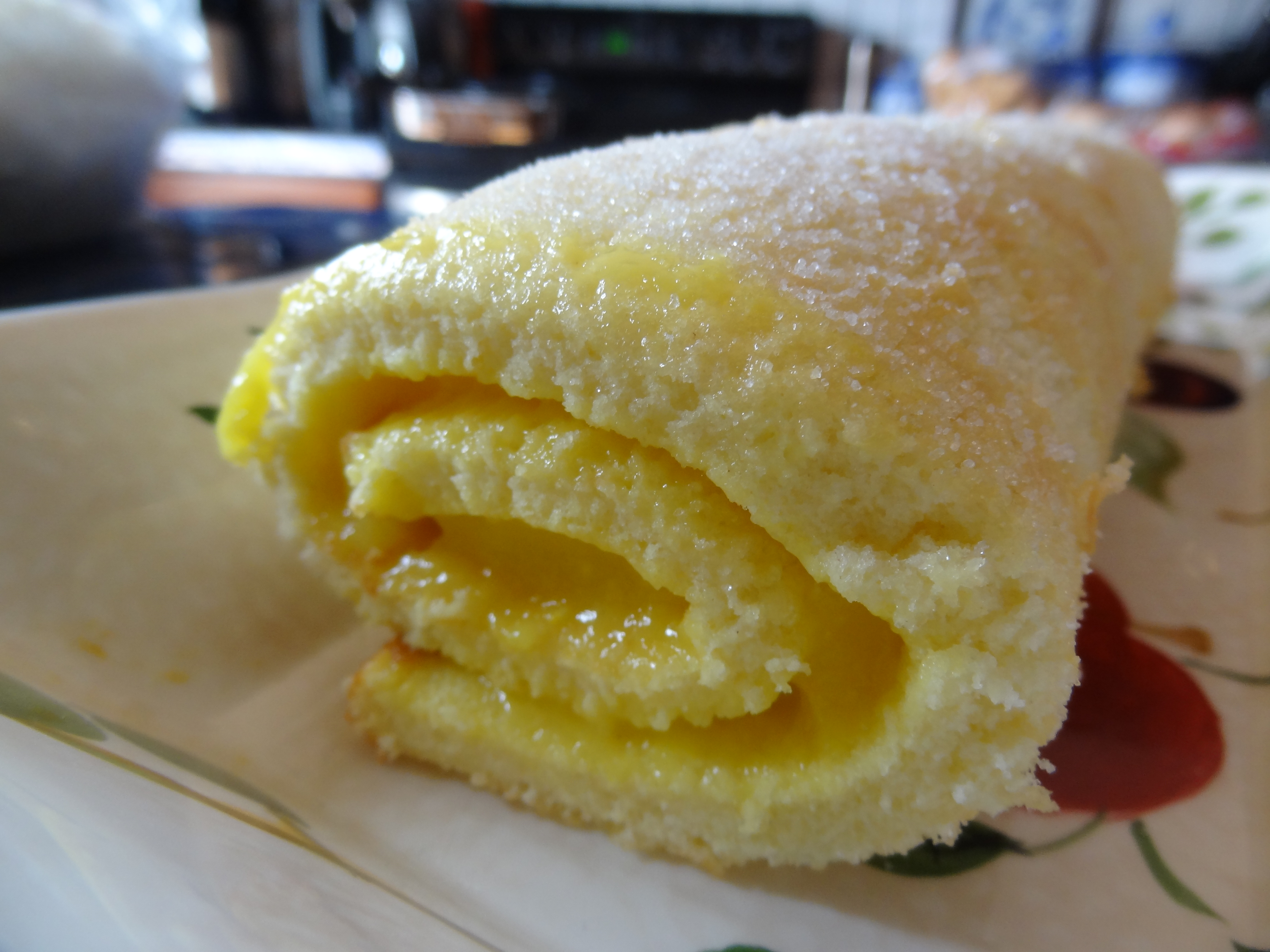
This recipe for Torta (similar to a Jelly Roll) is easy to prepare and only takes 15 minutes to bake.

What’s great about this recipe is that you can change the fillings to any that you prefer such as; chocolate pudding, flavored jams, or fresh chopped fruits like strawberries, peaches, berries etc.


Lemon Vanilla Torte

 Ingredients:

5 room temp eggs separated

3/4 cup flour

1 tsp baking  powder

1/2 tsp salt

2 tsp crated lemon rind

1 tbsp lemon juice

1 package instant Vanilla or Lemon pudding mix

1 1/2 cups milk

3/4 cups sugar


Instructions:

Preheat oven to 350 degrees. Grease (Pam spray or margarine) and line a large sheet pan with parchment paper. Combine flour, salt, baking powder in a bowl.

In a large bowl beat egg yolks with 1/4 cup of sugar until lemony. Add flour mix, lemon zest and lemon juice and mix well for about 5 minutes.

In a separate bowl beat the egg whites until they form soft peaks. Add the 1/2 cup sugar gently into the whites until stiff peaks form.

Gently fold the egg whites into the eggs with a rubber spatula. Pour into the sheet pan spreading evenly. Cook for about 15 minutes or less depending on your oven. The cake should be golden light brown in color.

Prepare the pudding by mixing the contents of the package with only 1 1/2 cups of milk (not 2 cups as package directs).

Mix for 2 minutes, then place in fridge to thicken.

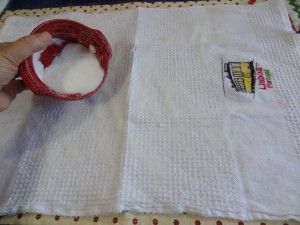
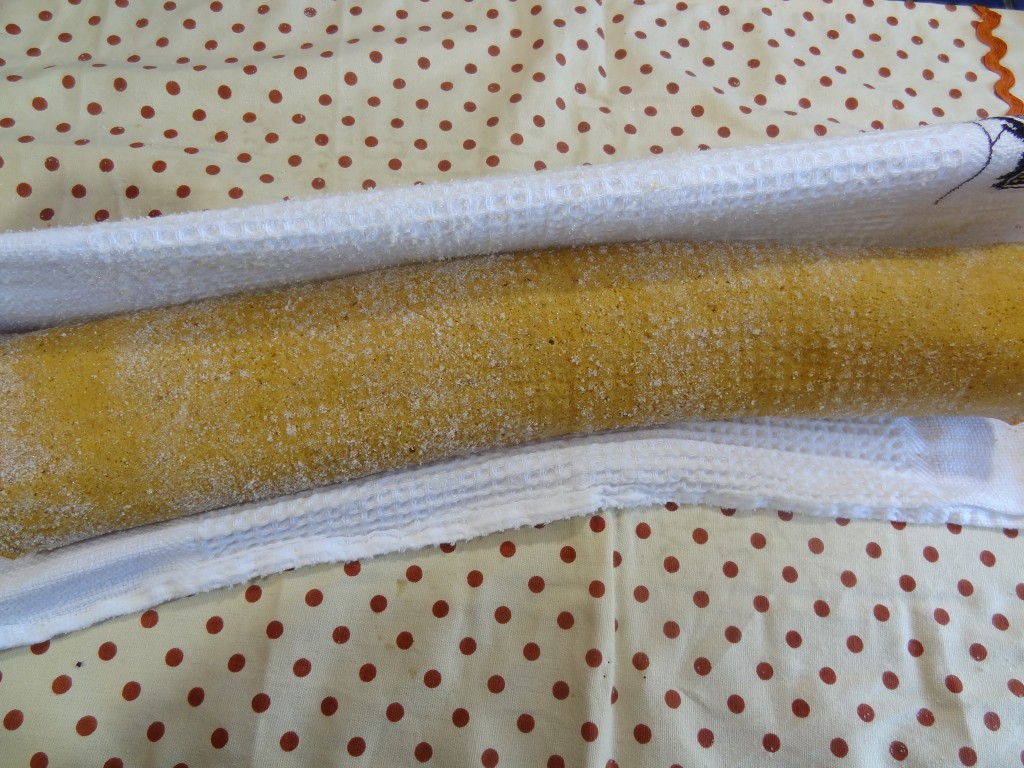
Place a clean linen white kitchen towel on the counter and sprinkle generously with granulated sugar. Slowly flip the cake pan onto the towel with the sugar.

Peel the parchment paper off the cake, then roll up the cake with the dish towel and let it sit for 5 minutes for the cake to cool.

Unwrap the rolled up cake let sit for a few minutes and spread the pudding (or any filling you prefer) evenly over the cake.

Gently roll up the cake without the towel leaving the edge on the bottom.

Sprinkle more sugar on top of the Torta to serve. Enjoy!


Bolo Rei – King of Portuguese Cakes

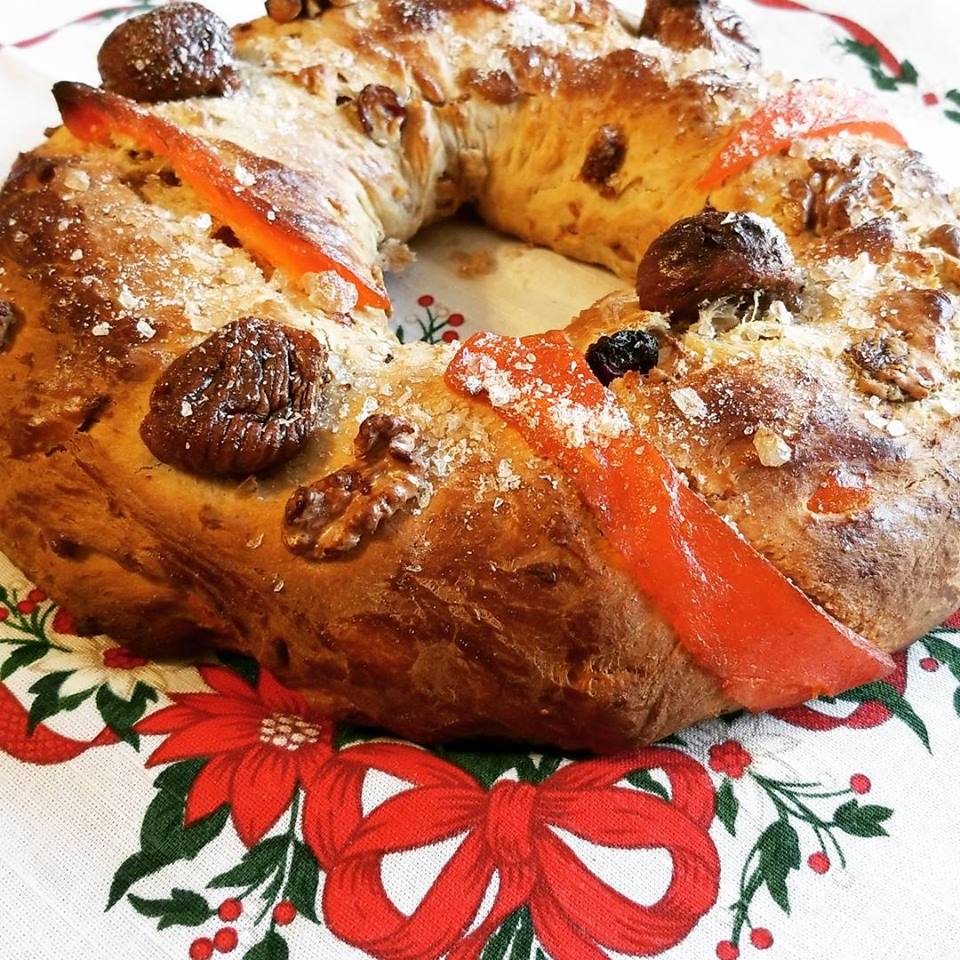
Bolo Rei is Portugal’s king of cakes. It’s traditionally eaten throughout the Christmas season, but mostly on January 6, the twelfth day of Christmas, which is known as King’s day.

The date is when the three kings arrived in Jerusalem to greet the newborn baby Jesus.  The legend is that the three kings were disputing which one of them would be the first to give their gift to Jesus. Upon their travels they met a baker who baked a cake with a bean inside it.

Which ever one of them got the slice of cake with the bean would give their gift first. Through the years coins and trinkets were added to the cake instead of the bean which would bring good luck upon the bearer. The cake without the fruit on top is often called Bolo da Rainha! My recipe inspired by Cascaistravel.com. Enjoy!

The cake was introduced to Portugal by the Confeitaria National bakery run by the Casteneira family for over 100 years.

Visit the website for the history of the origin of the recipe at confeitarianacional.com.
Watch the video of the famous bakery at: www.portugaldailyview.com/portuguese-christmas-cakes

Find the recipe in my Taste Portugal More Easy Portuguese recipes cookbook. Order on Amazon below:

Ingredients:

Yeast

2 tbsp active yeast
2 tsp granulated sugar

1 tablespoon flour
1/3 cup warm water

Dough

1 cup finely chopped assorted crystallized fruit NOTE: (I used dried apricots, dates, and raisins in my cake)
1/2 cup seedless raisins
1 teaspoon  finely grated lemon rind
1 teaspoon finely grated orange rind
2 tablespoons port wine
2 tablespoons rum

1 teaspoon salt

1 and 1/4 stick butter (10 tablespoons)
1 cup granulated sugar
3 eggs
2 egg yolks
5 cups all purpose flour
1/2 cup warm milk

1/4 cup chopped almonds
1/4 cup chopped walnuts

Topping

crystallized fruit of your choice, such as pineapple, cherries, or figs
1 egg for egg wash
confectioners sugar


Instructions:

Prepare the yeast mixture

In a small bowl mix together the yeast, sugar and flour and warm water. Stir and let sit for a few minutes for yeast to dissolve and activate.

For the Dough

In another bowl add the chopped crystallized fruit, raisins, grated lemon and orange peel, port wine and rum. Leave the fruit to soak up the liquid while you prepare the dough.

In a large bowl beat the butter and sugar together with an electric mixer until smooth and creamy. Beat in the eggs and egg yolks one at a time. Gradually beat in the flour and the milk. Then add the yeast mixture to the dough.

Add the almonds, walnuts and pine nuts and the crystallized fruit mixture.

Lightly mix in more flour as needed to create a sticky bread like dough.

Cover and leave to rise in a warm place for about one hour or until it has doubled in size.

Take the dough and knead for about one minute, then shape into a round loaf and place on a greased baking tray.

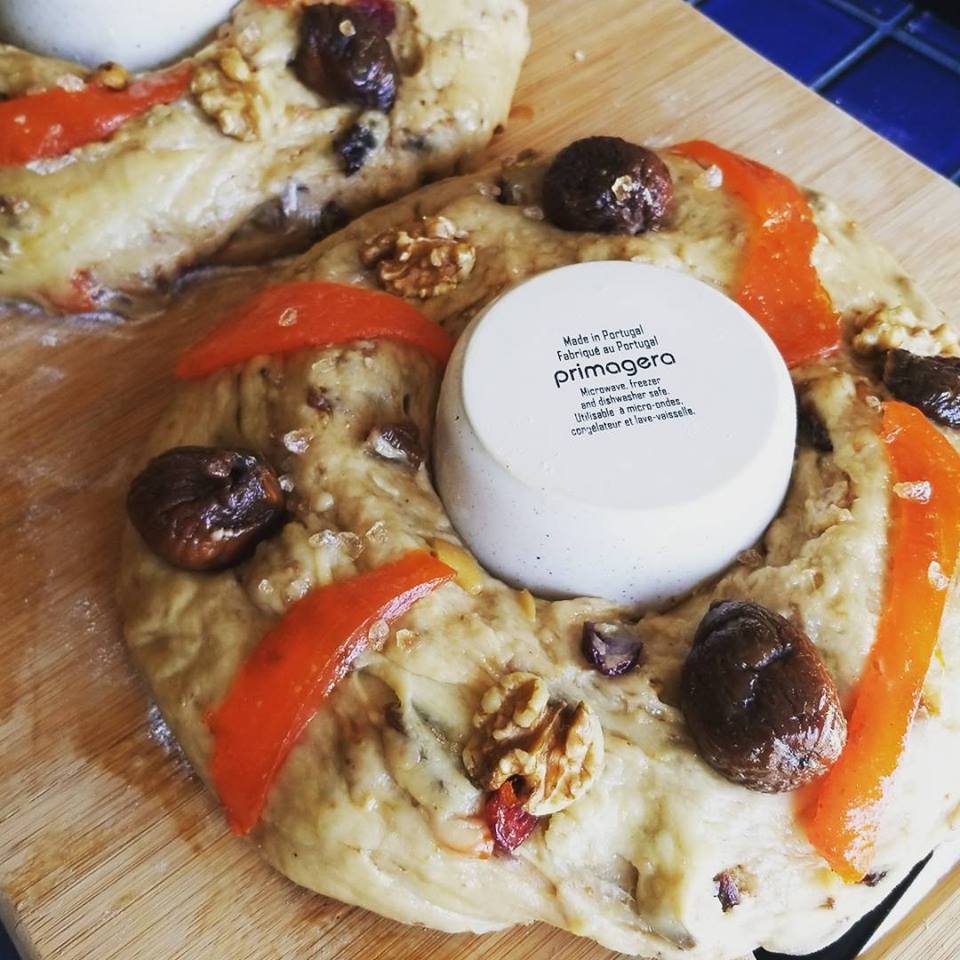
Using your thumbs, open up a hole in the middle of the dough so that you are left with a wreath shape, or crown. I used a greased and floured ramekin and placed it in the middle of the wreath to form the wreath.

Note: To add the surprise: Make a hole with a knife on one side of the wreath and push the wrapped broad bean into the dough. Choose another spot on the wreath, make a hole with the knife and push the wrapped coin into the dough.

Topping

Decorate the wreath with a few crystallized fruits. Beat the egg and brush over the wreath. Cover and let rise in a warm place for about one hour or until it has doubled in size.

Remove ramekin and bake in a preheated over at 375 degrees F for about 40 minutes or until golden brown. Cool and dust with powdered sugar.


Pão de Ló – Portuguese Sponge Cake

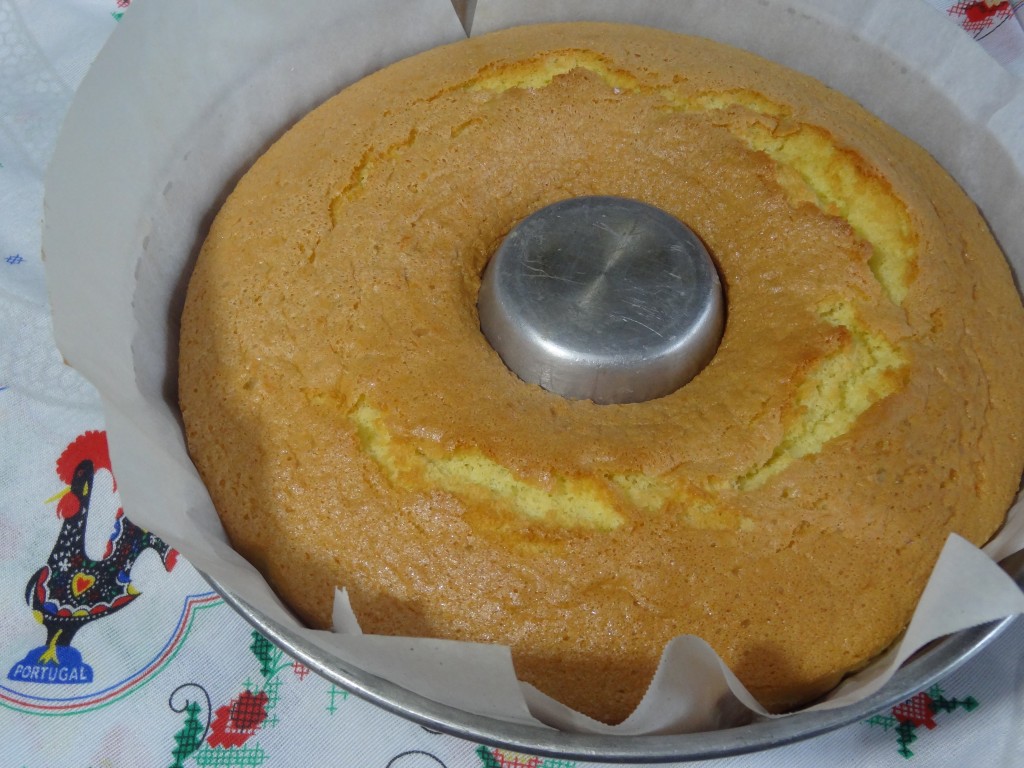
Pão de Ló – “Sponge Cake”  Just as the translation is easy, so is the recipe. This cake is so easy to make that you’ll find yourself making it again and again. The recipe uses no oil, butter or fats so it’s virtually fat free!

This classic dessert is so versatile that you can make it for all the holidays, special occasions, bring it to a pot luck diner as a dessert, or just make one when you’re craving a simple cake.  Enjoy!….. and…..Happy Holidays!

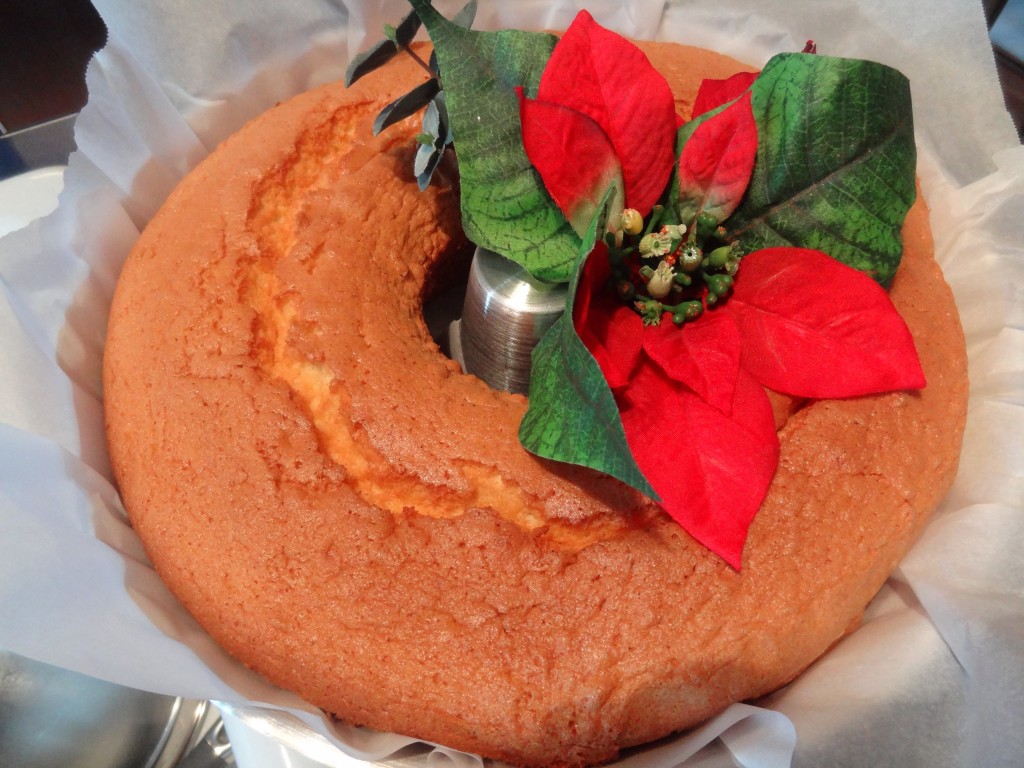
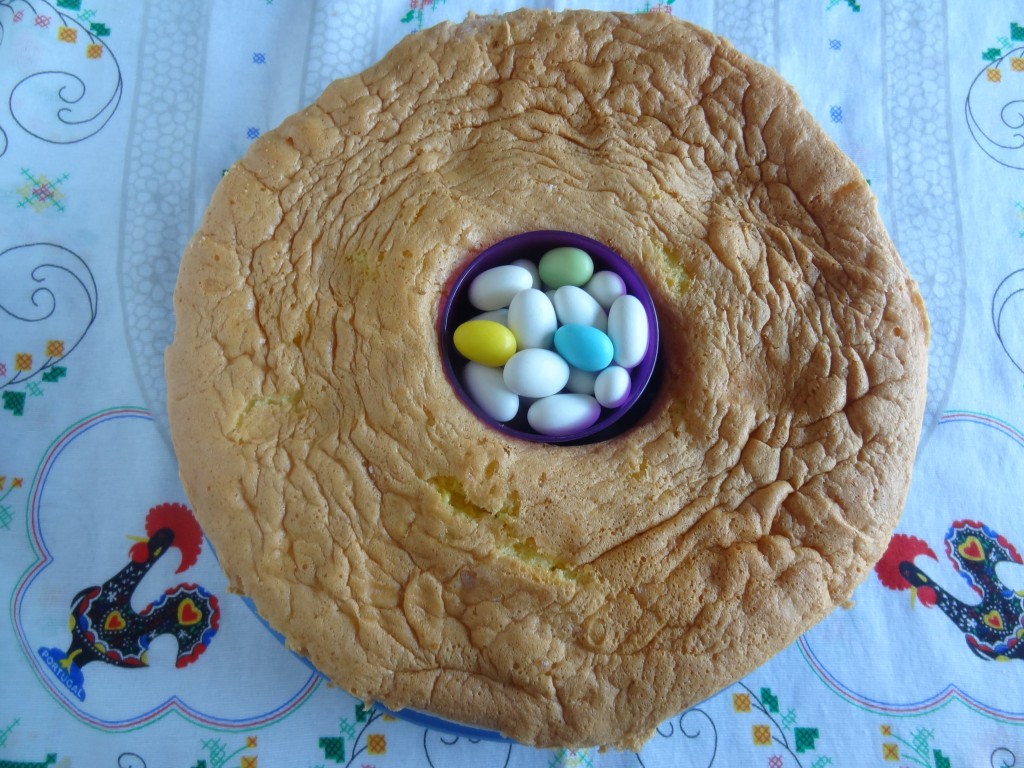
This is a Christmas photo of the classic – Portuguese – Pao de Lo which I give as home made Christmas gifts for my family and friends.

*Please note: There is Silk – Poinsettia in the center

(Do not use real Poinsettias with food items)

Pao de lo recipe:

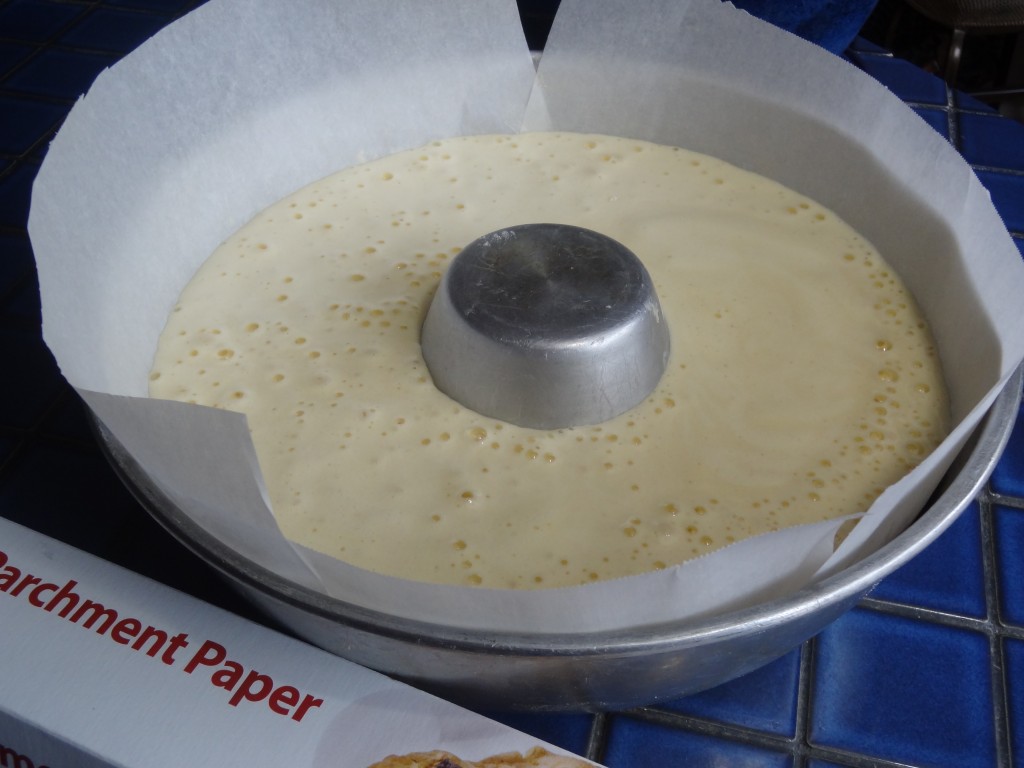
You will need an extra large bundt pan to cook the cake. If you don’t have an extra large pan be sure to use parchment paper all around so the cake doesn’t over spill.

Here’s our youtube video cooking the recipe.

Please subscribe and like our page for the latest video postings!


Ingredients:

10 brown eggs (room temp)

1 1/2 cups sugar

2 cups sifted flour

1/4 tsp salt

1 tsp baking powder

1 tsp (grated lemon peel – Optional)

Preparations:

Make sure your eggs are room temp or place them in a bowl of warm water for about 15 minutes.

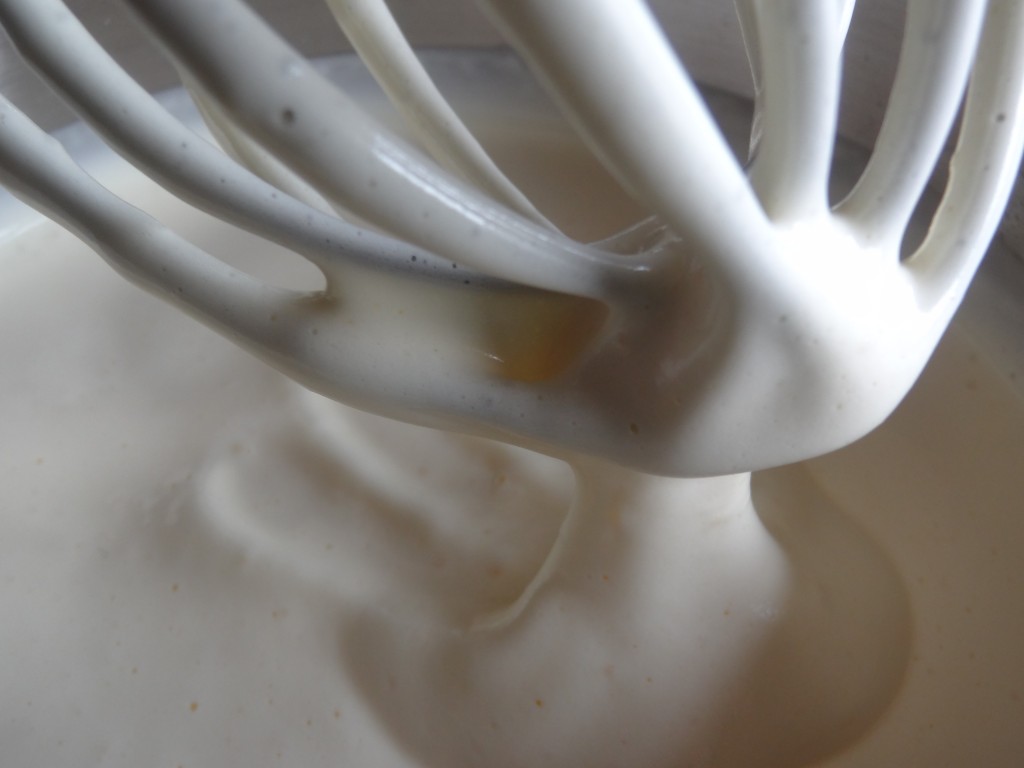
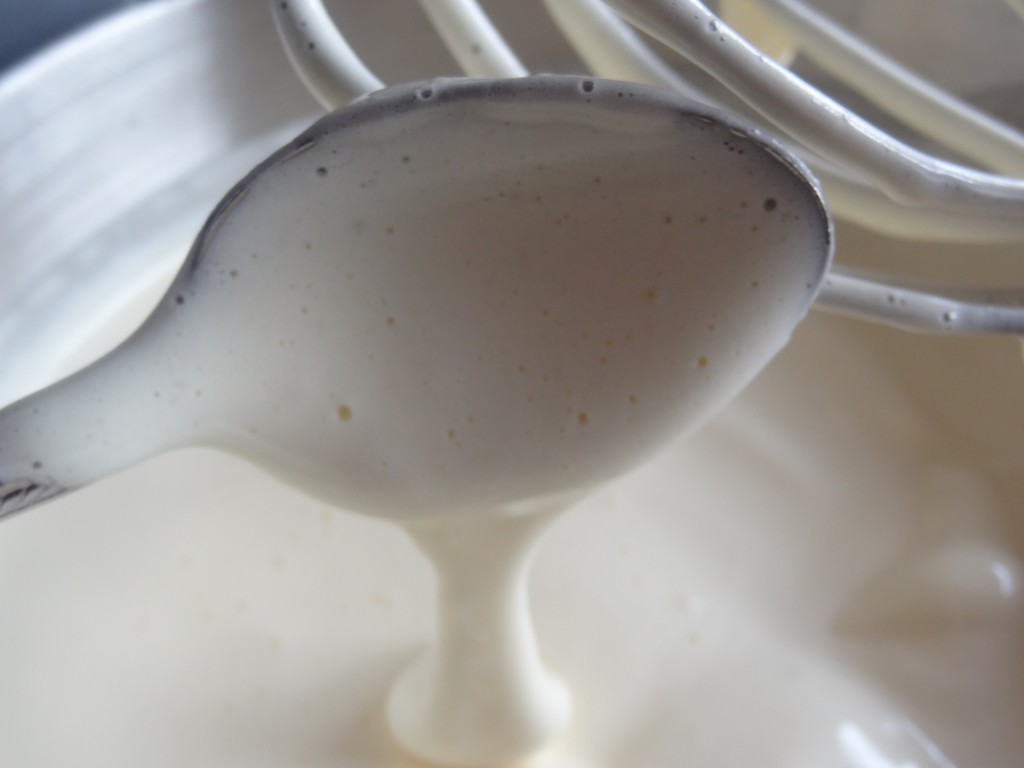
In a large bowl beat the eggs until foamy. Add sugar and beat for at least 20 minutes until batter becomes very thick,  stiff peaks. (Add lemon at this point if desired)

Note: If using a kitchenaid mixer, mix for only 10-15 minutes until stiff peaks form.

While the sugar and eggs are beating, mix flour, salt and baking powder in a small bowl.

When the batter is ready, add the flour mixture very slowly 1/4 cup at a time on low speed or fold in with a spatula. 

This should only take about 3-5 minutes. (Don’t over beat, this is important) 

Grease a large tube pan. (Aluminum works best). If your pan is smaller, line the top few inches of the cake pan with parchment paper in case the batter rises over the top. Poor batter into the pan and shake slightly to spread evenly. 

Cook at 350 degrees F. for 45 minutes or until a toothpick comes out clean.

Let the cake cool for about 10 minutes. Invert the cake pan right side up onto a serving dish.

(Note:  This cake freezes well so you can make it ahead of time. Slice into pieces for individual servings or freeze the whole cake. Make sure it’s completely cooled, wrap in saran wrap and heavy foil or in Freezer bags.)

Pao de Lo – Easter Decoration


Sonhos – Portuguese Choux Pastry Dreams!

dsc06173

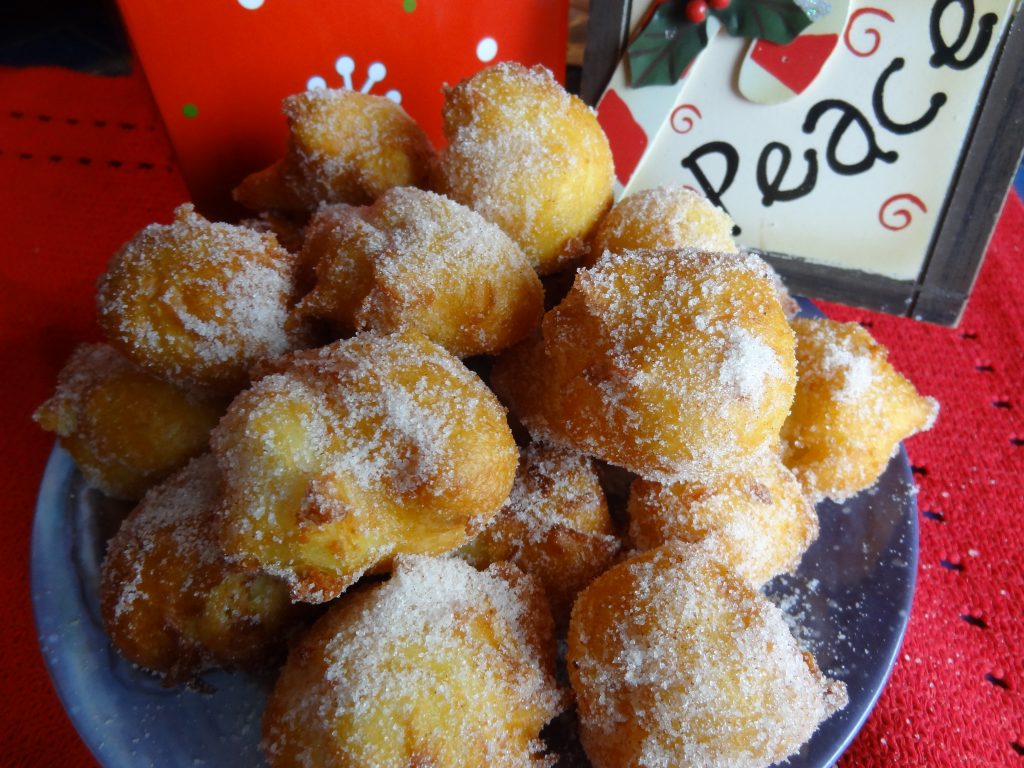
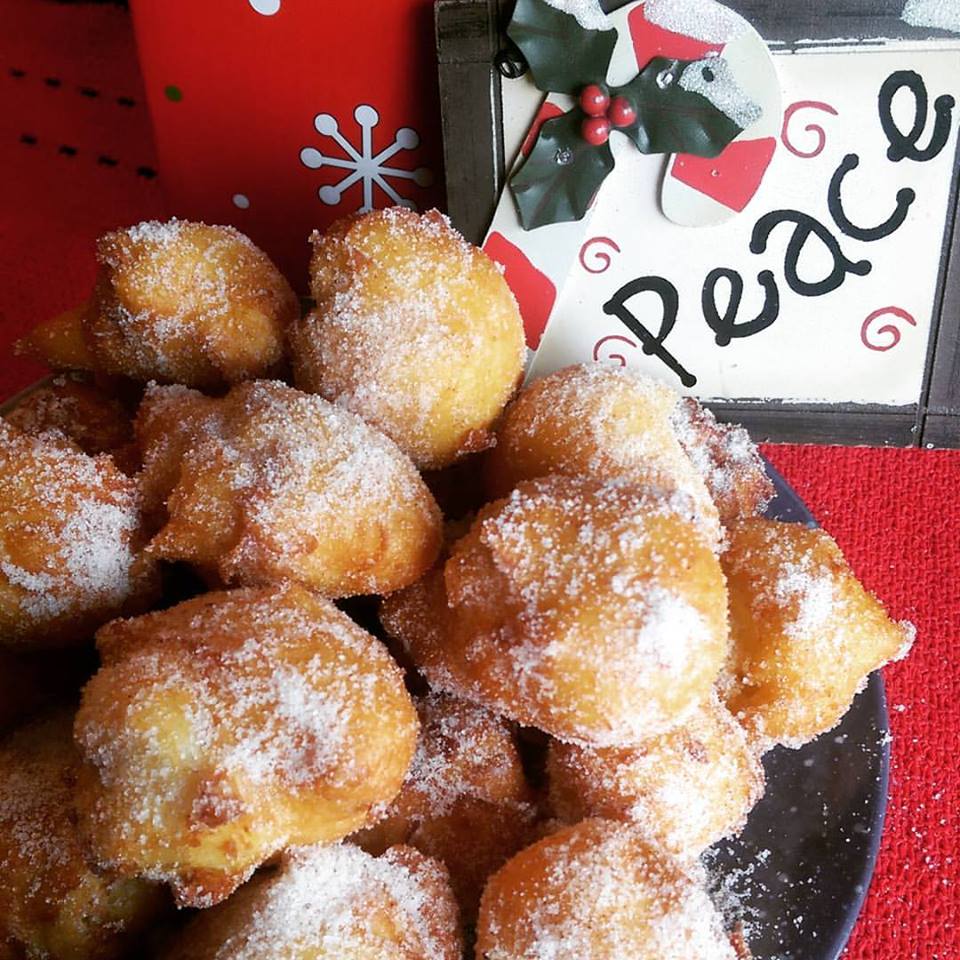
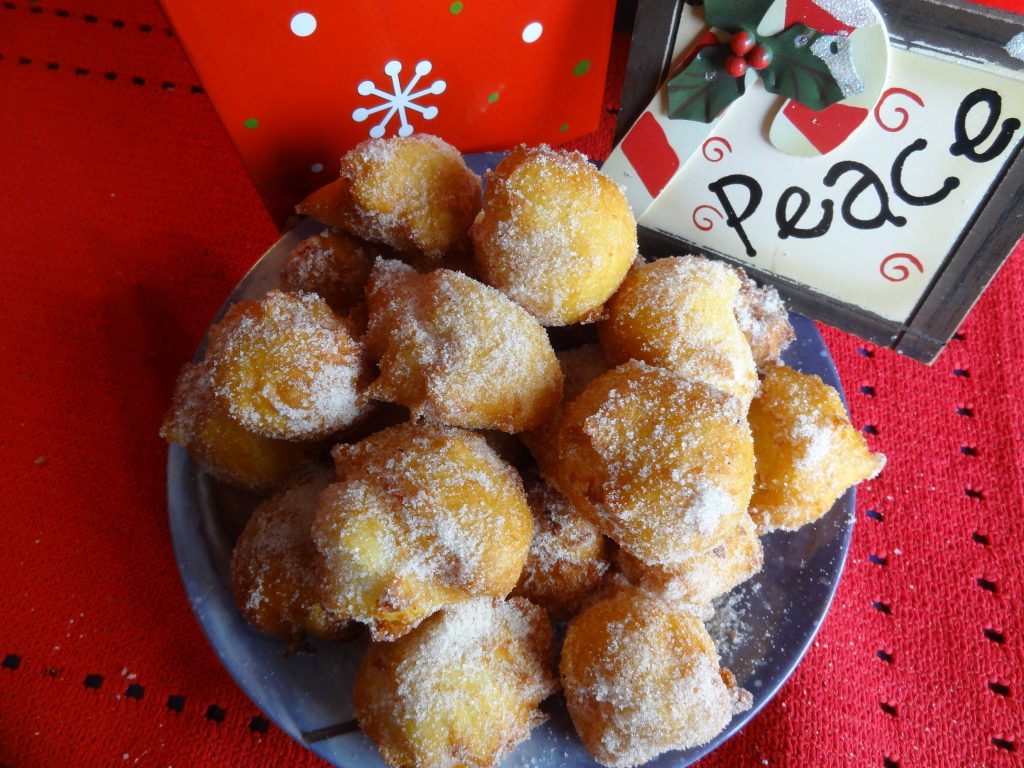
sonhos-2Sonhos, are light and fluffy doughnut like pastries that melt in your mouth! Generally, they’re served around the Holidays but this popular fried pastry is a favorite at almost every Portuguese celebration. They are quite easy to make unlike filhos which are made out of risen dough and have a much longer process time.

Good luck to those of you are making these for the first time! Enjoy!

Sonhos

Ingredients:

6 extra large eggs

2 cups flour

3/4 cup water

3/4 cup milk

1/2 tsp salt

1/2  stick butter or margarine

1 slice lemon rind

Sugar and Cinnamon for topping

Instructions:

In a large heavy pan, place the water, milk, butter, lemon rind,  and salt over medium heat and bring to boiling point. Stir in the flour and stir with a wooden spoon until the flour becomes a soft dough which turns into a ball shape that separates from the sides of the pan. This is similar to a basic Choux paste that is used for baking eclairs and cream puffs.

Remove the dough from heat and place into a medium bowl. Let the dough cool for a few minutes. Beat in one egg at a time making a smooth batter.

Heat the oil to 365 degrees. Shape the dough into round doughnuts by using 2 large tablespoons.  Fry the dough by 4 or 5 pieces at time until golden brown while keeping the heat at a steady temperature. * NOTE. If you find the dough is turning brown too quickly reduce the heat to a lower setting. They should cook slowly.

**IMPORTANT**Pierce sonhos slightly with a fork all around as they cook. NOTE: If you find they are too dark and still raw in the middle, lower the heat so they cook through at a slower temperature.

Drain on a new clean brown paper lunch bags or on paper towels.

While still hot, roll sonhos in a mixture of sugar and cinnamon.

Watch this video for the demonstration. The recipe varies from mine.

dsc06172

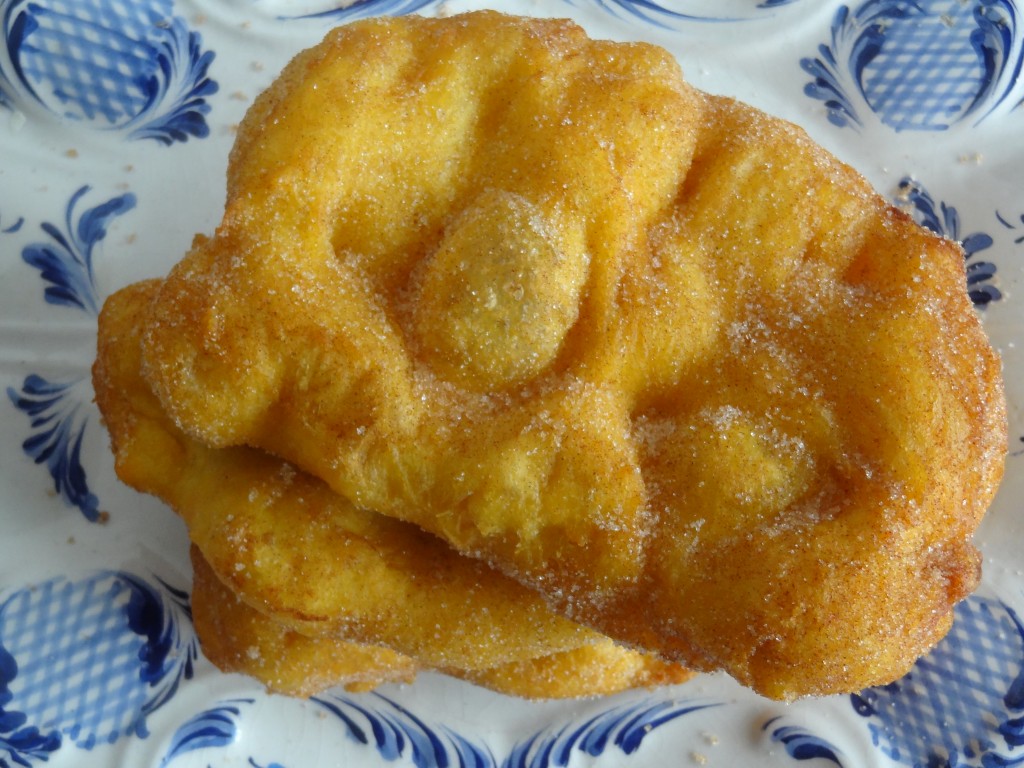
This recipe is for Coscorões – Portuguese fried dough
Receita de Coscorões

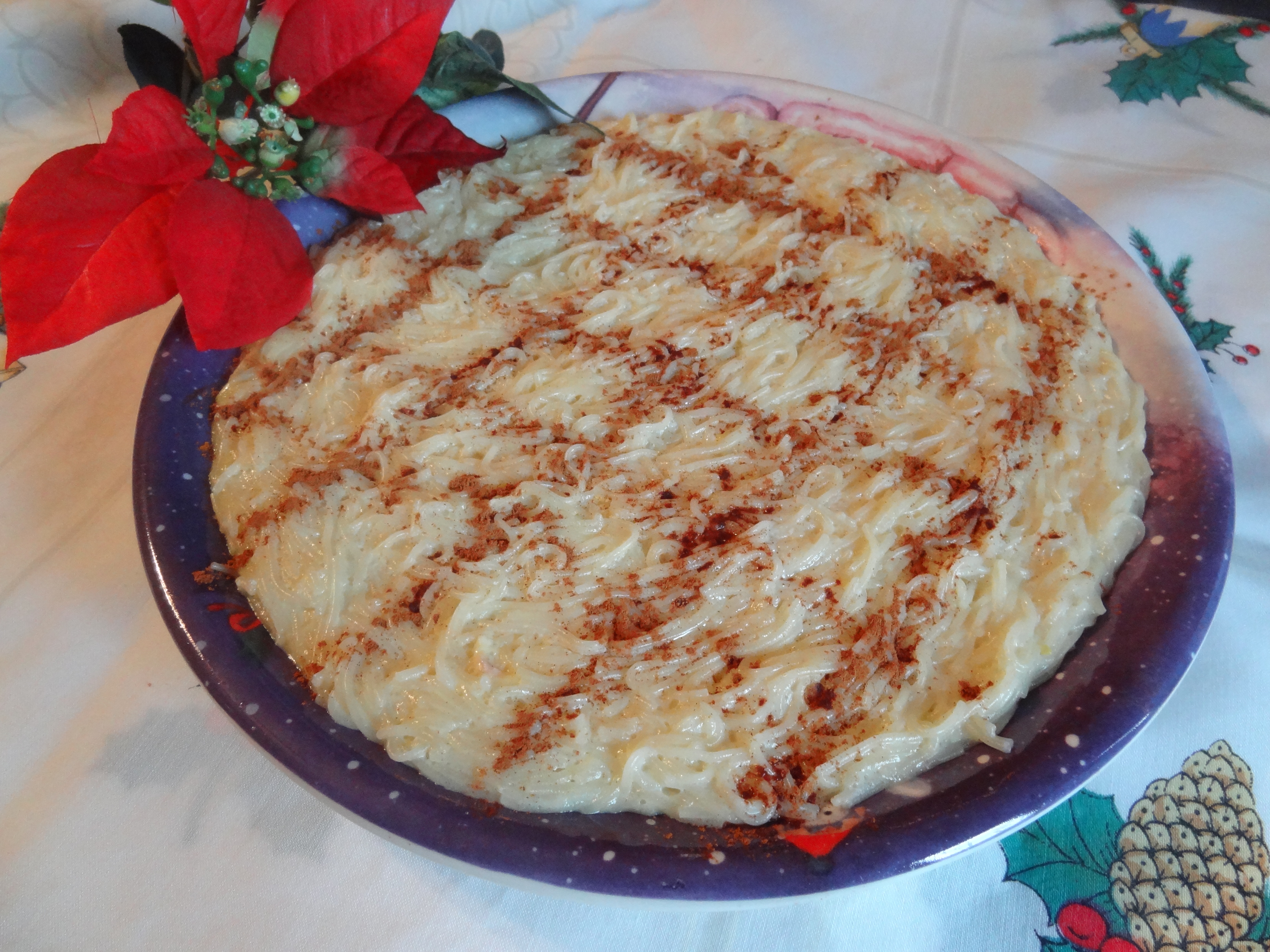
Aletria – Sweet Egg Noodle Christmas Dessert

Aletria, is a sweet dessert made with fine egg noddles which is mostly served at Christmas and for many other festive occasions.

This classic is made with the same basic ingredients; eggs, sugar, cinnamon and lemon peel as the ever popular Arroz Doce – Portuguese Sweet Rice Pudding


Ingredients:

7 cups of whole milk

6 egg yolks

1 + 1/2 cups of sugar

1 tsp salt

1 cinnamon stick

2 pieces of lemon peel

1 12 oz package of very fine egg noodles

Pour milk, sugar, salt and cinnamon stick into a large pan and bring it to a boil, stirring constantly.

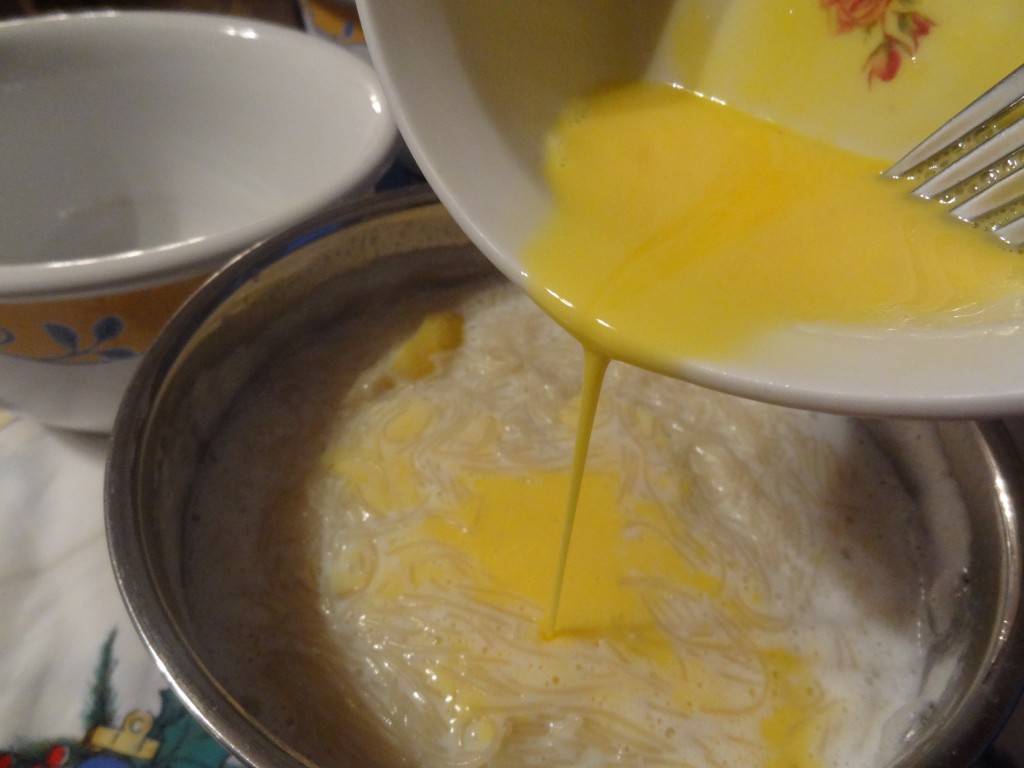
Meanwhile, beat the egg yolks in a small bowl and slowly blend some heated milk into the eggs and stir. Set aside.

Break up the noodles and add them to the boiling milk. Stir constantly until the noodles are cooked and remove from the heat.

Slowly add egg mixture into the cooked noodles and stir to incorporate. Turn off heat *Do not let the noodles boil. Remove from heat.

Remove the lemon peel and cinnamon stick. Pour the mixture into a large serving platter at least 1 inch depth. Sprinkle with cinnamon.

Let cool and store covered in the refrigerator.