Tagged: Portuguese beef

Alcatra – Portuguese Pot Roast

Most often at the Portuguese Festa, or Holy Ghost Festival as some call it. The story goes like this:
Read more at http://www.farmgirlgourmet.com/2012/03/alcatra-portuguese-pot-roast-in-slow.html#bu0ukcesDDt7UDH0.99
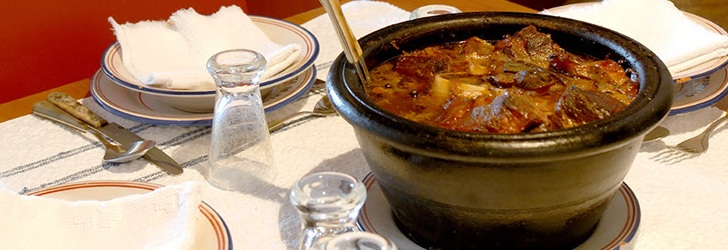
I’ve had many requests for the Alcatra recipe recently but I waited until the weather got a little cooler to share it with you.

Alcatra is a pot roast very popular in the Azorean Island of Terceira in Portugal. It is mostly made during the Holy Ghost Festivals which are celebrated at all the other Azorean Islands, as well as in many Azorean immigrant communities in the United States and in other countries with an Azorean – Portuguese immigrant community. Here’s a list of Holy Ghost and other Festas.

You can learn more about the gastronomy of the Azores here or read this book: Sopas: A brief History of Portuguese Islanders, the Cape Cod Town of Falmouth, and the Feast of the Holy Ghost (2012) Lewis A. White.

This following recipe for Alcatra is from the cook book;

Portuguese Home Style Cooking by Author Ana Patuleia Ortins

Thank you Ana!

Alcatra – Beef Rump

“The Azorean Portuguese from the Island of Terceira are famous for this unique dish, Simply seasoned with allspice, pepper, salt and bay leaf, it is traditionally served on the Feast of the Holy Ghost, but can be served on other occasions as well. Cooked in red wine, the meat takes on a deep mahogany color.

Other Azorean Islands have versions of this popular meal. Some cooks use white wine for a lighter color. Served with rice as a separate coarse after the Soup of the Holy Ghost. (see page 40 of cook book), or is prepared in a clay pot.

The traditional pot is somewhat like an inverted lamp shade in shape. Similar deep, unglazed clay bakers may be found at kitchen specialty shops (or see resource guide at the end of the book). New -clay pots must be seasoned. Unglazed clay pots must be soaked before each use and placed in a cold oven to prevent cracking.”

Ingredients:

1 – Pre soaked unglazed 4 quart red clay pot or 4 quart dutch oven or casserole pan *soaking instructions below*

1   Stick of soft butter

3  Large onion, thinly sliced

½  Pound slab bacon cut into 1 inch pieces

6   Cloves garlic

2   Bay leaves

1    5 Pound rump or chuck roast, bone in, cut into 4 inch pieces

1   Pound shin bone (if using rump roast)

½  tsp whole allspice (Jamaican is best)

½  tsp black peppercorns

1   tsp coarse salt

4   tbsp firm butter, cut into pieces

1   cup water

4-6 Cups medium bodied red or white wine

Instructions:

1.  Generously grease the interior of the pot with the soft butter

2.  Place half of the onions in the bottom of the pot followed by half of the bacon, garlic and 1 bay leaf. Add the meat, including the bone from the roast or shin bone. Followed by the second bay leaf, the garlic and remaining bacon. End with the remaining onions. Scatter the allspice and Peppercorns over top along with the salt. Dot the top with pieces of the cold butter.

3.   Mix the water with 1 cup of the wine, pour over the ingredients followed by enough additional wine to cover everything by 1 inch.

4.   Place the pot in a cold oven. Set the temperature to 400 degrees F. When the liquid begins o boil, reduce the temperature to 300 degrees, cover the pot with foil and cook, without turning the ingredients until tender –  about 3-31/20 hours more.

5.  Turn off the heat. Uncover the pot and remove some of the broth for cooking the rice. Leave the uncovered pot in the oven just until the oven heat has dissipated.

The top will brown a little. Serve meat with rice cooked in the broth.

Soaking & Seasoning Pot – Notes:

Lucia Costa, who learned to prepare this dish as a young girl in Terceira, says long slow cooking is necessary to cook this dish.

A new unglazed clay pot needs to be seasoned to avoid passing an earthy flavor to food.

To season; fill the pot with water and add several cabbage or collard leaves and and some onion peelings.

Then place the pot on a flame diffuser over medium heat. Bring to a boil then reduce to a simmer. Simmer for about 2 hours and then drain.

When you want to cook in the pot, immerse it in water and soak for 24 hours. Then proceed with the recipe by generously greasing the interior with butter.”(Portuguese Home Style Cooking by  Ana Patuleia Ortins)

Alcatra Photo credit: http://www.visitazores.com/en/the-azores/the-9-islands/the-archipelago/food-and-drinks

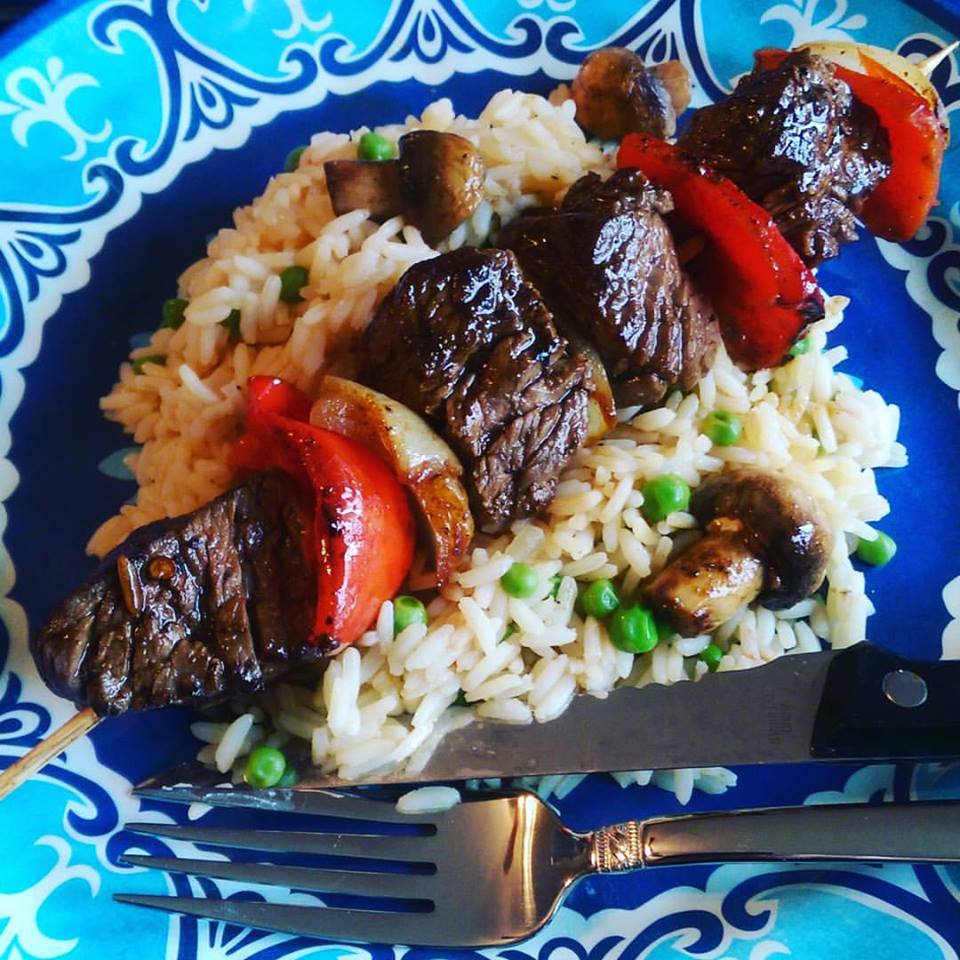
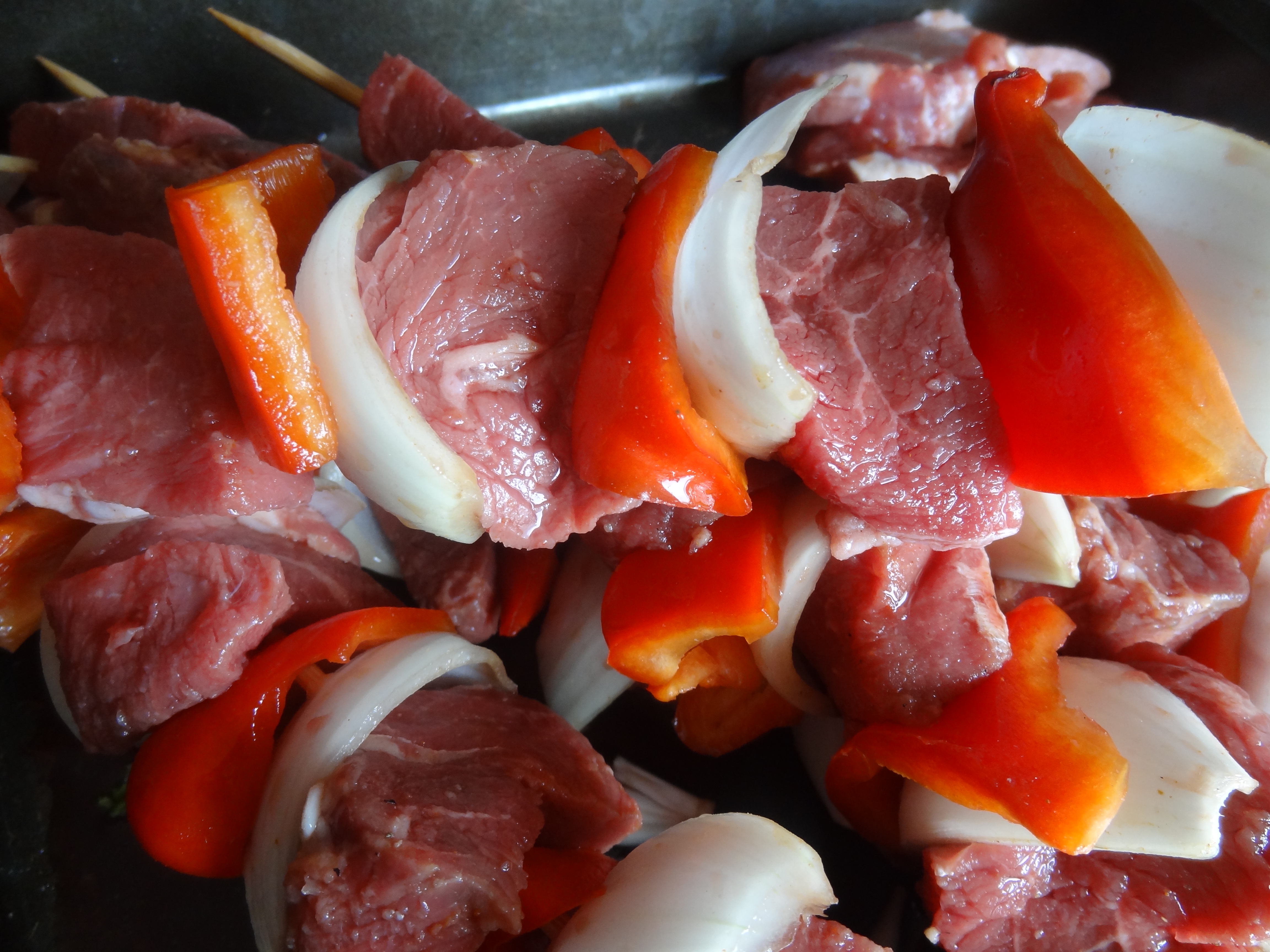
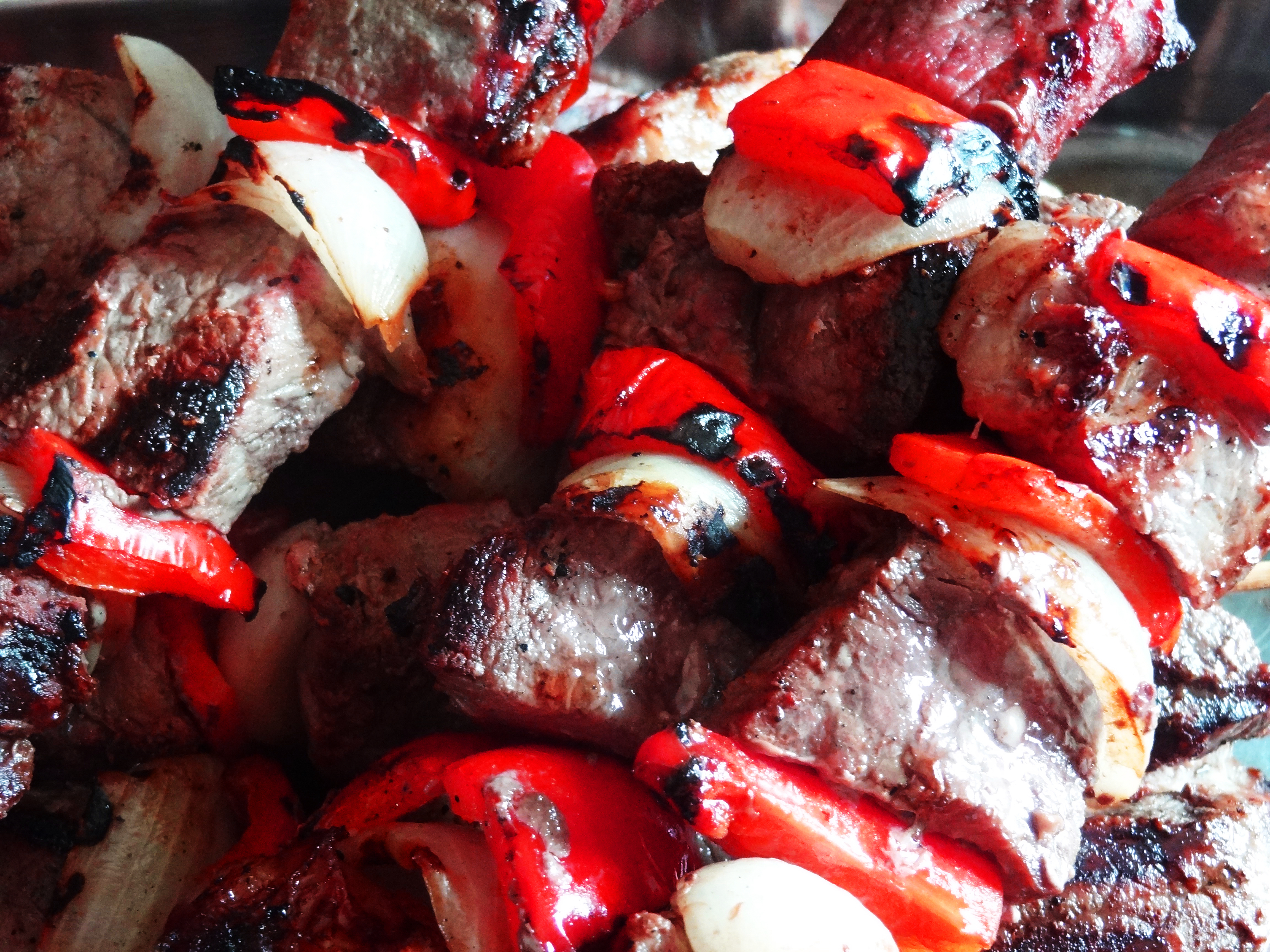
Piri Piri Beef Kabob – Espetada de Bife

Beef kabob 

Tired of the same old barbeque? Try Beef Kabobs. They’re easy to prepare and take only minutes to cook.

The Piri Piri adds a “kick” to the savory – sweet onion, and red pepper.

You may substitute the beef with chicken, pork loin, or grilling vegetables for a variation.

Serve over Portuguese Rice.

Piri Piri Beef Kabob – Serves 4-6

Ingredients:

2  lbs of sirloin or beef tenderloin (approximately 6-8 oz per person)

1 large onion

1 large red or green pepper

1 tsp salt

1 tsp pepper

2 cloves crushed garlic

1 tsp paprika

1 – 2 tsp Piri Piri or Tabasco Sauce

2 tbsp Olive oil

Butter or margarine

Preparation:

Soak the wooden skewers in water for 1/2 hour. Cut the steak into 2 inch cubes. Slice onions and peppers into 2×2 cubes. Place the steak and vegetables onto a large tray and season with the salt, pepper, garlic, 1 tbsp olive oil and piri piri sauce.

Make the kabob by skewering the steak and vegetable in alternate rotation. Cover and let marinate for 1-2 hours in refrigerator.

When ready to cook, take the kabobs out of the refrigerator and let them sit at room temperature for 10 – 15 minutes.

Brush with the remaining olive oil.

Preheat the grill to medium-high heat. Cook kabobs 2 to 3 minutes per side. Approximate 8-10 minutes total. *Do not over cook.
Remove from the heat onto a warm tray. Brush with butter, and cover with aluminum foil. Let rest for 2 to 3 minutes prior to serving.
Enjoy!

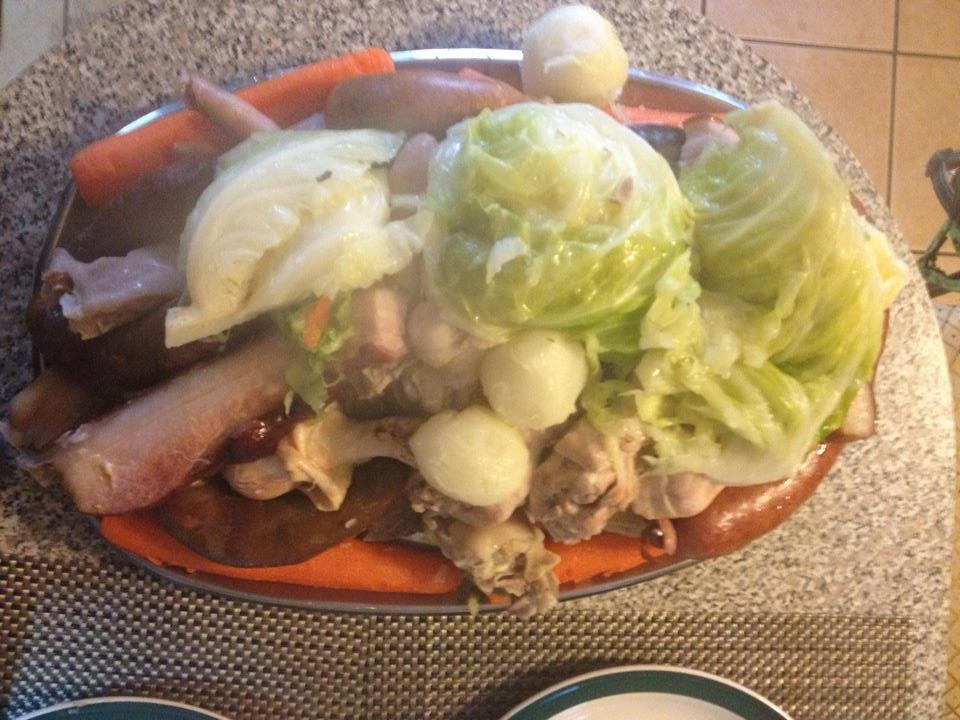
Cozido a Portuguesa – Portuguese Hot Pot

Cozido a Portuguesea (Portuguese Hot Pot) by Nelson de Sousa

Nothing says I love you as much as cooking that great classic, “Cozido a Portuguesa” for your family on a cold winter day!

Here’s a recipe from a great home cook! Nelson, is a Bona fide –  “Portuguese Foodie” like me who puts his heart on the plate.

He loves Portuguese food so much that began a “Portuguese Cooking” page on Facebook and even took a job as unpaid intern – sous chef at: o lagar restaurant – a Portuguese restaurant in Union NJ.

Nelson’s  recipe for Portuguese Oxtail Stew recently won a contest on (rumbameats.com).

Here’s his intro and his recipe below. Thanks Nelson. Enjoy everyone!

Nelson de Sousa – Feb 21, 2011:

Every culture has a tradition of a boiled meat dish. The Chinese call it hot pot, the French call it choucroute and Latin Americans call it sancocho. The Portuguese call it cozido and nothing beats this comfort food in the middle of winter with several inches of snow falling and a negative wind chill!

Of course it doesn’t much snow in Portugal but cozido reminds me of cold Saturdays in my parent’s basement with a big pot of boiling goodness that would steam up the windows, walls and the TV with its warmth. The Portuguese cozido has its origins in the Beira region and is commonly made from shin of beef, pork, and Portuguese smoked sausages and in some regions chicken, served with cabbage, carrots, turnips, rice, potatoes, and collard greens.

Since the origins of this dish are humble (this is a rustic recipe meant to use up the cheaper cuts of meat) it contains ingredients that are unsavory to more “American” refined palates such as pig’s snout, pig’s feet, pig’s ear and blood sausage.  I give no quantities below as it varies by how many people you are serving.

When you go to the store you will have to gauge how much meat to buy for the amount of people you are serving. Similarly,  I don’t give cooking times as this varies by how much meat you are using, which particular cut you are using and the thickness/weight of each meat item. You will have to test periodically with a knife and fork until you reach your desired tenderness.

Some aficionados of cozido prefer the meat less tender while others prefer it falling off the bone. Traditionally a well plated dish will consist of some quantity of one of everything mentioned below albeit in a smaller cut up portion.

If all the various cuts of meat are not available or they disgust you don’t worry all you need to maintain the spirit of the dish is to have a sampling of all the meats (pork, beef, chicken)  sausage and the vegetables.  


Cozido


Ingredients:

  • stewing beef (whole piece not cut up stew meat)
  • pork ribs
  • pork hock,
  • pork snout
  • pork tail
  • pork ear
  • pork neck bones
  • chicken
  • morcela sausage (a Portuguese blood sausage)
  • chourico sausage (the Portuguese equivalent to chorizo)
  • salpicao sausage (a Portugese sausage)
  • farinheira sausage (a Portuguese mealy sausage)
  • lean unsmoked bacon slab, in one piece
  • turnips
  • potatoes
  • white cabbage
  • carrots, scraped
  • collard greens
  • rice (optional)


Directions:

Place all the meat except for the sausages in boiling water enough to cover all and allow it to  cook at a low boil. Add salt to taste. As each item of meat cooks, remove it from the broth into a separate dish.

Please note that different meats will cook differently.  Check your meat periodically for your desired tenderness.

When all the meat has cooked thoroughly place the white cabbage, potatoes, carrots and turnips in the broth and cook.  Remove vegetables as they are cooked and set aside with the meat.

Once again please note that vegetables may cook at varying rates so check periodically. Add collard greens and boil until tender and cooked.  Finally add the sausages and boil until cooked being careful to watch the farinheira as it can explode.

When the sausages are near being fully cooked gently place the meat back into the broth pot, along with vegetables so that all the ingredients can come up to temperature. Place the vegetables last into the pot.

To plate the dish place the cabbage into a platter. Slice the beef, pork, chicken and sausages into manageable 2-3 inch  pieces and place on top leaving the bone in pieces a little bigger so as to not distort the natural shape of the meat.

Garnish the dish with the remaining vegetables around the platter and top with slices of sausage.

Some like to reserve some of the broth and cook some rice in it.  To do so take some broth out before adding all the ingredients back into the pot to reheat.  Remember that liquid to rice ratios are: 1 quantity or rice to 2 of liquid.