Tagged: Entree

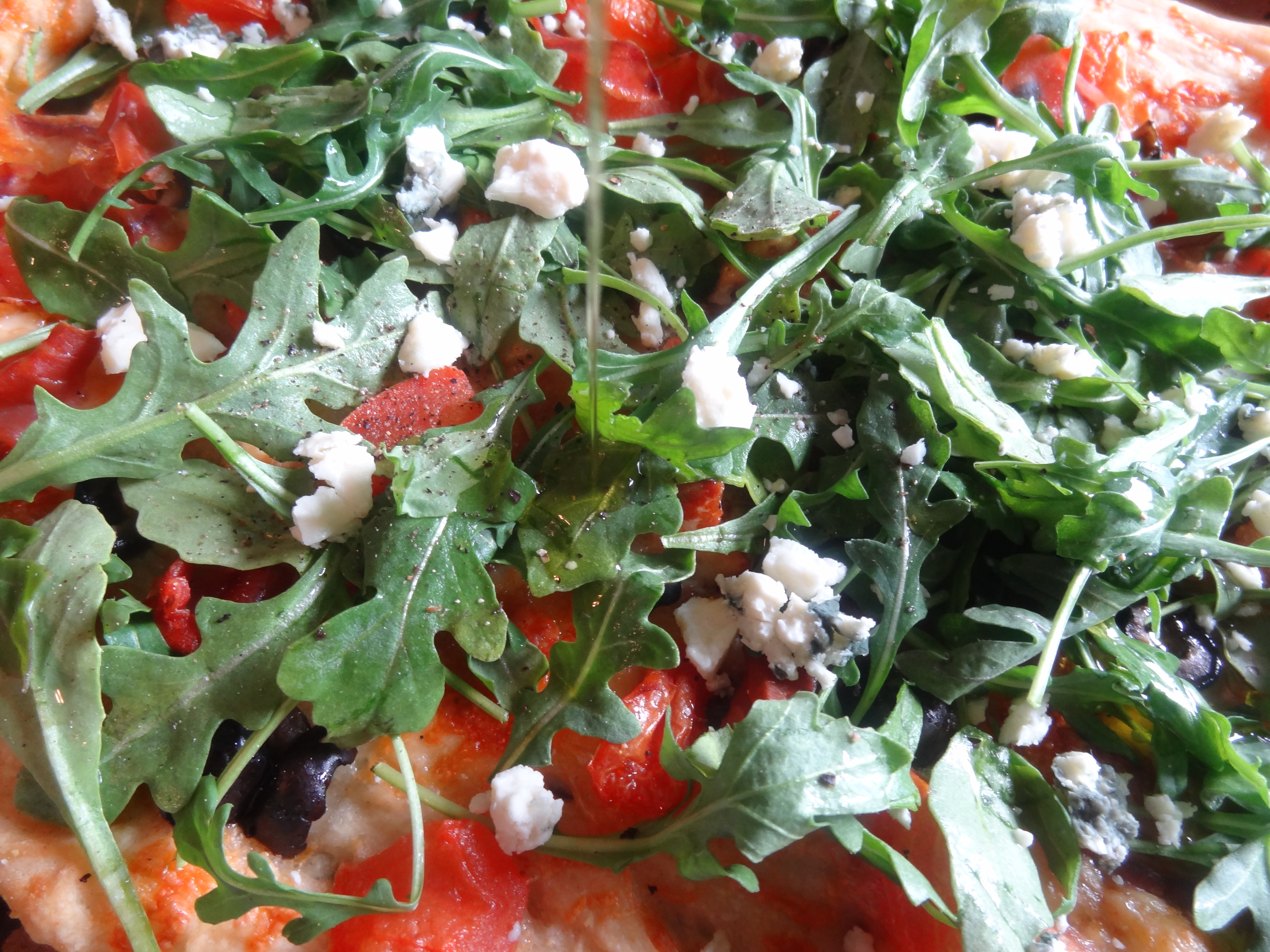
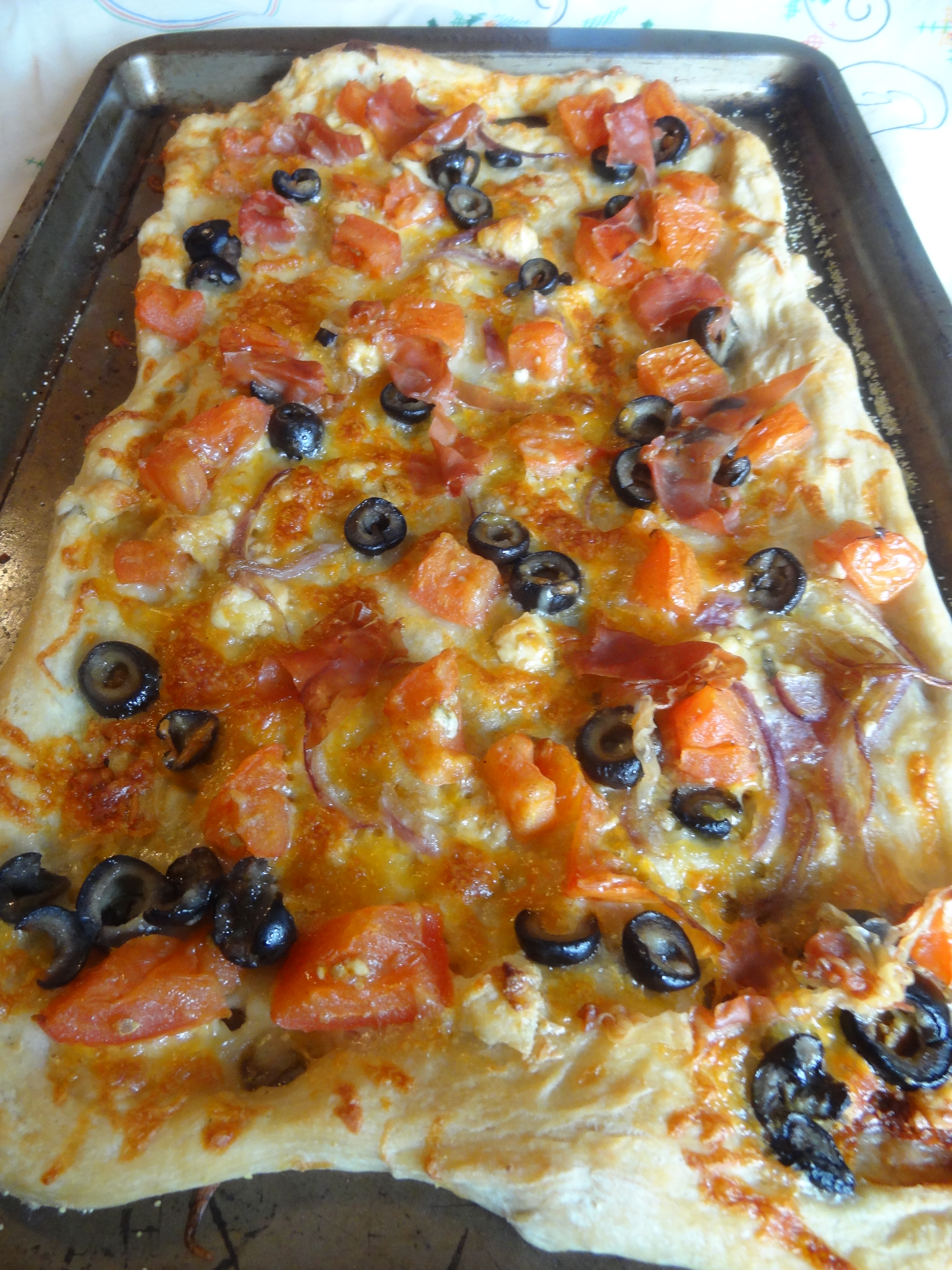
Presunto & Arugula Flat Bread

I love the American “melting pot” of different cuisines from all over the world!

This recipe incorporates a little bit of Portugal and Tuscany with my variation on “Flat Bread”.

If you prefer you can leave out the Presunto for a vegetarian style flat bread. Enjoy!

Ingredients:

2 lbs Pizza Dough

3 tbsp olive oil

1 clove garlic

1 cup shredded mozzarella cheese

1 large chopped tomato

1/2 cup sliced Portuguese olives

1/2 cup thinly sliced red onion

1 tbsp Corn Meal

1/2 cup Blue Cheese or (any you prefer)

4 thin slices of Presunto chopped into 2 inches pieces

 2 cups of fresh Arugula or (fresh baby spinach)

Fresh black pepper


Instructions:

Roll out pizza dough into desired length on a large cookie sheet or 2 small flat pans that have been heavily sprinkled with cornmeal. (If you love a crispy thin crust roll out the dough very thin.)

Place garlic with the olive oil in microwave and heat for 45 seconds. Brush the garlic infused olive oil over the pizza dough.

Spread the shredded cheese, tomatoes, olives, onion and Presunto on top.

Bake at 400 for 10-15 minutes until cheese is melted and a crispy crust has formed. * Your oven may require more cooking time. Lift bottom of pizza and look for a lightly golden crust. The Flat bread will be crispy when done.

Let flat bread cool for a few minutes. Spread the Arugula over the pizza then add the Blue cheese. Drizzle the arugula with olive oil if desired and top with fresh cracked pepper!

Slice into squares with a pizza cutter or a large serrated knife.

This is delicious with a cool refreshing classic Portuguese style wine cooler!

Recipe: Poor ice into a tall glass – Add equal parts – Vinho Tinto (Red wine) and Ginger Ale (or Orange Soda).

Garnish with Orange Slice!

Cheers!


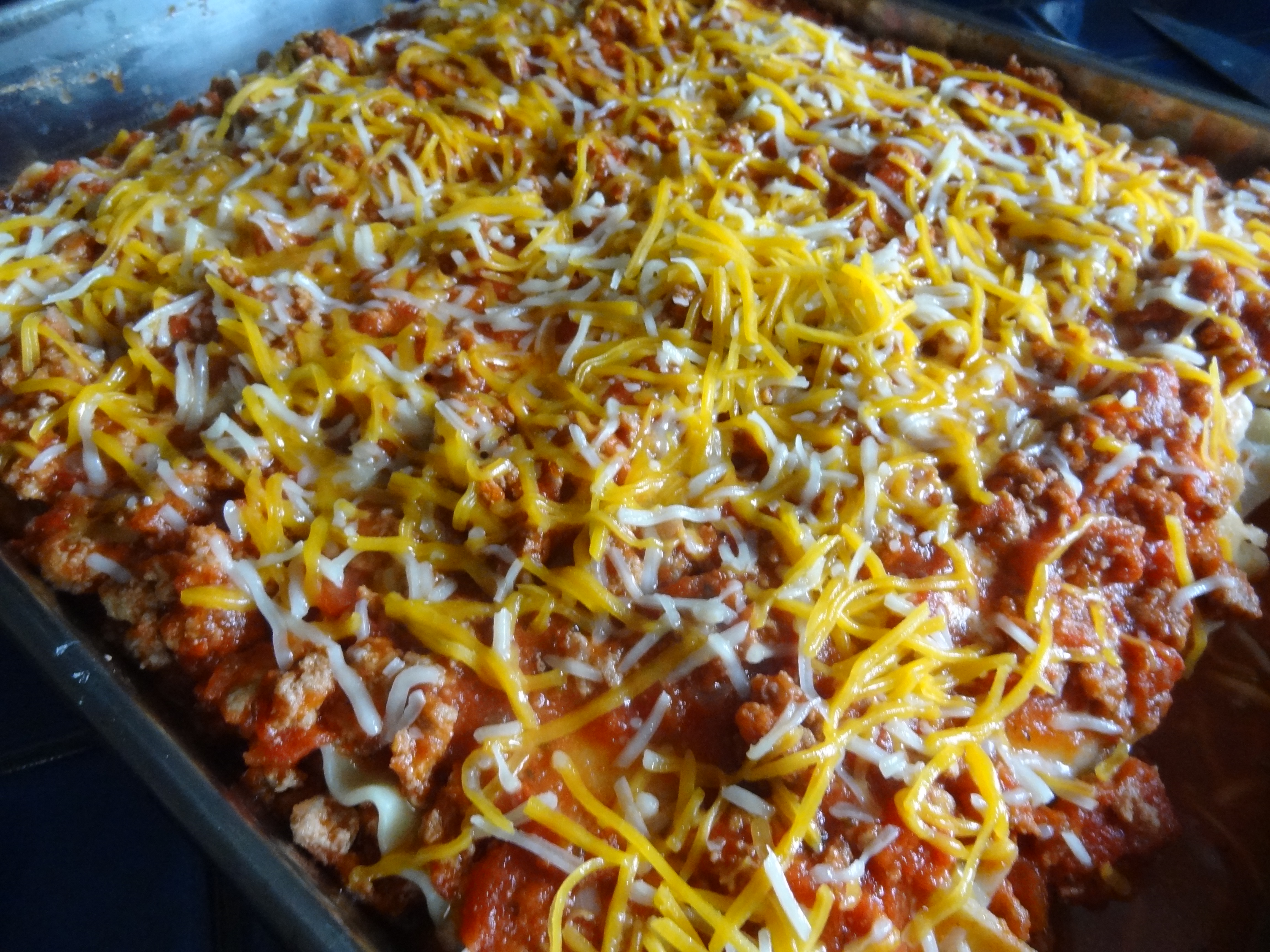
Turkey and Vegetable Lasagna


This lasagna is so hearty and cheesy that once you taste it, you’ll never go back to using ground beef.

By adding Red Wine, to the sauce I discovered that you get a bolder richer flavor and I haven’t used beef since!

What a great way to get your family to eat more vegetables in their diet since there are shredded vegetables in the recipe!

Since most of you know the basic way to make the lasagna, I didn’t take photos along the way until the finished product!

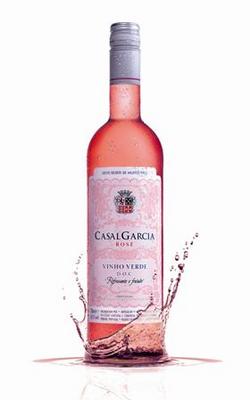
This goes perfectly with Vinho Verde Rose. I discovered this wine a few years ago and I’ve been hooked since! Enjoy!


Ingredients:

2 lbs ground turkey

1 large onion

2 cloves garlic

3 tbsp Olive oil

1 tsp salt

1 tsp pepper

2 tsp dry oregano

2 tsp dry basil

2 28 oz cans of crushed tomatoes (any brand)

2 tbsp tomato paste

1 cup red wine

1 cup shredded carrots (optional)

1 cup shredded zucchini (optional)

1 8 oz package of shredded Cheddar cheese

1 8 oz package of Mozzarella cheese

2 cups part skim Ricotta cheese

1 package of Lasagna noodles (Any brand)


Instructions:

Step 1 :

Saute the onions and garlic with the olive oil in a large sauce pan until translucent. Add the turkey and let brown. Break up the turkey as it cooks.

Add 1 tsp oregano, salt, pepper, 1 tsp basil, tomato sauce, tomato paste, red wine, carrots and zucchini. Let the sauce cook on medium heat for about 20 minutes.

Step 2:

Meanwhile cook the Lasagna noodles as directed and put aside.

Step 3:

Mix the Ricotta cheese with 1/2 of the cheeses, 1 tsp oregano and 1 tsp of the basil in a small bowl, and set aside.

Step 4:

In large lasagna pan – begin layering: 1 layer sauce, 1 layer pasta, 1 layer Ricotta cheese, 1 layer sauce etc. Finish with remaining sauce and top with the remaining shredded cheese.

Cover loosely with foil to let steam escape and let it cook for about 40 minutes at 350.

If you like a crusty cheese top uncover the lasagna for the last 10 minutes.

Let the lasagna sit for 10 minutes and serve! Enjoy!


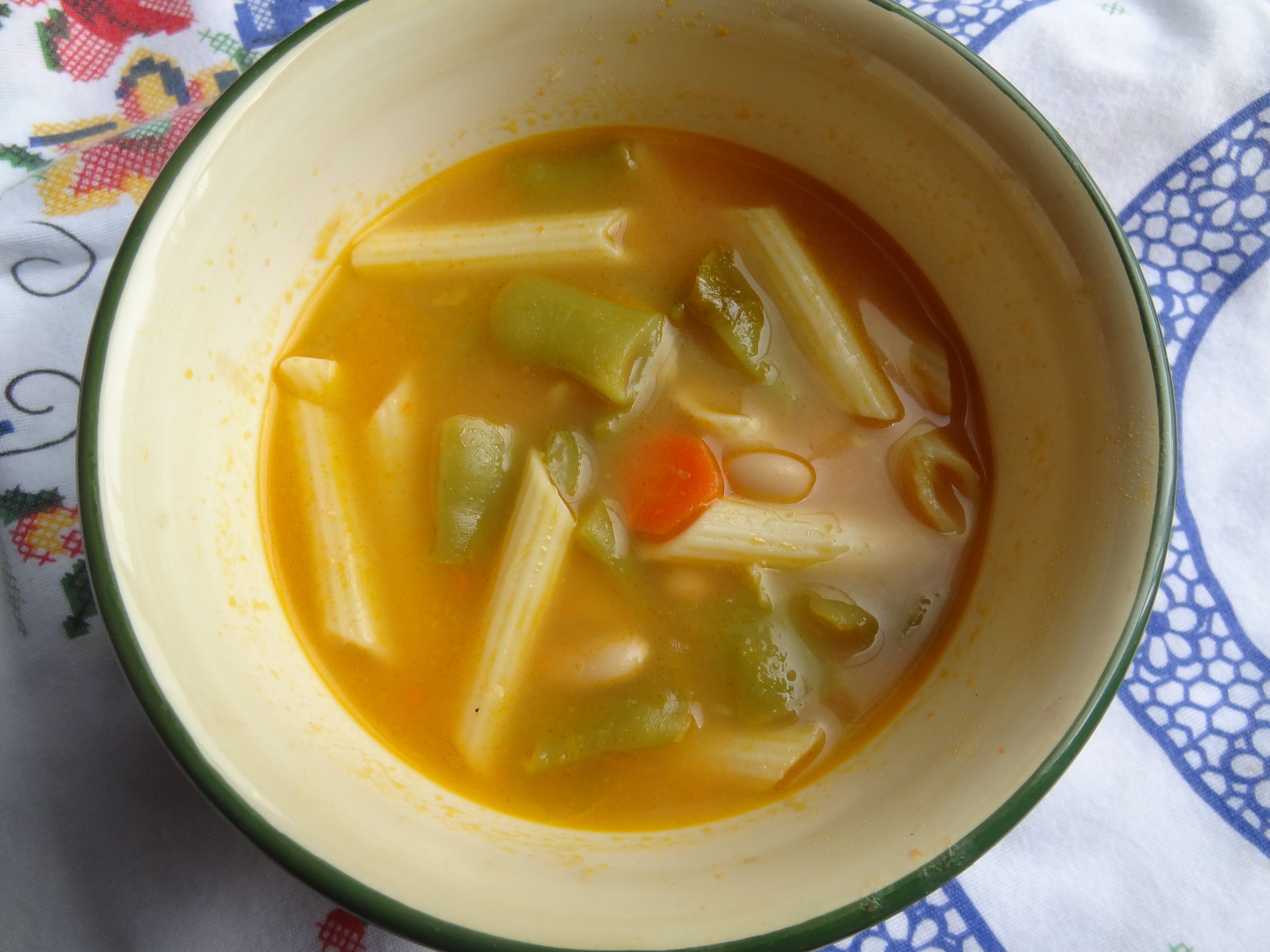
Sopa de Feijão Verde – Portuguese Green Bean Soup


I’ve recently been asked to add more Portuguese soup recipes to this site. Today I made one of my family’s favorite’s to share with you.

This recipe for Sopa de Feijão – Portuguese Green Bean Soup, is a beautifully flavored and hearty soup that you can enjoy all year round!

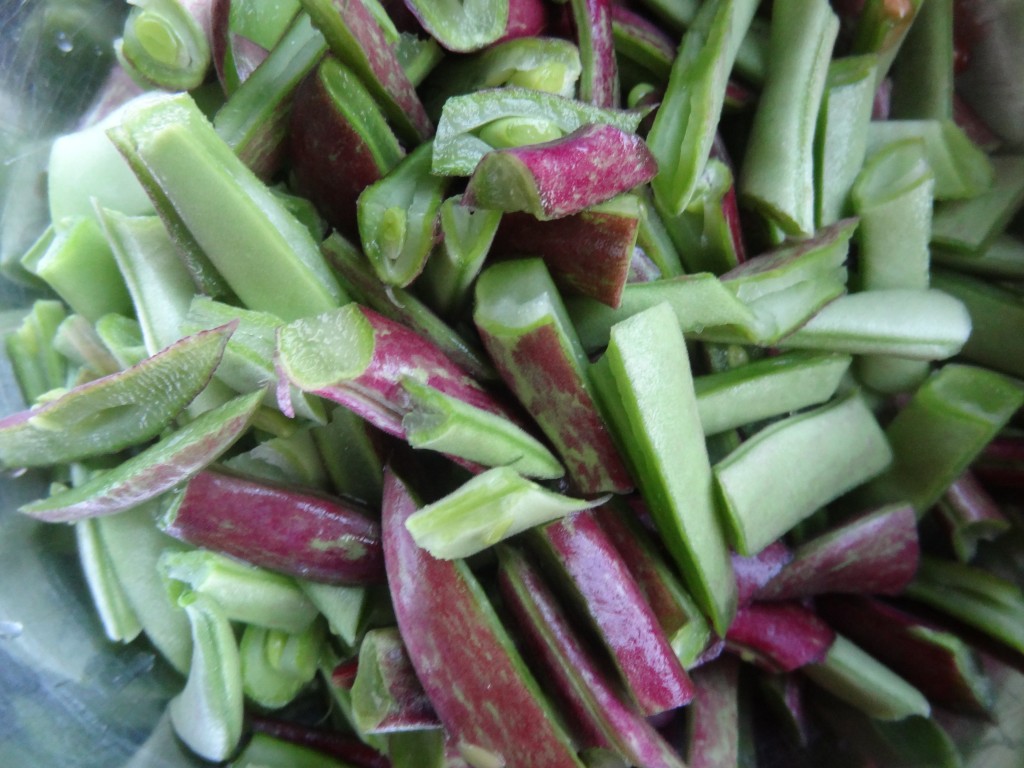
When I make this soup in the summer, I normally use a heirloom variety of green beans from my vegetable garden known as Romanos – also known as Italian green beans.

The flat beans are superior in quality because they have a nutty, meaty taste and smooth tender flavor.

I love this variety of beans and use them in all of my recipes requiring green beans. They’re very easy to grow and require little maintenance other than lots of watering and a some miracle grow!

If you’re not familiar with this type of heirloom green bean ask some of your Portuguese friends who are gardeners and they can help you find some.

In the winter I buy the packages of frozen Italian green beans which you can find in the frozen vegetable section of your supermarket.

In my recipe, I use pasta instead of potatoes which many cooks usually use, but I’m not a big fan of potatoes!

If you prefer to use potatoes, just substitute 2 cups of potatoes instead of pasta but you’ll have to cook and puree the potato along with the vegetables.

This recipe is very easy to prepare since it’s made with the staple ingredients you already have in your kitchen.

Ingredients:

1 large chopped onion

3 large chopped carrots

1 stalk celery

1 large clove garlic

3 tbsp olive oil

1 large bay leaf

1 can white northern beans

1  9 oz box (Romano – Italian) green beans

8 cups water

2 cups chicken broth (or vegetable if you prefer)

1 tbsp salt

1 tsp pepper

2 tbsp any tomato sauce or 1 small ripe tomato

2 cups small Penne or (substitute potato if you prefer)


Instructions:

In a large soup pan, saute the trinity (onions, carrots and celery) in olive oil until translucent. Add the chicken broth, garlic, water, tomato, and seasonings. Bring to boil and cook on medium until vegetables are tender.

Remove pan from heat. Remove the bay leaf and add 1/2 of the can of white beans. Puree the soup with an immersion blender to desired consistency. I like the soup a little chunky but its up to your taste.

Place the soup back on the stove on medium heat. When it comes back up to a boil, add the pasta, green beans, and remaining white beans.

Cover and let it simmer on medium heat for about 20 minutes or until the pasta is cooked. Add more seasoning if desired.

Enjoy with some delicious home made bread.

Here’s the recipe:  Portuguese Pão de Milho !


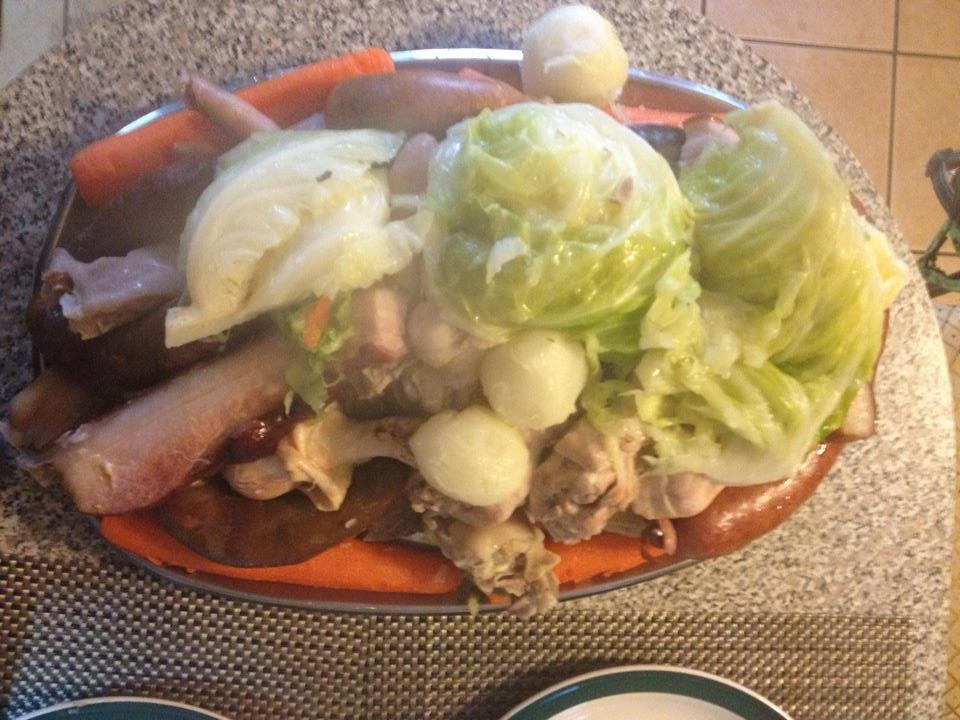
Cozido a Portuguesa – Portuguese Hot Pot

Cozido a Portuguesea (Portuguese Hot Pot) by Nelson de Sousa

Nothing says I love you as much as cooking that great classic, “Cozido a Portuguesa” for your family on a cold winter day!

Here’s a recipe from a great home cook! Nelson, is a Bona fide –  “Portuguese Foodie” like me who puts his heart on the plate.

He loves Portuguese food so much that began a “Portuguese Cooking” page on Facebook and even took a job as unpaid intern – sous chef at: o lagar restaurant – a Portuguese restaurant in Union NJ.

Nelson’s  recipe for Portuguese Oxtail Stew recently won a contest on (rumbameats.com).

Here’s his intro and his recipe below. Thanks Nelson. Enjoy everyone!

Nelson de Sousa – Feb 21, 2011:

Every culture has a tradition of a boiled meat dish. The Chinese call it hot pot, the French call it choucroute and Latin Americans call it sancocho. The Portuguese call it cozido and nothing beats this comfort food in the middle of winter with several inches of snow falling and a negative wind chill!

Of course it doesn’t much snow in Portugal but cozido reminds me of cold Saturdays in my parent’s basement with a big pot of boiling goodness that would steam up the windows, walls and the TV with its warmth. The Portuguese cozido has its origins in the Beira region and is commonly made from shin of beef, pork, and Portuguese smoked sausages and in some regions chicken, served with cabbage, carrots, turnips, rice, potatoes, and collard greens.

Since the origins of this dish are humble (this is a rustic recipe meant to use up the cheaper cuts of meat) it contains ingredients that are unsavory to more “American” refined palates such as pig’s snout, pig’s feet, pig’s ear and blood sausage.  I give no quantities below as it varies by how many people you are serving.

When you go to the store you will have to gauge how much meat to buy for the amount of people you are serving. Similarly,  I don’t give cooking times as this varies by how much meat you are using, which particular cut you are using and the thickness/weight of each meat item. You will have to test periodically with a knife and fork until you reach your desired tenderness.

Some aficionados of cozido prefer the meat less tender while others prefer it falling off the bone. Traditionally a well plated dish will consist of some quantity of one of everything mentioned below albeit in a smaller cut up portion.

If all the various cuts of meat are not available or they disgust you don’t worry all you need to maintain the spirit of the dish is to have a sampling of all the meats (pork, beef, chicken)  sausage and the vegetables.  


Cozido


Ingredients:

  • stewing beef (whole piece not cut up stew meat)
  • pork ribs
  • pork hock,
  • pork snout
  • pork tail
  • pork ear
  • pork neck bones
  • chicken
  • morcela sausage (a Portuguese blood sausage)
  • chourico sausage (the Portuguese equivalent to chorizo)
  • salpicao sausage (a Portugese sausage)
  • farinheira sausage (a Portuguese mealy sausage)
  • lean unsmoked bacon slab, in one piece
  • turnips
  • potatoes
  • white cabbage
  • carrots, scraped
  • collard greens
  • rice (optional)


Directions:

Place all the meat except for the sausages in boiling water enough to cover all and allow it to  cook at a low boil. Add salt to taste. As each item of meat cooks, remove it from the broth into a separate dish.

Please note that different meats will cook differently.  Check your meat periodically for your desired tenderness.

When all the meat has cooked thoroughly place the white cabbage, potatoes, carrots and turnips in the broth and cook.  Remove vegetables as they are cooked and set aside with the meat.

Once again please note that vegetables may cook at varying rates so check periodically. Add collard greens and boil until tender and cooked.  Finally add the sausages and boil until cooked being careful to watch the farinheira as it can explode.

When the sausages are near being fully cooked gently place the meat back into the broth pot, along with vegetables so that all the ingredients can come up to temperature. Place the vegetables last into the pot.

To plate the dish place the cabbage into a platter. Slice the beef, pork, chicken and sausages into manageable 2-3 inch  pieces and place on top leaving the bone in pieces a little bigger so as to not distort the natural shape of the meat.

Garnish the dish with the remaining vegetables around the platter and top with slices of sausage.

Some like to reserve some of the broth and cook some rice in it.  To do so take some broth out before adding all the ingredients back into the pot to reheat.  Remember that liquid to rice ratios are: 1 quantity or rice to 2 of liquid.

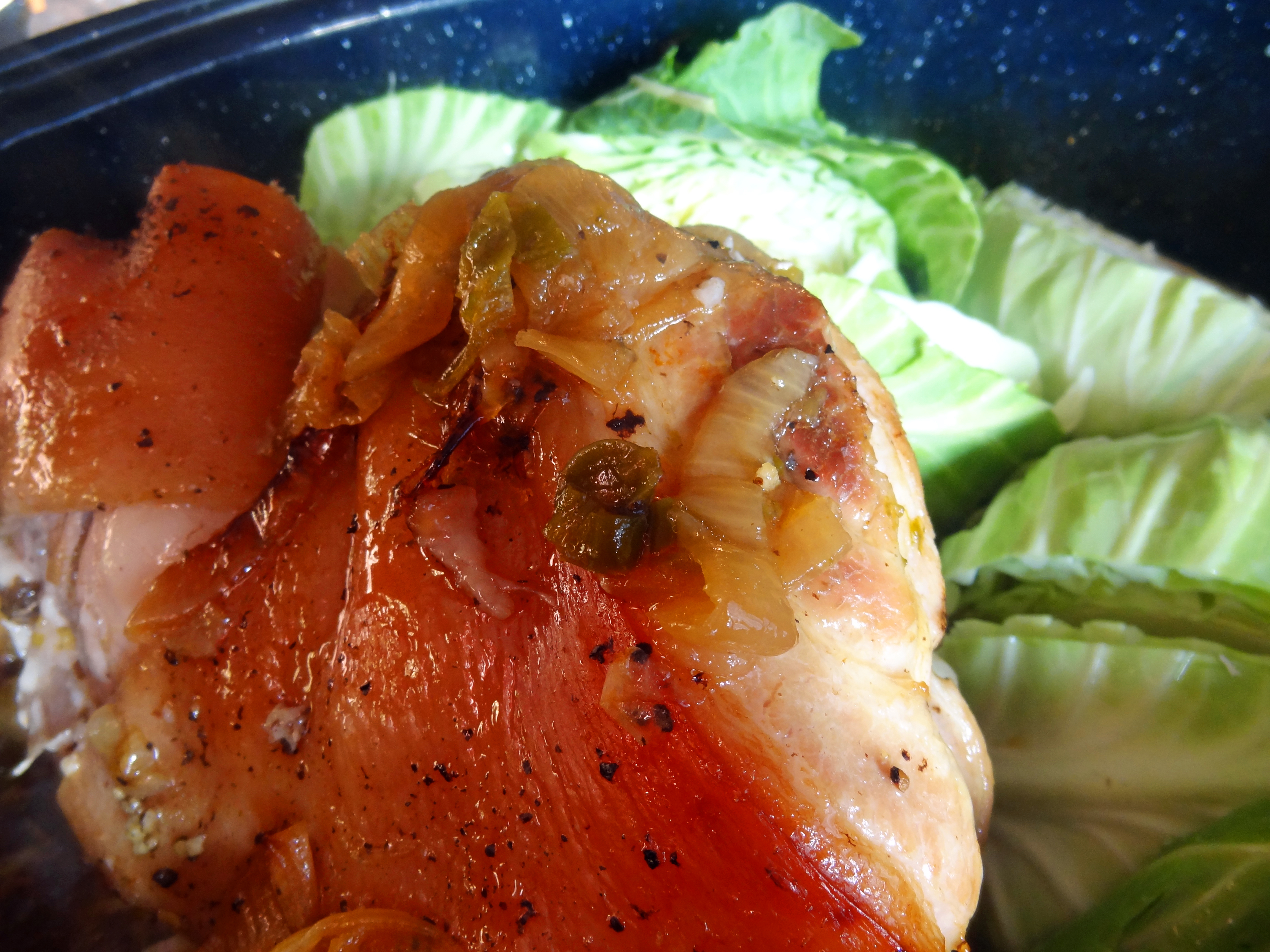
Spicy Portuguese Pulled Pork & Cabbage


I love pulled pork but I’m not a fan of Barbeque sauce so I came up with a Portuguese version.

This recipe is a crowd pleaser for your next party or family gathering. What a great way to warm up on a cold winter day!

My family loves Polish Perogies so I add them to the recipe, but this is optional.

Don’t you love the American Melting Pot of Cuisine?  I used the Southern, Polish, and Portuguese influences in this dish.

It’s very easy to make. You put the pork shoulder with all the ingredients in the oven and 6 hours later your meal is done!

I serve the pulled pork on Portuguese rolls, Pao Caseiro, or Pao Milho of course! Enjoy the recipe.


Ingredients:

1 large uncooked pork shoulder

2 large sliced onions

2 large carrots cut in half

3 cloves garlic

1 bay leaf

1 tsp cumin

2 cups (Sagres Beer) – or any Dark Beer


1 jar of Jalapeno, Chipolte, or any favorite (hot) peppers

2 tbsp  Piri Piri sauce

1 tbsp salt or more to taste

1 tbsp pepper or more to taste

1 large head of cabbage cut into wedges

1 package of any flavor Perogies (optional)


Instructions:

Wash and dry the pork. (Remove Skin if desired) Season with desired salt and pepper. Add all ingredients into a large covered Dutch Oven. I use my turkey roaster which has a lid.

Cook at 300 degrees for 5 hours. During the last half hour add the cabbage and cook until the cabbage is tender. Remove the excess grease from the pan but leave the cabbage in the pan.

Remove the pork and trim off all the fat. Shred the meat using 2 forks and place it back into the pan with the cabbage. (Add Perogies if desired) Cook for about 15-20 minutes to absorb the seasonings in pan.

Serve with Portuguese Roast Potatoes if desired. If you want to serve the pork the next day, let pork cool and store in refrigerator. Enjoy!


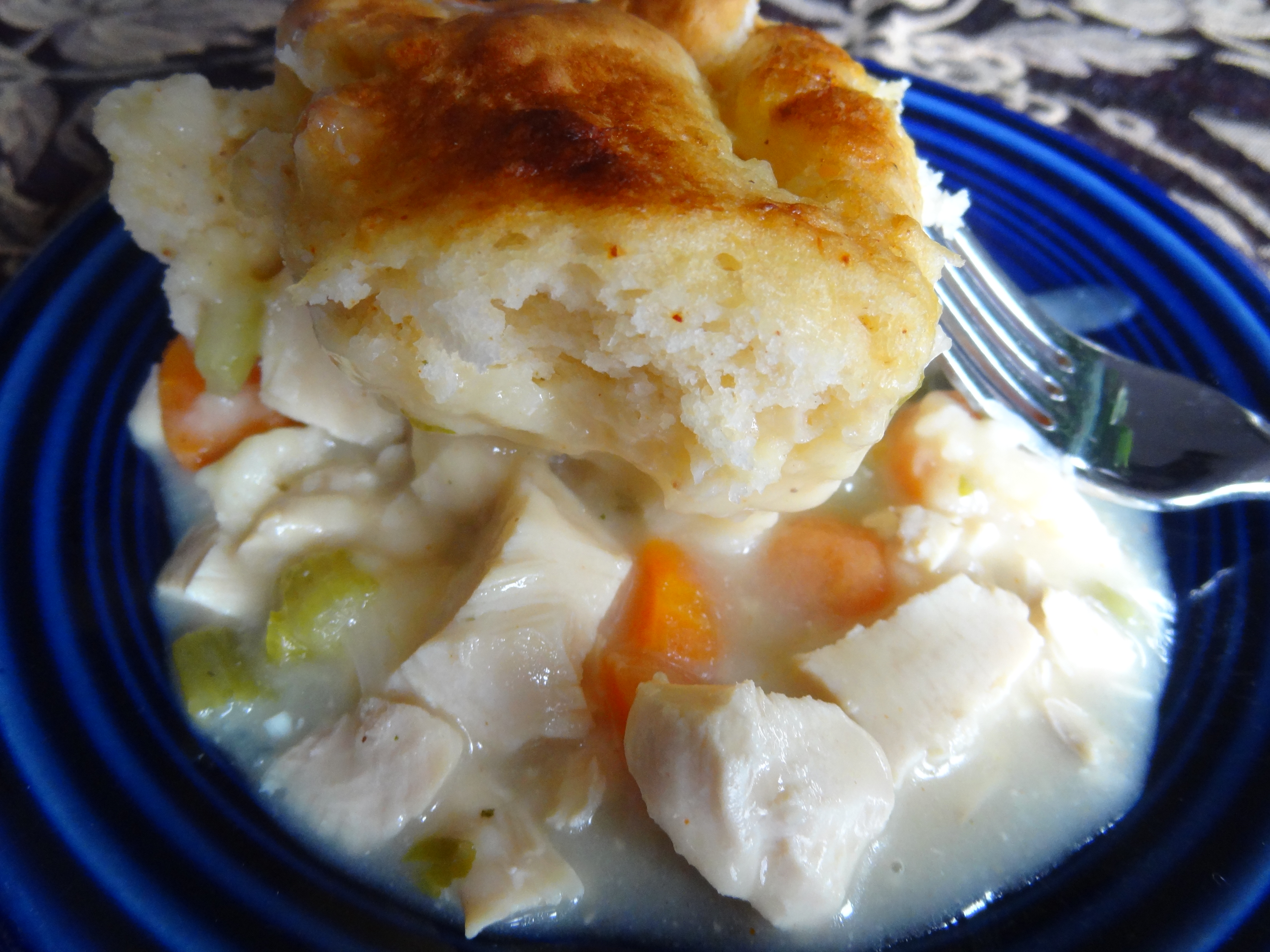
Stove Top Turkey Pot Pie With Dumplings

Don’t through away those leftovers! “Turkey or Chicken Pot Pie” is a family favorite.

This comforting classic is easy to make and I guarantee it will be gone before you know.

Enjoy!

Ingredients:

Filling:

Leftover Turkey (4-6 cups or amount desired) cut into cubes

1/2 cup chopped onion

1/2 cup chopped celery

1 cup cooked carrots

1 cup cooked peas

2 cups leftover gravy

Leftover – cooked potatoes or any vegetables chopped into small cubes (if desired)

salt

pepper

1/2 – 1 cup milk or cream

1 tbsp  Olive oil or Margarine


Dumplings:

3 cups Bisquick or other biscuit mix

1/2 tsp garlic powder

1 tsp chopped parsley

1/2 tsp paprika

1 tbsp melted margarine

1 1/2 cups milk

1 cup shredded cheddar cheese (or any you prefer)


Instructions:

In a very large oven proof skillet or dutch oven, saute onions and celery in oil until tender.

Add all ingredients (except Dumpling ingredients) and cook on low – med for about 10-15 minutes.

Reduce to low, taste and add seasonings if desired. Add more gravy to thicken if needed.

Meanwhile, make the Dumplings by mixing all ingredients in a large bowl. This should look like a very thick pancake dough.

With a large spoon that measures 1/4 – 1/2 cup, drop the dough into the cooked turkey mixture in even amounts that cover the pan.

Add any leftover stuffing if desired in between the dumplings. Cook the dumplings in the pan for about 10 minutes.

The dough will sink into the gravy but it will double in size as it cooks.

Shake the pan gently so the gravy doesn’t stick but don’t break up the dumplings. You’ll notice the dumplings will cook from bottom up.

After 10 minutes, place the pan in the oven on Broil. Leave the oven door slightly open and let the dumplings get golden brown.

Take the pan out of the oven and lift one dumpling to see if it’s cooked through.

If you see the dough is still raw, cook the pot pie on stove top at medium heat for a few more minutes, or in the oven at 400 degrees until the dumpling is fully cooked. Serve with any leftover sides such as the stuffing or vegetables! This will keep in Refrigerator for 2 days. Heat up in oven or microwave.

Enjoy!


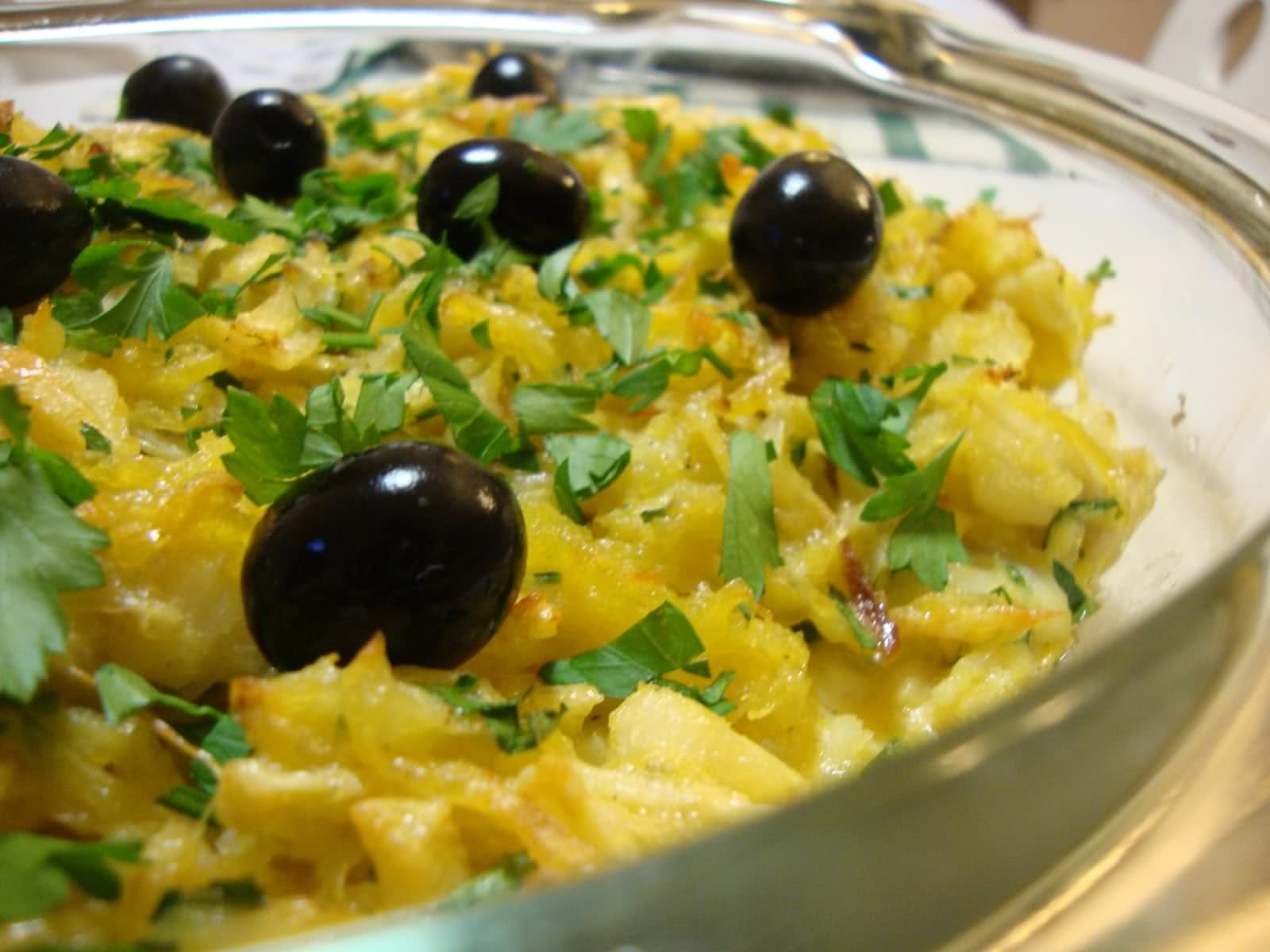
Bacalhau à Brás – Cod Fish and Egg Scramble

image credit: http://bacalhautuga.blogs.sapo.pt/2004.html

This video for the recipe of Bacalhau à Brás, (Cod Fish with Potato Sticks) by Michelin Star Chef Jose Avillez  is from Taste Portugal. The recipe for this dish is said to have originated hundreds of years ago in the Estremadura (meaning extremities), the coastline region of central Portugal known for its consistent wind and ocean waves. The Chef’s restaurant, Belcanto, Lisbon Portugal has been awarded a Michelin Star for 2013. Congratulations to the Chef!

This popular Euro windsurf and surf destination has great beaches which has hosted many surf championships including the IFCA wave championships.

It’s interesting to note that last month,  The Guinness World Records confirmed that Garrett McNamara broke the record for the biggest wave ever, a 78-foot wave (23,7 metres) in Nazaré, Portugal by riding the wave in November of 2011. Read the article in Surfer Today.


Estremadura, Nazaré historical coastal province of central Portugal that contains Lisbon and the Tagus River estuary.

The landforms of Estremadura are geologically younger than other parts of the Iberian Peninsula, containing sandstone, limestone, and volcanic rock instead of granite and schist. The peninsulas of Lisbon and Setúbal are divided by the lower Tagus River valley. Land use north of the Tagus is diverse. Vineyards, olive groves, and cereal plots are found on the hilly slopes, and the Cartaxo and Torres areas are known for their wines. South of the Tagus the landscape is less tamed; much is still unproductive or in extensive estates of cork oak forest. Along the Tagus valley, corn (maize), grapes, rice, and wheat are cultivated, and some of Portugal’s finest horses and fighting bulls—both used in Portuguese bullfights—are raised there. A bullfighting museum is near Sintra.

Known as the Portuguese Riviera, the coastal region west of the city of Lisbon has important resort centres, including Estoril, Cascais, and Sintra. Apart from Lisbon, other chief towns include Setúbal, the main sardine port, with canneries; Barreiro and Almada, suburbs of Lisbon; and the fishing towns of Peniche and Nazaré.

“Estremadura”. Encyclopædia Britannica. Encyclopædia Britannica Online.
Encyclopædia Britannica Inc., 2012. Web. 21 May. 2012

Now that I shared a little bit of Portugal’s geography with you let’s get back to the recipe for this centuries old, yet one of Portugal’s most popular dishes!

 Recipe:

Bacalhau à Brás

Ingredients:

4 oz of hydrated salt cod finely shredded

1 small potato cut into small match stick size

1 egg + 2 yolks

1/4 cup thinly sliced onion

1 clove garlic

2 bay leaves

1 tbsp chopped parsley

5 olives

Salt & Pepper to taste

2 tbsp olive oil


Preparation:

Fry the potato sticks in very hot oil and set aside. Saute onions Garlic and Bay leaf until translucent (about 2 minutes) in olive oil.

Stir the cod fish into the onions and cook for about 1 minute. Remove Bay Leaf. Add eggs on very low heat until cooked leaving a creamy texture.

Stir in the potato sticks and parsley.  Reserve a few sticks to use as garnish. 

Add salt and pepper to taste.  Garnish with olives and parsley. Enjoy!

Baked Lobster a Maria

Happy New Year 2014 to all my fans and supporters of Tia Maria’s Blog!

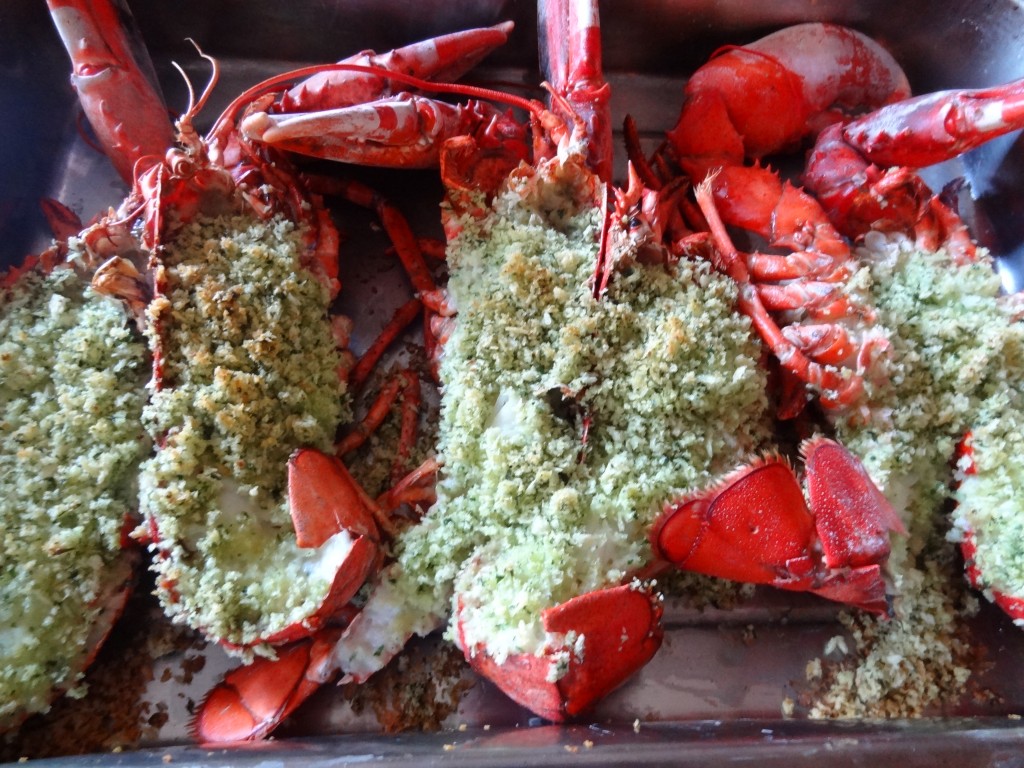
This recipe for Lobster Maria, Baked Scallops wrapped in Bacon and Brocolli Rabe with Presunto, will be a hit for your New Years Celebrations! Enjoy!

Since I began making this easy recipe, I rarely order lobster out unless I’m dining at the shore.  I know you’ll never have to go out to a restaurant for lobster again!

If you have a hard time killing the lobsters yourself, just ask the Seafood clerk to split them in half for you (however, be sure to have them put the lobster on ice for you, and cook it within a couple of  hours).

My family exits the kitchen, thus leaving me with the honor of performing the evil dead of splitting the lobsters in half.

I don’t enjoy this and I admit that I do it as quickly as possible closing my eyes when I feel the knife cracking the shell.

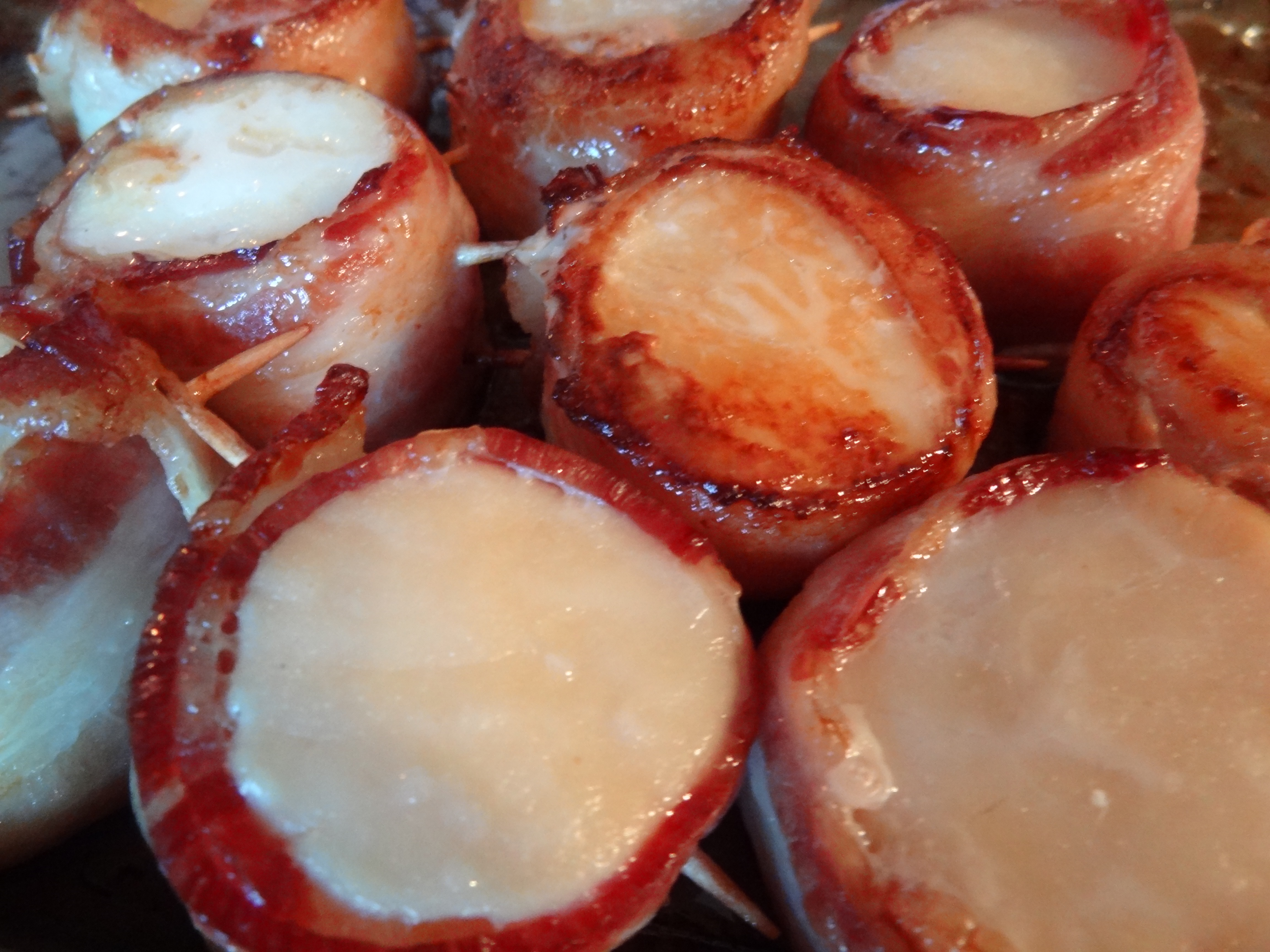
Since I usually make this recipe for special occasions, I also make other family favorites; Bacon Wrapped Scallops and Sauteed Broccoli Rabe (Grillos) with Presunto.

This meal is simple to make, but it has a very upscale restaurant look for your next diner party when you want to treat your guests to something special! Enjoy!

Recipe:

Baked Lobster a Maria

Ingredients:

4 Lobsters split into halves

1 cup Panko Bread crumbs

10 Ritz crackers

4 cloves garlic

1/2 cup Italian parsley

1/4 cup olive oil

1/2 stick butter or margarine


Instructions:

Place all ingredients into a food processor and pulse about 6-8 times until all of the ingredients are fine.

Place the lobster halves in a large baking dish facing shell down.

Spread the breadcrumb mixture over the lobsters and bake for about 20 minutes at 350 degrees. Serve warm with melted butter.


Bacon Wrapped Scallops:

Ingredients:

8 large fresh Sea Scallops

4 slices of thick cut bacon

Instructions:

Slice bacon strips in half and cook until slightly browned.

Wrap each piece around the scallop and secure with a toothpick.

Cook at 350 for about 10-15 minutes.


Broccoli Rabe with Presunto

Ingredients:

1 bunch of fresh Broccoli Rabe

1/4 cup of minced onion

3 slices of chopped presunto

1/4 cup of Olive oil

Instructions:

In a large pan bring water to a boil. Add the Broccoli Rabe and cook for about 5 minutes. Take out the Broccoli Rabe and strain in colander to remove excess water. Meanwhile, in a large skillet, saute the onions and Presunto until crispy. Add the Broccoli Rabe and continue sauteing for about 10 minutes until the Broccoli is tender. Drizzle some olive oil over the top when ready to serve. Enjoy!


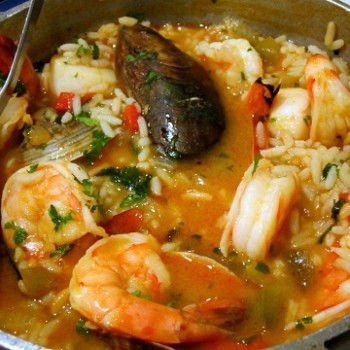
Mariscada – Portuguese Seafood With Rice


Chef Luisa Fernandes sent me the following recipe to share with you.

Mariscada is an Atlantic Seafood inspiration based on rice and very popular along coastal Portugal.

The dish often has lobster, shrimp, clams, mussels, as well as cuttlefish and is seasoned with olive oil, sea salt, pepper and Portuguese paprika.

Chef Luisa is a very accomplished chef with an extensive resume. Currently she is the Executive Chef at Robert Restaurant. MOD Museum, NYC.

She has appeared on Chopped, The Food Network where she was crowned a Champion.

Read more about Chef Luisa here: tiamariasblog.com/chef-luisa-fernandes/

” I think that the victory is not mine, but all of ours, because I’m Portuguese and proud when people recognize our cuisine. That’s why I will never enter another contest unless I can cook the cuisine from our country” said Luisa, in an interview for ComunidadesUSA.

One year later, on September 14, 2010 she returned as one of the four contestants of Chopped Champions.

Watch Chef Luisa on Chopped


Mariscada - Portuguese Seafood With Rice
Prep time: 
Cook time: 
Total time: 
Mariscada is an Atlantic Seafood inspiration based on rice and very popular along coastal Portugal. The dish often has lobster, shrimp, clams, mussels, as well as cuttlefish and is seasoned with olive oil, sea salt, pepper and Portuguese paprika.
Ingredients
  • 3 ripe tomatoes
  • 2 cloves of minced garlic
  • 1 branch of Coriander leaves (finely chopped)
  • 2 sliced onions
  • ½ cup of oil
  • ½ cup of white wine
  • 1 chopped bell pepper
  • 8 clams – medium
  • 12 mussels
  • 4 squid (cut in pieces)
  • 2 lobster tails
  • 12 large shrimps with heads
  • juice of 1 lemon
  • salt, pepper, paprika
Instructions
  1. Put the olive oil in a saucepan and arrange the tomatoes, onions and peppers in layers.
  2. Add ½ of the chopped coriander, ½ cup of white wine , a little of Portuguese paprika and salt to taste.
  3. Cover the pan over medium heat until it starts to boil. At that time, add the clams and allow to cook for five minutes.
  4. Then add the lobster tails, shrimp and mussels. Increase heat slowly so that it does not retain a lot of liquid.
  5. Let the clams and mussels open and uncover the pan. Keep checking the heat for another 10 minutes or until everything is cooked.
  6. Add the other half of chopped coriander on top and the juice of a lemon. Serve with white rice.
  7. Note: Recipe was one of the dishes that Chef Luisa prepared for her casting at Chopped.

Pasteis de Carne – Savory Beef Puff Pastry Pockets

dsc05907 dsc05906Pasteis de Carne

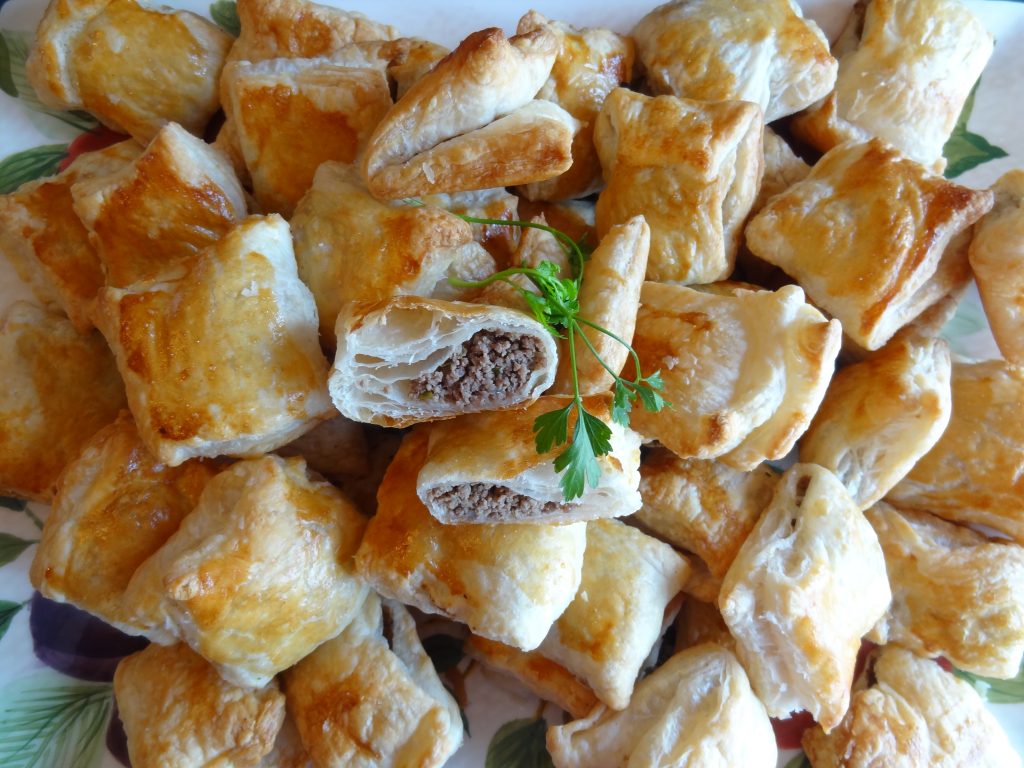
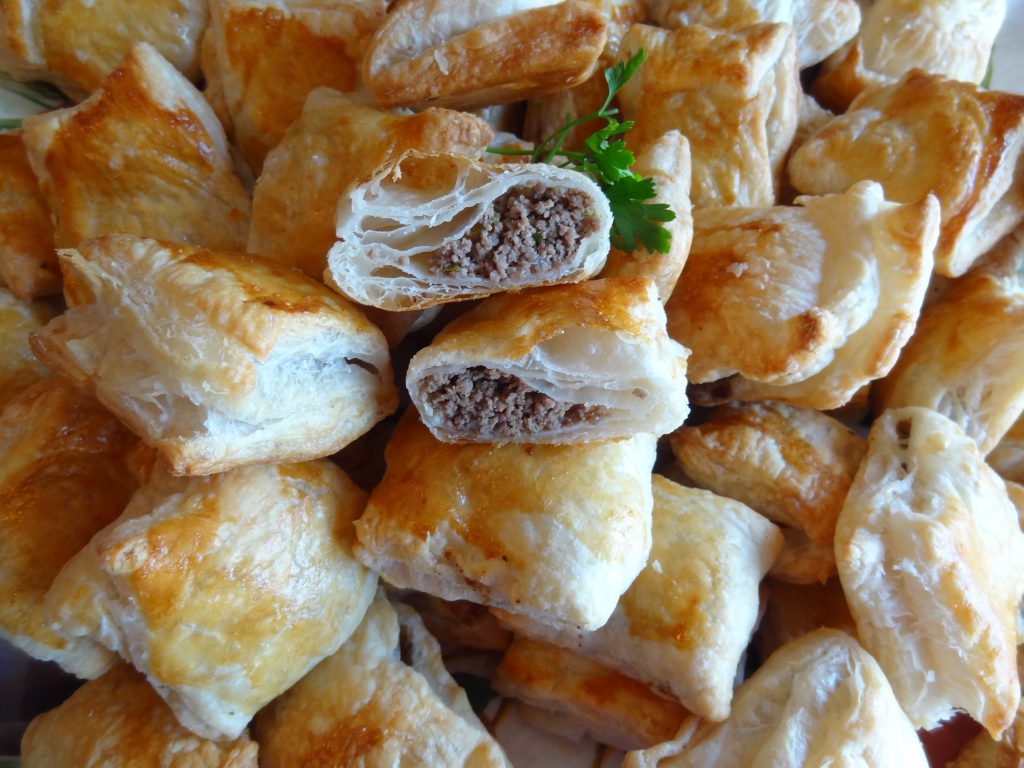
Pasteis de Carne are savory meat pies made with puff pastry dough that are perfect for parties, tailgating or anytime! This recipe is so easy to make, that it will be one of your favorites for entertaining.  I buy my puff pastry sheets at my local Portuguese bakery, but you can also use Pepperidge Farm puff pastry sheets.

These meat puffs freeze well so you can make them ahead of time but of course they’re best eaten freshly cooked. Store in refrigerator for up to 3 days.


Ingredients:

2 sheets Puff Pastry squares ( I use Pepperidge Farm)

1 lb ground beef

1/4 cup chopped onion

1 clove chopped garlic

1 tsp chopped parsley

salt and Pepper

1 chicken boullion cube

1/4 cup shredded cheese (optional)

1 egg and 1 tsp water (beat together for egg wash)

Instructions:

In a large skillet, cook meat until browned.  Remove from pan, drain and set aside. In same skillet add unions, boullion and garlic and cook until golden brown.  Add onion mix to meat and let cool.

Place meat mixture in food processor and pulse 5 times or until the meat is of a fine consistency. Add parsley and cheese and pulse 2 times.

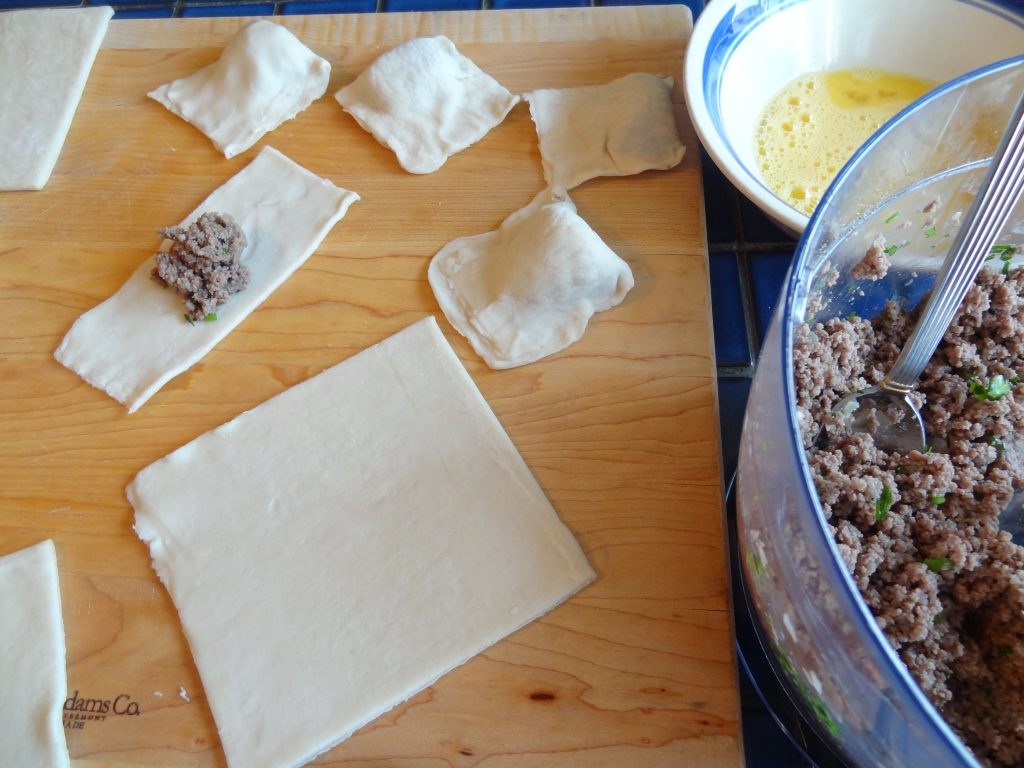
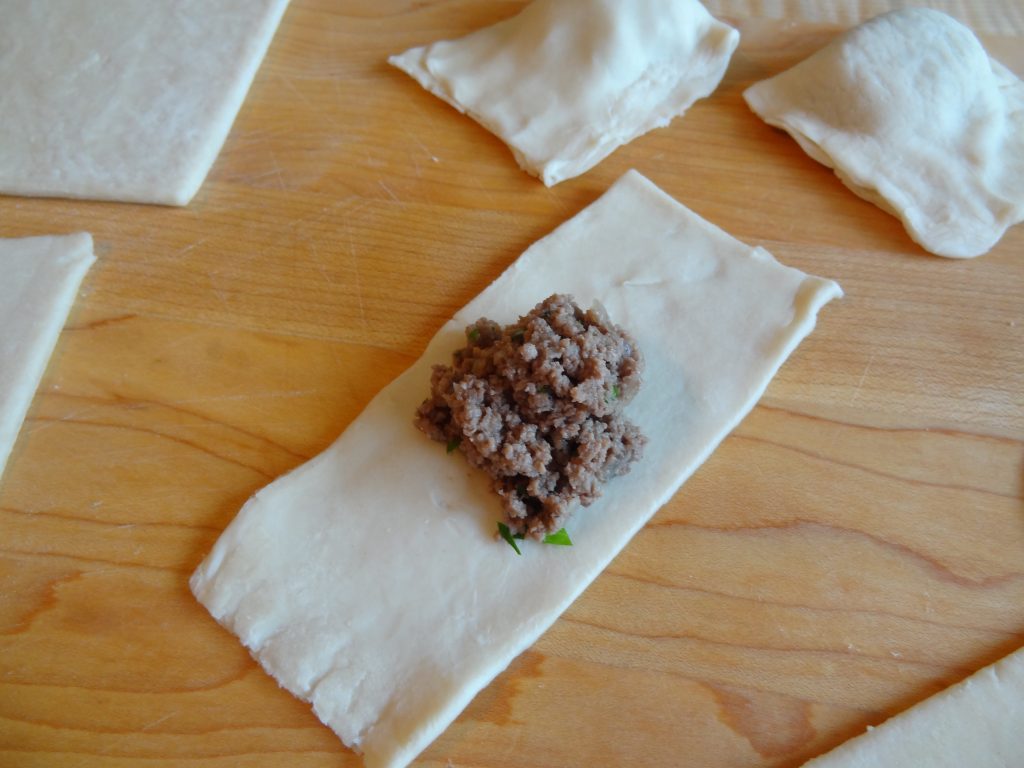
Roll out dough and cut into 3″ x 6″ rectangle. Place 1 tablespoon meat in center of rectangle. Fold over one side onto the other to create a square pinching edges. *Freeze any leftover meat in a plastic bag and the pastry in a separate bag for next time.

dsc05903dsc05904

Cover 2 baking sheets with parchment paper.  Place puffs onto the paper and brush with a light egg wash.

Cook in preheated oven at 400 degrees for 15 minutes or until golden brown. *Every oven has different heat temperature watch the pies.

dsc05905

Serve warm or at room temperature.

Freeze or store in refrigerator 3 days after cooking. Enjoy!

dsc05908