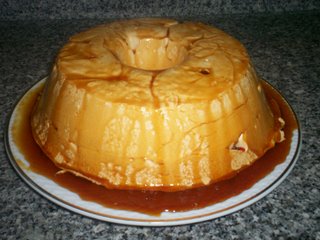
This egg white souffle dessert is light, airy and delicious. It will become a Holiday tradition for your family!
Ingredients:
12 egg whites
2 cups sugar
Ingredients for caramel sauce:
2 cups sugar
1 tbsp water
Instructions:
Grease a large bunt pan and set aside. Meanwhile, in a large heavy skillet, cook sugar and water on med heat until it turns into a smooth golden caramel.
Put the caramel except for (3 tbsp) into the bunt pan. Rotate the bottom of pan and sides to coat with caramel. Set aside.
Beat egg whites until stiff. Add sugar and beat to incorporate. Add the 3 tablespoons of caramel. Beat slowly to incorporate.
Place egg whites in bunt pan. Tap pan lightly on counter to take out air bubbles.
Cook the Pudim in (bain marie) for 12 minutes at 375. *Do not open oven for at least 10 minutes* Let the Pudim cool.
Take out of the oven, let completely cool and refrigerate until ready to serve. When ready to serve place a large serving platter on top of pan and flip over
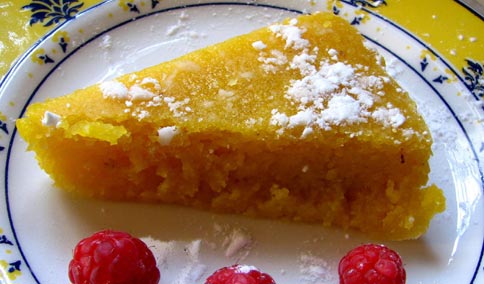
I love the fact that I learn a little bit of Portuguese Foodie – history when I share a recipe. Today, Pastry Chef Vania Soares from 42 and Bellota Restaurant at the Ritz Carlton, Westchester NY, sent me her recipe for “Toucinho-do-céu ” – Bacon From Heaven.
This is a wonderfully “Sinful” dessert created centuries ago in northern Portugal by nuns around the Eighteenth Century!
Most Portuguese desserts use egg yolks and sugar. Why mostly egg yolks? It’s because the egg whites are used to clarify wine (like a filter), acting like a brush to sweep out impurities.
The wine makers in the local region would save the yolks and give them to the nuns at the convents who make desserts which were sold, to raise money for the poor.
There are different versions of this classic dessert sold in pastry shops all over Portugal, one is made with Almonds and one made with Gila, a sweet pumpkin jelly. A convent in the city of Murca, Portugal, is rumored to have first invented this version for the dessert using Gila. Watch the video below for a demonstration of Toucinho do céu, Murça.
Some believe the recipe came from the convent of Santa Clara in Guimarães, Portugal. The convent closed in 1910 but 3 displaced nuns carried on the traditional recipes by making pastries to support themselves. Years later, the nuns niece, Palmira learned the recipes and opened Casa Costinhas in the city that is the European Capital of Culture 2012. Visit golisbon.com/guimaraes, portugaldailyview.com,cafeportugal.net, for more information and to learn about our cuisine’s origins!
Ingredients:
2 3/4 cups ground almonds —– (300 g amêndoa moida) 1 cup water —— (0.250 Lt água) 2 1/2 cups sugar —– (500 g açúcar) 4 eggs —– (4 ovos) 2 tbsp melted butter —– (25 g manteiga derretida) 1/2 crated lemon peel —– (1/2 limão raspa) 1 tsp cinnamon —– (q.b. canela em pó) 1 tbsp flour —– (12 g farinha) 20 egg yolks —– (20 gemas)
English:
Make a syrup with the sugar and water and heat up to 225 degrees or until a wooden spoon becomes coated. Meanwhile beat the 4 eggs and egg yolks well and set aside. When sugar is cooled, add eggs and beat well. Add the butter, lemon, cinnamon, almonds and flour. Stir well and bring to boil to thicken over low heat, stirring constantly to prevent burning. Pour into a greased and floured cake pan and bake at 350 for 25-30 minutes.
Portuguese:
Fazer a calda com o açúcar e a água até aos 108ºC, adicionar os ovos e as gemas previamente batidos e mexer bem. Adicionar a manteiga, o limão, a canela, a amêndoa e a farinha. Mexer bem e levar ao lume a engrossar em lume brando, sem parar de mexer para não queimar. Deitar numa forma untada e polvilhada de farinha e cozer a 180ºC por 25-30 minutos.
Chef Vania
Video from: Toucinho do Ceu – Murca, Portugal
Find a Recipe
FIND RECIPES HERE
"Join me! Lets' s share recipes, learn how to cook traditional Portuguese dishes, or chat about our cuisine, culture and traditions. I want to share these recipes to preserve our Portuguese passion for great food and pass them along to the next generation. So come along, Let's cook Portuguese!"
Support Tia Maria's Blog page to promote our Portuguese heritage. SCAN QR CODE:
ORDER SET OF 1 REGULAR AND 1 SPICY JAR - FREE SHIPPING IN USA
BUY NOW ON PAYAPAL OR SCAN QR CODE BELOW
TASTE PORTUGAL COOKS AVAILABLE ON AMAZON ALL AROUND THE WORLD: FREE Prime shipping in USA
COOK BOOKS ARE ALSO AVAILABLE ON AMAZON.CA (CANADA)
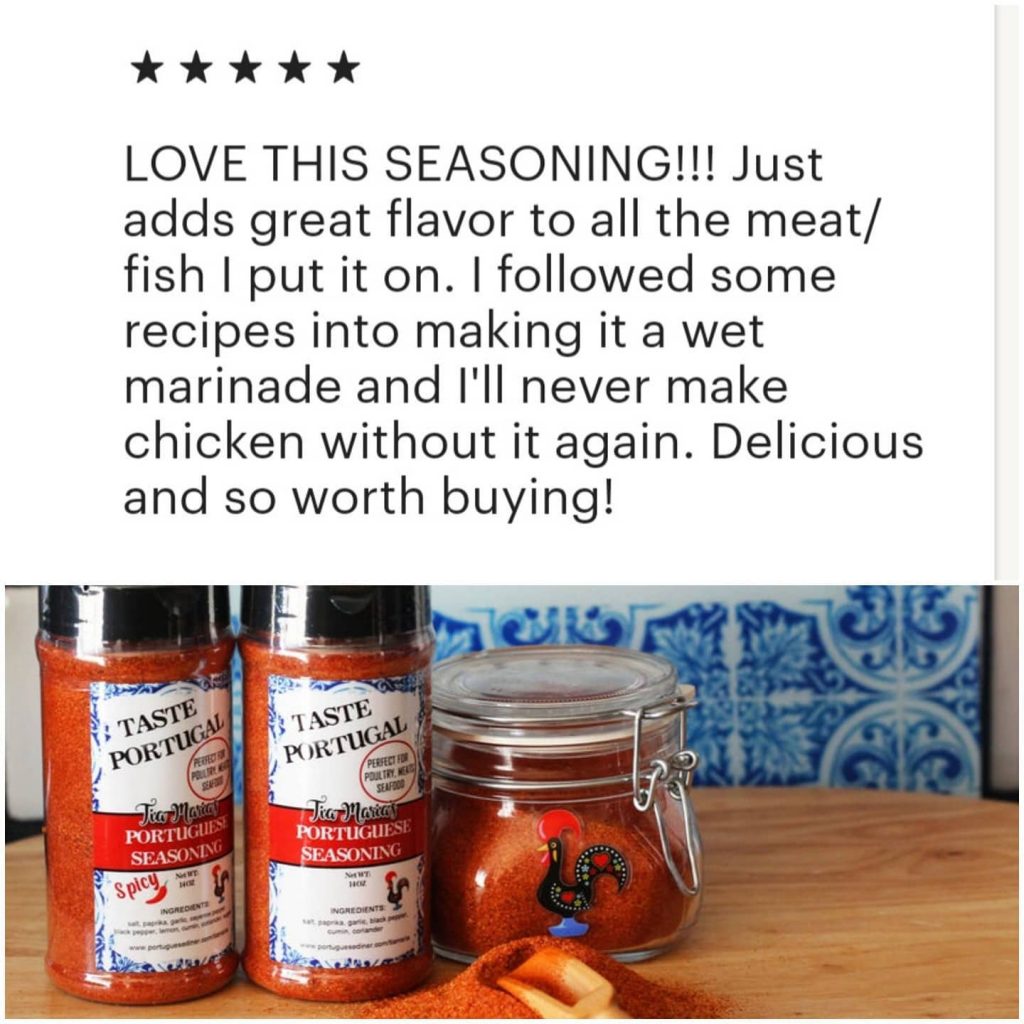
ORDER SET OF 2 TASTE PORTUGAL SEASONINGS ON PAYPAL OR SCAN QR CODE: FREE SHIPPING USA
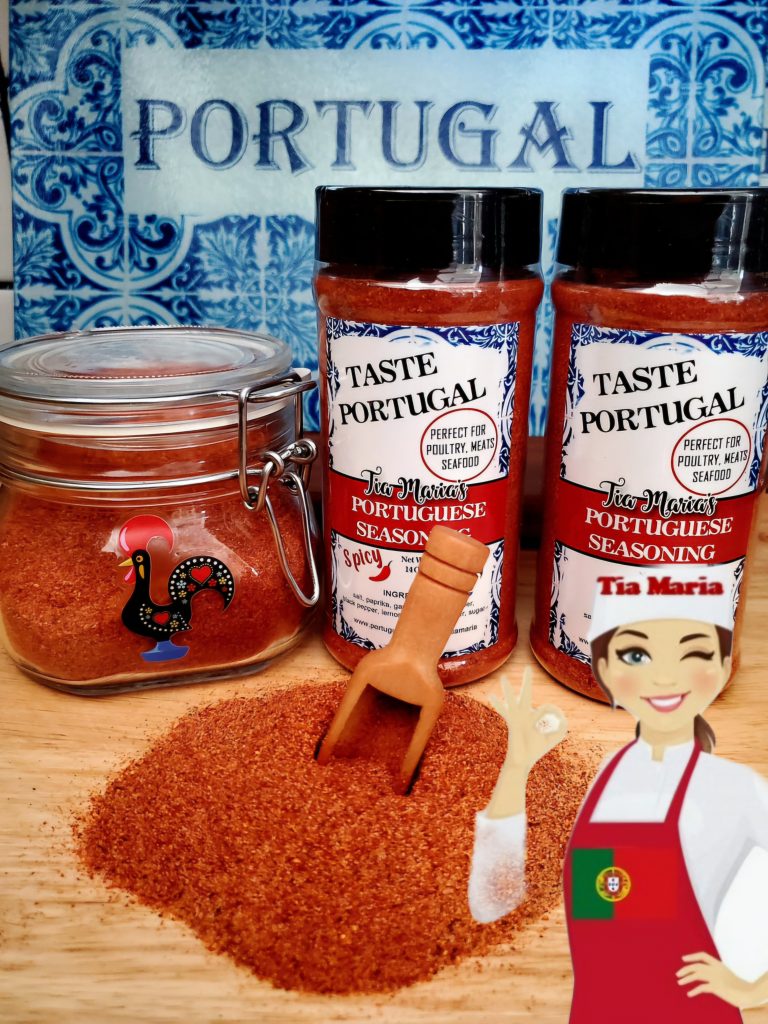
COOKING PORTUGUESE IS EASY WITH TIA MARIA’S TASTE PORTUGAL PORTUGUESE SEASONINGS
LISBON BLUE ETSY SHOP – FREE SHIPPING IN USA
Shop at Gaspars online for great Portuguese Products
Portuguese Linguica and Chourico
Gift Packs
Gaspars Sausage Company
For nearly a century Gaspar’s Sausage Co., Inc. Has been recognized as the largest manufacturer of Portuguese smoked sausage in the United States. Order today! www.gasparssausage.com or call us at 1-800-542-2038
MY TASTE PORTUGAL SEASONINGS DISTRIBUTOR - GONSALVES FOODS.COM
GONSALVES FOODS
GONSALVES FOODS
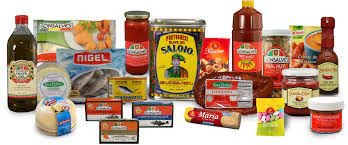
The taste of Portugal here in America Your source for authentic Portuguese products We’re proud to offer a wide selection of authentic Portuguese foods from our Gonsalves and Bom Petisco brands as well as the leading Portuguese brands like Saloio olive
0




 Now available in Canada – Amazon Canada
 LISBON BLUE ETSY SHOP
 My appearance on RTP Portuguese TV Notícias do Meu País
 No Kid Hungry | Share our Strength Help End Child Hunger in America




















 GONSALVES FOODS