Category: Portuguese Christmas

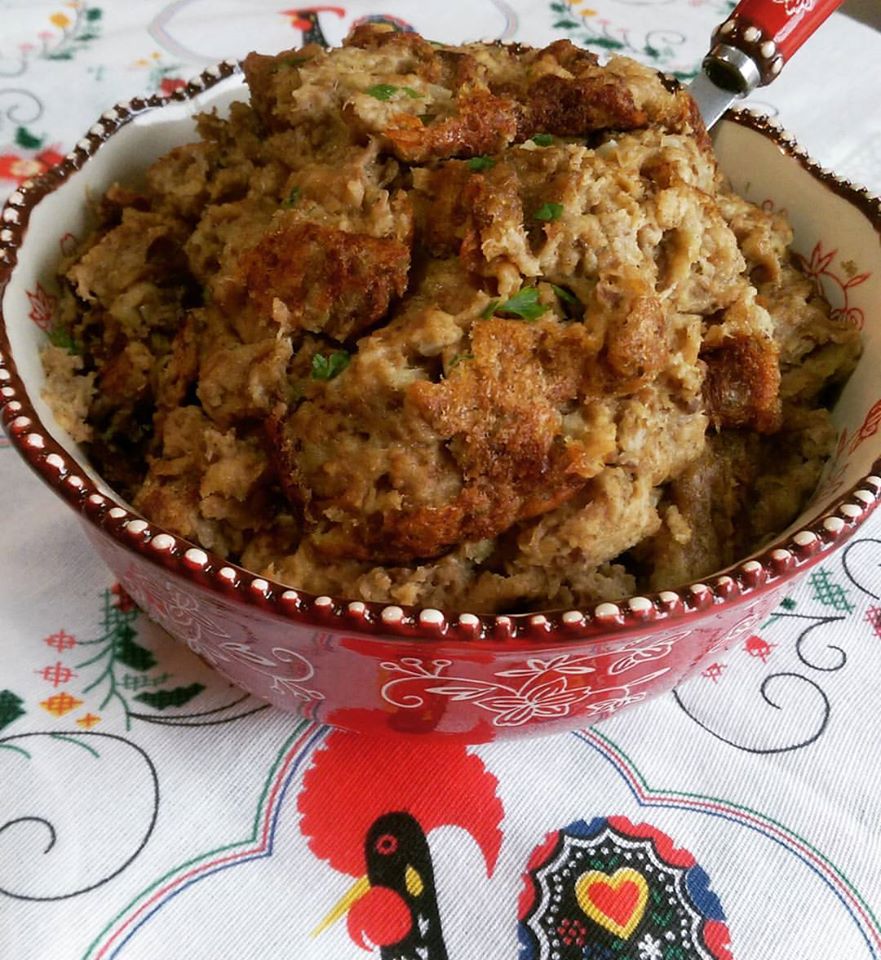
Portuguese Style – Thanksgiving Stuffing

 

portuguese-stuffing-1

I get many requests from people looking for lost recipes, but especially around the Holidays.

There are many reasons why people don’t have their family recipes.

Some family members didn’t want to share them, the recipes were not written down, or they just hadn’t taken the time to learn the recipe until it was too late.

This Thanksgiving, I encourage you to sit down with the cooks in your family, write down their recipes and share the family traditions and history!

In this post, I’m sharing a little of my own family history along with my family’s favorite Thanksgiving recipe which I only cook once a year!

My family came to America in 1963, when John F. Kennedy was President of the United States. We came here, thanks to my Aunt Isabel, my mother’s sister, who immigrated to America when she was only 16 years old.

She sailed here by ship and passed through the historical landmark of Ellis Island in New York. She eventually became a US Citizen and later filed the paperwork for my mother and her family to immigrate!

My parents were typical Portuguese immigrants, who idolized President Kennedy because he was a proponent of Immigration, which eventually led to the Immigration Act of 1965.

This act, allowed my two older brothers who were living in Brazil at that time to join our family in the USA a few short years after we arrived here.

A soft velvety tapestry of JFK hung on the walls of most Portuguese family living rooms those days. I still have the one my parents had, neatly stored away in my cedar chest as a reminder of our family’s journey of coming to America.

President Kennedy was assassinated only 6 months later and like so many of others, I remember exactly where I was the moment I heard about it. I cried but I don’t think I knew why it affected me so much. Perhaps it was because my mother was crying.

Like so many before them my parents grew to love America and they were happy and grateful to move here. They followed the dream of a better life for their family, opportunity, and freedom from living in a country ruled by Salazar who was the dictator at that time.

I remember my first day in America, but that story is for another day and another recipe.

Like most Portuguese immigrants in America, my family has embraced the tradition of celebrating Thanksgiving since we were very grateful for the blessings of the food, our health, friends, and family.

I was very young when I watched my mother prepare our family’s first Thanksgiving diner, but I remember it vividly.

A friend of hers came by the night before Thanksgiving to teach her how to brine the turkey, and to make the stuffing.

I didn’t understand why they had to drown the poor bald turkey in a big plastic tub filled with salt, water and lemons since it was already dead anyway!

I watched in horror as they prepared the stuffing by peeling the sagging skin hanging off the turkey neck and then chopping up the cooked heart and the liver! Yuk!. I said to myself, I would never make that stuffing for my family, but of course I did.

Despite hating what I saw, I couldn’t leave that kitchen because I wanted to see, what this Thanksgiving cooking fuss was about anyway?

Many years later, I began preparing my mother’s stuffing recipe for my own family and it’s become the favorite side dish on our Thanksgiving table every year!

I hope you enjoy it as much as we do!

*Note that every family has a special Thanksgiving stuffing recipe. Some use meats in their stuffing, while some add chourica to the bread mix. I also use Pepperidge farm stuffing mix for an authentic Thanksgiving flavor. I suggest you try this recipe a couple of times to perfect to your taste by substituting your favorite meats, or bread stuffing mix. You can order chourica online at Gaspars Linguica.

Happy Thanksgiving Everyone!

Tia Maria
dsc06131

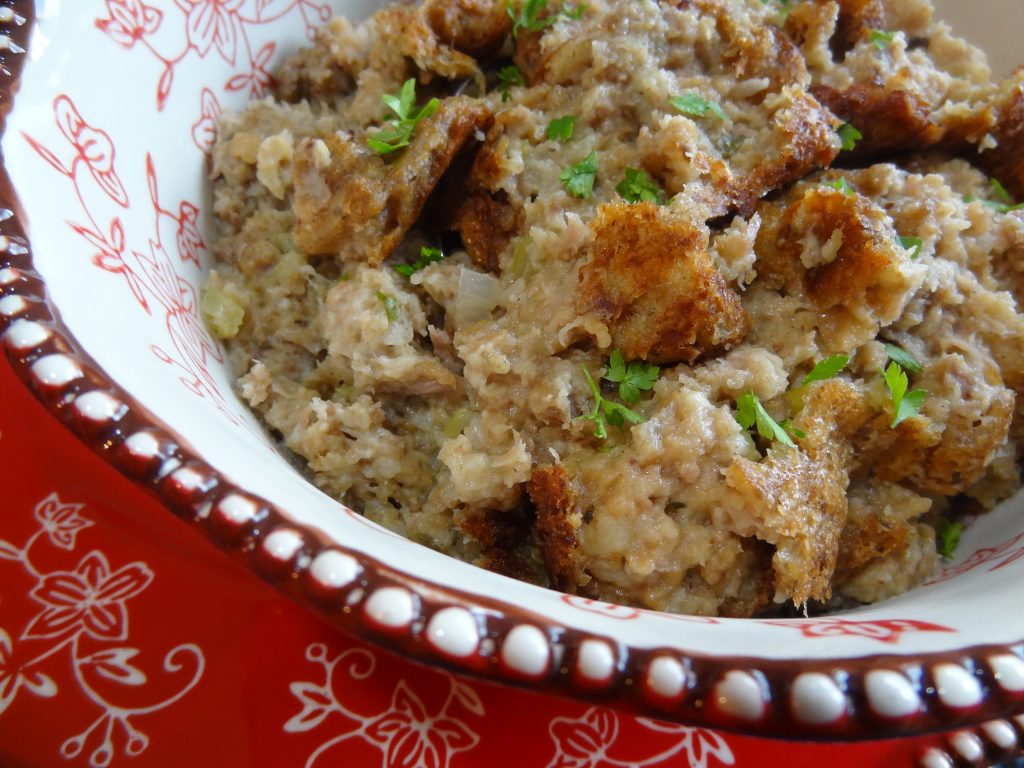
Portuguese Style – Thanksgiving Stuffing with Giblets – Serves 12 +

Ingredients:

Giblets & Stock

Turkey Giblets (which come inside turkey – neck, liver, heart, gizzard)

1 medium onion (chopped)

1 celery stock (chopped)

4 cups of water

4 cups of chicken broth

2 cloves of garlic

1 tsp of salt

1 tsp of pepper

Ground Meat & Bread Stuffing

1 lb ground beef, ground turkey, or sausage meat (this is optional)

1/2  cup diced Chourica or Linguica sausage (this is optional)

1/2 tsp garlic powder

1/2 tsp Paprika (omit if you use chourica)

1/2 tsp salt

1/2 tsp pepper

1 small diced onion

3 tbsp of olive oil

3 or 4 day old Portuguese rolls cut into cubes

4 cups of Pepperidge Farms stuffing mix with herbs (optional but use more bread instead and add 1/2 teaspoon of sage)

2 eggs

2 tsp very finely chopped parsley


Preparation:

How to cook giblets and stock:

Step 1:

Place the water, onion, garlic, celery, stock, and seasonings in a large stock pan and bring to a boil.

Rinse the giblets and neck and place them (except the liver) into the pan.
Cover, and cook on medium heat for at least 1 hour.

*Add liver during the last 10 minutes of cooking.

*The giblets should very well cooked, let cook longer if needed.

Remove the giblets from pan but save the stock. When giblets and neck are cooled, trim the meat by removing any ten-dints, veins or skin.

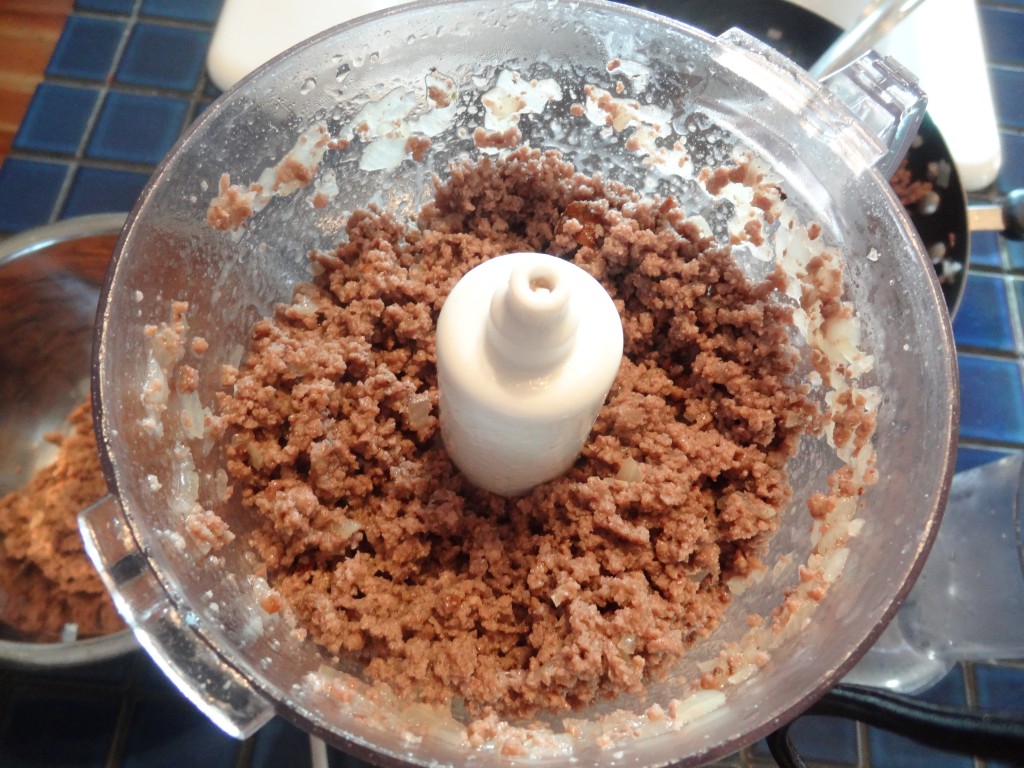
Place the trimmed meat in a food processor and pulse until they are the consistency of ground meat or leave chunky if you prefer.
Meatstuffing

Step 2

*Prepare meat for stuffing

Saute ground meat in olive oil with onions and seasonings until cooked. Add the diced Chourica the meat and mix.

Place in a food processor and pulse about 5 times until you get a smooth like consistency – (or chunky if you prefer

Step3:

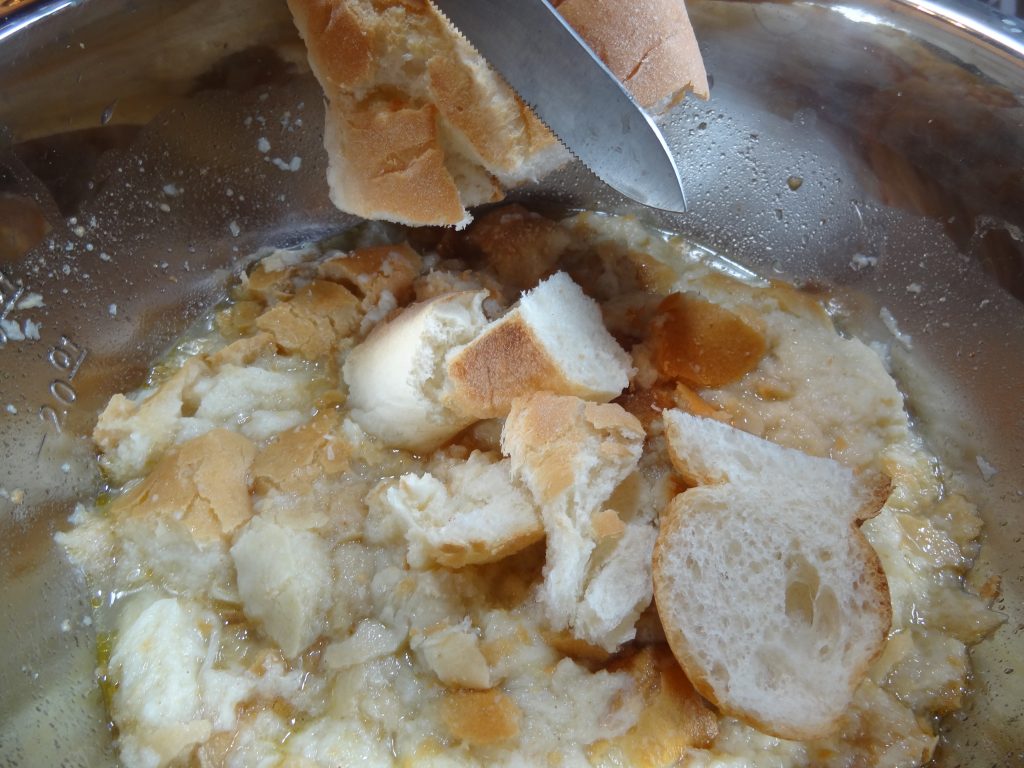
Strain your giblet turkey broth into a large bowl. Add the Portuguese rolls.
dsc06114

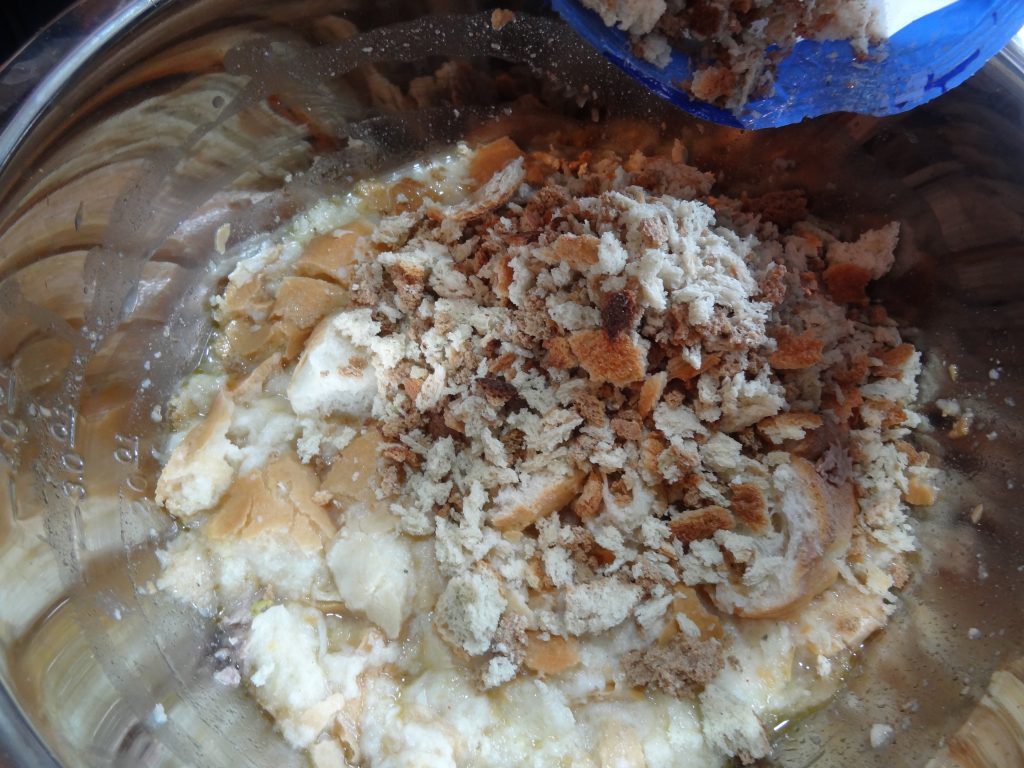
Let the rolls absorb the broth until they are soft. Add the cooked onion, garlic and celery from the broth. Mash well with your hand or a potato masher.

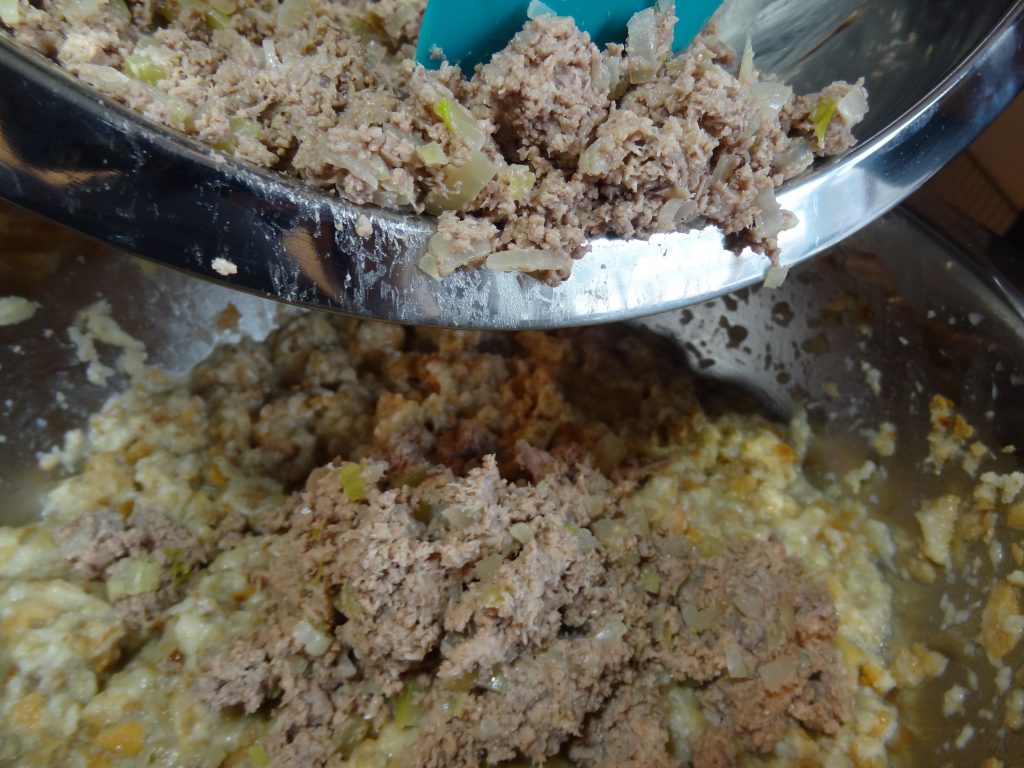
Add stuffing mix, ground meat mixture, and giblets. Mix until well incorporated.
dsc06118

dsc06122

At this point it’s up to you, if like a wet stuffing leave it alone, if you like a dry stuffing, add more stuffing mix or bread. If you find the stuffing dry add more broth.

Taste the stuffing and add salt or seasonings to your taste.

Add 2 eggs, and parsley. Mix well.

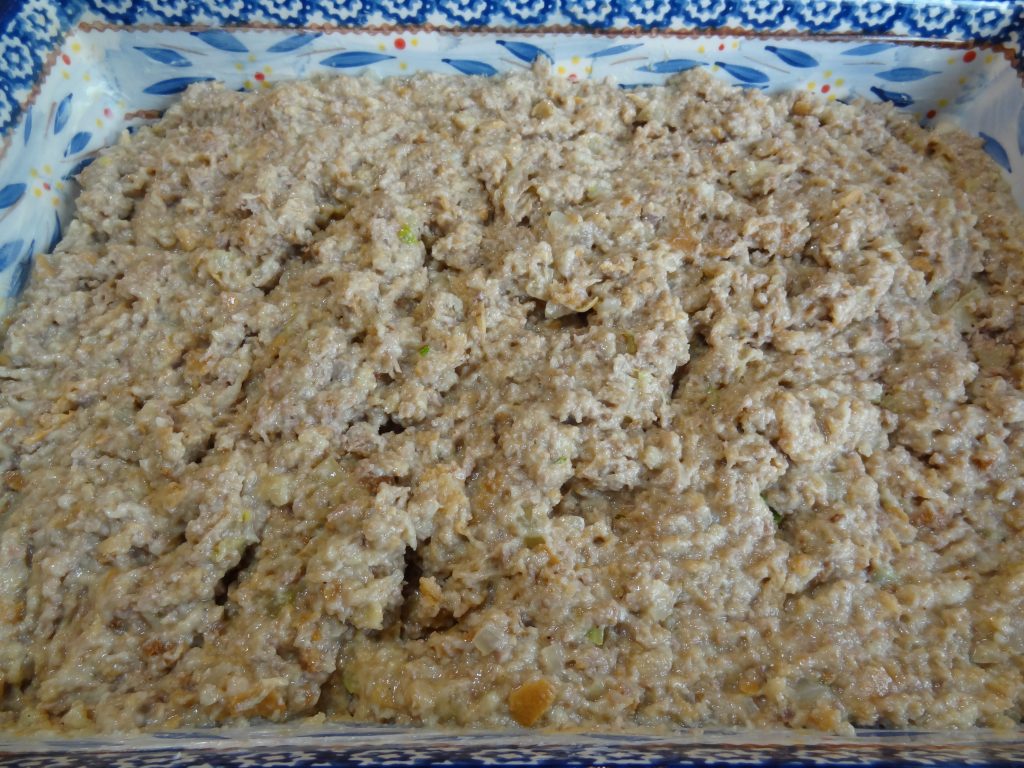
Spray or grease with margarine, a souffle, or baking pan which is at least 4 inches deep and big enough to hold all of the stuffing

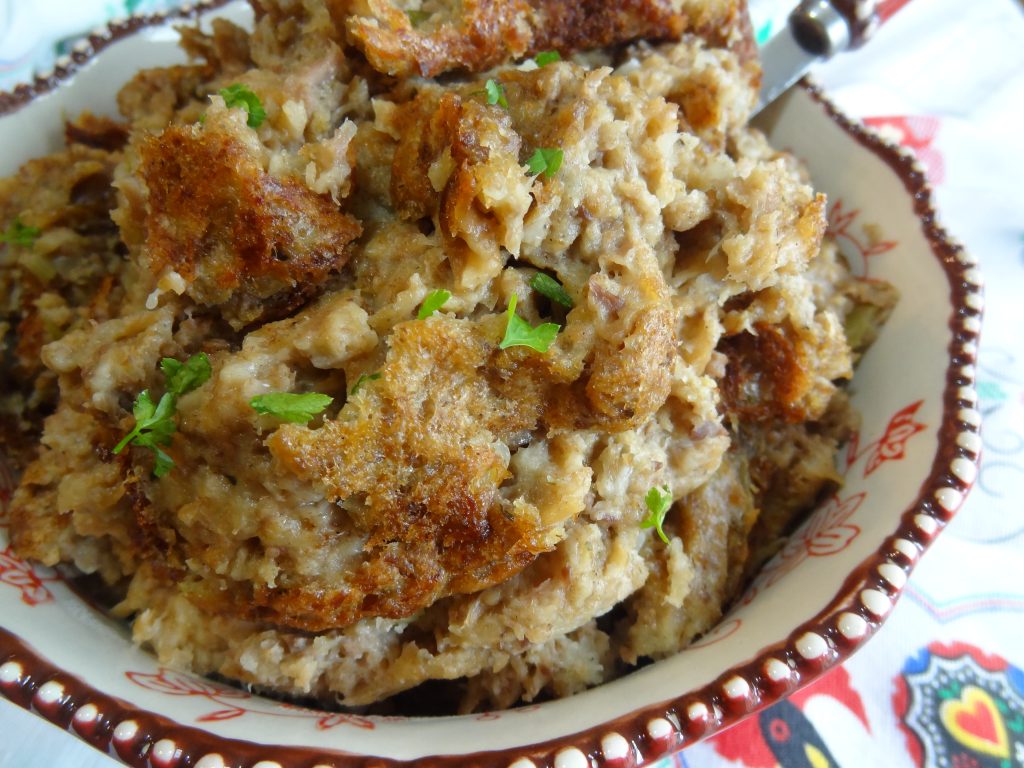
Pour in the stuffing and cover with foil. Cook for at least 45 minutes at 350. If you want a crispy top remove foil during the last 15 minutes.
dsc06124

* Important – If you make this the day before. Let it cool – cover and store in refrigerator. (Heat up in the oven for 20-30 minutes at 350 F oven, or one portion at at time in the microwave.)
dsc06136

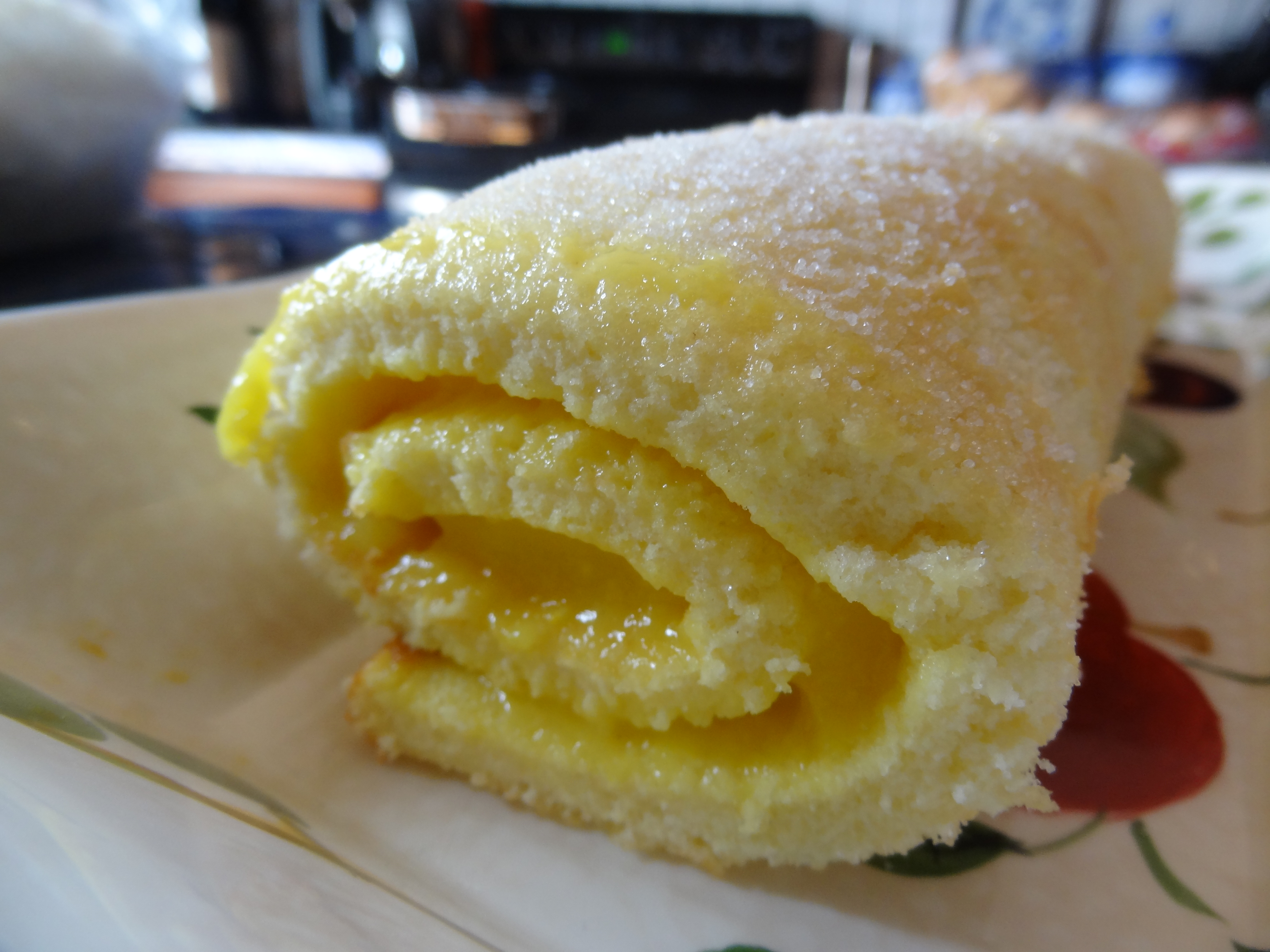
Torta de Laranja – Orange Roll

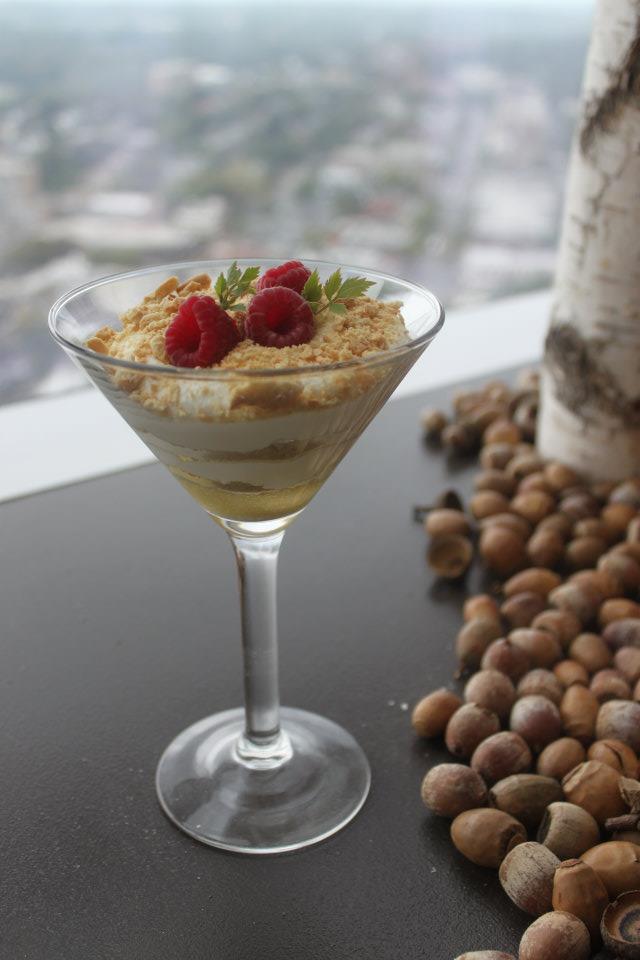
Chef Vania prepares dessert at Bellota


I admire a chef that can bake, because I admit that I am not a good baker. Baking is a science, where precise measuring and timing is needed. I don’t have the patience for that, so I usually cook relying on my instincts and taste buds.

When I bake I usually go with my 4 basic desserts; Coffee Cake, Pao de Lo, Torta, and Brownies. That’s it! So, this is the reason that I only look for dessert recipes requiring very few ingredients and little measuring!

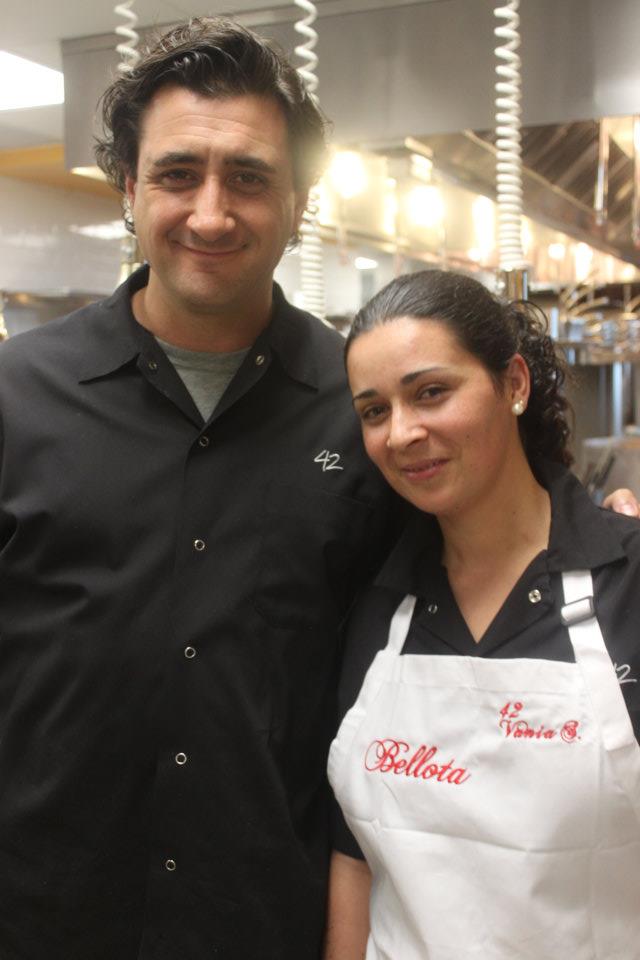
Portuguese Pastry Chef,  Vania Soares creates some sweet “Portuguese” desserts such as the trio of Pasteis,  Natas do ceu , and Sonhos de chocolate, among other treats as the Pastry Chef at 42 and Bellota at The Ritz Calton in Westchester NY.

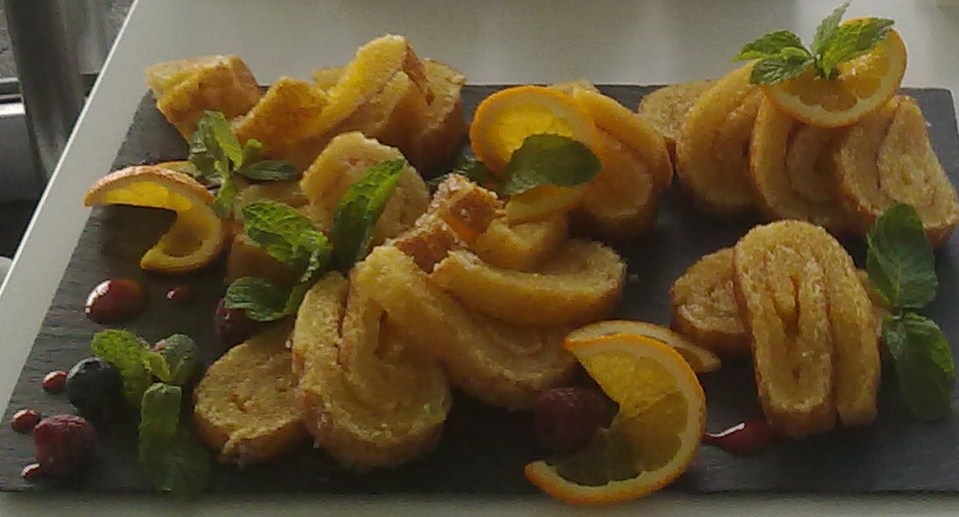
When I asked her for an easy recipe for a Portuguese dessert, she gave this one for her Torta de Laranja. This looks amazing and it only requires 4 ingredients, has no oil or butter in the recipe.

Chef Vania, graduated from the “Escola Profissional de Leiria” a renowned cooking school in Portugal. She later worked at the Madeira (hotel CS) and at the Sheraton Hotel in Porto before coming to America four years ago.

She told me she loves living in America but she misses her family and friends back in Portugal. Congratulations to Chef Vania for her accomplishments both in Portugal and in the USA and we wish her much success!

You can see more amazing photos as some of these featured here with Vania preparing her sweet creations by visiting the Facebook page of Henrigue Mano – Journalist for the Luso Americano newspaper.


Chef Vania and Executive Chef Anthony Goncalves of 42 and Bellota

Torta de laranja Recipe:

Ingredients:
1  3/4 cups sugar
1/3  cup & 1 tablespoon  corn starch
12  large eggs
3  Oranges (crated rind from 2 – juice from all 3 )
Instructions:

In a bowl mix sugar & corn starch. Add eggs one at a time and mix until foamy. Add the orange juice & rind and mix well. 
Grease or Pam a sheet pan and cover with parchment paper (spray with pam)
Cook 20-30 minutes in a 350 degree oven until a toothpick comes out clean.

Let cool for a few minutes and invert onto a lightly sugared parchment paper. Roll up the cake along the long side with the paper to form a roll.
Let it cool for a few minutes. Unroll and serve with desired fruit and whipped cream.
Enjoy!


Portuguese Lemon & Vanilla Torta

This recipe for Torta (similar to a Jelly Roll) is easy to prepare and only takes 15 minutes to bake.

What’s great about this recipe is that you can change the fillings to any that you prefer such as; chocolate pudding, flavored jams, or fresh chopped fruits like strawberries, peaches, berries etc.


Lemon Vanilla Torte

 Ingredients:

5 room temp eggs separated

3/4 cup flour

1 tsp baking  powder

1/2 tsp salt

2 tsp crated lemon rind

1 tbsp lemon juice

1 package instant Vanilla or Lemon pudding mix

1 1/2 cups milk

3/4 cups sugar


Instructions:

Preheat oven to 350 degrees. Grease (Pam spray or margarine) and line a large sheet pan with parchment paper. Combine flour, salt, baking powder in a bowl.

In a large bowl beat egg yolks with 1/4 cup of sugar until lemony. Add flour mix, lemon zest and lemon juice and mix well for about 5 minutes.

In a separate bowl beat the egg whites until they form soft peaks. Add the 1/2 cup sugar gently into the whites until stiff peaks form.

Gently fold the egg whites into the eggs with a rubber spatula. Pour into the sheet pan spreading evenly. Cook for about 15 minutes or less depending on your oven. The cake should be golden light brown in color.

Prepare the pudding by mixing the contents of the package with only 1 1/2 cups of milk (not 2 cups as package directs).

Mix for 2 minutes, then place in fridge to thicken.

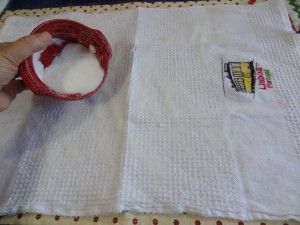
Place a clean linen white kitchen towel on the counter and sprinkle generously with granulated sugar. Slowly flip the cake pan onto the towel with the sugar.

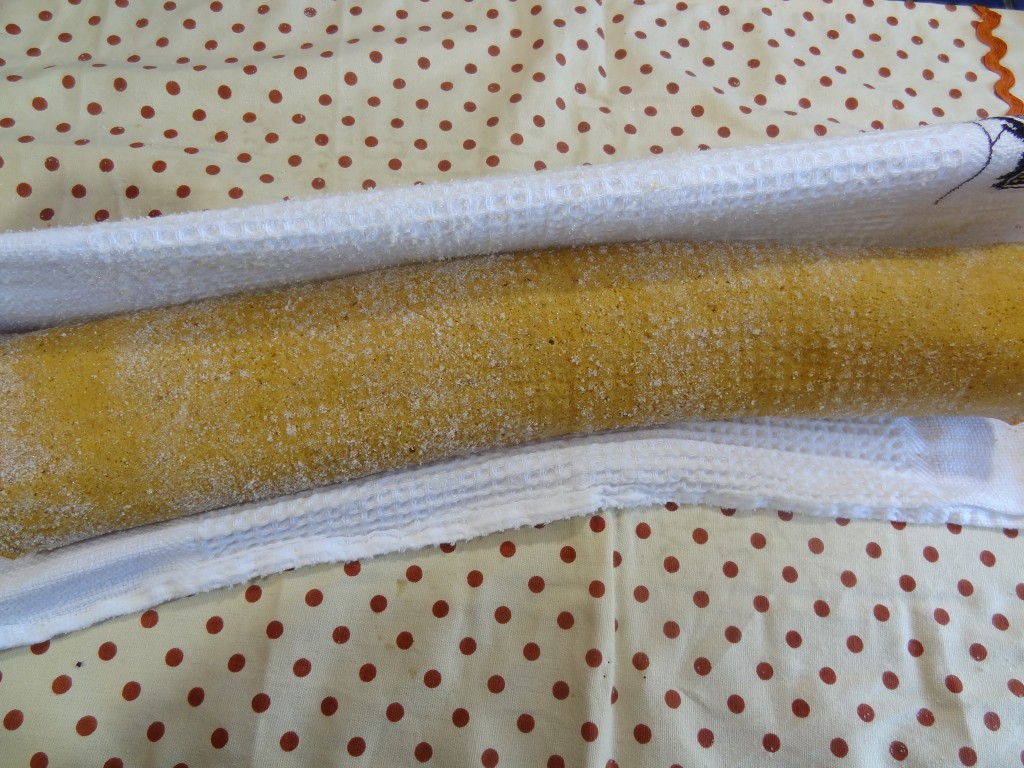
Peel the parchment paper off the cake, then roll up the cake with the dish towel and let it sit for 5 minutes for the cake to cool.

Unwrap the rolled up cake let sit for a few minutes and spread the pudding (or any filling you prefer) evenly over the cake.

Gently roll up the cake without the towel leaving the edge on the bottom.

Sprinkle more sugar on top of the Torta to serve. Enjoy!


Bolo de Bolacha Maria – Maria Cookie Cake

Maria Cookie Cake


Carla Almeida sent me her recipe for Bolo de Bolacha Maria. “This is usually the recipe made by mothers in Portugal, especially in the summer. It’s fresh, easy and kids love it! It’s one of those Portuguese desserts that everyone has at one point or another tried. It is, probably, the dessert most loved by kids in Portugal. I remember that my mother baked it for special occasions, when she wanted to surprised us” She said.
Bolo de Bolacha Maria

Ingredients:

1 can Sweetened Condensed Milk
1 can (same can)  milk
5 eggs
2 big packages of  Bolacha Maria (Maria Cookies)
4 – 6 cups of strong black coffee
1 pint whipping cream
1 tsp of sugar or brown sugar
Cinnamon powder


Instructions:
In a large bowl beat together the condensed milk, milk and egg yolks until creamy. Pour mixture into a pan on low heat and stir well until the mixture comes to a boil. Turn off heat.

Meanwhile dip cookies one at a time into coffee for about 5-10 seconds to coat with coffee, but don’t let them get soft. In a spring form pan or large platter, begin layering the cookies one a time then topping each with the egg cream until towers of your desired height form.

In small bowl beat the whipping cream with sugar until whipped. In separate bowl, beat the remaining egg whites until stiff peaks form. Fold the egg whites into the whipped cream gently. Top the cookie cake with the cream. Top the cake with desired amount of cinnamon and crushed Maria cookie crumbs. Put it in the fridge for about 5 hours, or overnight for best results.

Visit this youtube video Bolo de Bolacha for a demonstration of how to assemble the cake. The recipe is different but there are many variations of this classic. Carla’s recipe is unique!… Enjoy


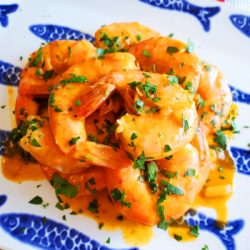
Mariscada – Portuguese Seafood With Rice


Chef Luisa Fernandes sent me the following recipe to share with you.

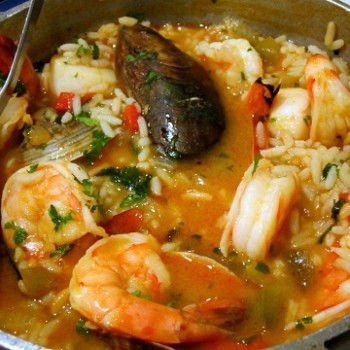
Mariscada is an Atlantic Seafood inspiration based on rice and very popular along coastal Portugal.

The dish often has lobster, shrimp, clams, mussels, as well as cuttlefish and is seasoned with olive oil, sea salt, pepper and Portuguese paprika.

Chef Luisa is a very accomplished chef with an extensive resume. Currently she is the Executive Chef at Robert Restaurant. MOD Museum, NYC.

She has appeared on Chopped, The Food Network where she was crowned a Champion.

Read more about Chef Luisa here: tiamariasblog.com/chef-luisa-fernandes/

” I think that the victory is not mine, but all of ours, because I’m Portuguese and proud when people recognize our cuisine. That’s why I will never enter another contest unless I can cook the cuisine from our country” said Luisa, in an interview for ComunidadesUSA.

One year later, on September 14, 2010 she returned as one of the four contestants of Chopped Champions.

Watch Chef Luisa on Chopped


Mariscada - Portuguese Seafood With Rice
Prep time: 
Cook time: 
Total time: 
Mariscada is an Atlantic Seafood inspiration based on rice and very popular along coastal Portugal. The dish often has lobster, shrimp, clams, mussels, as well as cuttlefish and is seasoned with olive oil, sea salt, pepper and Portuguese paprika.
Ingredients
  • 3 ripe tomatoes
  • 2 cloves of minced garlic
  • 1 branch of Coriander leaves (finely chopped)
  • 2 sliced onions
  • ½ cup of oil
  • ½ cup of white wine
  • 1 chopped bell pepper
  • 8 clams – medium
  • 12 mussels
  • 4 squid (cut in pieces)
  • 2 lobster tails
  • 12 large shrimps with heads
  • juice of 1 lemon
  • salt, pepper, paprika
Instructions
  1. Put the olive oil in a saucepan and arrange the tomatoes, onions and peppers in layers.
  2. Add ½ of the chopped coriander, ½ cup of white wine , a little of Portuguese paprika and salt to taste.
  3. Cover the pan over medium heat until it starts to boil. At that time, add the clams and allow to cook for five minutes.
  4. Then add the lobster tails, shrimp and mussels. Increase heat slowly so that it does not retain a lot of liquid.
  5. Let the clams and mussels open and uncover the pan. Keep checking the heat for another 10 minutes or until everything is cooked.
  6. Add the other half of chopped coriander on top and the juice of a lemon. Serve with white rice.
  7. Note: Recipe was one of the dishes that Chef Luisa prepared for her casting at Chopped.

Bolo Rei – King of Portuguese Cakes

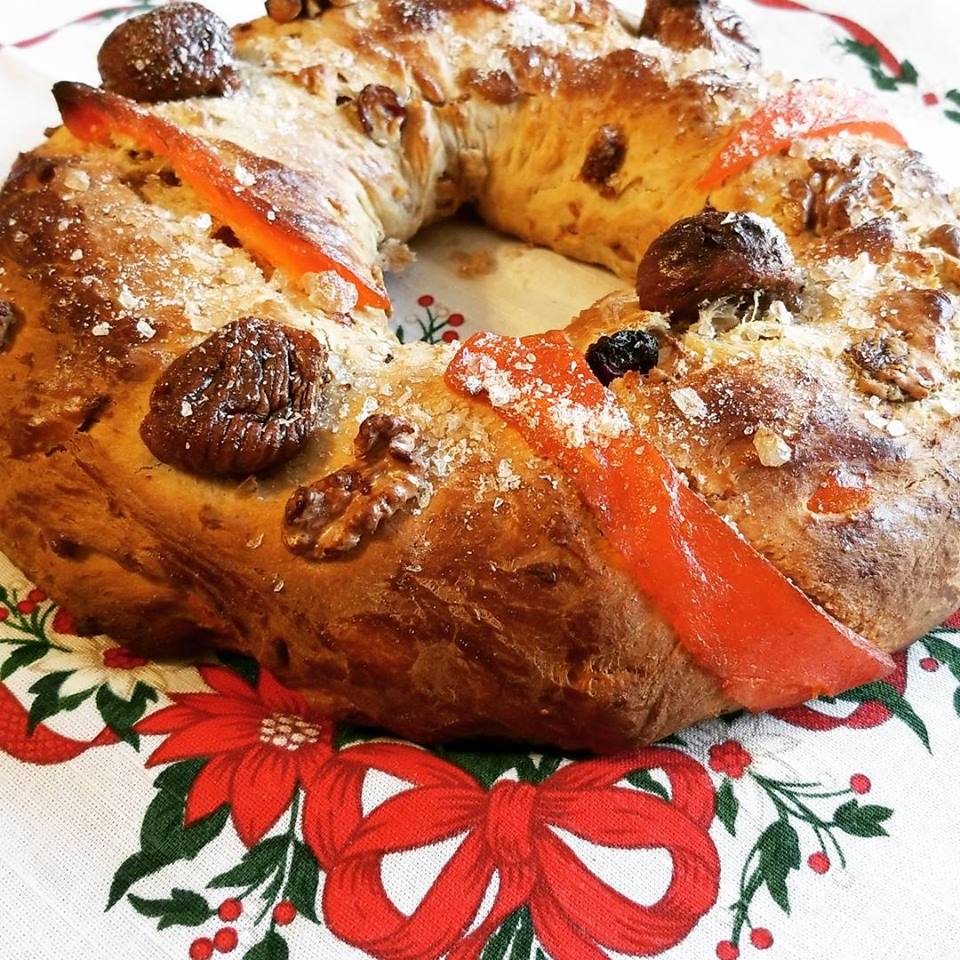
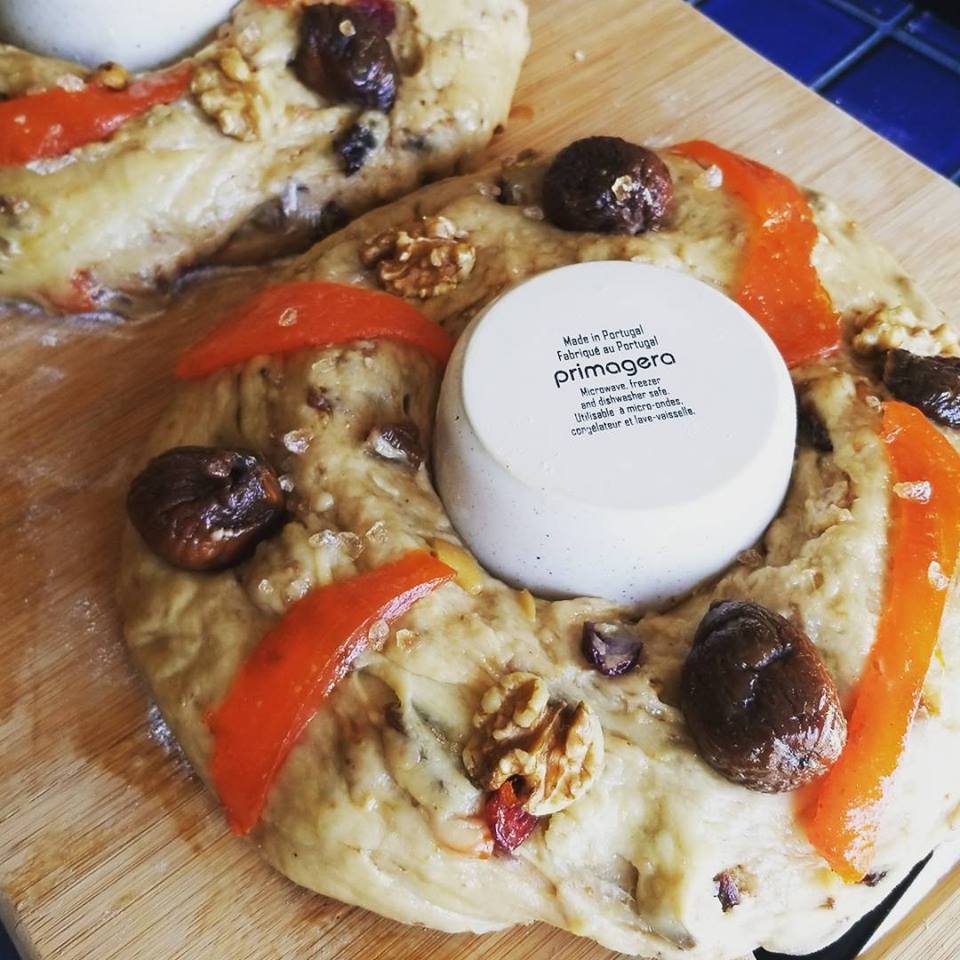
Bolo Rei is Portugal’s king of cakes. It’s traditionally eaten throughout the Christmas season, but mostly on January 6, the twelfth day of Christmas, which is known as King’s day.

The date is when the three kings arrived in Jerusalem to greet the newborn baby Jesus.  The legend is that the three kings were disputing which one of them would be the first to give their gift to Jesus. Upon their travels they met a baker who baked a cake with a bean inside it.

Which ever one of them got the slice of cake with the bean would give their gift first. Through the years coins and trinkets were added to the cake instead of the bean which would bring good luck upon the bearer. The cake without the fruit on top is often called Bolo da Rainha! My recipe inspired by Cascaistravel.com. Enjoy!

The cake was introduced to Portugal by the Confeitaria National bakery run by the Casteneira family for over 100 years.

Visit the website for the history of the origin of the recipe at confeitarianacional.com.
Watch the video of the famous bakery at: www.portugaldailyview.com/portuguese-christmas-cakes

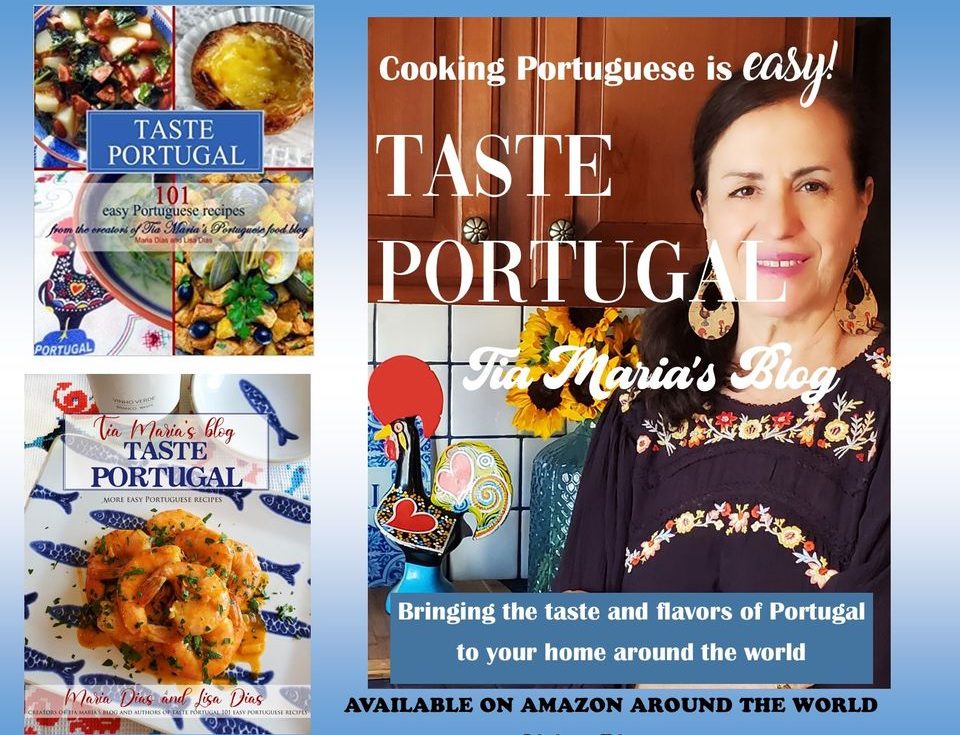
Find the recipe in my Taste Portugal More Easy Portuguese recipes cookbook. Order on Amazon below:

Ingredients:

Yeast

2 tbsp active yeast
2 tsp granulated sugar

1 tablespoon flour
1/3 cup warm water

Dough

1 cup finely chopped assorted crystallized fruit NOTE: (I used dried apricots, dates, and raisins in my cake)
1/2 cup seedless raisins
1 teaspoon  finely grated lemon rind
1 teaspoon finely grated orange rind
2 tablespoons port wine
2 tablespoons rum

1 teaspoon salt

1 and 1/4 stick butter (10 tablespoons)
1 cup granulated sugar
3 eggs
2 egg yolks
5 cups all purpose flour
1/2 cup warm milk

1/4 cup chopped almonds
1/4 cup chopped walnuts

Topping

crystallized fruit of your choice, such as pineapple, cherries, or figs
1 egg for egg wash
confectioners sugar


Instructions:

Prepare the yeast mixture

In a small bowl mix together the yeast, sugar and flour and warm water. Stir and let sit for a few minutes for yeast to dissolve and activate.

For the Dough

In another bowl add the chopped crystallized fruit, raisins, grated lemon and orange peel, port wine and rum. Leave the fruit to soak up the liquid while you prepare the dough.

In a large bowl beat the butter and sugar together with an electric mixer until smooth and creamy. Beat in the eggs and egg yolks one at a time. Gradually beat in the flour and the milk. Then add the yeast mixture to the dough.

Add the almonds, walnuts and pine nuts and the crystallized fruit mixture.

Lightly mix in more flour as needed to create a sticky bread like dough.

Cover and leave to rise in a warm place for about one hour or until it has doubled in size.

Take the dough and knead for about one minute, then shape into a round loaf and place on a greased baking tray.

Using your thumbs, open up a hole in the middle of the dough so that you are left with a wreath shape, or crown. I used a greased and floured ramekin and placed it in the middle of the wreath to form the wreath.

Note: To add the surprise: Make a hole with a knife on one side of the wreath and push the wrapped broad bean into the dough. Choose another spot on the wreath, make a hole with the knife and push the wrapped coin into the dough.

Topping

Decorate the wreath with a few crystallized fruits. Beat the egg and brush over the wreath. Cover and let rise in a warm place for about one hour or until it has doubled in size.

Remove ramekin and bake in a preheated over at 375 degrees F for about 40 minutes or until golden brown. Cool and dust with powdered sugar.


Pão de Ló – Portuguese Sponge Cake

Pão de Ló – “Sponge Cake”  Just as the translation is easy, so is the recipe. This cake is so easy to make that you’ll find yourself making it again and again. The recipe uses no oil, butter or fats so it’s virtually fat free!

This classic dessert is so versatile that you can make it for all the holidays, special occasions, bring it to a pot luck diner as a dessert, or just make one when you’re craving a simple cake.  Enjoy!….. and…..Happy Holidays!

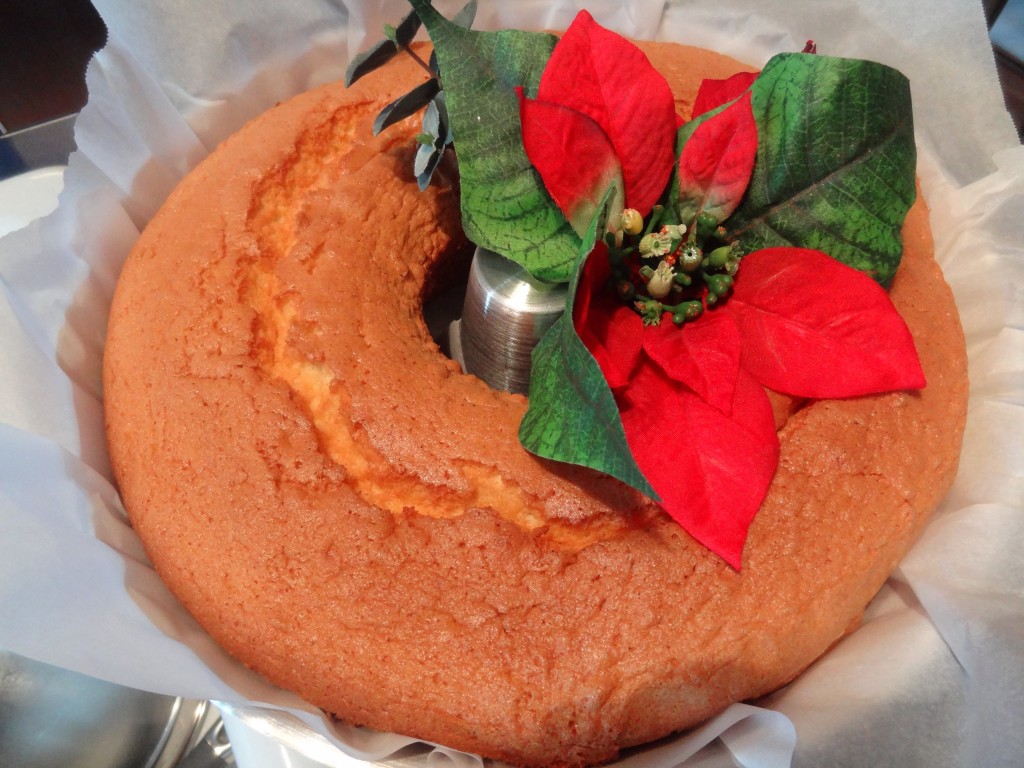
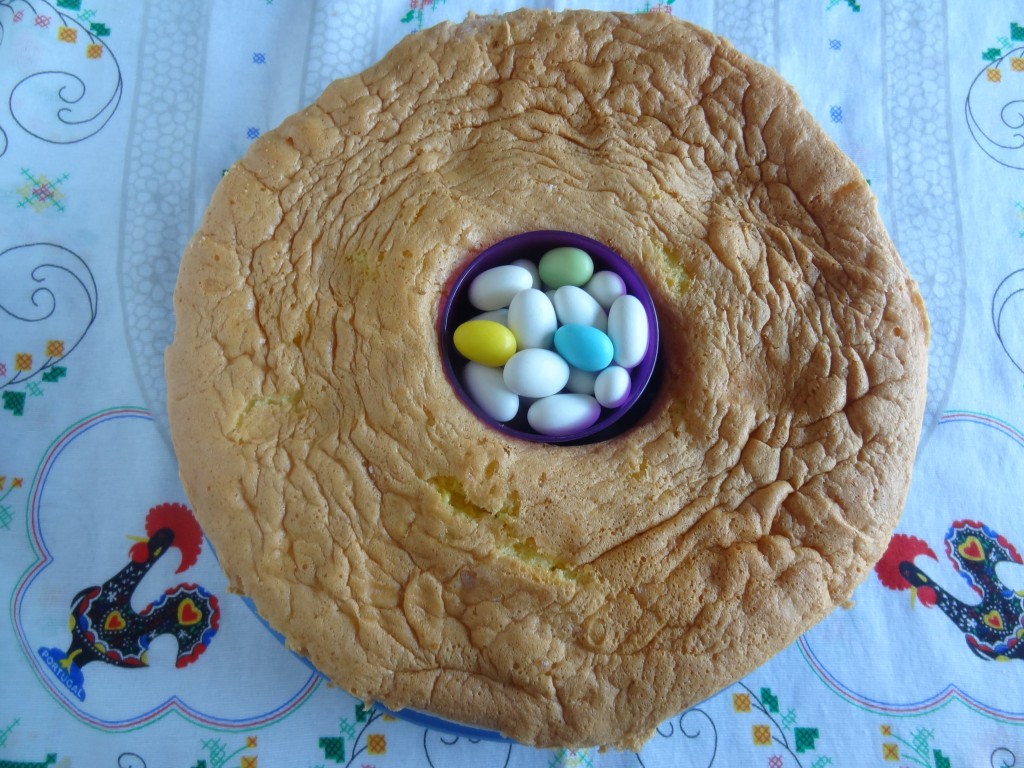
This is a Christmas photo of the classic – Portuguese – Pao de Lo which I give as home made Christmas gifts for my family and friends.

*Please note: There is Silk – Poinsettia in the center

(Do not use real Poinsettias with food items)

Pao de lo recipe:

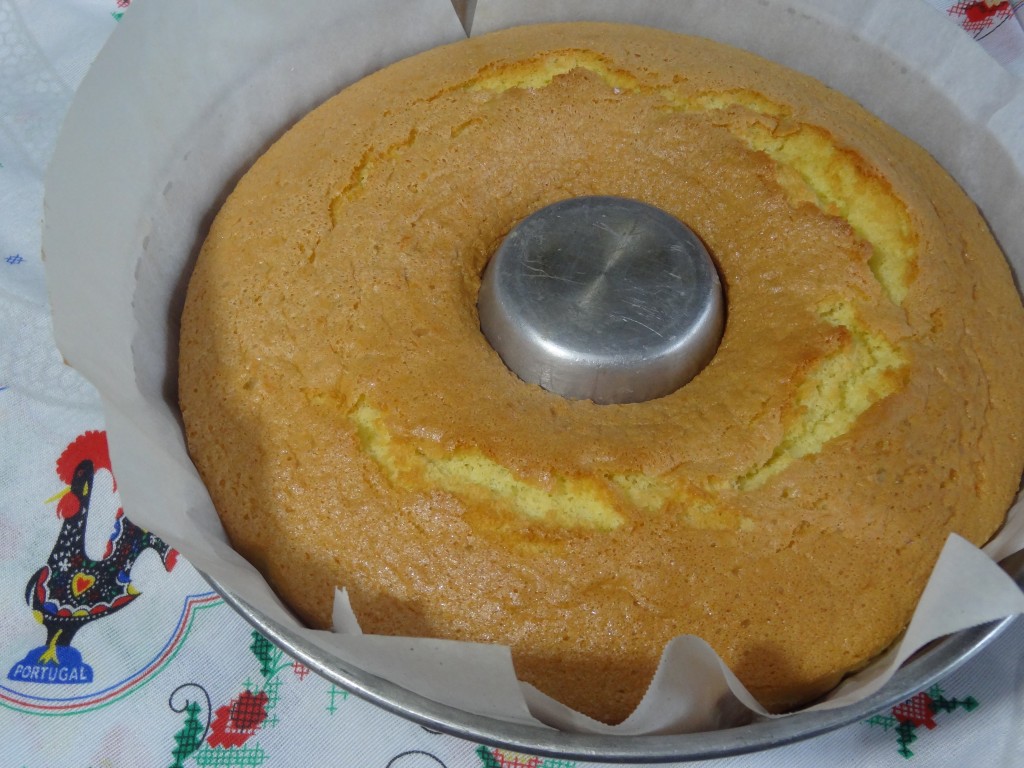
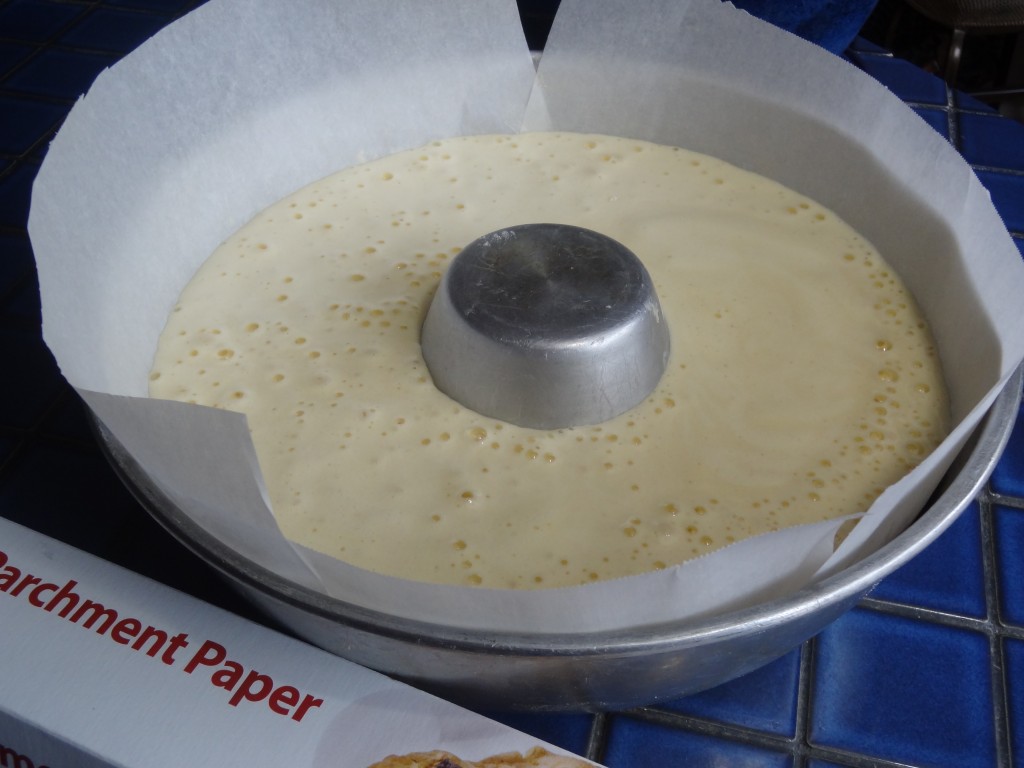
You will need an extra large bundt pan to cook the cake. If you don’t have an extra large pan be sure to use parchment paper all around so the cake doesn’t over spill.

Here’s our youtube video cooking the recipe.

Please subscribe and like our page for the latest video postings!


Ingredients:

10 brown eggs (room temp)

1 1/2 cups sugar

2 cups sifted flour

1/4 tsp salt

1 tsp baking powder

1 tsp (grated lemon peel – Optional)

Preparations:

Make sure your eggs are room temp or place them in a bowl of warm water for about 15 minutes.

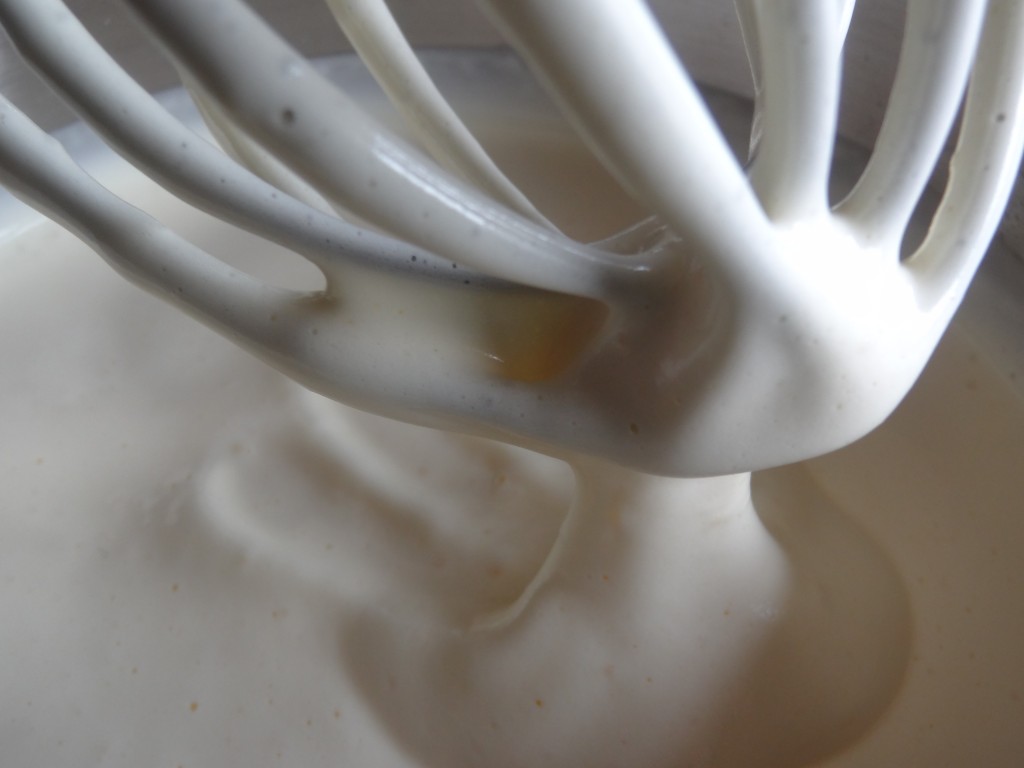
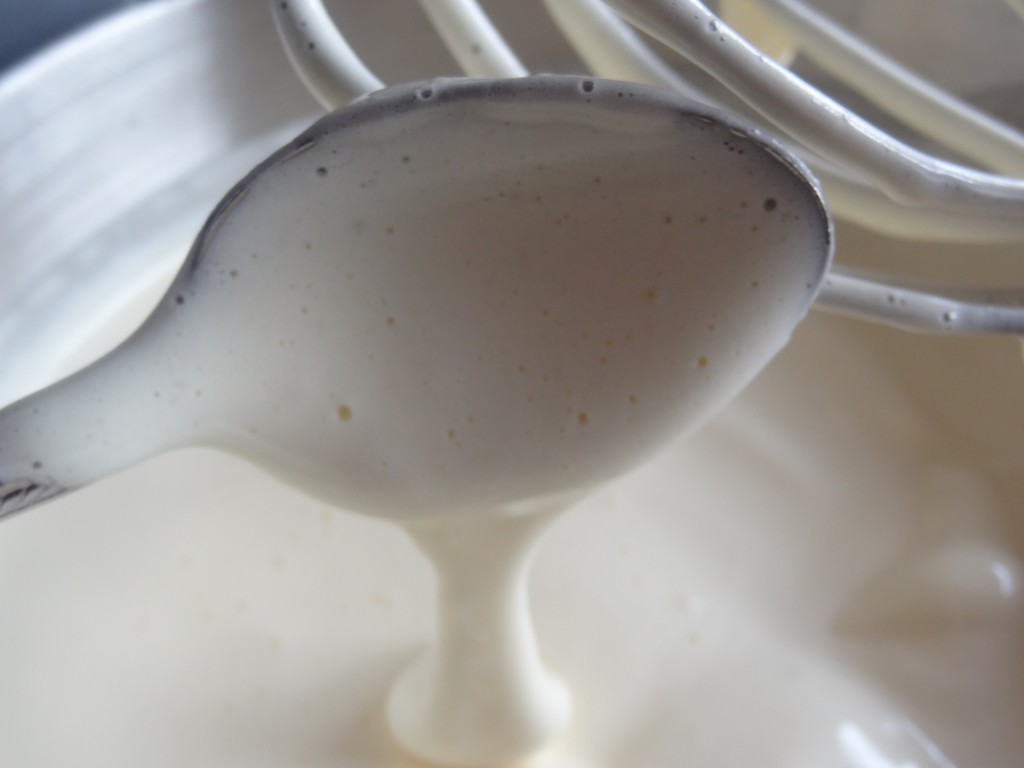
In a large bowl beat the eggs until foamy. Add sugar and beat for at least 20 minutes until batter becomes very thick,  stiff peaks. (Add lemon at this point if desired)

Note: If using a kitchenaid mixer, mix for only 10-15 minutes until stiff peaks form.

While the sugar and eggs are beating, mix flour, salt and baking powder in a small bowl.

When the batter is ready, add the flour mixture very slowly 1/4 cup at a time on low speed or fold in with a spatula. 

This should only take about 3-5 minutes. (Don’t over beat, this is important) 

Grease a large tube pan. (Aluminum works best). If your pan is smaller, line the top few inches of the cake pan with parchment paper in case the batter rises over the top. Poor batter into the pan and shake slightly to spread evenly. 

Cook at 350 degrees F. for 45 minutes or until a toothpick comes out clean.

Let the cake cool for about 10 minutes. Invert the cake pan right side up onto a serving dish.

(Note:  This cake freezes well so you can make it ahead of time. Slice into pieces for individual servings or freeze the whole cake. Make sure it’s completely cooled, wrap in saran wrap and heavy foil or in Freezer bags.)

Pao de Lo – Easter Decoration


Pudim Flan – Caramel Flan Recipe Western Mass Women Magazine!


Caramel Flan – An International Holiday Dessert!

Article in Western Mass Women’s Magazine by Maria Dias, Contributing Writer-2011

Caramel mariadiasFlan is a rich and creamy custard-based dessert topped with a layer of caramel.
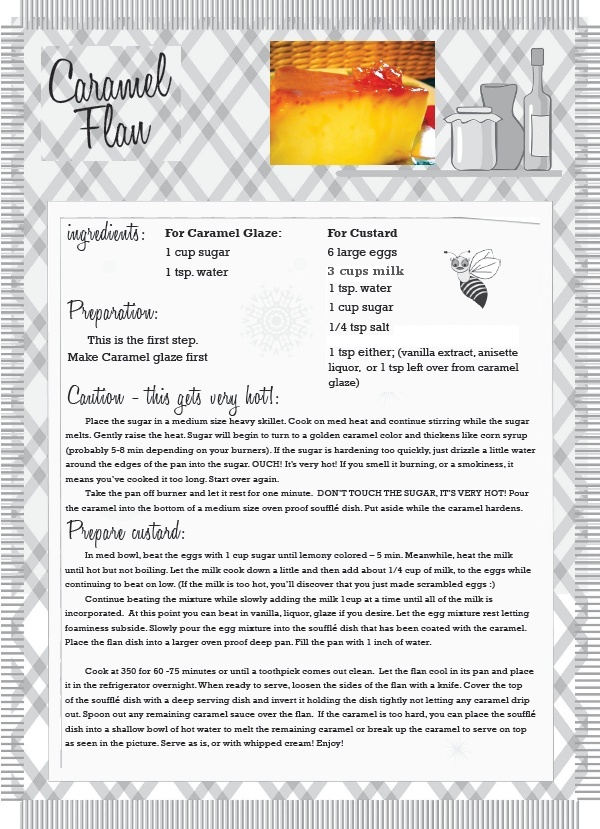
This classic dessert is enjoyed during the Holiday season in Europe, North America, Latin America and even as far away as Macau and the Philippines. It originated in Europe but became very popular in Central and South America.

Some believe that it was the Romans who first began raising chickens for their eggs. They began cooking the eggs with sweeteners which eventually evolved into the custard desserts of today.

Outside of Spanish-speaking countries and the United States, Flan is sometimes referred to as crème caramel.

Every culture has different variations on the ingredients. My recipe is for Caramel Flan served in Portugal and Spain for Christmas Eve or Christmas day dinner. It took me years to master a great flan, but if you follow my recipe it’s easy. If you cook it, they will come, and you’ll be the hit of the Holiday party!


Recipe:

 Flan ingredients:

6 large eggs

3 cups (whole milk) not low fat

1 cup sugar

1/4 tsp salt

1 tsp either; (this is optional: vanilla, anisette liquor, or caramel glaze)

Caramel glaze ingredients:

1 cup sugar

1 tsp water


Sonhos – Portuguese Choux Pastry Dreams!

dsc06173

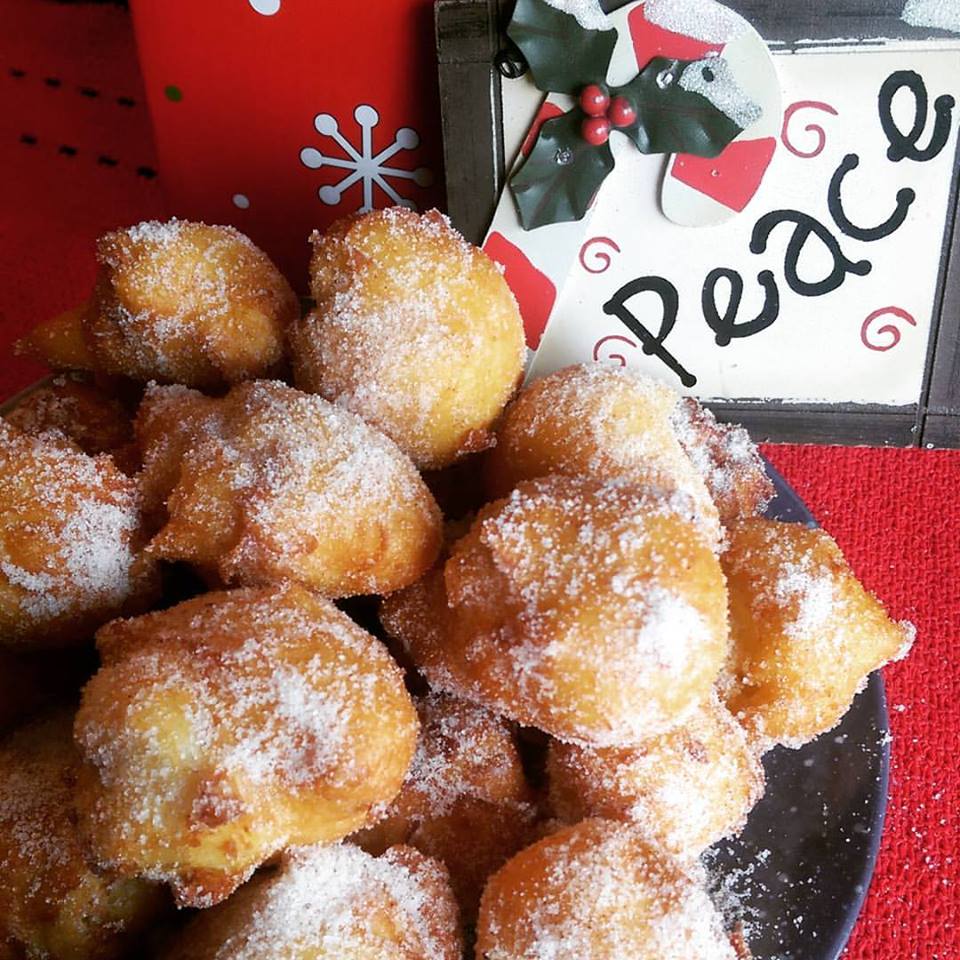
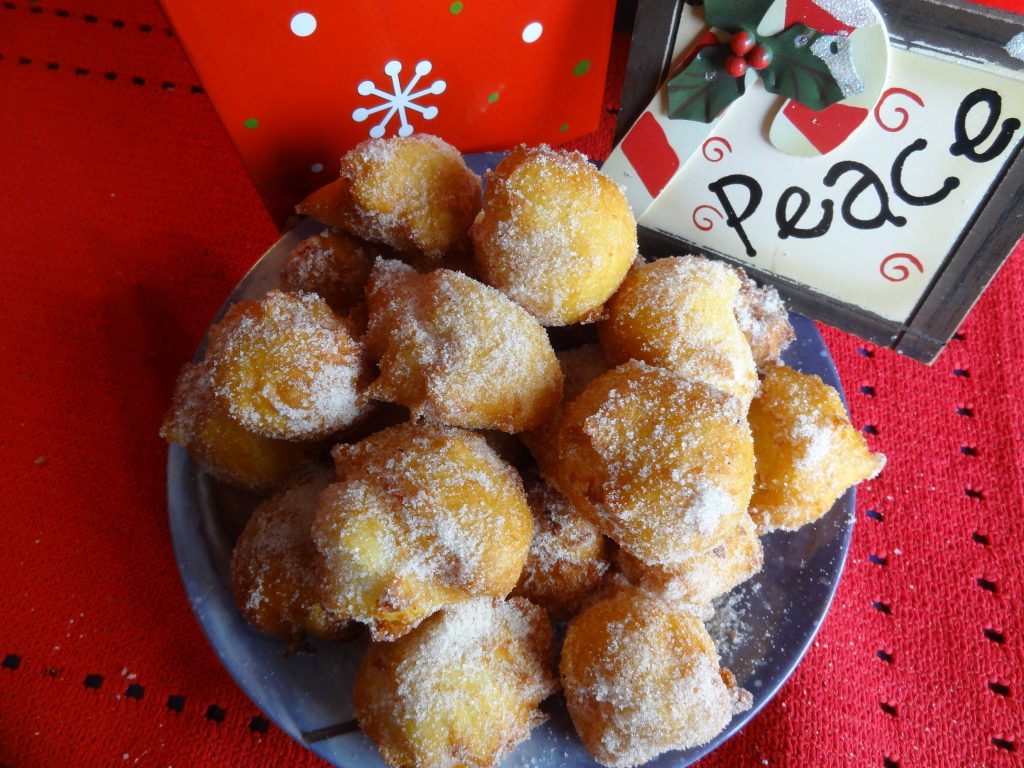
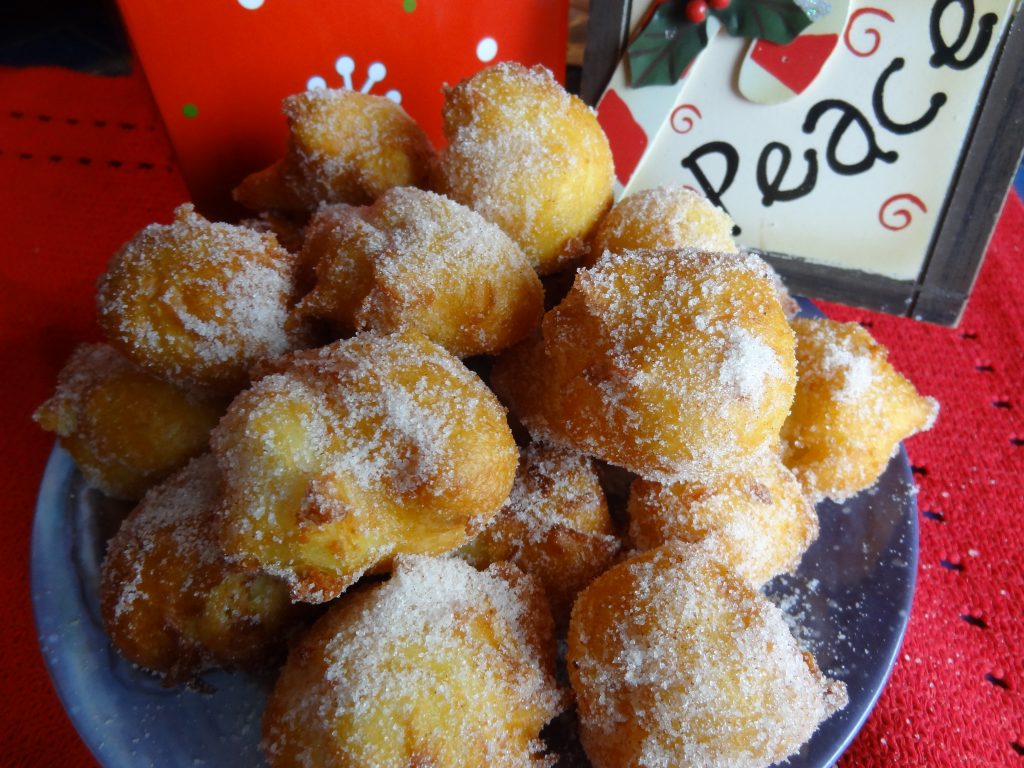
sonhos-2Sonhos, are light and fluffy doughnut like pastries that melt in your mouth! Generally, they’re served around the Holidays but this popular fried pastry is a favorite at almost every Portuguese celebration. They are quite easy to make unlike filhos which are made out of risen dough and have a much longer process time.

Good luck to those of you are making these for the first time! Enjoy!

Sonhos

Ingredients:

6 extra large eggs

2 cups flour

3/4 cup water

3/4 cup milk

1/2 tsp salt

1/2  stick butter or margarine

1 slice lemon rind

Sugar and Cinnamon for topping

Instructions:

In a large heavy pan, place the water, milk, butter, lemon rind,  and salt over medium heat and bring to boiling point. Stir in the flour and stir with a wooden spoon until the flour becomes a soft dough which turns into a ball shape that separates from the sides of the pan. This is similar to a basic Choux paste that is used for baking eclairs and cream puffs.

Remove the dough from heat and place into a medium bowl. Let the dough cool for a few minutes. Beat in one egg at a time making a smooth batter.

Heat the oil to 365 degrees. Shape the dough into round doughnuts by using 2 large tablespoons.  Fry the dough by 4 or 5 pieces at time until golden brown while keeping the heat at a steady temperature. * NOTE. If you find the dough is turning brown too quickly reduce the heat to a lower setting. They should cook slowly.

**IMPORTANT**Pierce sonhos slightly with a fork all around as they cook. NOTE: If you find they are too dark and still raw in the middle, lower the heat so they cook through at a slower temperature.

Drain on a new clean brown paper lunch bags or on paper towels.

While still hot, roll sonhos in a mixture of sugar and cinnamon.

Watch this video for the demonstration. The recipe varies from mine.

dsc06172

This recipe is for Coscorões – Portuguese fried dough
Receita de Coscorões

Aletria – Sweet Egg Noodle Christmas Dessert

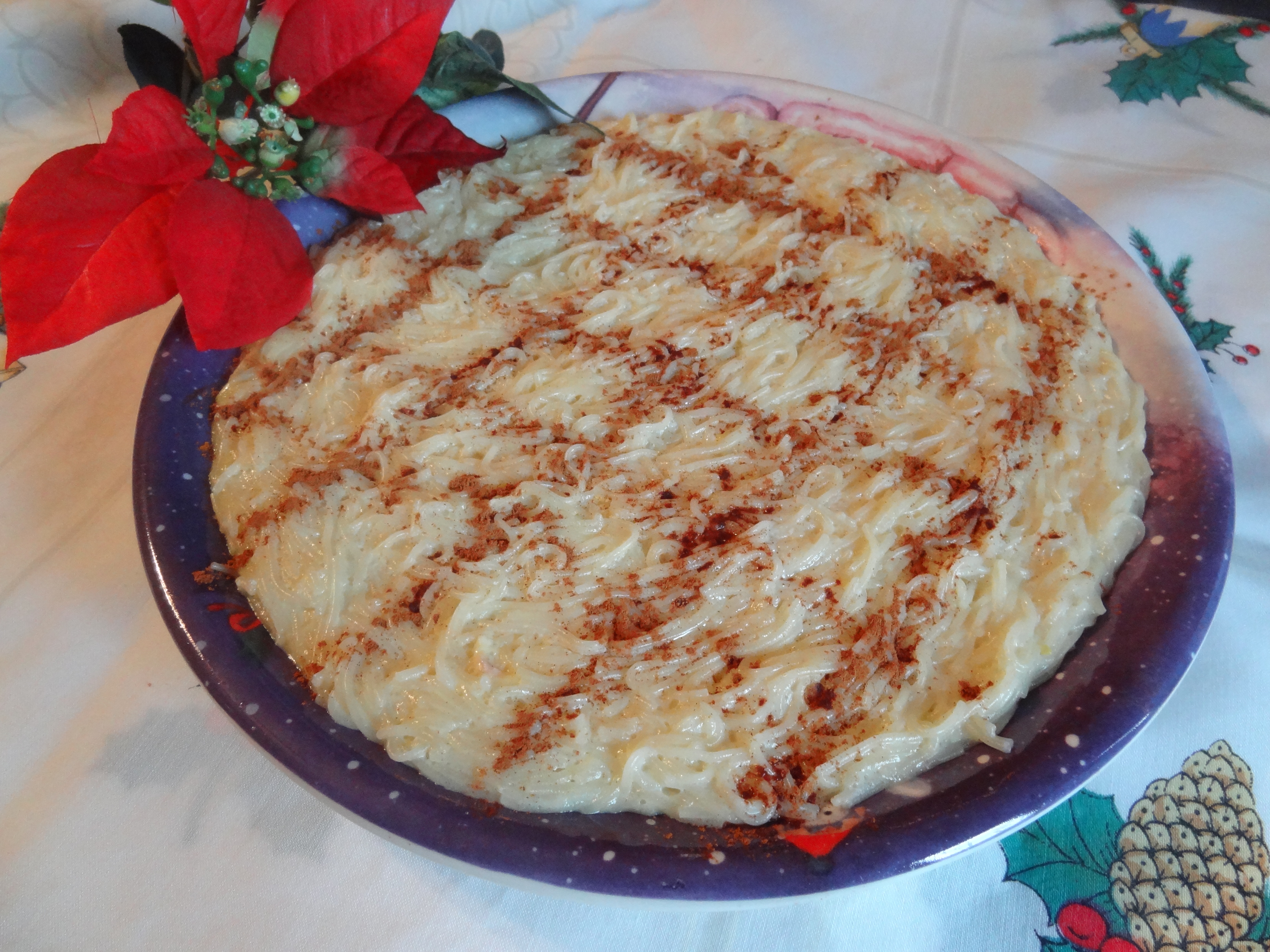
Aletria, is a sweet dessert made with fine egg noddles which is mostly served at Christmas and for many other festive occasions.

This classic is made with the same basic ingredients; eggs, sugar, cinnamon and lemon peel as the ever popular Arroz Doce – Portuguese Sweet Rice Pudding


Ingredients:

7 cups of whole milk

6 egg yolks

1 + 1/2 cups of sugar

1 tsp salt

1 cinnamon stick

2 pieces of lemon peel

1 12 oz package of very fine egg noodles

Pour milk, sugar, salt and cinnamon stick into a large pan and bring it to a boil, stirring constantly.

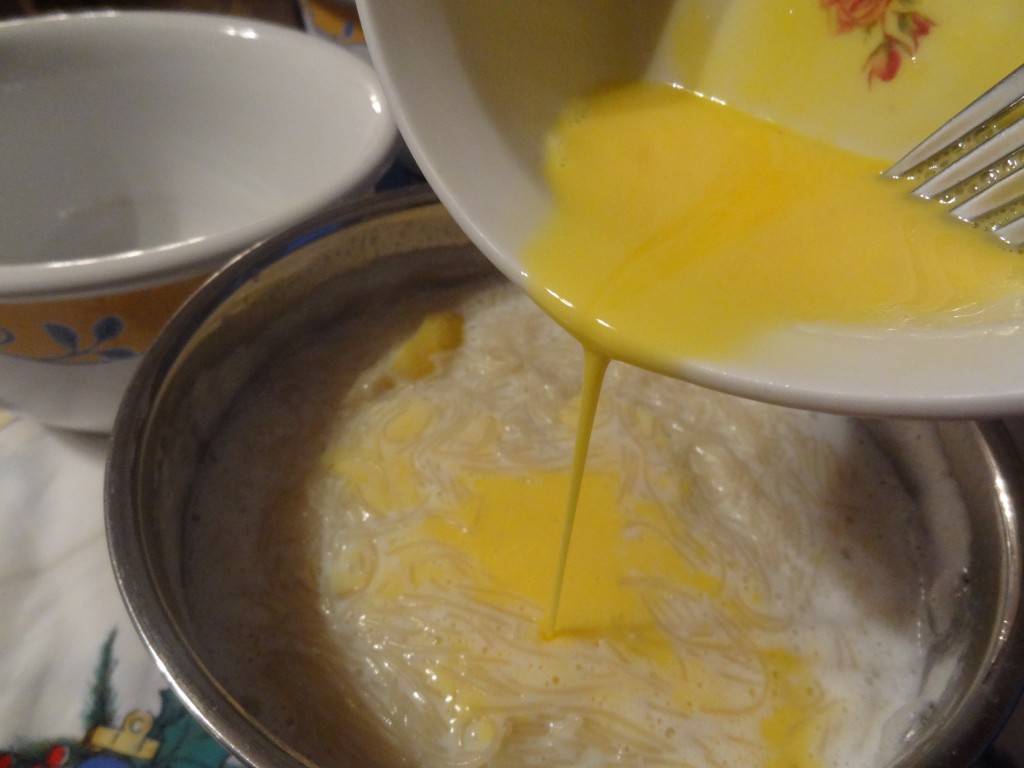
Meanwhile, beat the egg yolks in a small bowl and slowly blend some heated milk into the eggs and stir. Set aside.

Break up the noodles and add them to the boiling milk. Stir constantly until the noodles are cooked and remove from the heat.

Slowly add egg mixture into the cooked noodles and stir to incorporate. Turn off heat *Do not let the noodles boil. Remove from heat.

Remove the lemon peel and cinnamon stick. Pour the mixture into a large serving platter at least 1 inch depth. Sprinkle with cinnamon.

Let cool and store covered in the refrigerator.